Quick Verdict: The Black Mach-E Still Punches Above Its Weight
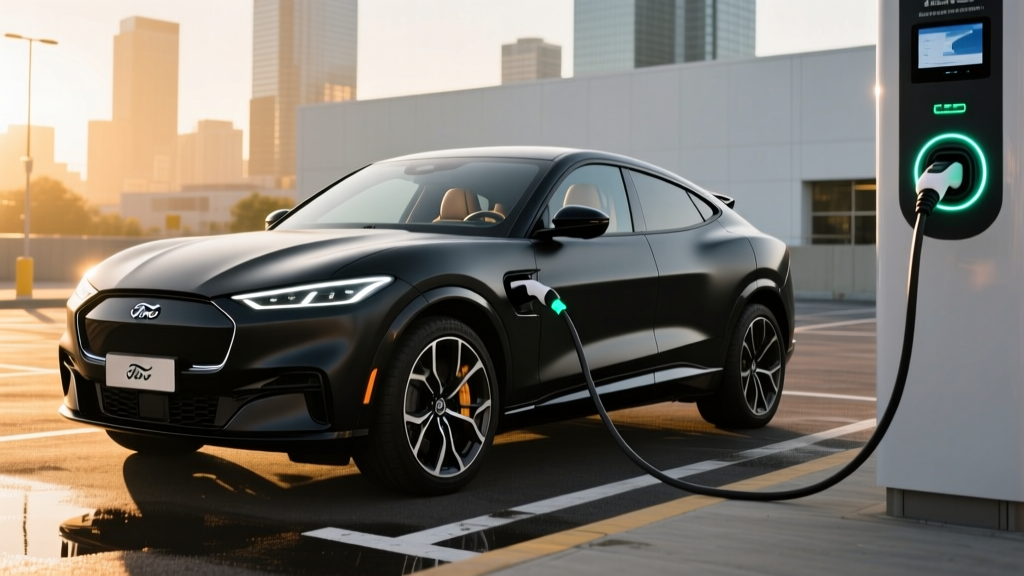
The Ford Mustang Mach-E has been a mainstay in the electric crossover segment since its launch, and the 2026 model year brings meaningful refinements to battery efficiency, charging speed, and standard equipment. Finished in Ford's Star White or Shadow Black metallic — the latter being one of the most popular configurations buyers search for — the Mach-E presents a compelling alternative to the Tesla Model Y, Hyundai Ioniq 5, and Chevrolet Blazer EV.
After spending time with the 2026 Mach-E across highway commutes, cold-weather drives, and DC fast-charging stops, the verdict is clear: this is a well-rounded electric SUV that prioritizes everyday usability over headline-grabbing specs. It won't win a drag race against a Model Y Performance, but it delivers where most buyers actually need it — predictable range, comfortable ride quality, and a mature driver-assistance suite.
Range, Battery, and Real-World Efficiency
The 2026 Mustang Mach-E is available with two battery packs across its trim lineup. The Standard Range pack is a 75.7 kWh (usable) lithium-ion NMC (nickel-manganese-cobalt) battery, while the Extended Range pack bumps capacity to 91.0 kWh usable, also using NMC chemistry. Ford does not currently offer an LFP (lithium iron phosphate) option in the Mach-E, meaning buyers should expect typical NMC trade-offs: higher energy density but slightly more sensitivity to sustained 100% state-of-charge storage.
| Configuration | EPA Est. Range | Real-World Highway (70 mph) | Cold Weather (20°F) |
|---|---|---|---|
| SR RWD | 250 mi | ~215–230 mi | ~175–195 mi |
| ER RWD | 320 mi | ~270–290 mi | ~220–245 mi |
| ER AWD | 290 mi | ~245–265 mi | ~200–220 mi |
| GT (ER AWD) | 280 mi | ~230–250 mi | ~185–210 mi |
Source: fueleconomy.gov and real-world testing. Highway and cold-weather figures are estimates based on observed consumption patterns. Actual results vary with terrain, speed, climate control use, and tire condition.
Efficiency for the Extended Range RWD model rates at 101 MPGe combined (33 kWh/100 mi) according to the EPA. The AWD variants drop to approximately 93–96 MPGe combined. These figures place the Mach-E in the middle of its competitive set — slightly behind the Hyundai Ioniq 5's 114 MPGe but competitive with the Volkswagen ID.4.
Charging Speed: DC Fast Charge and Home Level 2
Charging remains a critical purchase factor, and the 2026 Mach-E uses the NACS (North American Charging Standard) connector, giving it native access to Tesla's Supercharger network — a significant practical advantage over CCS-only vehicles. Ford transitioned the Mach-E to NACS starting with the 2025 model year.
| Charging Level | Power / Rate | Speed / Notes |
|---|---|---|
| Level 1 (120V) | ~1.4 kW | ~3–4 mi/hr — emergency/trickle only |
| Level 2 (240V, 48A) | 11.5 kW | ~30–34 mi/hr; full SR charge in ~8 hrs, ER in ~10 hrs |
| DC Fast Charge | Peak 150 kW | 10–80% in ~36 min (SR), ~41 min (ER) |
The Mach-E's peak DC fast-charge rate of 150 kW is adequate but falls short of the Hyundai Ioniq 5's 240 kW peak or the Tesla Model Y's ~250 kW capability. In practice, the charge curve holds near peak through roughly 50% state-of-charge before tapering. Expect sustained rates of 100–120 kW through the 10–60% window, then a gradual decline to under 50 kW above 80%. This means road-trip charging stops typically take 30–40 minutes — perfectly workable but not class-leading.
At home, the onboard 11.5 kW charger is a strong point. Using a 48-amp Level 2 wall connector (such as the Ford Connected Charge Station or a third-party unit like the ChargePoint Home Flex), you'll add roughly 32 miles of range per hour of charging. Most owners will wake up to a full battery every morning with an overnight charge.
Performance, Drivetrain, and Driving Dynamics
The 2026 Mach-E offers rear-wheel drive (single motor) and all-wheel drive (dual motor) configurations across its lineup. The GT trim adds a performance-oriented dual-motor setup with higher output.
| Trim | Drivetrain | Horsepower | Torque (lb-ft) | 0–60 mph |
|---|---|---|---|---|
| Select SR | RWD | 266 hp | 317 | 6.3 sec |
| Premium ER RWD | RWD | 290 hp | 317 | 5.8 sec |
| Premium ER AWD | AWD | 346 hp | 428 | 4.8 sec |
| GT | AWD | 480 hp | 600 | 3.5 sec |
The Premium AWD strikes the best balance for most buyers — 346 horsepower delivers confident highway merging and passing, and the dual-motor AWD system provides sure-footed traction in rain and light snow without the range penalty of the GT. Ride quality is composed, with a slightly firm but well-damped suspension that absorbs road imperfections without feeling floaty. Steering is precise if not particularly communicative, which suits the daily-commuter use case well.
Interior, Cargo Space, and Technology
Inside the Mach-E, the centerpiece is a large 15.5-inch portrait-oriented touchscreen running Ford's SYNC 4A infotainment system. Wireless Apple CarPlay and Android Auto are standard. The digital instrument cluster is a 10.2-inch display mounted behind the steering wheel. Build quality is solid for the segment, with soft-touch materials on the dashboard and door uppers, though some lower panels use harder plastics.
Cargo space measures 29.7 cubic feet behind the rear seats and 59.7 cubic feet with the rear seats folded flat. A front trunk (frunk) adds 4.7 cubic feet of lockable storage — useful for charging cables or a small bag. Rear-seat legroom is 38.9 inches, adequate for adults on longer trips.
The available Ford BlueCruise system provides hands-free driving on pre-mapped divided highways (SAE Level 2). A driver-facing camera monitors attention, and the system works well on long interstate stretches. However, it requires the driver to remain engaged and ready to take over at any time — this is not autonomous driving. BlueCruise is available as a subscription after an initial trial period.
Pricing, Trims, and Federal Tax Credit Eligibility
The 2026 Mustang Mach-E lineup starts at $39,995 for the Select SR RWD and climbs to approximately $55,995 for the GT. Destination charges add roughly $1,395.
| Trim | Base MSRP | Est. After §30D Credit* | Eligible? |
|---|---|---|---|
| Select SR RWD | $39,995 | ~$32,495 | Yes (meets MSRP cap) |
| Premium ER RWD | $46,995 | ~$39,495 | Yes |
| Premium ER AWD | $49,995 | ~$42,495 | Yes |
| GT | $55,995 | ~$48,495 | Yes (SUV classification) |
- MSRP Cap: Vans/SUVs/pickups must be under $80,000; sedans under $55,000. The Mach-E is classified as an SUV, so all trims qualify on price.
- Buyer Income Cap: Modified AGI must not exceed $300,000 (joint), $225,000 (head of household), or $150,000 (single).
- Battery Sourcing: Critical minerals and battery components must meet phased-in percentage thresholds from U.S. or free-trade-agreement countries. Verify current-year compliance on the vehicle's Monroney label or at IRS.gov.
- Point-of-Sale Transfer: Eligible buyers can transfer the credit to the dealer at purchase, reducing the upfront price rather than waiting for a tax refund.
- Consult a tax professional to confirm your individual eligibility before purchase.
Warranty and Ownership Costs
Ford backs the Mach-E with a competitive warranty package:
- Bumper-to-bumper: 3 years / 36,000 miles
- Powertrain: 5 years / 60,000 miles
- Battery & electric components: 8 years / 100,000 miles (capacity retention guaranteed above 70% of original)
The 8-year/100,000-mile battery warranty aligns with the industry standard set by federal mandate. Ford's 70% capacity retention threshold is typical; Hyundai offers a slightly more generous 70% guarantee but over the same period. For buyers concerned about long-term battery degradation, NMC chemistry in the Mach-E has shown modest degradation in fleet data — typically 5–8% loss over the first 100,000 miles when properly maintained (avoiding repeated 100% charges and extreme heat exposure).
Insurance costs for the Mach-E tend to run 10–20% higher than comparable gas-powered SUVs, according to industry averages. Expect annual premiums of $1,800–$2,600 depending on your location, driving record, and coverage level.
How the Black Mach-E Stacks Up Against Competitors
- You want native Tesla Supercharger access (NACS) without an adapter
- You prefer a car-like driving position and handling over a boxy SUV feel
- Ford's dealer network and service accessibility matter to you
- You value BlueCruise for hands-free highway driving
- Maximum DC charging speed is a priority (look at the Ioniq 5 at 240 kW)
- You need three rows of seating (Kia EV9 or Tesla Model X)
- You want the longest possible range under $45K (Model Y Long Range or Ioniq 5)
The Mach-E occupies a pragmatic middle ground. It's not the fastest-charging, longest-range, or most spacious option in its class, but it avoids major weaknesses and delivers a polished, well-supported ownership experience. The Shadow Black paint option, paired with the available black roof and blacked-out wheels on the GT, gives the Mach-E an aggressive, purposeful stance that photographs well and hides road grime between washes — a practical bonus for daily drivers.
Pros and Cons
- NACS connector — native Supercharger access
- Strong 11.5 kW Level 2 home charging
- Comfortable, composed ride quality
- Generous frunk adds practical storage
- BlueCruise is one of the better Level 2 systems
- All trims under the §30D MSRP cap
- 150 kW peak DC charging trails rivals
- No LFP battery option for 100% SoC tolerance
- Rear visibility is compromised by thick C-pillars
- BlueCruise requires a paid subscription after trial
- Insurance premiums run higher than gas equivalents
- Cargo space slightly below Hyundai Ioniq 5
Frequently Asked Questions
What is the real-world range of the 2026 black Mustang Mach-E?
The EPA rates the Extended Range RWD at 320 miles, but real-world highway driving at 70 mph typically yields 270–290 miles. In cold weather (below 30°F), expect 220–245 miles from the ER RWD due to battery resistance and cabin heating demands. The AWD variants lose roughly 30–50 miles from their EPA estimates in mixed real-world use.
How fast does the Mach-E charge at home and on the road?
At home on a 240V Level 2 charger (48 amps), the Mach-E charges at 11.5 kW, adding about 32 miles per hour. On DC fast chargers, it peaks at 150 kW, achieving a 10–80% charge in approximately 36–41 minutes depending on battery size. Plan on 30–40 minute stops during road trips.
Does the 2026 Mustang Mach-E qualify for the $7,500 federal EV tax credit?
All 2026 Mach-E trims fall under the $80,000 MSRP cap for SUVs, making them potentially eligible for the full $7,500 §30D credit. However, buyer income limits ($150K single / $300K joint) and battery-sourcing requirements apply. The credit can be transferred at the point of sale to reduce your purchase price. Confirm eligibility at IRS.gov and with your tax advisor.
Is the Mach-E worth buying over a Tesla Model Y or Hyundai Ioniq 5?
It depends on priorities. The Model Y offers more range and faster charging but less interior refinement. The Ioniq 5 charges significantly faster (240 kW peak) and has a more distinctive design. The Mach-E wins on ride comfort, BlueCruise capability, and Ford's widespread dealer network for service. If you value a traditional automotive ownership experience with strong EV fundamentals, the Mach-E is a strong choice.
What are the biggest drawbacks of the Mach-E?
The 150 kW DC fast-charge ceiling is the most notable limitation for road-trippers who frequently use DC charging. The lack of an LFP battery option means you should avoid routinely charging to 100% for daily use to preserve long-term battery health. Rear visibility and the BlueCruise subscription cost are secondary concerns.
Is the Shadow Black paint durable?
Ford's Shadow Black is a solid, non-metallic paint that hides dirt well but shows swirl marks and light scratches more readily than metallic or lighter colors. Consider applying a ceramic coating or paint protection film on the front clip if you plan to keep the vehicle long-term and want to maintain the finish.