Quick Verdict: The Efficiency King of Luxury EVs
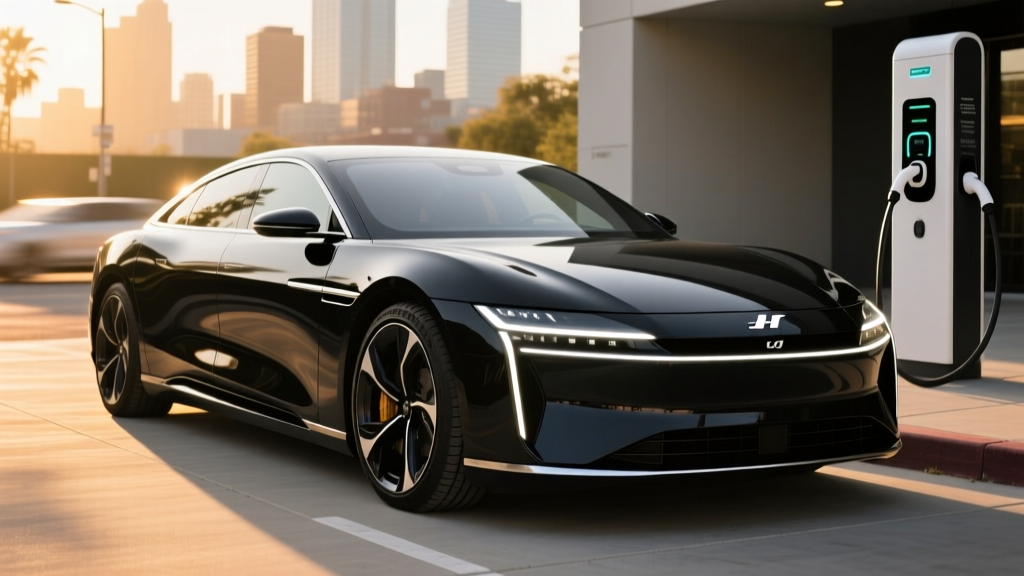
The 2022 Lucid Air remains one of the most technically impressive electric sedans ever built. Its 112 kWh battery pack delivers an EPA-estimated 520 miles in the Air Dream Edition — a figure no competitor has matched as of 2026. But beyond the headline range, the Air's 900-volt architecture, 300 kW peak DC fast-charging capability, and class-leading efficiency (up to 131 MPGe) make it a serious ownership proposition for luxury EV buyers who prioritize real-world usability over badge prestige.
This review covers the 2022 model year lineup — Pure, Touring, Grand Touring, and the limited-run Dream Edition — with exact specs, real-world range reconciliation, charging data, and current tax credit eligibility under IRS §30D rules.
Range & Efficiency: EPA Numbers vs. Real-World Reality
Lucid's engineering team obsessed over aerodynamics (a 0.20 Cd drag coefficient) and powertrain efficiency. The result is an EV that extracts more miles per kilowatt-hour than virtually anything else on the road. Here are the EPA figures by trim:
| Trim | Battery (usable kWh) | EPA Range | Real-World Highway (~70 mph) | Cold Weather Est. (20°F) |
|---|---|---|---|---|
| Dream Edition Range (19" wheels) | 112 kWh | 520 mi | ~420–450 mi | ~360–390 mi |
| Grand Touring (19") | 112 kWh | 516 mi | ~415–445 mi | ~355–385 mi |
| Touring (19") | 92 kWh | 406 mi | ~330–355 mi | ~280–310 mi |
| Pure (19") | 88 kWh | 406 mi | ~325–350 mi | ~275–305 mi |
Note: Real-world highway range assumes sustained 70 mph driving at moderate temperatures. Cold-weather estimates reflect typical lithium-ion capacity loss and increased cabin heating load. Larger 21" wheels reduce range by roughly 8–12%.
The Grand Touring's EPA-rated 131 MPGe combined (25 kWh/100 mi) is exceptional for a 5,200-pound luxury sedan. For context, the Tesla Model S Long Range achieves 120 MPGe combined. This efficiency advantage means cheaper charging costs per mile and less time spent at DC fast chargers on road trips.
Battery Chemistry & Architecture
The 2022 Air uses NMC (nickel-manganese-cobalt) lithium-ion cells supplied by Samsung SDI and LG Energy Solution, packaged in a structural "wunderbox" format that sits low in the chassis. The Grand Touring and Dream Edition carry a gross capacity of approximately 118 kWh with ~112 kWh usable; the Touring and Pure use a smaller pack with ~92 kWh and ~88 kWh usable, respectively.
NMC chemistry offers higher energy density than LFP (lithium iron phosphate), which is why Lucid achieved 520 miles without an impossibly heavy pack. The trade-off: NMC cells degrade slightly faster than LFP over thousands of cycles and prefer not to sit at 100% state of charge for extended periods. Lucid's battery management system includes a buffer to mitigate this, and daily charging to 80–90% is recommended for longevity.
Charging Speed: 900V Architecture Pays Off
The Air's 900-volt electrical architecture is one of the highest in production, enabling DC fast-charge rates that most 400V competitors can't touch.
| Charging Method | Max Power | Speed / Time | Notes |
|---|---|---|---|
| DC Fast Charge (CCS) | 300 kW peak | 10–80% in ~20 min (Grand Touring) | Peak rate sustained to ~55% SoC, then tapers; expect ~25 min in practice on a 350 kW station |
| DC Fast Charge (Tesla Supercharger via adapter) | ~150 kW | 10–80% in ~35–40 min | Lucid offers a NACS adapter for Supercharger access; limited by adapter throughput |
| Level 2 Home (240V, 48A) | 11.5 kW | ~37 mi/hr added (Grand Touring) | Full charge in ~10–11 hours for 112 kWh pack |
| Level 2 Home (240V, 80A) | 19.2 kW | ~62 mi/hr added (Grand Touring) | Requires 100A circuit; Lucid's Connected Home charging station supports this rate |
| Level 1 (120V, 12A) | 1.4 kW | ~4.5 mi/hr | Emergency/trickle only; full charge takes days |
Charging curve reality check: The 300 kW peak is achievable on 350 kW chargers (like Electrify America's latest stalls) but only when the battery is preconditioned and starting from a low state of charge (~10%). The rate holds strong through about 50–55% SoC, then tapers progressively. From 80–100%, expect dramatically slower speeds — this is standard for NMC packs and protects cell health. Plan road-trip stops around 10–80% top-ups for the fastest turnaround.
Performance: Dual-Motor, Sub-3-Second Sprints
| Trim | Drivetrain | Horsepower | 0–60 mph | Top Speed |
|---|---|---|---|---|
| Dream Edition Performance | AWD Dual-Motor | 1,111 hp | 2.5 sec | 168 mph |
| Grand Touring | AWD Dual-Motor | 1,050 hp | 3.0 sec | 168 mph |
| Touring | AWD Dual-Motor | 620 hp | 3.4 sec | 145 mph |
| Pure | RWD Single-Motor | 480 hp | 3.5 sec | 145 mph |
Every Air trim delivers brisk acceleration, but the Grand Touring's 1,050 hp and 3.0-second sprint put it in hypercar territory while maintaining sedan practicality. The dual-motor AWD system provides excellent traction in rain and light snow, though the Air's 5,200+ lb curb weight is noticeable during aggressive direction changes. Ride quality is composed and quiet, with an adaptive air suspension that absorbs road imperfections effectively.
Interior, Cargo & Technology
The Air's cabin centers on a 34-inch curved glass cockpit display (dubbed the "Canopy") that stretches across the driver's instrument cluster and infotainment area. A lower 17-inch retractable center display handles climate and media controls. The software, Lucid's proprietary UX system, is visually polished but has drawn criticism for requiring too many taps for basic functions like adjusting mirrors or changing drive modes.
Dimensions:
- Front legroom: 43.4 inches
- Rear legroom: 37.6 inches (surprisingly generous for a sedan)
- Trunk (rear): 22.1 cu ft
- Frunk (front): 7.1 cu ft
- Total cargo: 29.2 cu ft
The rear seat comfortably fits two adults on long trips, and the trunk volume beats the Tesla Model S (28 cu ft total) and the Mercedes EQS (22 cu ft trunk + 14 cu ft with seats folded). However, the Air lacks a hatchback liftgate — it's a traditional sedan trunk opening, which limits loading bulky items.
Driver Assistance: The 2022 Air ships with DreamDrive Pro, a Level 2 ADAS suite featuring adaptive cruise control, lane-centering, automatic emergency braking, and blind-spot monitoring. Per SAE definitions, this is Level 2 automation — the driver must remain fully engaged with hands on the wheel and eyes on the road. It is not self-driving. Lucid has been developing a more advanced DreamDrive system with lidar, but full hands-free highway capability was not available on 2022 models at launch.
Pricing, Trims & Federal Tax Credit Eligibility
| Trim | 2022 Base MSRP | As-Tested (typical options) | §30D Credit Eligible? |
|---|---|---|---|
| Pure | $77,400 | $82,000–$87,000 | Eligibility varies — see below |
| Touring | $95,000 | $100,000–$108,000 | Eligibility varies — see below |
| Grand Touring | $139,000 | $145,000–$160,000 | Likely ineligible (sedan MSRP cap) |
| Dream Edition | $169,000 | $169,000+ | Ineligible (exceeds MSRP cap) |
- MSRP cap for sedans: $55,000 — the Air Pure at $77,400 base exceeds this cap, making most trims ineligible for the new-vehicle credit.
- Buyer income caps: AGI ≤ $150,000 (single), $225,000 (head of household), $300,000 (joint).
- Battery sourcing requirements: Critical minerals and battery components must meet phased-in domestic/FTA-country sourcing thresholds that tighten annually.
- Point-of-sale transfer: Eligible buyers can transfer the credit to the dealer for an upfront price reduction.
The 2022 Lucid Air does not qualify for the new-vehicle §30D credit due to the $55,000 sedan MSRP cap. However, if purchasing a used 2022 Air from a dealer in 2026, the §25E used EV credit (up to $4,000, 30% of sale price, with income caps of $75K/$112.5K/$150K) may apply if the sale price is $25,000 or less — unlikely given current resale values. Always verify eligibility at irs.gov and consult a tax professional.
Warranty & Ownership Costs
- Basic vehicle warranty: 4 years / 50,000 miles
- Battery & powertrain warranty: 8 years / 100,000 miles (covers battery capacity retention above 70% of original)
- Roadside assistance: 4 years / 50,000 miles
The 8-year/100,000-mile battery warranty is industry-standard and matches Tesla, BMW, and Mercedes. Lucid guarantees the pack will retain at least 70% of its original capacity during the warranty period. Independent long-term data on Lucid-specific degradation is still limited given the brand's youth, but NMC cells with active thermal management typically lose 10–15% capacity over 150,000 miles in normal use.
Estimated 5-year ownership cost: With no federal credit, a Grand Touring buyer paying $145,000 can expect roughly $6,500 in electricity costs (at $0.14/kWh national average over 75,000 miles), $8,000–$12,000 in insurance (luxury EV premiums run 20–40% higher than equivalent ICE sedans), and minimal maintenance (no oil changes, brake pad life extended by regen). Total 5-year operating cost: approximately $18,000–$22,000 excluding depreciation.
Pros & Cons
- Class-leading EPA range (520 mi Dream Edition, 516 mi Grand Touring)
- Best-in-class efficiency: 131 MPGe / 25 kWh per 100 mi
- 300 kW peak DC fast charging — 10–80% in ~20 min
- Spacious rear seat (37.6" legroom) and 29.2 cu ft total cargo
- Supernova dual-motor powertrain with 1,050+ hp in top trims
- 900V architecture future-proofs charging compatibility
- Quiet, composed ride with adaptive air suspension
- High starting price ($77,400 Pure; $139,000 Grand Touring) — no federal new-EV credit
- Infotainment UX requires too many screen taps for basic controls
- Traditional sedan trunk limits bulky cargo loading (no hatchback)
- Limited service center network compared to Tesla or legacy luxury brands
- DreamDrive ADAS is basic Level 2 — no hands-free highway driving
- Brand is young; long-term reliability and resale value data remain limited
- 21" wheel option significantly reduces range (8–12% penalty)
Who Should Buy the 2022 Lucid Air?
- Choose the Air if: You want maximum range per charge, value efficiency over badge cachet, regularly take 300+ mile road trips, and can charge at home with a Level 2 setup. The Grand Touring is ideal for tech-forward buyers who want hypercar acceleration with sedan comfort.
- Consider a competitor if: You need hands-free highway driving (Tesla Model S with FSD or BMW i7 with Highway Assistant), prefer a hatchback or SUV for cargo flexibility (Porsche Taycan Cross Turismo, Tesla Model X), or need extensive dealer/service infrastructure (Mercedes EQS, BMW i7).
- Skip the Air if: Budget is under $80,000 and you need a federal tax credit to make the math work — the sedan MSRP cap eliminates the Air from §30D eligibility.
Frequently Asked Questions
What is the real-world range of the 2022 Lucid Air?
The EPA rates the Grand Touring at 516 miles and the Dream Edition at 520 miles. In real-world highway driving at 70 mph, expect approximately 415–450 miles depending on temperature, terrain, and wheel size. In cold weather (below 30°F), range drops to roughly 355–390 miles due to battery chemistry limitations and cabin heating demands.
How fast does the 2022 Lucid Air charge at home and on the road?
On a 350 kW DC fast charger, the Air peaks at 300 kW and can go from 10–80% in approximately 20–25 minutes with battery preconditioning. At home on a 48A Level 2 charger (11.5 kW), the Grand Touring adds about 37 miles per hour, requiring roughly 10–11 hours for a full charge. An 80A home setup (19.2 kW) cuts that to about 6 hours.
Does the 2022 Lucid Air qualify for the federal EV tax credit?
No. Under IRS §30D rules, the new-vehicle credit has a $55,000 MSRP cap for sedans. Since even the base Air Pure starts at $77,400, no 2022 Air trim qualifies for the up-to-$7,500 new clean vehicle credit. The used EV credit (§25E) could theoretically apply to a pre-owned Air priced at or below $25,000, but current resale values make this unlikely. Always verify at irs.gov.
Is the 2022 Lucid Air worth buying vs. the Tesla Model S or Mercedes EQS?
The Air outperforms both on range (520 mi vs. Model S's 405 mi vs. EQS's 350 mi) and efficiency. The Model S wins on Supercharger network access, Autopilot/FSD capability, and hatchback practicality. The EQS offers a more traditional luxury interior, hands-free driving features, and broader dealer support. If range and efficiency are your top priorities, the Air is the strongest choice.
What are the biggest drawbacks of owning a Lucid Air?
The main concerns are Lucid's limited service center footprint (fewer than 30 locations nationwide as of early 2026), an infotainment system that prioritizes aesthetics over usability, and the lack of a hatchback trunk opening. Long-term reliability data is still accumulating given Lucid's brief production history.
What battery warranty does the 2022 Lucid Air carry?
Lucid provides an 8-year / 100,000-mile battery and powertrain warranty that guarantees the high-voltage pack will retain at least 70% of its original capacity. The basic vehicle warranty covers 4 years / 50,000 miles.