Quick Verdict: The Black Model X in 2026
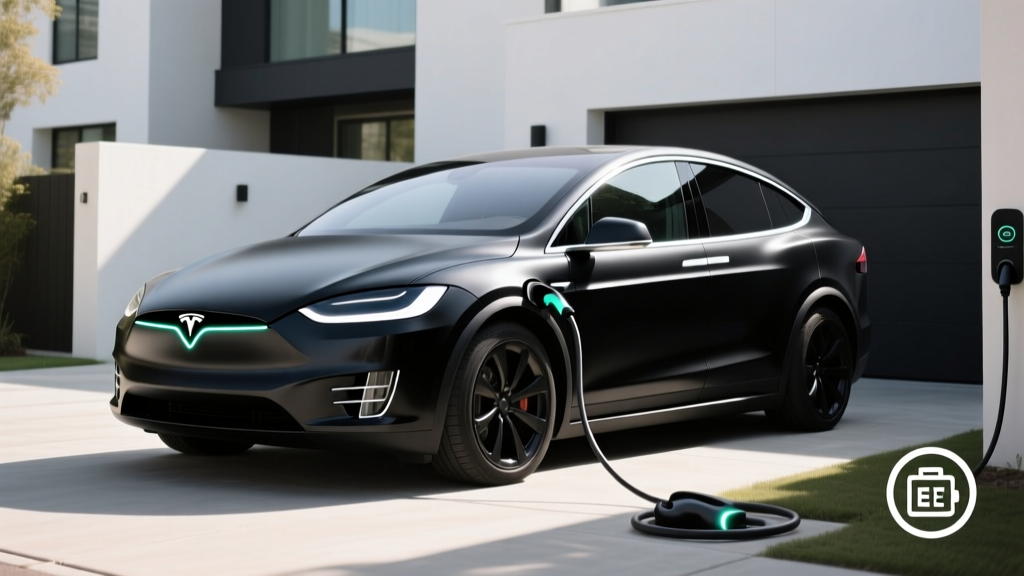
The Tesla Model X remains the benchmark three-row electric SUV for buyers who prioritize performance and Supercharger network access above all else. Dressed in Solid Black — Tesla's no-cost standard paint — it carries a stealthy, understated presence that contrasts with the attention-grabbing Plaid variant's performance credentials. For 2026, the Model X continues with its 100 kWh (usable ~95 kWh) NMC battery pack, dual- and tri-motor powertrains, and a starting MSRP that positions it firmly in luxury EV territory. But does the real-world range, charging speed, and ownership experience justify the premium over rivals like the Rivian R1S and BMW iX?
EPA Estimated: 335 miles (Long Range AWD) / 326 miles (Plaid)
Real-World Expectation: 270–295 miles highway at 70 mph; 235–260 miles in freezing temperatures (below 32°F). City driving with regenerative braking can approach or slightly exceed EPA figures.
2026 Tesla Model X Specifications at a Glance
| Spec | Long Range AWD | Plaid (Tri-Motor) |
|---|---|---|
| EPA Range | 335 miles | 326 miles |
| Battery (usable) | ~95 kWh, NMC | ~95 kWh, NMC |
| Horsepower | 670 hp | 1,020 hp |
| 0–60 mph | 3.8 seconds | 2.5 seconds |
| Drivetrain | Dual-Motor AWD | Tri-Motor AWD |
| MPGe (combined) | 102 MPGe | 98 MPGe |
| Efficiency | 33 kWh/100 mi | 34 kWh/100 mi |
| Peak DC Fast Charge | 250 kW | 250 kW |
| 10–80% DCFC Time | ~30 minutes | ~30 minutes |
| Level 2 Home Charging | 11.5 kW (~34 mi/hr) | 11.5 kW (~34 mi/hr) |
| Cargo (behind 3rd row) | 42.1 cu ft | 42.1 cu ft |
| Cargo (max, seats folded) | 92.3 cu ft | 92.3 cu ft |
| Towing Capacity | 5,000 lbs | 5,000 lbs |
| Battery Warranty | 8 yr / 150,000 mi | 8 yr / 150,000 mi |
| Base MSRP | $79,990 | $94,990 |
Source: EPA / fueleconomy.gov and Tesla's official specifications. Prices exclude destination fee ($1,390) and reflect 2026 model year.
Battery Chemistry, Capacity, and Long-Term Degradation
The 2026 Model X uses a nickel-manganese-cobalt (NMC) lithium-ion battery pack with approximately 95 kWh of usable capacity (from a ~100 kWh gross pack). Tesla employs a top-and-bottom buffer strategy — meaning the vehicle software prevents you from accessing the absolute 0% and 100% of the physical cells — which protects long-term health.
NMC chemistry offers higher energy density than lithium iron phosphate (LFP), which is why Tesla reserves LFP for the Standard Range Model 3 and Model Y. The trade-off: NMC packs are slightly more sensitive to sustained high states of charge. Tesla recommends daily charging to 80–90% and only charging to 100% before long trips.
Based on aggregated fleet data from Tesla owners, expect approximately 10–12% degradation over the first 100,000 miles, with the curve flattening significantly afterward. The battery warranty guarantees at least 70% capacity retention over 8 years or 150,000 miles — a strong policy, though some competitors like Hyundai offer 10-year coverage.
Charging Performance: DC Fast Charging and Home Level 2
Charging speed is where the Model X benefits enormously from Tesla's Supercharger network — now expanded to include NACS-equipped vehicles from Ford, Rivian, and others. The Model X natively uses the NACS connector.
| Charging Level | Power / Rate | Miles Added per Hour |
|---|---|---|
| Level 1 (120V outlet) | ~1.4 kW | ~3–4 mi/hr |
| Level 2 (240V, Wall Connector) | 11.5 kW (48A) | ~34 mi/hr |
| Level 2 (240V, 32A mobile) | 7.7 kW | ~22 mi/hr |
| DC Fast Charge (V3 Supercharger) | 250 kW peak | ~175 mi in 15 min |
| DC Fast Charge (V4 Supercharger) | 250 kW peak | ~175 mi in 15 min |
Real-world charging curve note: The 250 kW peak rate is achieved only between roughly 10–30% state of charge with a preconditioned battery. Above 50%, the rate tapers progressively — by 80%, you're seeing roughly 80–100 kW. This is why the 10–80% time is approximately 30 minutes, not the ~20 minutes some marketing materials imply. On a road trip, plan for 20–25 minute stops at Superchargers to go from 10% to 70%, which is the practical sweet spot.
At home, the Tesla Wall Connector on a 60-amp circuit delivers the full 11.5 kW, replenishing a depleted battery overnight in about 8.5 hours. Most owners who plug in nightly never need DC fast charging for daily driving.
Performance and Driving Dynamics
The Long Range AWD Model X delivers 670 horsepower and a 3.8-second 0–60 mph time — figures that would have been supercar territory a decade ago. The Plaid variant's tri-motor setup produces 1,020 hp and a 2.5-second 0–60 time, making it one of the quickest production SUVs ever built.
Both variants feature dual-motor or tri-motor all-wheel drive with torque vectoring. The air suspension provides adjustable ride height (useful for clearing speed bumps or improving highway aerodynamics) and a compliant ride that absorbs most road imperfections. At 5,185 lbs (Long Range), the Model X carries its weight well, though you'll feel it in tight corners compared to lighter, lower SUVs like the Porsche Cayenne EV or BMW iX.
The Model X's defining exterior feature remains the Falcon Wing rear doors — dramatic, practical for loading child seats in tight spaces, and a conversation starter. However, they add mechanical complexity and can be slower to open/close than conventional doors.
Pricing, Trims, and Federal Tax Credit Eligibility
| Trim | Base MSRP | Destination | As-Tested (Black) | §30D Credit Eligible? |
|---|---|---|---|---|
| Long Range AWD | $79,990 | $1,390 | $81,380 | No (exceeds $80,000 SUV cap) |
| Plaid | $94,990 | $1,390 | $96,380 | No (exceeds $80,000 SUV cap) |
Tax credit reality check: Under IRS §30D rules, the federal EV tax credit caps at $7,500 for qualifying vehicles. However, SUVs must have an MSRP at or below $80,000 to qualify. The Model X Long Range starts at $79,990 — but with destination charges and any options, it exceeds the cap. The Plaid is well above it. Neither Model X variant qualifies for the federal credit in any realistic configuration.
Additional §30D requirements — even if the price cap were met — include buyer income limits ($300,000 joint / $150,000 single modified AGI), critical mineral and battery component sourcing thresholds, and the vehicle must be assembled in North America (the Model X is built in Fremont, CA, which satisfies this). Point-of-sale transfer is available for qualifying vehicles, but again, the MSRP cap is the disqualifying factor here.
Solid Black is a no-cost standard paint option for the Model X, so there's no premium for the black exterior — unlike Deep Blue Metallic ($2,000) or Ultra Red ($2,500). The as-tested price above reflects the base Long Range in Solid Black with no additional options beyond destination.
Interior Space, Cargo, and Technology
The Model X seats up to seven in a 2-3-2 configuration (or six with optional second-row captain's chairs). Third-row legroom is 32.7 inches — adequate for children and shorter adults on trips under an hour, but tight compared to the Rivian R1S or the three-row Kia EV9.
Cargo volume is generous: 42.1 cubic feet behind the third row and 92.3 cubic feet with both rear rows folded. The front trunk (frunk) adds 6.5 cubic feet of sealed storage — useful for charging cables or groceries.
Standout tech features:
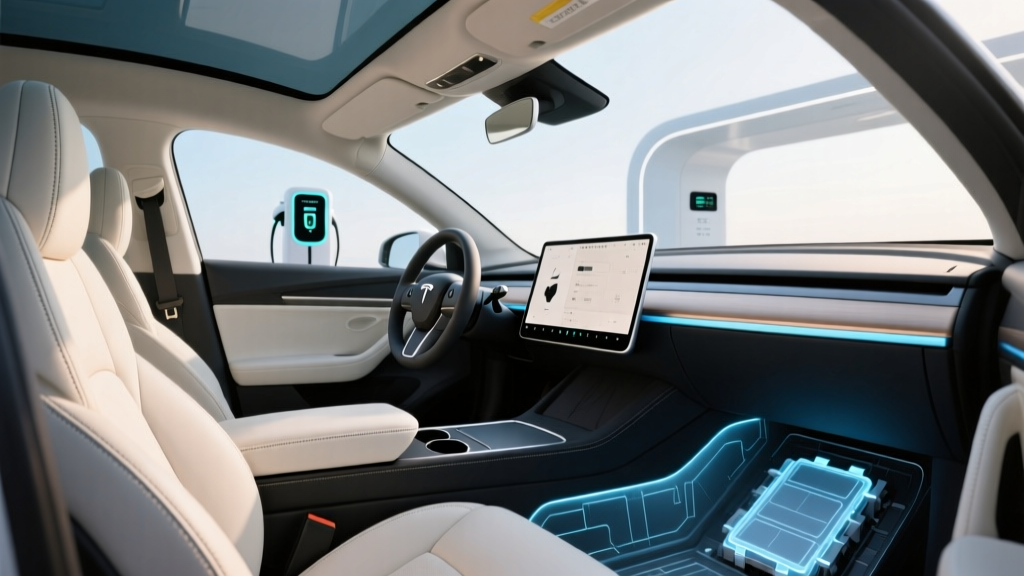
- 17-inch center touchscreen with 22-speaker audio system
- Rear-seat 8-inch touchscreen for climate and entertainment
- Tesla Autopilot standard (SAE Level 2 driver assistance — requires active driver supervision at all times)
- Full Self-Driving (Supervised) available as a $8,000 add-on or $99/month subscription — still Level 2, not autonomous
- Over-the-air updates that add features post-purchase
- HEPA air filtration with Bioweapon Defense Mode
- Sentry Mode (parked-camera security recording)
Tesla Autopilot and FSD (Supervised) are SAE Level 2 driver-assistance systems. You must keep your hands on the wheel and eyes on the road at all times. The vehicle does not handle all driving scenarios independently. Only Level 4 robotaxi services like Waymo operate without a human driver — and those are geofenced to specific cities.
Pros, Cons, and Who Should Buy the Black Model X
- Best-in-class Supercharger network access (20,000+ stations in North America)
- 335-mile EPA range — among the longest of any three-row EV SUV
- Class-leading acceleration (3.8s Long Range, 2.5s Plaid)
- Solid Black is a no-cost paint option with strong resale appeal
- Generous OTA update cadence adds features over time
- 5,000-lb towing capacity for boat/trailer duty
- Does not qualify for the $7,500 federal tax credit (MSRP cap)
- Third row is cramped for adults on longer trips
- Falcon Wing doors add complexity and slower open/close cycles
- Interior materials don't match the price point of BMW iX or Mercedes EQS SUV
- 250 kW peak DCFC is outpaced by Hyundai/Kia's 350 kW E-GMP architecture
- Insurance costs run 15–25% higher than comparable ICE luxury SUVs
Who the Black Model X Suits Best
- Families needing three rows + Supercharger road-trip confidence: No other three-row EV SUV matches the Supercharger network's reliability and coverage for cross-country travel.
- Performance-oriented buyers: The Plaid variant's 2.5-second 0–60 time is unmatched in the SUV segment.
- Tech-forward owners: If you value OTA updates, a minimalist interface, and Tesla's software ecosystem, the Model X delivers.
- Towing households: 5,000-lb capacity handles small boat trailers and utility trailers.
Who Should Look Elsewhere
- Budget-conscious buyers: The Rivian R1S Dual-Motor starts around $75,000 and qualifies for the tax credit in certain configurations.
- Adult-heavy three-row use: The Kia EV9 offers significantly more third-row space at a lower price.
- Interior luxury seekers: The BMW iX xDrive50 delivers a more premium cabin at a similar price point (though it only seats five).
Competitive Comparison: Model X vs. Rivian R1S vs. BMW iX
| Attribute | 2026 Tesla Model X LR | 2026 Rivian R1S Dual-Motor | 2026 BMW iX xDrive50 |
|---|---|---|---|
| EPA Range | 335 mi | ~340 mi (Max Pack) | 324 mi |
| Rows / Seats | 3 / up to 7 | 3 / up to 7 | 2 / 5 |
| 0–60 mph | 3.8 sec | ~4.5 sec | 4.4 sec |
| Peak DCFC | 250 kW | 200 kW | 200 kW |
| Starting MSRP | $79,990 | ~$75,900 | ~$87,250 |
| §30D Credit | No (MSRP cap) | Yes (qualifying configs) | No (MSRP cap) |
| Charging Network | Supercharger (NACS) | Supercharger (NACS adapter) | CCS (EA, etc.) |
Ownership Costs: 5-Year Estimate
| Category | Estimated 5-Year Cost | Notes |
|---|---|---|
| Purchase (Long Range, after dest.) | $81,380 | No federal credit applied |
| Home charging (est. 12,000 mi/yr) | ~$3,600 | At $0.15/kWh avg; varies by utility |
| Insurance | ~$16,000–$20,000 | Higher than ICE equivalents |
| Maintenance | ~$1,500–$2,500 | No oil changes; tires, cabin filter, wipers |
| Estimated depreciation | ~$30,000–$35,000 | Tesla depreciation has been volatile |
| Est. 5-Year Total | ~$132,000–$142,000 | Before state/local incentives |
State and local incentives vary by jurisdiction. Check your state's energy office and afdc.energy.gov for current programs.
Frequently Asked Questions
What is the real-world range of the 2026 Tesla Model X?
The EPA rates the Long Range AWD at 335 miles. In real-world highway driving at 70 mph, expect 270–295 miles. In freezing temperatures, range can drop to 235–260 miles due to battery resistance and cabin heating demands. Preconditioning the battery while plugged in mitigates some cold-weather loss.
How fast does the Model X charge at home and on DC fast chargers?
At home on a Tesla Wall Connector (240V, 48A), the Model X charges at 11.5 kW, adding roughly 34 miles of range per hour — a full charge takes about 8.5 hours. On a V3 or V4 Supercharger, peak rate is 250 kW, achieving a 10–80% charge in approximately 30 minutes. Note that the charge curve tapers significantly above 50% SoC.
Does the Tesla Model X qualify for the federal EV tax credit?
No. Under current IRS §30D rules, SUVs must have an MSRP at or below $80,000 to qualify. The Model X Long Range starts at $79,990, but destination fees push it over the cap, and the Plaid is well above it. Buyer income limits and battery-sourcing requirements also apply, but the MSRP cap is the primary disqualifier.
Is the Model X worth buying over the Rivian R1S or BMW iX?
Choose the Model X if Supercharger network access, acceleration, and Tesla's software ecosystem are your top priorities. Choose the Rivian R1S if you want three rows, off-road capability, tax-credit eligibility, and a more rugged design. Choose the BMW iX if you want a premium two-row interior and don't need three-row seating. Each excels in different areas.
What are the biggest pros and cons of the black Model X?
Pros: 335-mile EPA range, Supercharger access, class-leading performance, OTA updates, no-cost Solid Black paint. Cons: No federal tax credit, cramped third row for adults, Falcon Wing door complexity, insurance costs above segment average, interior materials lagging German rivals at this price.
How long will the Model X battery last?
Tesla warranties the battery for 8 years or 150,000 miles (whichever comes first) with at least 70% capacity retention. Real-world fleet data suggests 10–12% degradation at 100,000 miles with the curve flattening afterward. Many Tesla batteries exceed 200,000 miles before approaching the 70% threshold. A full pack replacement, if needed out of warranty, currently costs approximately $18,000–$25,000 depending on labor and pack availability.