Quick Verdict: What Is the Bingo EV?
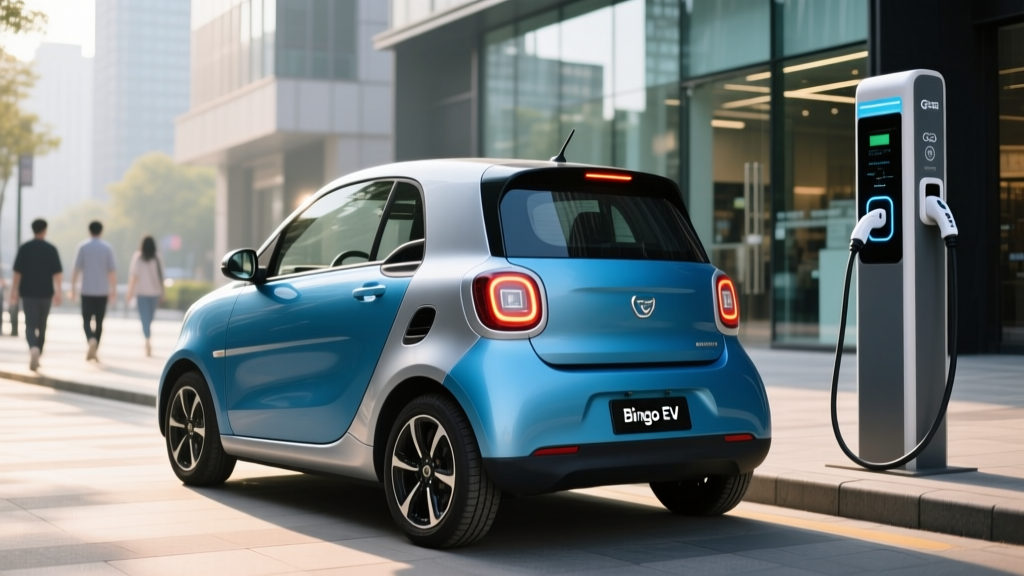
The Bingo EV is a compact electric hatchback produced by Wuling (a joint venture between SAIC, GM, and Liuzhou Wuling) primarily for the Chinese domestic market. Priced from approximately ¥69,800 (~$9,600 USD before import costs), it offers up to 333 km (~207 miles) of CLTC range from a 31.9 kWh LFP battery. However, the Bingo EV is not currently sold or homologated for the US market. Importing one privately is legally complex, voids any warranty, and disqualifies the buyer from the §30D federal tax credit. For US buyers drawn to the Bingo's concept, domestic alternatives like the Chevrolet Equinox EV or Nissan Leaf offer similar practicality with full support.
The Bingo EV has generated significant search interest among US EV shoppers looking for an ultra-affordable electric car. With a starting price in China that undercuts every EV sold stateside by tens of thousands of dollars, it's easy to see the appeal. But affordability means nothing if the vehicle can't legally be registered, insured, or serviced where you live. This guide breaks down every spec, cost, and ownership reality of the Bingo EV — and gives you a concrete framework for what to buy instead if you're stateside.
Bingo EV Specifications at a Glance
| Specification | Bingo EV (333 km Trim) | Bingo EV (203 km Trim) |
|---|---|---|
| Battery Capacity | 31.9 kWh (LFP) | 17.3 kWh (LFP) |
| CLTC Range | 333 km (~207 mi) | 203 km (~126 mi) |
| Estimated EPA-Equivalent Range | ~165–180 mi | ~100–110 mi |
| Motor Output | 50 kW (67 hp) / 150 Nm | 30 kW (40 hp) / 110 Nm |
| 0–50 km/h | ~5.5 seconds | ~7.0 seconds |
| Top Speed | 100 km/h (~62 mph) | 100 km/h (~62 mph) |
| DC Fast Charge (peak) | ~35 kW (30–80% in ~35 min) | ~20 kW (30–80% in ~40 min) |
| AC Level 2 Charge | 6.6 kW (~5.5 hours 0–100%) | 3.3 kW (~5.5 hours 0–100%) |
| Cargo Volume | 790 L (rear seats folded) | 790 L (rear seats folded) |
| Curb Weight | ~1,140 kg (~2,513 lbs) | ~995 kg (~2,194 lbs) |
| China MSRP | ¥88,800 (~$12,200) | ¥69,800 (~$9,600) |
| Battery Warranty (China) | 8 years / 120,000 km | 8 years / 120,000 km |
Key distinction — CLTC vs. EPA range: China's CLTC testing cycle is notably more generous than the US EPA cycle. Real-world US buyers should discount CLTC figures by roughly 15–20%. The 333 km (207 mi) CLTC rating translates to an estimated 165–180 miles EPA-equivalent, and expect further reduction to ~130–145 miles in sustained highway driving or cold weather below 40°F.
Real-World Range and Charging: What to Actually Expect
Range Reality Check
CLTC Sticker: 207 miles (333 km)
Estimated EPA-Equivalent: ~165–180 miles
Highway (70 mph sustained): ~130–145 miles
Cold Weather (below 32°F): ~115–135 miles (LFP chemistry suffers 20–30% loss in freezing temps without a heat pump)
The Bingo EV's 31.9 kWh LFP (lithium iron phosphate) battery is its strongest asset for longevity and weakest for cold-weather performance. LFP cells offer excellent cycle life — typically 3,000+ full charge cycles before reaching 80% capacity — making degradation a non-issue for most owners over a decade. However, LFP chemistry has lower energy density than NMC, which is why the battery is relatively large for the range delivered.
Charging curve reality: The Bingo's peak DC fast-charge rate of ~35 kW is modest by 2026 standards. While Wuling claims 30–80% in approximately 35 minutes, expect the curve to taper significantly above 80%. A full 10–80% session will realistically take 40–45 minutes at a compatible charger. The vehicle uses the GB/T charging standard in China — not CCS or NACS — meaning US public charging infrastructure is incompatible without an adapter that doesn't exist commercially for DC fast charging.
At home on a 240V Level 2 connection (6.6 kW), a full charge takes roughly 5.5 hours. On a standard 120V US outlet (Level 1, ~1.4 kW), you're looking at 22+ hours — making Level 1 impractical as a primary charging strategy.
Bingo EV vs. Gas Car vs. US EV Alternatives
| Metric | Bingo EV (333 km) | 2026 Chevrolet Equinox EV 2LT | 2026 Honda Civic (Gas Baseline) |
|---|---|---|---|
| Base Price (US) | Not sold in US (~$12,200 China) | $34,900 (est. after credit: ~$27,400) | $25,400 |
| EPA Range / Tank Range | ~170 mi (est.) | 319 mi | ~410 mi (12.4 gal × 33 mpg) |
| Fuel/Energy Cost per Mile | ~$0.04 (home charging at $0.14/kWh) | ~$0.04 (home charging) | ~$0.11 (gas at $3.50/gal, 33 mpg combined) |
| Annual Fuel/Energy (12k mi) | ~$480 | ~$480 | ~$1,320 |
| Annual Maintenance | ~$200 | ~$250 | ~$600 |
| 0–60 mph | ~14 seconds (est.) | ~8.2 seconds | ~7.5 seconds |
| US Warranty | None | 8 yr / 100k mi battery; 3 yr / 36k mi bumper-to-bumper | 3 yr / 36k mi; 5 yr / 60k mi powertrain |
| §30D Tax Credit | Not eligible | Up to $7,500 (eligibility varies) | N/A |
The comparison reveals the fundamental problem: the Bingo EV's price advantage evaporates once you factor in US import costs, lack of tax credit eligibility, absence of warranty coverage, and incompatibility with American charging networks. The Equinox EV, after a potential $7,500 §30D federal tax credit (subject to income caps, MSRP limits, and battery sourcing requirements — always verify current-year rules with a tax professional), lands near $27,400 with full EPA certification, a 319-mile range, NACS charging compatibility, and a dealer network.
Total Cost of Ownership: 5-Year Breakdown
| Cost Category (5 Years / 60,000 mi) | Bingo EV (Hypothetical US Import) | Chevrolet Equinox EV 2LT | Honda Civic Gas |
|---|---|---|---|
| Purchase Price (incl. import fees for Bingo) | ~$22,000–$28,000 | $34,900 | $25,400 |
| Federal Tax Credit | $0 | Up to –$7,500 | $0 |
| Net Purchase Cost | ~$22,000–$28,000 | ~$27,400 | $25,400 |
| Fuel/Energy (60k mi) | ~$2,400 | ~$2,400 | ~$6,600 |
| Maintenance | ~$1,000 (no dealer support; parts imports) | ~$1,250 | ~$3,000 |
| Insurance (estimated) | $4,500–$7,000 (grey-market surcharge) | ~$5,500 | ~$4,800 |
| Home Charger Install | ~$1,200 (adapter issues likely) | ~$800–$1,500 | $0 |
| Depreciation (est. 5-yr) | –$12,000 to –$18,000 (unproven resale) | –$14,000 | –$10,000 |
| Estimated 5-Year Total | ~$19,100–$29,600 | ~$17,550–$21,950 | ~$29,800 |
The Bingo EV's TCO advantage — if it exists at all — depends entirely on a low import cost and favorable insurance, neither of which is guaranteed. Grey-market vehicles often face insurance surcharges of 30–50%, and the lack of a US dealer network means any collision repair requires sourcing parts internationally, potentially weeks at a time.
US Import Reality: Legal and Practical Barriers
The Bingo EV faces several hard barriers to US ownership:
- Federal Motor Vehicle Safety Standards (FMVSS): The Bingo is not certified to NHTSA safety standards. Importing a non-conforming vehicle requires a registered importer (RI) to modify and certify it — a process that costs $5,000–$15,000+ and is rarely undertaken for economy vehicles.
- EPA Emissions Certification: Even though EVs produce zero tailpipe emissions, they still require EPA certification for import. Without it, the vehicle cannot be legally registered in most states.
- 25-Year Rule: The NHTSA allows import of vehicles 25+ years old without FMVSS compliance. The Bingo EV (first released in 2023) won't qualify until approximately 2048.
- Charging Standard: The GB/T DC connector used in China has no commercially available adapter to CCS or NACS for DC fast charging in the US. You would be limited to slow AC charging only.
- No §30D Tax Credit: The IRS §30D credit requires vehicles to be new, from an eligible manufacturer, assembled in North America (for new vehicles post-2023 under the Inflation Reduction Act's sourcing rules), and meet MSRP and buyer income caps. An imported Bingo qualifies for none of these.
Common Misconceptions About the Bingo EV
| Myth | Fact |
|---|---|
| "I can just import one through Alibaba" | Alibaba sellers ship to ports, but US Customs requires DOT/EPA clearance. Without it, the vehicle is seized or refused entry. |
| "It's so cheap it doesn't matter if it breaks" | A non-crash-tested vehicle with no airbag certification puts occupants at risk. LFP battery replacement without dealer support could cost $4,000–$7,000+ with international shipping. |
| "207 miles of range is enough for my commute" | CLTC 207 mi ≈ ~170 mi EPA-equivalent ≈ ~135 mi real-world highway. Add cold-weather loss and you may see 115 mi on a winter day. |
| "LFP batteries last forever" | LFP offers excellent cycle life (~3,000+ cycles), but calendar degradation still occurs. Expect 10–15% capacity loss over 8–10 years regardless of chemistry. Without a US warranty, replacement is out-of-pocket. |
| "I can charge it at any US public station" | The GB/T connector is incompatible with CCS, NACS, and CHAdeMO stations. Public DC fast charging is essentially unavailable for this vehicle in the US. |
Decision Framework: Should You Buy a Bingo EV?
Choose a US-Market Alternative If:
- You live in the United States and need a daily driver
- You want §30D tax credit eligibility (up to $7,500, subject to IRS rules on income, MSRP caps, and battery sourcing)
- You rely on public DC fast charging for road trips
- You need NHTSA/IIHS safety ratings and certified crash protection
- You want a warranty backed by a US dealer network
- You drive in cold climates where range loss compounds an already modest 170-mile range
The Bingo EV Might Make Sense If:
- You live in a market where it is officially sold (China, parts of Southeast Asia, select Latin American markets)
- You need a low-speed urban runabout under 60 mph and have reliable home Level 2 charging
- You're evaluating it as a fleet or commercial vehicle in a market with GB/T infrastructure
- You accept the full risk of no warranty, no safety certification, and no resale market
Better Alternatives for US Buyers on a Budget
If the Bingo EV's appeal is its low price, consider these US-market options that deliver legal, warrantied, and chargeable electric mobility:
- 2026 Chevrolet Equinox EV 2LT (~$34,900): 319 mi EPA range, 150 kW DC fast charging (NACS), eligible for up to $7,500 §30D credit. After credit: ~$27,400.
- Used EV Market (under $25,000): A 2023–2024 Hyundai Ioniq 5, Nissan Leaf, or Chevrolet Bolt EUV can be found under $25,000 with remaining battery warranty and may qualify for the up to $4,000 used EV credit (§25E) if income and price caps are met.
- 2026 Nissan Leaf S (~$29,000): 212 mi EPA range, CHAdeMO DC charging (declining network but functional), widely available used under $20,000.
Frequently Asked Questions
Can I legally buy and drive a Bingo EV in the United States?
Not practically. The Bingo EV does not meet FMVSS safety standards or EPA import requirements. While theoretical import pathways exist through registered importers, the cost ($5,000–$15,000+ in modifications and certification) eliminates the price advantage, and the vehicle remains incompatible with US DC fast-charging networks.
What is the real-world range of the Bingo EV?
The 333 km CLTC sticker rating translates to roughly 165–180 miles EPA-equivalent. In real-world mixed driving, expect 140–160 miles. Sustained highway speeds above 65 mph or temperatures below 40°F will reduce that to 115–140 miles.
Does the Bingo EV qualify for the US federal EV tax credit?
No. The §30D credit requires the vehicle to be new, from an eligible manufacturer, and meet North American assembly and battery sourcing requirements under the Inflation Reduction Act. An imported Bingo EV qualifies for none of these criteria. Always verify current rules at irs.gov.
How does the Bingo EV's LFP battery compare to NMC?
LFP (lithium iron phosphate) batteries offer superior cycle life (3,000+ cycles vs. ~1,500–2,000 for NMC) and better thermal stability, but lower energy density and worse cold-weather performance. For a city car in a mild climate, LFP is ideal. For highway commuting in cold states, the range penalty is significant.
What should a first-time EV buyer know before considering an import like the Bingo?
First-time EV buyers should prioritize: (1) reliable home Level 2 charging access, (2) EPA-certified range that covers your daily needs with a 30% buffer, (3) compatibility with your local public charging network, (4) a transferable battery warranty, and (5) NHTSA/IIHS safety ratings. The Bingo EV fails on criteria 2–5 for US buyers. Start with a domestic-market EV and learn ownership basics before considering grey-market options.
How much does home Level 2 charging installation cost?
A typical 240V/48A Level 2 home charger installation costs $800–$1,500 for the hardware plus $500–$2,000 for electrician labor, depending on panel proximity and whether a panel upgrade (to 200A service) is needed. For a grey-market import like the Bingo, you may also need a J1772-to-GB/T AC adapter (~$200–$400), adding complexity.