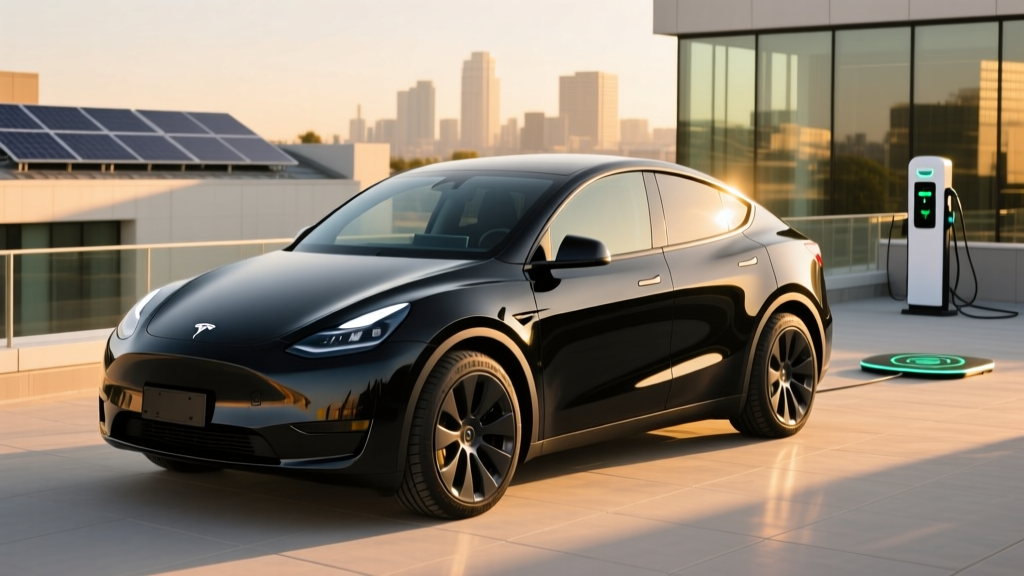
If you've been researching electric cars, you've almost certainly encountered the acronym BEV. But what exactly does a BEV vehicle mean, and how does it differ from the hybrids and plug-in hybrids sharing showroom floors? The short answer: a BEV — Battery Electric Vehicle — runs exclusively on electricity stored in an onboard battery pack, with zero gasoline engine and zero tailpipe emissions. It's the purest form of electric mobility, and the 2026 Tesla Model Y remains one of the most compelling examples of the category.
In this review, we'll use the 2026 Model Y to illustrate every defining characteristic of a BEV: its battery chemistry, real-world range, charging behavior, ownership economics, and how federal tax credits apply. Whether you're comparing your first BEV against a PHEV or simply want the exact numbers before signing a lease, this guide covers what you need to know.
What Is a BEV Vehicle? Meaning and How It Works
A Battery Electric Vehicle (BEV) is a car, truck, or SUV propelled entirely by one or more electric motors drawing energy from a high-voltage lithium-based battery pack. Unlike a Hybrid Electric Vehicle (HEV) which pairs a gas engine with a small battery, or a Plug-in Hybrid (PHEV) which adds a modest electric-only range before the gas engine kicks in, a BEV has no internal combustion engine at all. You plug it in. You drive on electrons. That's it.
Key characteristics that define every BEV:
- Zero tailpipe emissions — no exhaust system, no catalytic converter, no fuel tank.
- Regenerative braking — the motor acts as a generator during deceleration, recapturing kinetic energy back into the battery.
- External charging required — via Level 1 (120V), Level 2 (240V), or DC fast charging (50–350+ kW).
- Large traction battery — typically 50–130 kWh of usable capacity, far larger than the 1–20 kWh packs found in hybrids.
- Lower running costs — electricity per mile is generally 40–60% cheaper than gasoline, with fewer moving parts to maintain.
The 2026 Tesla Model Y Long Range AWD exemplifies all of these traits. Let's look at the exact specifications.
2026 Tesla Model Y: Core BEV Specifications
| Specification | 2026 Model Y Long Range AWD | 2026 Model Y Performance AWD |
|---|---|---|
| EPA Estimated Range | 320 miles | 285 miles |
| Usable Battery Capacity | 75 kWh (NMC chemistry) | 75 kWh (NMC chemistry) |
| Max DC Fast Charge Rate | 250 kW (peak) | 250 kW (peak) |
| 10–80% DC Fast Charge Time | ~22 minutes | ~22 minutes |
| Level 2 Home Charging Rate | 11.5 kW (~44 mi/hr) | 11.5 kW (~44 mi/hr) |
| 0–60 mph | 4.8 seconds | 3.5 seconds |
| Horsepower | 384 hp (dual motor) | 456 hp (dual motor) |
| Drivetrain | Dual Motor AWD | Dual Motor AWD |
| EPA Efficiency | 122 MPGe combined (28 kWh/100 mi) | 111 MPGe combined (30 kWh/100 mi) |
| Cargo Volume (rear seats up) | 30.2 cu ft | 30.2 cu ft |
| Cargo Volume (rear seats folded) | 72.1 cu ft | 72.1 cu ft |
| Rear Legroom | 40.5 inches | 40.5 inches |
| Base MSRP | $44,990 | $51,490 |
Source: fueleconomy.gov and Tesla official specifications, 2026 model year.
Real-World Range: What the EPA Number Doesn't Tell You
Real-World Highway (70 mph, 72°F): ~265–280 miles
Real-World Highway (70 mph, 20°F): ~210–235 miles
City/Commuter Driving with Regen: ~295–315 miles
The EPA range figure is a blended test cycle — part city, part highway, at moderate temperatures. In practice, a BEV's range is highly dependent on speed, ambient temperature, and terrain. Highway driving at 75 mph consumes significantly more energy per mile than stop-and-go city driving, where regenerative braking recaptures energy at each stoplight.
Cold weather is the great BEV equalizer. At 20°F, the Model Y's NMC battery experiences increased internal resistance, and energy is diverted to cabin and battery heating. Expect a 25–35% range reduction in sustained freezing temperatures compared to the EPA figure. Tesla's heat pump — standard on the 2026 Model Y — mitigates this loss substantially compared to older resistive-heater EVs, but physics still wins. If you live in Minnesota or Maine and commute 150 miles round-trip in January, plan your charging accordingly.
The Model Y's NMC (nickel manganese cobalt) chemistry offers high energy density — that's how Tesla packs 320 EPA miles into a crossover-sized battery. The trade-off versus LFP (lithium iron phosphate) chemistry, which Tesla uses in the base RWD Model Y, is that NMC degrades slightly faster over thousands of charge cycles and shouldn't be routinely charged to 100% for daily use. Tesla recommends an 80% daily charge limit for NMC, reserving 100% for road trips.
Charging Speed: DC Fast Charging and Home Level 2
Charging is the single most important ownership variable for any BEV. The Model Y supports Tesla's NACS (North American Charging Standard) connector natively, giving it seamless access to the Supercharger network — the most reliable public DC fast-charging network in the U.S. as of 2026, with over 25,000 stalls nationwide.
| Charging Level | Power / Voltage | Speed (Miles Added) | Full Charge Time (10–80%) | Best Use Case |
|---|---|---|---|---|
| Level 1 (120V household) | ~1.4 kW | ~3–4 mi/hr | ~50+ hours | Emergency / overnight trickle |
| Level 2 (240V home wall connector) | 11.5 kW | ~44 mi/hr | ~5.5 hours (10–80%) | Daily home charging |
| DC Fast Charge (Supercharger V3) | Up to 250 kW peak | ~200 mi in 15 min | ~22 minutes (10–80%) | Road trips |
| DC Fast Charge (CCS adapter, EA/others) | Up to 150–350 kW (station dependent) | Varies by station | ~25–40 minutes (10–80%) | Non-Tesla networks |
Charging curve reality check: The Model Y does not sustain 250 kW for the entire session. Peak rate occurs between roughly 10–30% State of Charge, then tapers progressively. From 50–80%, expect ~100–130 kW. This is normal lithium-ion behavior — every BEV tapers to protect battery longevity. The 22-minute 10–80% figure accounts for the full curve.
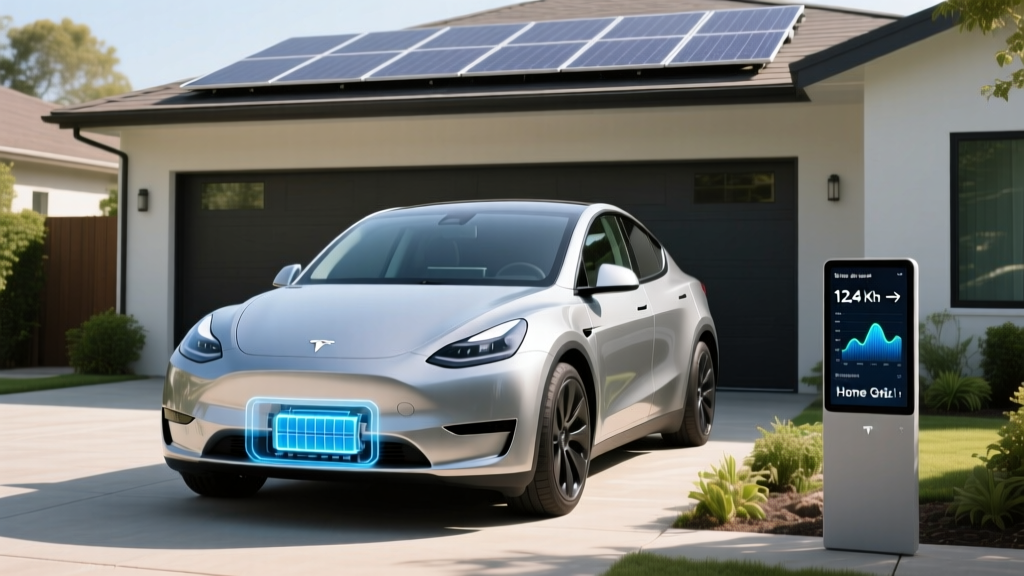
For home charging, Tesla's Wall Connector on a 60-amp circuit delivers 11.5 kW, adding approximately 44 miles of range per hour. Most owners who plug in overnight start each morning with a full battery. If your home electrical panel is 100 amps or older, expect a panel upgrade ($1,500–$3,000) as part of your Level 2 installation. A typical Level 2 install with a 240V/50A circuit runs $800–$2,000 total, including the $400–$500 Wall Connector unit, electrician labor, and permits.
Pricing, Trim Levels, and Federal Tax Credit Eligibility
| Trim | Base MSRP | Destination | Est. §30D Credit | Effective Price (if eligible) |
|---|---|---|---|---|
| Long Range AWD | $44,990 | $1,390 | Up to $7,500 | ~$38,880 |
| Performance AWD | $51,490 | $1,390 | Up to $7,500 | ~$45,380 |
The 2026 Model Long Range AWD comes in at $44,990 before destination, putting it under the IRS §30D MSRP cap of $80,000 for SUVs. However, qualifying for the full $7,500 federal tax credit is not guaranteed. Under current IRS rules, eligibility depends on three moving targets:
- Buyer income caps: Modified AGI must not exceed $300,000 (joint filers), $225,000 (head of household), or $150,000 (single).
- MSRP cap: The vehicle's base MSRP must be ≤$80,000 for SUVs/pickups, ≤$55,000 for sedans. Both Model Y trims clear this easily.
- Battery sourcing requirements: Increasingly strict critical-mineral and battery-component sourcing rules apply. Tesla has progressively shifted supply chains to meet these thresholds, but the exact credit amount ($3,750 or $7,500) can shift based on annual IRS guidance. Always verify current eligibility at IRS.gov before purchasing.
As of the 2026 model year, the Model Y Long Range AWD qualifies for the full $7,500 credit when purchased by an eligible buyer, and Tesla offers point-of-sale transfer — meaning the $7,500 comes off the purchase price at the dealership rather than waiting for tax filing. This is a significant cash-flow advantage over the older claim-on-your-return process.
Interior, Technology, and Driver Assistance
The 2026 Model Y interior remains minimalist by design: a single 15.4-inch center touchscreen controls virtually every vehicle function, from climate to navigation to seat heaters. There are no physical gauges — speed and range information lives in the upper-left corner of the display. The second-row passengers get their own 8-inch screen for climate and entertainment, a welcome addition from the 2025 refresh.
Standard technology includes:
- Tesla's native navigation with real-time Supercharger routing and battery preconditioning
- Over-the-air (OTA) software updates that add features post-purchase
- Sentry Mode (360° camera-based security recording)
- Dashcam with front/rear/side camera recording
- Phone-as-key with Bluetooth proximity unlock
- Ventilated front seats and heated rear seats (standard on Long Range)
Driver assistance — a critical clarification: The Model Y comes with Tesla's Basic Autopilot standard (adaptive cruise control + lane centering). Full Self-Driving (Supervised) is an $8,000 option or $99/month subscription. Despite the name, FSD is a SAE Level 2 driver-assist system — it does not make the car self-driving. You must keep your hands on the wheel and eyes on the road at all times. True Level 4 driverless capability (no human required) remains limited to geofenced robotaxi services like Waymo in select cities. Do not conflate Tesla's marketing language with SAE automation definitions.
Warranty Coverage and Battery Longevity
Tesla's warranty structure for the 2026 Model Y:
- Basic Vehicle: 4 years / 50,000 miles
- Battery & Drive Unit: 8 years / 120,000 miles (Long Range/Performance AWD)
- Battery capacity retention threshold: Tesla warrants that the battery will retain at least 70% of its original capacity during the warranty period. If degradation exceeds 30%, Tesla will repair or replace the battery at no cost.
In practice, Tesla's NMC batteries have shown strong longevity. Data aggregated from fleet telemetry and owner reports suggests typical degradation of approximately 8–12% over the first 100,000 miles, with the curve flattening significantly after the initial break-in period. Out-of-warranty battery replacement for a Model Y currently runs approximately $12,000–$16,000 including labor — a figure worth considering if you plan to keep the vehicle beyond 150,000 miles.
Who Should Buy the 2026 Model Y as Their First BEV?
- You need a practical family crossover with strong cargo space (72 cu ft folded) and 320-mile range for road trips
- You want access to the Tesla Supercharger network for reliable cross-country travel
- You can install a Level 2 home charger and want to start every morning with a "full tank"
- You value OTA updates that improve the car after purchase
- You prefer physical buttons and a traditional instrument cluster (try the Hyundai Ioniq 5 or Ford Mustang Mach-E)
- You need a third row for larger families (consider the Kia EV9)
- You tow frequently — the Model Y is rated for 3,500 lbs, which is modest for the crossover segment
- You want LFP battery chemistry for routine 100% daily charging without degradation concerns (the base Model Y RWD offers this)
Pros and Cons at a Glance
- 320-mile EPA range covers most road trips without mid-journey charging
- Supercharger network remains the gold standard for DC fast-charging reliability
- 250 kW peak charging with 10–80% in ~22 minutes
- Class-leading cargo space (72.1 cu ft) with flat load floor
- Excellent efficiency: 122 MPGe combined keeps charging costs low
- OTA updates continuously add features and refinements
- Qualifies for full $7,500 §30D credit (as of 2026, verify at purchase)
- Minimalist interior lacks physical controls — everything routes through the touchscreen
- NMC battery shouldn't be charged to 100% daily (limits usable range for some routines)
- FSD (Supervised) is expensive and still requires full driver attention
- Ride quality is firm — road imperfections transmit more than competitors
- No Apple CarPlay or Android Auto — Tesla's proprietary system only
- Towing limited to 3,500 lbs
- Insurance premiums run 15–25% above segment average
Frequently Asked Questions
What does BEV vehicle mean in simple terms?
BEV stands for Battery Electric Vehicle. It means the vehicle is powered entirely by electricity stored in a rechargeable battery pack — there is no gasoline engine, no fuel tank, and no tailpipe. You charge it from an external power source (home outlet, wall charger, or public DC fast charger) and drive on electricity alone. The 2026 Tesla Model Y, Hyundai Ioniq 5, Ford Mustang Mach-E, and Chevrolet Equinox EV are all BEVs.
What is the real-world range of the 2026 Tesla Model Y?
The EPA rates the Long Range AWD at 320 miles. In real-world highway driving at 70 mph and moderate temperatures, expect approximately 265–280 miles. In freezing conditions (20°F), that drops to roughly 210–235 miles due to battery resistance and cabin heating demands. City driving with regenerative braking yields results closer to the EPA sticker, around 295–315 miles.
How fast does the Model Y charge at home and on the road?
At home on a Level 2 (240V) Tesla Wall Connector, the Model Y charges at 11.5 kW, adding about 44 miles of range per hour — enough for a full overnight charge. On a Tesla V3 Supercharger, it peaks at 250 kW and charges from 10% to 80% in approximately 22 minutes. Note that charge speed tapers above 50% to protect battery health — peak kW is not sustained for the full session.
How much does the 2026 Model Y cost after the federal tax credit?
The Long Range AWD starts at $44,990 plus $1,390 destination, totaling $46,380. If you qualify for the full $7,500 §30D federal tax credit (income and sourcing requirements apply), the effective price drops to approximately $38,880. Tesla offers point-of-sale credit transfer, so the discount applies at purchase rather than at tax filing. Always verify current eligibility on IRS.gov before committing.
Does the Tesla Model Y qualify for the federal EV tax credit?
As of the 2026 model year, the Model Y qualifies for up to $7,500 under IRS §30D, provided the buyer meets income caps ($300K joint / $150K single), the MSRP is under $80,000 (it is), and the battery meets critical-mineral and component sourcing requirements. These sourcing rules tighten periodically, so confirm current eligibility before purchase. The credit can be transferred to the dealer at point of sale for an immediate price reduction.
Is the Model Y worth buying versus competitors like the Ioniq 5 or Mach-E?
The Model Y wins on Supercharger network access, efficiency (122 MPGe vs. the Ioniq 5's ~110 MPGe), and cargo volume. The Hyundai Ioniq 5 counters with faster 10–80% charging (~18 min at 350 kW on 800V architecture), physical buttons, Apple CarPlay, and a more comfortable ride. The Ford Mustang Mach-E offers a more engaging driving experience and a traditional cockpit layout. If Supercharger reliability and Tesla's software ecosystem are priorities, the Model Y remains the benchmark. If you prefer a more conventional interior or faster peak charging, test-drive the Ioniq 5.
What's the difference between a BEV and a PHEV?
A BEV runs exclusively on electricity — no gas engine at all. A PHEV (Plug-in Hybrid Electric Vehicle) has both a battery/electric motor and a gasoline engine, typically offering 25–45 miles of electric-only range before the gas engine takes over. PHEVs suit buyers who can't reliably charge at home or who frequently drive beyond electric range without wanting to plan charging stops. BEVs offer lower running costs and zero tailpipe emissions but require charging infrastructure planning for longer trips.
Specs and pricing reflect the 2026 model year as published by Tesla and the U.S. EPA. Tax credit rules are subject to change — consult IRS.gov and a tax professional for your specific eligibility. Safety ratings available at NHTSA.gov and IIHS.org.