Why Paint Color Matters More on a Tesla Than You Think
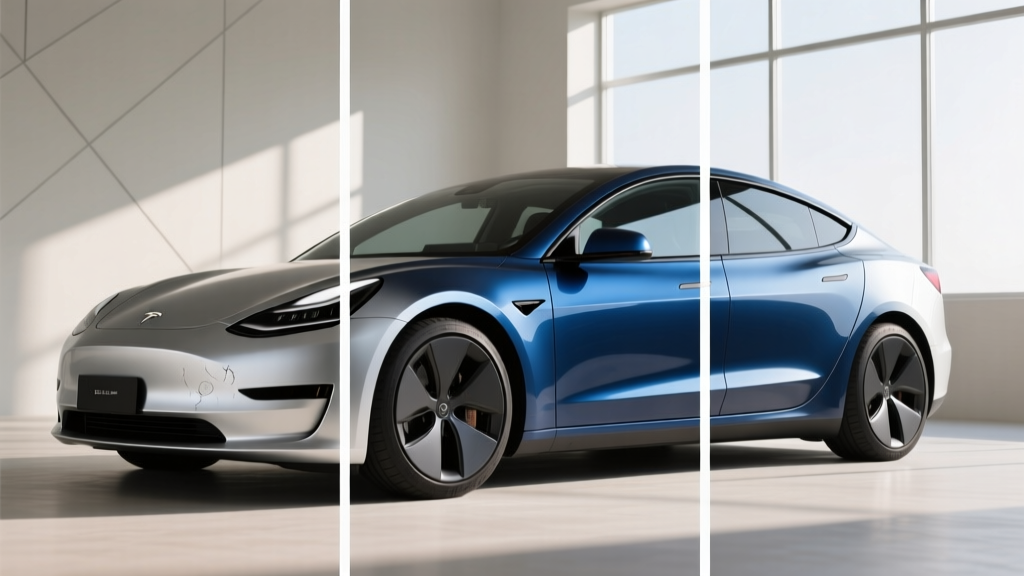
Choosing the best Tesla color isn't just an aesthetic exercise. Tesla's paint has a well-documented reputation for being thinner and softer than legacy automaker finishes, making your color choice a practical decision that affects long-term appearance, maintenance cost, and resale value. A 2025 iSeeCars study found that white and silver Teslas retained up to 5% more resale value than red or blue counterparts over three years, while darker colors consistently showed more visible swirl marks and rock chips in owner surveys.
This guide breaks down every current Tesla paint option across the 2026 Model 3, Model Y, Model S, and Model X lineup — analyzing chip visibility, heat absorption, resale performance, and which color pairs best with each body style. We'll also cover the full ownership picture: range, charging, pricing, and whether the underlying EV is still worth your money regardless of what wraps it.
Every 2026 Tesla Color Option by Model
Tesla streamlined its paint palette for 2026. Here's what's available across the current fleet, including the no-cost and premium options:
| Color | Model 3 | Model Y | Model S | Model X | Cost |
|---|---|---|---|---|---|
| Pearl White Multi-Coat | ✓ | ✓ | ✓ | ✓ | No cost (Model 3/Y); $0-$2,000 (S/X) |
| Solid Black | ✓ | ✓ | ✓ | ✓ | $1,500–$2,000 |
| Deep Blue Metallic | ✓ | ✓ | ✓ | ✓ | $1,500–$2,500 |
| Ultra Red | ✓ | ✓ | ✓ | ✓ | $2,000–$2,500 |
| Quicksilver | ✓ | ✓ | ✓ | ✓ | $2,500–$3,000 |
| Midnight Cherry Red | — | — | ✓ | ✓ | $2,500 |
| Lunar Silver | — | — | ✓ | ✓ | $2,500 |
Note: Tesla frequently adjusts paint availability and pricing by quarter. Always confirm current options on Tesla's configurator before ordering. The Stealth Gray option that replaced Midnight Silver Metallic in late 2024 was discontinued for 2026 Model 3/Y but remains available on some S/X inventory.
The Best Tesla Color by Category
Best for Hiding Scratches & Swirl Marks: Pearl White Multi-Coat
White paint reflects light rather than absorbing it, which means micro-scratches, swirl marks from automated car washes, and water spots are significantly less visible. Tesla's Pearl White is a multi-coat finish with a subtle pearlescent shimmer that adds depth without the maintenance burden of darker metallics. For owners who skip ceramic coating or paint protection film (PPF), white is the most forgiving daily-driver choice.
Best for Resale Value: Pearl White or Quicksilver
According to iSeeCars depreciation data, neutral tones — particularly white and silver — consistently outperform bold colors in the used EV market. A white Model Y listed on Tesla's used inventory or third-party sites like Carvana typically commands $1,000–$2,500 more than an identically specced red or blue unit at the same mileage. Quicksilver, as a premium neutral, holds strong with enthusiasts and tends to attract buyers willing to pay for the factory upgrade.
Best for Hot Climates: Pearl White Multi-Coat
White exterior surfaces can be 20–30°F cooler than black surfaces under direct sun, according to Lawrence Berkeley National Laboratory research on vehicle color and thermal load. In Phoenix, Las Vegas, or Southern California, a white Tesla reduces cabin heat soak, which means your climate system works less during preconditioning and initial driving — preserving a small but measurable amount of range in summer. Black and Deep Blue Metallic absorb the most solar energy and will tax the heat pump harder.
Best for Visual Impact: Ultra Red or Midnight Cherry Red
Tesla's Ultra Red (introduced 2023) is a multi-coat candy finish that shifts between bright crimson and deep burgundy depending on light angle. On the Model 3 Highland and refreshed Model Y Juniper, it's the most photographed and complimented option. Midnight Cherry Red, exclusive to Model S and X, is even deeper and more luxurious. The trade-off: red shows every defect. Plan on PPF and hand-wash-only maintenance if you choose either.
Worst for Daily-Driver Maintenance: Solid Black
Solid Black is a single-stage paint (no clear metallic flake) that shows swirl marks, dust, pollen, and water spots more aggressively than any other Tesla color. Owner forums are filled with complaints about "spider web" scratches visible after just a few automated car washes. If you love the look, budget $1,500–$3,000 for a full PPF application or commit to two-bucket hand washing and quarterly polish.
Paint Quality, Protection & Ownership Realities
Tesla's Fremont and Shanghai paint shops have improved since the well-publicized quality issues of 2018–2020, but the paint remains thinner than BMW, Mercedes, or Lexus finishes. Independent paint-depth measurements by detailers consistently show Tesla clear coats in the 35–45 micron range, compared to 50–65 microns on comparable German sedans. This means:
- Rock chips are more likely on the hood, front bumper, and fenders — especially on dark colors where exposed primer is immediately visible.
- Machine polishing has less margin — aggressive compound can burn through the clear coat faster than on thicker finishes.
- Paint protection film (PPF) pays dividends on Teslas more than on most vehicles. A full-front PPF application typically costs $1,200–$2,000 and preserves resale by preventing chip accumulation.
Ceramic coating ($800–$1,500 professional application) adds hydrophobic protection and UV resistance but does not prevent rock chips. Many owners layer ceramic over PPF for the best combined protection.
The EV Underneath: 2026 Tesla Specs at a Glance
Color choice matters, but the underlying vehicle determines whether a Tesla fits your life. Here are the 2026 specs that actually drive purchase decisions:
| Spec | Model 3 LR AWD | Model Y LR AWD | Model S LR | Model X LR |
|---|---|---|---|---|
| EPA Range | 363 mi | 320 mi | 402 mi | 335 mi |
| Battery (usable) | ~75 kWh (NMC) | ~75 kWh (NMC) | ~95 kWh (NMC) | ~95 kWh (NMC) |
| Max DC Charge | 250 kW | 250 kW | 250 kW | 250 kW |
| 10–80% DC Time | ~28 min | ~28 min | ~35 min | ~35 min |
| Level 2 (11.5 kW) | ~44 mi/hr | ~44 mi/hr | ~52 mi/hr | ~48 mi/hr |
| 0–60 mph | 4.2 sec | 4.8 sec | 3.1 sec | 3.8 sec |
| Horsepower | 346 hp | 384 hp | 670 hp | 670 hp |
| Drivetrain | Dual-Motor AWD | Dual-Motor AWD | Dual-Motor AWD | Dual-Motor AWD |
| MPGe (combined) | 132 MPGe | 122 MPGe | 120 MPGe | 108 MPGe |
| Cargo (rear+frunk) | 23 cu ft | 72 cu ft (seats folded) | 28 cu ft | 88 cu ft (seats folded) |
| Battery Warranty | 8 yr / 120,000 mi | 8 yr / 120,000 mi | 8 yr / 150,000 mi | 8 yr / 150,000 mi |
Pricing, Trims & Federal Tax Credit Eligibility
| Model / Trim | Base MSRP | As-Tested (Typical) | §30D Credit Eligible? |
|---|---|---|---|
| Model 3 RWD | $38,990 | $40,490 (w/ color) | Yes — up to $7,500 |
| Model 3 Long Range AWD | $45,490 | $47,990 (w/ color) | Yes — up to $7,500 |
| Model 3 Performance | $52,990 | $55,490 (w/ color) | Yes — up to $7,500 |
| Model Y Long Range AWD | $44,990 | $47,490 (w/ color) | Yes — up to $7,500 |
| Model Y Performance | $51,490 | $53,990 (w/ color) | Yes — up to $7,500 |
| Model S Long Range | $79,990 | $84,990 (w/ color) | No — exceeds $55K sedan cap |
| Model X Long Range | $84,990 | $89,990 (w/ color) | No — exceeds $80K SUV cap |
Federal tax credit rules (IRS §30D) for 2026: Model 3 and Model Y buyers may qualify for up to $7,500 in federal tax credits, applied at the point of sale. However, eligibility depends on several factors per IRS guidelines:
- Income caps: Modified AGI must not exceed $150,000 (single), $225,000 (head of household), or $300,000 (joint).
- MSRP caps: Sedans (Model 3) must be under $55,000; SUVs/trucks (Model Y) must be under $80,000.
- Battery sourcing: Critical minerals and battery components must meet phased domestic-content thresholds that tighten annually through 2029.
- Point-of-sale transfer: Buyers can transfer the credit to the dealer at purchase for an immediate price reduction rather than waiting for a tax refund.
Model S and X exceed their respective MSRP caps and do not qualify for the new-vehicle credit regardless of buyer income. Always verify your specific eligibility with a tax professional before purchase.
Tech, Driver Assistance & What's Changed for 2026
All 2026 Teslas ship with the current-generation infotainment system featuring a 15.4-inch center display (Model 3/Y) or 17-inch display (Model S/X), AMD Ryzen processor, and over-the-air update capability. Standout features include:
- Autopilot (included): Adaptive cruise control, lane centering, and automatic emergency braking. This is SAE Level 2 — you must keep hands on the wheel and eyes on the road at all times.
- FSD Supervised ($8,000 or $99/month): Adds automatic lane changes, intersection navigation, and parking assist. Still Level 2 — the driver is legally and practically responsible for all vehicle operation. Tesla's "Supervised" naming was mandated by NHTSA to clarify this is not autonomous driving.
- Sentry Mode & Dashcam: Continuous recording from all external cameras; clips saved to USB drive.
- Theater & Gaming: Netflix, YouTube, and Steam-compatible gaming on the center display while parked.
- Heat pump (all models): Significantly improves cold-weather efficiency and cabin heating speed.
Pros and Cons: Honest Ownership Assessment
Pros
- Class-leading Supercharger network — over 25,000 stalls in North America with NACS connector now adopted industry-wide
- Over-the-air updates continuously add features post-purchase
- Strongest real-world range efficiency (kWh/mi) in each segment
- Low center of gravity and instant torque deliver confident handling
- Minimal scheduled maintenance — no oil, filters, or spark plugs
- Best-in-class app integration for remote climate, charging, and security
Cons
- Paint quality remains thinner than legacy luxury competitors — PPF strongly recommended
- No Apple CarPlay or Android Auto — Tesla's proprietary system only
- Repair costs and insurance premiums are above segment average
- FSD Supervised is expensive and still requires full driver attention
- Panel gaps and interior rattles still reported on some Fremont-built units
- Model S/X no longer eligible for federal tax credit due to MSRP caps
Who Should Buy a Tesla (and Which Model Fits)
Model 3: Best for solo commuters and couples who prioritize efficiency and driving dynamics over cargo space. The Long Range AWD at 363 miles EPA is the sweet spot for road-trip capability without Performance pricing.
Model Y: The default family EV. 72 cu ft of cargo with seats folded, available third-row (small children only), and the same powertrain efficiency as the Model 3. If you need one vehicle for school runs, Costco trips, and weekend getaways, this is it.
Model S: For buyers who want 400+ miles of range, sub-3.5-second 0–60 performance, and sedan luxury. Just know you're paying a premium without tax-credit help, and the BMW i5 and Mercedes EQS offer more traditional luxury interiors.
Model X: Falcon-wing doors are genuinely useful in tight parking spots, and 88 cu ft of cargo space rivals mid-size SUVs. But at $85K+ without a tax credit, the Rivian R1S and BMW iX are compelling alternatives.
Frequently Asked Questions
What is the most popular Tesla color?
Pearl White Multi-Coat is the most ordered Tesla color globally, accounting for an estimated 30–35% of all deliveries based on registration data. It's the default no-cost option on Model 3 and Model Y, which contributes to its popularity, but its practical advantages (hides defects, runs cooler, best resale) make it the rational choice regardless of price.
Does Tesla color affect insurance cost?
Not directly. Insurance companies do not factor paint color into premium calculations. However, premium colors that raise the vehicle's replacement value (Quicksilver, Ultra Red) can marginally increase comprehensive coverage costs because the insurer's potential payout is higher.
Is Quicksilver worth the $2,500–$3,000 upcharge?
Quicksilver is Tesla's most technically impressive paint — a liquid-metal-style finish that shifts between bright silver and warm gray depending on light conditions. It photographs exceptionally well and holds resale value strongly among enthusiasts. However, it shows swirl marks more than Pearl White and requires careful maintenance. If you're committing to PPF and hand washing, it's a rewarding choice. If you want low-maintenance daily driving, stick with white.
Do dark Tesla colors reduce range in summer?
Indirectly, yes. A black Tesla parked in direct sun will have a cabin temperature 10–20°F hotter than a white one, requiring more energy for initial cooling. Over a full summer in a hot climate, this can add up to roughly 1–2% additional energy consumption for climate control. It's a small effect, but real — and another reason white dominates in Sun Belt states.
What's the best Tesla color for a wrap or PPF?
If you plan to apply a full vinyl wrap, the base color is irrelevant — choose the cheapest option (Pearl White) and wrap over it. For PPF (which is transparent), white or silver hides the slight orange-peel texture that PPF can introduce on dark surfaces. Dark-colored Teslas with PPF sometimes show a visible "film edge" along panel gaps that's less noticeable on lighter paint.
How does Tesla's paint compare to other EV brands?
Tesla's paint is generally considered a step behind Hyundai/Kia (thicker clear coat, fewer chip complaints), BMW (traditional German paint-shop quality), and Rivian (multi-coat finishes with strong depth). It's roughly on par with early-production Ford Mustang Mach-E units. The gap has narrowed since Tesla's 2022 paint-shop upgrades at Fremont and Giga Texas, but most professional detailers still recommend protective measures from day one.