Why EV Shoppers Are Exploring Tesla Alternatives
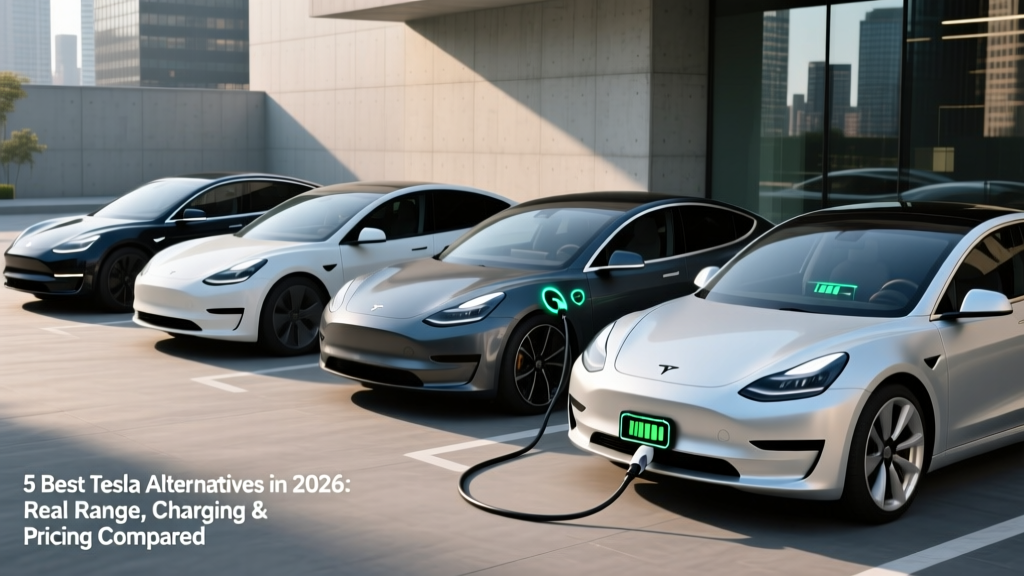
Tesla built the modern EV market, but in 2026 the competition has caught up — and in several categories, surpassed it. Legacy automakers now offer 800-volt architectures, faster DC charging curves, and more conventional interiors that appeal to buyers who want an electric car without the Tesla ecosystem lock-in. Meanwhile, Tesla's own lineup has refreshed (the Juniper Model Y arrived for 2025), keeping the bar high. The result: a genuinely competitive field where the right choice depends on your specific needs — road-trip charging speed, cargo space, budget, or driver-assist capability.
This guide profiles five of the strongest Tesla alternatives available in the US market for the 2026 model year, with exact EPA figures, real-world range caveats, charging-curve behavior, and current §30D federal tax-credit eligibility. We'll help you decide which model — if any — beats a Tesla for your use case.
The Contenders at a Glance
| Spec | Hyundai Ioniq 5 Limited AWD | Kia EV6 GT-Line AWD | Ford Mustang Mach-E Premium AWD | VW ID.4 AWD Pro S | Tesla Model Y LR AWD (Baseline) |
|---|---|---|---|---|---|
| EPA Range | 290 mi | 282 mi | 290 mi | 275 mi | 320 mi |
| Battery (usable) | 84 kWh (NMC) | 77.4 kWh (NMC) | 91 kWh (NMC) | 82 kWh (NMC) | 78.1 kWh (NMC) |
| Peak DC Charge | 238 kW | 233 kW | 150 kW | 175 kW | 250 kW |
| 10–80% DC Time | ~18 min | ~18 min | ~36 min | ~29 min | ~25 min |
| Level 2 Rate | 10.9 kW | 10.9 kW | 10.5 kW | 11 kW | 11.5 kW |
| 0–60 mph | 5.1 sec | 5.2 sec | 5.2 sec | 5.7 sec | 4.8 sec |
| Drivetrain | Dual-motor AWD | Dual-motor AWD | Dual-motor AWD | Dual-motor AWD | Dual-motor AWD |
| MPGe (combined) | 98 MPGe | 100 MPGe | 93 MPGe | 95 MPGe | 117 MPGe |
| EPA Efficiency | 34 kWh/100mi | 33 kWh/100mi | 36 kWh/100mi | 35 kWh/100mi | 28 kWh/100mi |
| Base MSRP | $54,200 | $52,900 | $48,995 | $47,995 | $46,990 |
| Battery Warranty | 10 yr / 100k mi | 10 yr / 100k mi | 8 yr / 100k mi | 8 yr / 100k mi | 8 yr / 120k mi |
Sources: fueleconomy.gov, manufacturer US spec pages. All figures reflect 2025/2026 model-year AWD trims as tested.
Deep Dive: Range, Charging & Real-World Efficiency
Hyundai Ioniq 5 — The Charging-Speed Champion
The Ioniq 5's E-GMP 800-volt platform remains its killer feature. On a 350 kW DC fast charger (Electrify America, EVgo), it peaks at 238 kW and sustains above 180 kW through roughly 55% state of charge before tapering. The 10–80% sprint takes approximately 18 minutes in warm conditions — among the fastest in this segment.
Real-World Expectation: ~240–260 miles highway at 70 mph; ~200–220 miles in sub-freezing temperatures. The Ioniq 5's heat pump (standard on AWD trims) mitigates cold-weather range loss to roughly 15–20%, better than the 25–30% loss seen in EVs without active thermal management.
Efficiency at 34 kWh/100 mi is respectable but trails Tesla's class-leading 28 kWh/100 mi. On a 300-mile road trip, expect two DC fast-charge stops of roughly 18–20 minutes each.
Kia EV6 — Ioniq 5's Platform Sibling with Sportier Tuning
Sharing the E-GMP architecture, the EV6 matches the Ioniq 5's 800V charging capability (peak 233 kW, 10–80% in ~18 minutes) but sacrifices 8 miles of EPA range due to slightly less aerodynamic bodywork. The trade-off is a lower, more car-like driving position and available GT trim with 576 hp (0–60 in 3.4 seconds).
Real-World Expectation: ~235–255 miles highway; GT trim drops to ~195–210 miles highway due to performance-oriented powertrain tuning and wider tires.
Ford Mustang Mach-E — Improved but Slower-Charging
Ford upgraded the Mach-E's battery to 91 kWh usable for 2025/2026, pushing EPA range to 290 miles on the Extended Range AWD. However, the 400-volt architecture limits DC fast-charging to a peak of 150 kW, with a 10–80% time around 36 minutes. On road trips, that's a meaningful disadvantage versus the 800V competitors.
Real-World Expectation: ~245–265 miles highway; cold-weather loss around 20–25%. The larger battery helps offset the slower charging — you simply need fewer stops, even if each stop takes longer.
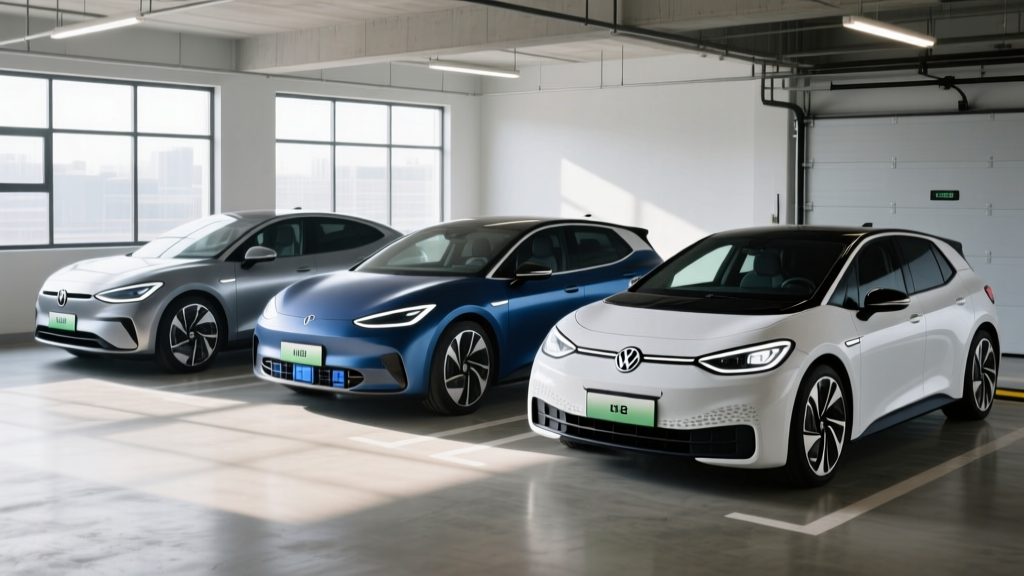
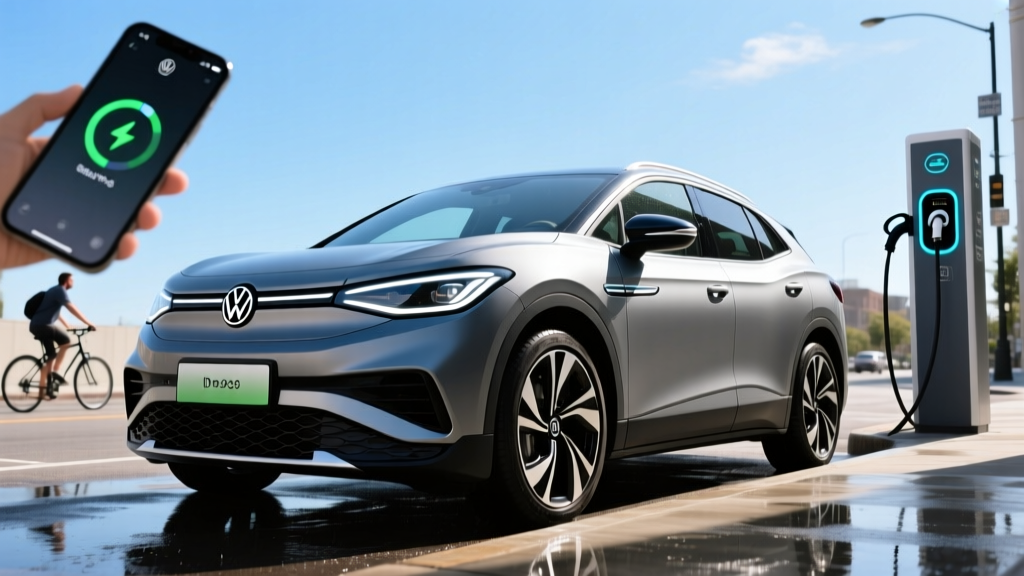
Volkswagen ID.4 — The Value Play
The ID.4 AWD Pro S undercuts competitors on price while offering competitive interior volume. Its 175 kW peak DC charge rate (10–80% in ~29 minutes) is middling but adequate for most owners who charge at home. The 275-mile EPA range is the lowest in this group, though real-world highway driving yields ~230–250 miles.
Charging Speed Comparison: Why kW and Architecture Matter
| Model | Architecture | Peak DC kW | Sustained kW (10–55% SoC) | 10–80% Time | Level 2 (mi/hr) |
|---|---|---|---|---|---|
| Hyundai Ioniq 5 | 800V | 238 kW | ~180–220 kW | ~18 min | ~35 mi/hr |
| Kia EV6 | 800V | 233 kW | ~175–215 kW | ~18 min | ~35 mi/hr |
| Ford Mach-E | 400V | 150 kW | ~115–140 kW | ~36 min | ~33 mi/hr |
| VW ID.4 | 400V | 175 kW | ~130–160 kW | ~29 min | ~34 mi/hr |
| Tesla Model Y | 400V | 250 kW | ~170–220 kW | ~25 min | ~44 mi/hr |
Key insight: Peak kW is a marketing number; sustained kW over the 10–80% window determines actual road-trip experience. The 800V Hyundai/Kia pair sustains higher rates longer, making them faster in practice despite Tesla's higher peak. Always precondition your battery before DC fast-charging — arriving at a charger with a cold battery can cut charge speed by 40–50%.
Interior, Cargo & Practicality
| Model | Cargo (rear seats up) | Cargo (rear seats down) | Frunk | Rear Legroom |
|---|---|---|---|---|
| Ioniq 5 | 27.2 cu ft | 59.3 cu ft | 0.85 cu ft (AWD) | 39.4 in |
| EV6 | 24.4 cu ft | 50.2 cu ft | 0.7 cu ft (AWD) | 39.0 in |
| Mach-E | 29.7 cu ft | 59.7 cu ft | 4.7 cu ft | 38.1 in |
| ID.4 | 30.3 cu ft | 64.2 cu ft | None (AWD) | 37.6 in |
| Model Y | 30.2 cu ft | 72.1 cu ft | 4.1 cu ft | 40.5 in |
The Model Y still leads in total cargo volume and rear legroom, which explains its dominance among families. The ID.4 offers the most cargo space behind the second row (seats-up), while the Mach-E's front trunk (frunk) is the most practical for stowing charging cables. AWD versions of the Ioniq 5 and EV6 have vestigial frunks — a trade-off of the E-GMP platform's front-mounted power electronics.
Pricing, Trims & Federal Tax Credit Eligibility
Federal EV tax credit eligibility under IRS §30D depends on three moving targets: MSRP caps ($55,000 for sedans; $80,000 for SUVs/trucks/vans), buyer income limits ($150K single / $300K joint MAGI), and battery component/critical-mineral sourcing requirements that tighten annually. As of 2026, the critical-mineral and battery-component sourcing rules have phased out credits for most non-North-American battery supply chains.
| Model | Base MSRP | As-Tested (this review) | Est. §30D Credit | Effective Price After Credit |
|---|---|---|---|---|
| Ioniq 5 Limited AWD | $54,200 | $56,750 | $3,750* | ~$52,950 |
| EV6 GT-Line AWD | $52,900 | $55,400 | $3,750* | ~$51,650 |
| Mach-E Premium AWD ER | $48,995 | $52,490 | $3,750* | ~$48,740 |
| ID.4 AWD Pro S | $47,995 | $49,690 | $7,500† | ~$42,190 |
| Model Y Long Range AWD | $46,990 | $49,490 | $3,750* | ~$45,740 |
* Partial credit — meets critical-mineral requirement but not full battery-component threshold for 2026. † ID.4 AWD built in Chattanooga, TN with qualifying domestic battery sourcing; verify at fueleconomy.gov before purchase. Credits can be transferred to the dealer as a point-of-sale rebate. Income limits and MSRP caps apply — consult a tax professional.
Tech, Driver Assists & Standout Features
Hyundai Ioniq 5 / Kia EV6: Both offer Highway Driving Assist 2 (HDA2), a competent Level 2 system with lane-centering, adaptive cruise, and lane-change assist. The Ioniq 5's dual 12.3-inch panoramic displays and vehicle-to-load (V2L) capability (3.6 kW — enough to power a campsite or emergency home circuits) are standout features. Neither offers hands-free driving on mapped highways.
Ford Mach-E: Available BlueCruise 1.4 allows hands-free driving on over 130,000 miles of pre-mapped divided highways — a genuine advantage over Tesla Autopilot's hands-on requirement in many scenarios. However, BlueCruise remains SAE Level 2: eyes-on supervision is mandatory, and the system will disengage if the driver-monitoring camera detects inattention.
VW ID.4: Travel Assist provides basic Level 2 lane-centering and adaptive cruise. The infotainment system has improved with the 4.0 software update, but VW's capacitive-touch steering wheel controls remain a common complaint.
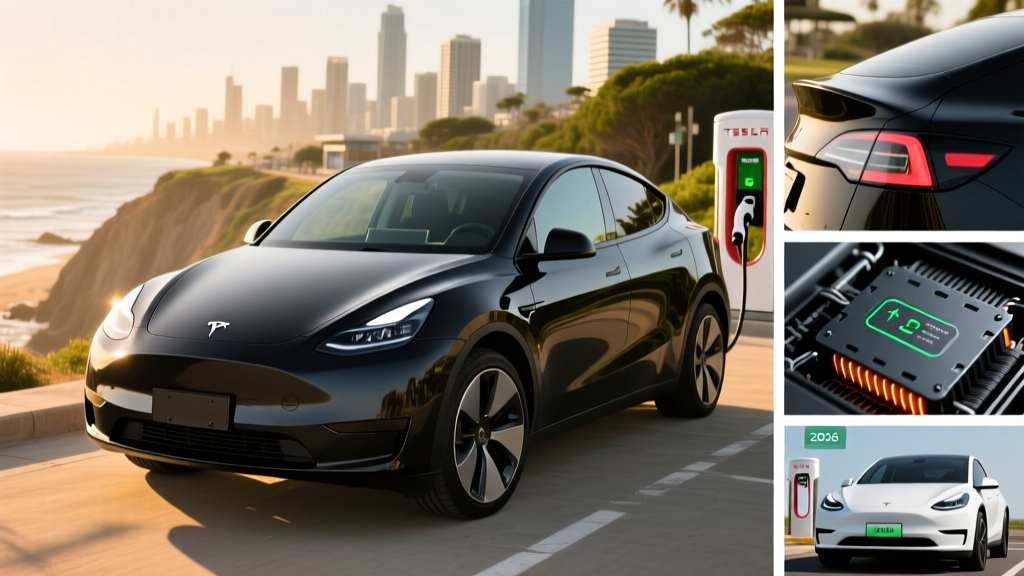
Tesla Model Y: Autopilot is standard; FSD (Supervised) is a $8,000 add-on. Despite the name, FSD remains SAE Level 2 — the driver must remain fully engaged. Tesla's Supercharger network (now open to NACS-equipped competitors) remains the most reliable public charging infrastructure in the US.
Pros and Cons: Quick Verdict
✅ Hyundai Ioniq 5
- Fastest DC charging in the segment (18 min 10–80%)
- V2L capability (3.6 kW)
- Spacious, flat-floor interior with excellent visibility
- 10-year/100k-mile battery warranty
❌ Hyundai Ioniq 5
- Nearly useless frunk on AWD trims
- No rear wiper (2025+ added one — verify model year)
- Infotainment learning curve with touch-only climate controls
- Only partial §30D credit in 2026
✅ Kia EV6
- Same 800V fast-charging as Ioniq 5
- Sportier driving dynamics; available 576-hp GT trim
- 10-year/100k-mile battery warranty
- Lower, car-like seating position
❌ Kia EV6
- Less cargo space than Ioniq 5 or Model Y
- Stiffer ride on GT-Line with 20-inch wheels
- Tiny frunk on AWD models
- Only partial §30D credit in 2026
✅ Ford Mustang Mach-E
- BlueCruise hands-free highway driving (130K+ mapped miles)
- Largest frunk in the group (4.7 cu ft)
- Competitive 290-mile EPA range
- Engaging driving dynamics for a crossover
❌ Ford Mustang Mach-E
- Slowest DC charging (36 min 10–80%) — 400V architecture
- Lower efficiency (36 kWh/100 mi)
- BlueCruise requires a subscription after trial period
- Only partial §30D credit in 2026
✅ Volkswagen ID.4
- Lowest effective price after full $7,500 §30D credit
- Most seats-up cargo room (30.3 cu ft)
- Competent, comfortable daily driver
- US-built (Chattanooga, TN) — supports domestic manufacturing
❌ Volkswagen ID.4
- Lowest EPA range in group (275 mi)
- Mediocre DC charging speed (29 min 10–80%)
- Infotainment still lags competitors in responsiveness
- No frunk on AWD
Decision Framework: Which Tesla Alternative Is Right for You?
Choose the Hyundai Ioniq 5 if: You road-trip frequently and want the shortest DC charge stops. The 800V architecture pays dividends at 350 kW Electrify America stations. Best for: commuters who also take 4+ road trips per year.
Choose the Kia EV6 if: You want Ioniq 5 charging performance with sportier styling and available GT-level performance (3.4-sec 0–60). Best for: driving enthusiasts transitioning from sport sedans.
Choose the Ford Mach-E if: Hands-free highway driving is a priority. BlueCruise's mapped-highway coverage is extensive and genuinely reduces fatigue on long interstate drives. Best for: frequent highway commuters in BlueCruise-mapped corridors.
Choose the VW ID.4 if: Budget is the primary concern and you mostly charge at home. At ~$42,000 after the full §30D credit, it's the most affordable AWD electric crossover here. Best for: value-focused families with home Level 2 charging.
Stick with the Tesla Model Y if: Maximum range, efficiency, Supercharger network reliability, and cargo volume are non-negotiable. The Model Y remains the benchmark — it's just no longer the only strong option.
Frequently Asked Questions
What is the real-world range of the best Tesla alternatives?
Expect 230–265 highway miles from the Ioniq 5, EV6, and Mach-E in moderate temperatures. The ID.4 delivers roughly 230–250 highway miles. All lose 15–25% range in sub-freezing weather; models with heat pumps (Ioniq 5, EV6, ID.4) fare better. Tesla's Model Y still leads with ~270–290 real-world highway miles thanks to superior efficiency.
How fast do these EVs charge at home and on the road?
On a Level 2 home charger (240V, 48A), all five models add roughly 30–44 miles of range per hour — an overnight charge from 20–80% takes 5–7 hours. For DC fast-charging, the 800V Ioniq 5 and EV6 are the fastest at ~18 minutes (10–80%). The Mach-E is slowest at ~36 minutes due to its 400V architecture.
How much do these EVs cost after the federal tax credit?
After the §30D credit, effective prices range from ~$42,190 (ID.4 AWD Pro S with the full $7,500 credit) to ~$52,950 (Ioniq 5 Limited with a partial $3,750 credit). Eligibility depends on buyer income (≤$300K joint / $150K single), MSRP caps ($80K for SUVs), and battery-sourcing requirements that change annually. Always verify current eligibility at fueleconomy.gov and consult a tax professional before purchasing.
Is buying a Tesla alternative worth it vs. a Model Y?
It depends on priorities. The Model Y still wins on range efficiency, cargo volume, and Supercharger convenience. But the Ioniq 5 and EV6 charge faster at non-Tesla DC stations, the Mach-E offers hands-free BlueCruise, and the ID.4 costs significantly less after tax credits. The gap has closed enough that personal preference — styling, interface, charging habits — now matters as much as specs.
Do these Tesla alternatives qualify for the federal EV tax credit?
Partially. As of 2026, the VW ID.4 (US-built with qualifying battery sourcing) qualifies for the full $7,500 credit. The Ioniq 5, EV6, Mach-E, and Model Y qualify for a partial $3,750 credit, meeting critical-mineral but not full battery-component sourcing thresholds. Credit eligibility is subject to change as sourcing rules tighten — check the IRS clean vehicle credit page for the latest.
Which Tesla alternative has the best warranty?
Hyundai and Kia lead with 10-year/100,000-mile battery and powertrain warranties — two years and 20,000 miles more than Ford, VW, and Tesla (8 years/100K–120K miles). All warranties guarantee a minimum battery capacity retention (typically 70% of original capacity) over the warranty period.