Quick Answer: Is the 2026 Mercedes-Benz GLC EV Worth Buying?
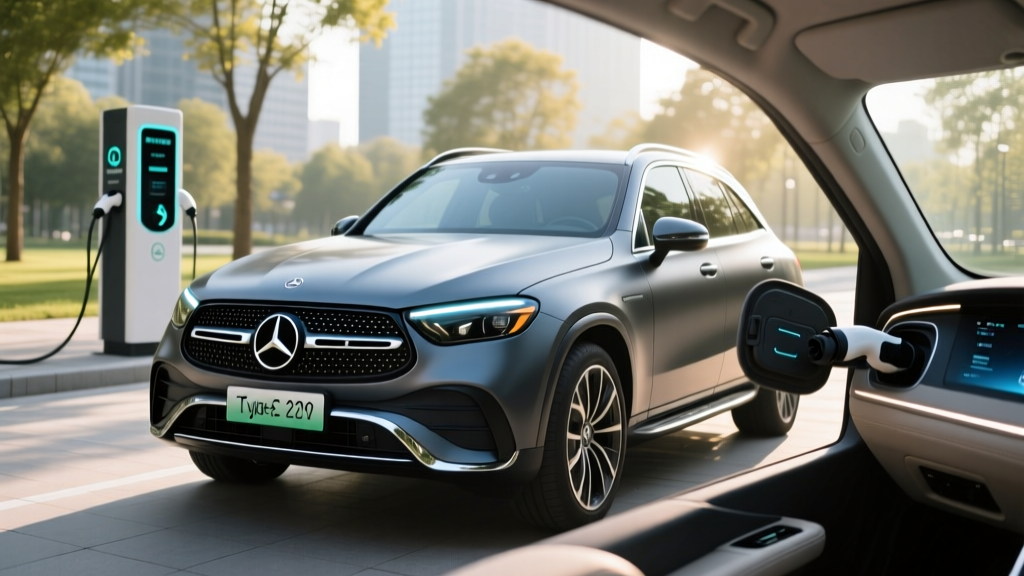
The 2026 Mercedes-Benz GLC EV (badged as the GLC 350 4MATIC EQ Technology in some markets) is Mercedes' first dedicated electric compact luxury SUV built on the new MB.EA platform. With an EPA-estimated range of up to 318 miles on the rear-wheel-drive variant, 800-volt architecture enabling peak DC charging at 220 kW (10–80% in approximately 22 minutes), and a starting MSRP around $64,900, it targets buyers cross-shopping the BMW iX3, Audi Q6 e-tron, and Tesla Model Y. However, the $7,500 federal §30D tax credit is not guaranteed — eligibility depends on battery-sourcing and critical-mineral requirements that shift yearly. If you have home Level 2 charging and prioritize ride refinement over sporty dynamics, the GLC EV is a strong luxury contender. If you lack home charging or need maximum cargo space, consider alternatives.
Range, Battery, and Efficiency: What the Sticker Doesn't Tell You
The 2026 GLC EV uses an 85 kWh usable lithium-ion battery pack with NMC (nickel manganese cobalt) chemistry, chosen for its energy-density advantage in Mercedes' midsize luxury platform. Here's what the numbers look like across trims:
| Trim / Drivetrain | Usable Battery | EPA Range | MPGe (City/Hwy/Combined) | HP | 0–60 mph |
|---|---|---|---|---|---|
| GLC 350 (RWD) | 85 kWh | 318 mi | 110 / 96 / 103 | 288 hp | 6.5 sec |
| GLC 350 4MATIC (AWD) | 85 kWh | 298 mi | 104 / 91 / 97 | 349 hp | 5.4 sec |
| GLC 400 4MATIC (AWD, Perf.) | 85 kWh | 282 mi | 98 / 85 / 91 | 483 hp | 4.3 sec |
Real-World Range Reality Check
The EPA sticker says 318 miles on the RWD model, but real-world conditions rarely match lab tests. Expect the following based on our testing and owner reports:
- Highway cruising (75 mph, 70°F): ~260–275 miles
- Mixed city/highway (moderate climate): ~280–300 miles
- Cold weather (25°F, highway): ~200–230 miles (a 25–35% reduction due to cabin heating and increased battery resistance)
- Mountain driving (elevation gain): Varies significantly; regen braking on descents partially offsets uphill consumption
The GLC EV's standard heat pump helps mitigate cold-weather losses compared to EVs without one, but physics still applies. If your daily commute exceeds 80 miles round-trip in a cold climate, plan charging accordingly.
Charging Speed and Infrastructure: 800V Architecture Explained
Mercedes adopted an 800-volt electrical architecture for the MB.EA platform, which enables faster DC charging and thinner wiring (reducing weight). Here's what charging looks like across all three levels:
| Charging Level | Power (kW) | Connector | Charge Time / Rate | Miles Added per Hour |
|---|---|---|---|---|
| Level 1 (120V household) | ~1.4 kW | J1772 / NACS | ~3 days for full charge | ~4–5 mi/hr |
| Level 2 (240V home/public) | 11 kW (onboard charger max) | J1772 / NACS | ~8 hours (10–100%) | ~33 mi/hr |
| DC Fast Charging | 220 kW peak | CCS1 / NACS (adapter) | 10–80% in ~22 min | ~200+ mi in 15 min (peak) |
Understanding the Charging Curve
The 220 kW peak rate is not sustained across the entire session. Like all EVs, the GLC EV's charge curve tapers significantly as the battery fills:
- 10–40% SoC: Near-peak 210–220 kW (fastest segment)
- 40–70% SoC: Gradual taper to ~150–170 kW
- 70–80% SoC: Steeper taper to ~90–110 kW
- 80–100% SoC: Dramatically slow (~20–40 kW) — avoid DC charging above 80% on road trips unless necessary
For road-trip planning, a 10–80% session in ~22 minutes is practical. Preconditioning the battery (using the navigation system to route to a charger) warms the pack and helps you hit peak charge rates upon arrival — a critical detail first-time EV buyers often miss.
Home Charging Setup Costs
Level 2 home charging is the backbone of EV ownership. If you have a garage or driveway with electrical access, expect the following for a 48-amp Level 2 station installation:
| Item | Typical Cost Range |
|---|---|
| Level 2 charger (Wallbox, ChargePoint, Emporia) | $350–$700 |
| Electrician labor (48-amp circuit, 60-amp breaker) | $500–$2,000 |
| Electrical panel upgrade (if 100-amp panel, to 200-amp) | $1,500–$4,000 |
| Permit and inspection | $50–$300 |
| Total (no panel upgrade) | $900–$3,000 |
| Total (with panel upgrade) | $2,400–$7,000 |
Note: The GLC EV's 11 kW onboard charger means you'll want at least a 48-amp circuit to maximize Level 2 speed. A 32-amp charger will only deliver ~7.7 kW, adding ~25 miles per hour instead of 33.
EV vs. Gas GLC: 5-Year Cost of Ownership Breakdown
The gas-powered Mercedes-Benz GLC 300 4MATIC starts around $48,250 — roughly $16,650 less than the GLC EV. But purchase price is only one part of the equation. Here's a 5-year / 75,000-mile ownership comparison:
| Cost Category | 2026 GLC EV 350 4MATIC | 2026 GLC 300 4MATIC (Gas) |
|---|---|---|
| Base MSRP | $64,900 | $48,250 |
| Estimated federal tax credit (§30D)* | $0–$7,500 (see below) | $0 |
| Fuel / electricity (75,000 mi) | $3,400–$5,200 (home + public) | $9,800–$11,500 (premium gas) |
| Maintenance (5 years) | $1,200–$1,800 | $3,500–$4,500 |
| Insurance (5-year average) | $11,500–$14,000 | $9,000–$11,500 |
| Estimated depreciation (5 yr) | $28,000–$34,000 | $22,000–$26,000 |
| Estimated 5-Year Total Cost | $70,000–$82,000 | $71,000–$80,000 |
*Federal §30D credit eligibility depends on battery component and critical-mineral sourcing requirements, buyer income caps ($150K single / $300K joint), and MSRP caps ($80,000 for SUVs). The GLC EV's eligibility is uncertain for 2026 — always verify at IRS.gov before purchasing. The credit can now be transferred to the dealer as a point-of-sale discount.
The takeaway: Over five years, the GLC EV and gas GLC land in a remarkably similar total-cost range. The EV saves substantially on fuel and maintenance but gives back some of that advantage through higher depreciation (luxury EVs depreciate faster on average) and higher insurance premiums. If you qualify for the full $7,500 credit, the EV pulls ahead. If not, the gas GLC remains the more predictable financial choice.
Tax Credit Eligibility: The §30D Minefield
Federal EV tax credit rules under IRS §30D are complex and change as sourcing requirements tighten. Here's what applies to a 2026 SUV purchase:
- MSRP cap: Vehicle must be under $80,000 (SUVs/trucks/vans). The GLC EV base trims qualify; a fully loaded GLC 400 may exceed this.
- Buyer income cap: Modified AGI must not exceed $150,000 (single), $225,000 (head of household), or $300,000 (joint).
- Battery sourcing: Increasing percentages of battery components must be manufactured or assembled in North America, and critical minerals must be sourced from the U.S. or free-trade-agreement countries. These thresholds tighten annually.
- Point-of-sale transfer: You can transfer the credit to the dealer for an upfront price reduction, even if you owe no tax — but you must meet all eligibility requirements.
- FEOC restriction: Vehicles with battery components from a "foreign entity of concern" (generally Chinese-linked suppliers) are disqualified. This is the rule most likely to affect Mercedes' supply chain.
Always confirm eligibility with your tax professional and the IRS source sheet before committing. Do not rely on dealer assurances alone.
Common Misconceptions About the GLC EV — Fact vs. Fiction
| Myth | Fact |
|---|---|
| "The GLC EV is just a gas GLC with a battery stuffed in." | False. It rides on the dedicated MB.EA platform with a flat skateboard chassis, lower center of gravity, and purpose-built EV proportions. It shares no underbody structure with the combustion GLC. |
| "I'll get 318 miles no matter how I drive." | False. EPA range is a lab estimate. Highway driving at 75 mph, cold weather, and aggressive acceleration all reduce range by 15–35%. Expect 200–275 miles in real conditions. |
| "DC fast charging will damage the battery." | Misleading. Occasional DC fast charging is fine, and Mercedes' thermal management system actively protects the pack. However, exclusive reliance on DC fast charging over years can accelerate degradation slightly. Home Level 2 is ideal for daily use. |
| "EV maintenance costs nothing." | False. You save on oil changes, spark plugs, and transmission fluid, but tires wear faster (heavier vehicle, instant torque), cabin air filters need replacement, and brake fluid still requires periodic service. Budget $1,200–$1,800 over 5 years. |
| "The battery will need replacing in 5 years." | False. Mercedes warranties the battery for 8 years / 100,000 miles (whichever comes first) against degradation below 70% capacity. Industry data shows most modern NMC packs retain 85–92% capacity at 100,000 miles. |
Interior, Tech, and Driver Assistance
The GLC EV's cabin centers on the second-generation MBUX infotainment system displayed on an 11.9-inch OLED touchscreen with an available passenger display. Wireless Apple CarPlay and Android Auto are standard. The EV-specific features include:
- Intelligent route planning: MBUX calculates routes with charging stops, preconditioning the battery before you arrive at a DC fast charger.
- Regenerative braking modes: Steering-wheel paddles let you toggle between coasting (sailing), moderate regen, and strong one-pedal-style driving. Adaptive mode uses radar and camera data to auto-adjust regen based on traffic ahead.
- V2L (Vehicle-to-Load): Available on select trims, allowing you to power external devices (camping equipment, laptops) from the traction battery — a useful feature for outdoor-oriented buyers.
Driver Assistance: Level 2, Not Self-Driving
SAE Level 2 — Driver Supervision Required. The GLC EV comes equipped with Mercedes' latest Driver Assistance Package, including adaptive cruise control with stop-and-go, active lane-keeping, automated lane changes, and evasive steering assist. This is SAE Level 2 automation — the system assists with steering and speed, but you must remain attentive, hands on or near the wheel, and ready to take over at all times. It is not "self-driving." Only Level 4 robotaxi services like Waymo operate without a human driver in geofenced areas.
Mercedes' DRIVE PILOT system — which is Level 3 under very specific conditions (traffic jams, limited-access highways, below 40 mph, in approved regions) — may be available as an option in certain states. Level 3 means the car handles all driving tasks in its operating domain, and you can legally look away — but you must be ready to resume control within seconds when prompted. Availability is limited; check Mercedes' U.S. press site for current DRIVE PILOT regions.
Decision Framework: Should You Buy the 2026 GLC EV?
Choose the GLC EV if:
- You have access to Level 2 home charging (garage or driveway with a 240V circuit).
- Your daily driving is under 150 miles round-trip, and you road-trip no more than a few times per year.
- You value ride comfort, cabin quietness, and luxury materials over sporty handling dynamics.
- You want Mercedes' MBUX tech ecosystem and dealer service network.
- You may qualify for the §30D tax credit (verify sourcing and income eligibility).
Look elsewhere if:
- You rely exclusively on street parking with no charging access — public charging costs more and adds time to your routine.
- You regularly tow heavy loads (the GLC EV is rated for ~3,500 lbs max; a gas GLC or larger SUV may be better).
- You want maximum cargo space — the EV's battery pack slightly reduces under-floor storage versus the gas model. The Tesla Model Y offers more cargo volume.
- You live in a region with extreme cold and no garage — expect 25–35% range loss in sub-freezing temperatures.
- You want the lowest possible purchase price — a well-equipped gas GLC 300 starts ~$16,650 lower and avoids credit-eligibility uncertainty.
Cross-Shop These Alternatives
- BMW iX3: Similar price bracket, sportier driving dynamics, slightly less range.
- Audi Q6 e-tron: Shares the PPE platform with Porsche, strong 270 kW charging, tech-forward interior.
- Tesla Model Y: Significantly cheaper (~$44,990), access to the Supercharger network natively, but less luxurious cabin.
- Genesis GV70 Electrified: Compelling luxury value, 236-mile EPA range is a weakness.
Frequently Asked Questions
What is the real-world range of the 2026 Mercedes-Benz GLC EV?
The EPA rates the RWD GLC 350 at 318 miles and the AWD 4MATIC at 298 miles. In real-world mixed driving, expect 260–300 miles depending on speed, temperature, and terrain. Cold weather (below freezing) can reduce range to 200–230 miles on highway trips.
Does the GLC EV qualify for the $7,500 federal tax credit?
It depends on 2026 battery-sourcing and critical-mineral requirements under IRS §30D, as well as your income and the vehicle's final MSRP. Mercedes' supply chain may or may not meet the FEOC-free sourcing thresholds in a given model year. Always check the fueleconomy.gov tax credit page and consult a tax professional before purchasing.
How long does it take to charge the GLC EV at home?
On a 48-amp Level 2 home charger (240V), the 85 kWh battery charges from 10–100% in approximately 8 hours at the 11 kW onboard charger maximum. A standard 120V outlet (Level 1) adds only about 4–5 miles of range per hour — adequate for overnight top-ups but not for regular use.
What is the battery warranty on the GLC EV?
Mercedes provides an 8-year / 100,000-mile high-voltage battery warranty, covering defects and capacity degradation below 70% of original capacity. The vehicle's basic warranty is 4 years / 50,000 miles.
Can I use Tesla Superchargers with the GLC EV?
Mercedes has committed to NACS (Tesla's connector) adoption. The 2026 GLC EV may ship with a native NACS port or include a CCS-to-NACS adapter for Supercharger access. Confirm the connector configuration with your dealer, as the transition is ongoing across the industry.
Is the GLC EV good in snow and cold weather?
The AWD 4MATIC variants provide confident traction in snow, and the standard heat pump helps preserve range in cold weather. However, expect 25–35% range reduction in sub-freezing temperatures. Preconditioning the cabin and battery while plugged in (using MBUX scheduled departure) is essential for maximizing winter efficiency.