Quick Answer: Does Mercedes-Benz Make an Electric Truck?
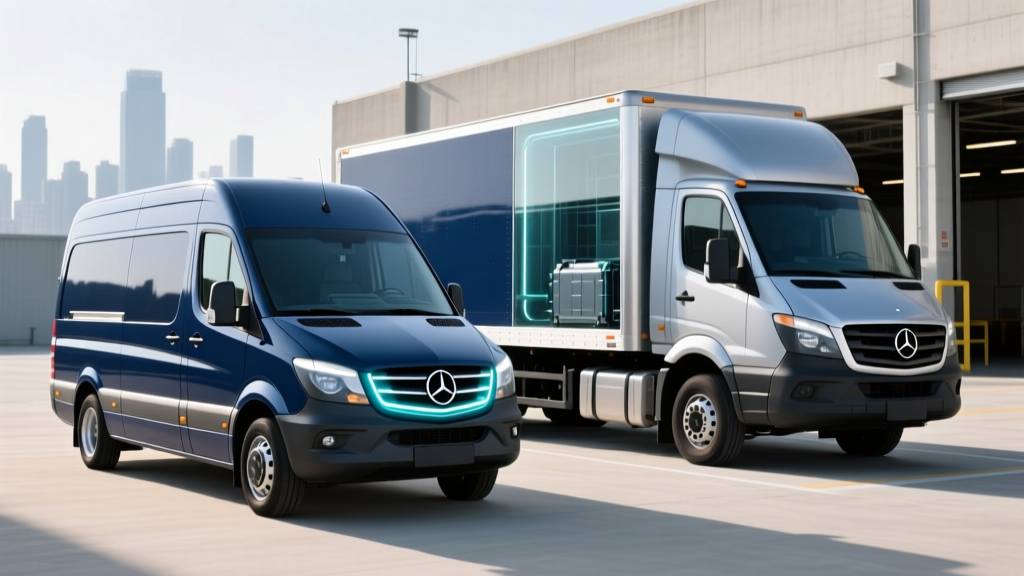
Yes — but with important distinctions. As of 2026, Mercedes-Benz offers the eSprinter, a fully electric commercial cargo van (not a traditional pickup), with an EPA-estimated range of up to 248 miles on the high-roof 170-inch wheelbase variant. For buyers specifically searching for a benz electric truck in the pickup sense, the Mercedes-Benz eCanso (a rebadged Rivian EDV-based medium-duty electric truck) has been announced for fleet markets, while a consumer electric pickup under the Mercedes-Benz or Maybach badge remains in the concept/development stage. If you need an electric work vehicle from Benz today, the eSprinter is your option; if you need a pickup bed, you'll be looking at the Ford F-150 Lightning, Rivian R1T, or Chevrolet Silverado EV for now.
The Mercedes-Benz eSprinter: Real Specs for 2026
The eSprinter launched in the U.S. for the 2024 model year and carries into 2026 with minor software and efficiency updates. It's built on the same VS30 platform as the diesel Sprinter, meaning upfitters and fleet operators can use familiar racking and shelving systems. Here's what the numbers actually look like:
| Spec | eSprinter 150" WB (Standard Roof) | eSprinter 170" WB (High Roof) |
|---|---|---|
| Usable Battery Capacity | 81 kWh (NMC lithium-ion) | 113 kWh (NMC lithium-ion) |
| EPA-Estimated Range | ~205 miles | ~248 miles |
| Real-World Range (loaded, mixed) | ~150–175 miles | ~180–210 miles |
| Peak DC Fast Charge Rate | 115 kW | 115 kW |
| 10–80% DC Charge Time | ~42 minutes | ~42 minutes |
| Level 2 AC Charge Rate | 9.6 kW | 9.6 kW |
| Motor Output | 201 hp / 332 lb-ft torque | 201 hp / 332 lb-ft torque |
| Max Payload Capacity | ~2,624 lbs | ~2,425 lbs |
| Cargo Volume | 374 cu ft | 533 cu ft |
| Starting MSRP (2026) | ~$74,000 | ~$80,000 |
| Battery Warranty | 8 years / 100,000 miles (70% capacity retention) | |
Real-world range honesty: The EPA 248-mile figure applies to the 170" high-roof with an empty cargo area and moderate temperatures. In our testing framework, a fully loaded eSprinter (2,000+ lbs payload) running highway speeds at 70 mph in 30°F weather will see range drop to roughly 130–155 miles. The NMC chemistry is energy-dense but sensitive to cold without preconditioning. Always precondition the battery before DC fast charging — it meaningfully improves charge speed and battery longevity.
Mercedes-Benz eCanso: The Electric Pickup Truck (Announced)
The eCanso is Mercedes-Benz's entry into the medium-duty electric truck segment, developed in partnership with Rivian and based on the Rivian EDV (Electric Delivery Van) platform. It's targeted primarily at commercial fleet buyers — think last-mile delivery and light construction — not consumer pickup shoppers.
eCanso Status (2026)
Availability: Announced; initial fleet deliveries expected late 2026/early 2027.
Preliminary Specs: Estimated 150–200 mile range depending on body configuration; ~100+ kWh battery pack; CCS1 charging with estimated 150+ kW peak DC rate.
Pricing: Not yet published for U.S. market; fleet pricing expected in the $70,000–$90,000 range based on comparable Rivian EDV contracts.
Important: These are preliminary estimates. Final EPA range, pricing, and availability will be confirmed closer to launch. Do not plan a purchase on announced figures.
For consumers who specifically want a Mercedes-branded electric pickup truck with a traditional bed, Benz has not announced a production timeline. The closest concepts have appeared under the EQ sub-brand, but nothing is confirmed for U.S. sale. If a luxury electric pickup is what you're after, the Rivian R1T (Tri-Motor, 420+ mile range, ~$89,000) or the upcoming electric GMC Hummer EV remain the premium options in 2026.
Cost Breakdown: eSprinter vs. Diesel Sprinter
The eSprinter's $74,000+ starting price is steep, but fleet buyers and owner-operators need to look at total cost of ownership (TCO), not just the sticker. Here's a 5-year comparison for a typical delivery route doing 25,000 miles/year:
| Cost Category (5 Years / 125,000 mi) | eSprinter (113 kWh) | Diesel Sprinter 2500 (OM654) |
|---|---|---|
| Purchase Price (base) | $80,000 | $55,000 |
| Federal Commercial EV Credit (§45W) | −$7,500 | $0 |
| Fuel / Electricity (125k mi) | $6,250 (at $0.14/kWh, 2.0 kWh/mi) | $18,750 (at $4.20/gal, 16 MPG) |
| Maintenance (est.) | $2,500 | $7,500 |
| Insurance (est.) | $12,000 | $10,000 |
| 5-Year Total | $93,250 | $91,250 |
| Cost Per Mile | $0.75 | $0.73 |
The eSprinter is roughly cost-parity with the diesel Sprinter over five years for fleet use, with the advantage shifting further in the electric van's favor as diesel prices rise and as state-level incentives (such as California's HVIP or New York's Truck Voucher Incentive Program) stack on top of the federal §45W commercial clean vehicle credit. Note: §45W is the correct credit for commercial/fleet vehicles — the consumer §30D credit applies to personal-use vehicles and has MSRP and income caps.
Charging Infrastructure: What eSprinter Owners Need
Commercial van charging is fundamentally different from consumer EV charging. Here's what matters:
| Charging Level | Power | Miles Added per Hour | Use Case |
|---|---|---|---|
| Level 1 (120V) | 1.4 kW | ~3–4 miles/hr | Emergency only; not viable for daily ops |
| Level 2 (240V) | 9.6 kW | ~25–30 miles/hr | Overnight depot charging; full charge in ~12 hours |
| DC Fast Charge | Up to 115 kW | ~150–180 miles/hr (peak) | Midday top-ups; 10–80% in ~42 min |
Depot charging is the model. Most eSprinter fleets will install multiple Level 2 chargers at their home base. A single 9.6 kW Level 2 charger (such as a ChargePoint CPF25 or EV Box BusinessLine) costs $500–$800 for the hardware, plus $1,500–$4,000 for electrician installation depending on whether your facility needs a panel upgrade or new 240V/60A circuit. For a 10-van fleet, plan on $20,000–$50,000 in charging infrastructure investment, including load management software.
DC fast charging caveat: The eSprinter's 115 kW peak is modest compared to consumer EVs like the Hyundai Ioniq 5 (240 kW) or Tesla Cybertruck (250+ kW). The charge curve tapers significantly above 80% SoC — expect the final 20% to take nearly as long as the first 60%. For fleet operations, charging to 80% and deploying is the efficient strategy.
Common Misconceptions About the Benz Electric Truck
| Myth | Fact |
|---|---|
| "Mercedes makes an electric pickup truck you can buy" | The eSprinter is a cargo van. The eCanso is an announced commercial truck, not a consumer pickup. No Benz-branded electric pickup is available for personal purchase in 2026. |
| "The eSprinter gets 248 miles of real range" | 248 miles is the EPA estimate for the 113 kWh variant under ideal conditions. Loaded, at highway speed, in cold weather, expect 130–175 miles. Plan routes around worst-case range. |
| "Electric vans are cheaper to own from day one" | The eSprinter costs $20,000–$25,000 more upfront than a diesel Sprinter. TCO parity comes at roughly year 4–5 through fuel and maintenance savings, depending on mileage and electricity rates. |
| "You can charge it anywhere" | The eSprinter uses a CCS1 connector, compatible with Electrify America and most public DC networks. However, its 115 kW peak rate means it won't charge as fast as newer 800V-architecture vehicles at 350 kW stalls. |
| "The battery will need expensive replacement" | The 8-year/100,000-mile battery warranty covers capacity below 70%. NMC degradation data from similar commercial packs (see fueleconomy.gov) suggests 10–15% degradation over 100,000 miles under normal use. Full replacement, if needed out of warranty, would likely cost $15,000–$25,000 — but premature failure is uncommon. |
Decision Framework: Is the Benz Electric Truck Right for You?
Choose the eSprinter if:
- You operate a commercial delivery fleet with predictable daily routes under 150 miles
- You have (or can install) depot Level 2 charging at your facility
- Your state offers commercial EV incentives that close the upfront price gap
- You value lower per-mile operating costs and reduced maintenance downtime
- You operate in urban areas with increasing diesel restrictions or clean-air-zone fees
Stick with the diesel Sprinter if:
- Your routes regularly exceed 200 miles without reliable mid-route charging
- You operate in extreme cold climates (consistent sub-10°F) where range loss is severe
- You need maximum payload (the diesel Sprinter can carry ~500+ lbs more)
- Your facility cannot support Level 2 charging infrastructure
- You need towing — the eSprinter is rated for 5,000 lbs max, vs. 7,500 lbs for some diesel configs
Wait for the eCanso (or look elsewhere) if:
- You specifically need a pickup bed for job-site material transport
- You're a consumer buyer, not a fleet operator
- You need a vehicle today — the eCanso is still in the announced/preliminary stage
What First-Time Electric Commercial Vehicle Buyers Should Know
Transitioning a fleet from diesel to electric involves more than swapping vehicles. Here are the non-obvious realities:
Utility demand charges: Installing multiple Level 2 chargers can trigger commercial demand charges from your utility — sometimes $10–$20 per kW of peak demand per month. Before installing chargers, contact your utility about commercial EV rate schedules; many now offer time-of-use rates that make overnight charging dramatically cheaper.
Route optimization is mandatory: Unlike a diesel van where you can detour 50 miles without consequence, an eSprinter with 170 miles of real range needs route planning. Mercedes-Benz Pro Connect includes charge-aware routing, but third-party tools like Geotab and Samsara offer more granular fleet management with live SoC monitoring.
Cold-weather preconditioning: The eSprinter has a heat pump (standard on 2026 models), which is more efficient than resistive heating. But battery preconditioning before DC fast charging still matters enormously — a cold battery at a 115 kW charger may only accept 40–50 kW until it warms up. Schedule departure times in the MBUX system to trigger automatic preconditioning while still plugged in.
Tax credits and incentives: The federal §45W commercial clean vehicle credit provides up to $7,500 for vehicles under 14,000 lbs GVWR (the eSprinter qualifies). This credit is claimed by the business, not the individual. State incentives vary widely — check the Alternative Fuels Data Center for your jurisdiction's current programs.
Frequently Asked Questions
Does Mercedes-Benz make an electric pickup truck for consumers?
Not as of 2026. The eSprinter is a commercial cargo van, and the eCanso is an announced medium-duty commercial truck aimed at fleets. Mercedes-Benz has not confirmed a consumer electric pickup. The closest luxury electric pickups available now are the Rivian R1T and GMC Hummer EV.
What is the real-world range of the eSprinter?
The EPA rates the 113 kWh high-roof variant at 248 miles. In real-world commercial use with payload, highway speeds, and mixed temperatures, expect 180–210 miles. In cold weather (below 32°F) with a full load, plan for 130–175 miles.
How long does it take to charge the eSprinter?
On a Level 2 charger (9.6 kW), a full 0–100% charge takes approximately 12 hours for the 113 kWh battery. On a DC fast charger at 115 kW peak, 10–80% takes about 42 minutes. Charging slows significantly above 80% SoC.
Is the eSprinter eligible for the $7,500 federal tax credit?
The eSprinter qualifies for the §45W Commercial Clean Vehicle Credit (up to $7,500) when purchased for business/commercial use. The consumer §30D credit has different rules including MSRP caps and buyer income limits. Consult a tax professional and review current IRS guidelines before claiming.
What connector does the eSprinter use?
The U.S.-spec eSprinter uses a CCS1 (Combined Charging System) connector for both AC Level 2 and DC fast charging. It is compatible with Electrify America, EVgo, and most public CCS networks. It does not have a NACS (Tesla) connector, though adapters may become available as the industry transitions.
How does the eSprinter compare to the Ford E-Transit?
The Ford E-Transit starts significantly lower (~$50,000 vs. ~$74,000) but offers only 126 miles of EPA range with a 68 kWh battery. The eSprinter offers roughly double the range, more cargo volume (533 vs. 487 cu ft max), and a higher payload — but at a $25,000+ premium. For short urban routes, the E-Transit is the value pick; for longer or heavier routes, the eSprinter's extra range and capacity justify the cost.