Quick Answer: Is a Benz Electric Worth It in 2026?
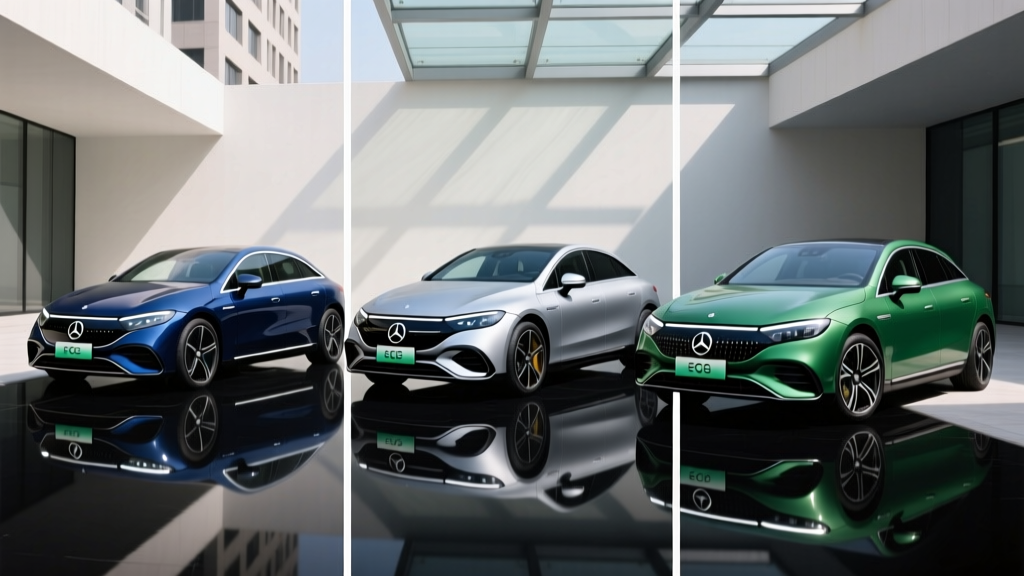
Mercedes-Benz currently sells three core battery-electric models in the U.S.: the EQB (compact SUV, ~245 mi EPA, from ~$54,500), the EQE Sedan (midsize luxury, ~305 mi EPA, from ~$76,000), and the EQS Sedan (full-size flagship, ~390 mi EPA, from ~$105,550). None currently qualify for the full $7,500 federal §30D tax credit due to battery-sourcing and MSRP-cap rules, making lease incentives and state-level rebates the primary offset tools. A Benz electric makes sense if you prioritize ride refinement, interior technology, and have reliable Level 2 home charging. If your priority is maximum range-per-dollar or DC fast-charging speed, competitors like the Hyundai Ioniq 6 or Tesla Model S deliver more efficiency for less money.
The 2026 Mercedes-Benz Electric Lineup at a Glance
Mercedes consolidated its "EQ" sub-brand messaging, but the vehicles carry forward with updated battery packs and software for the 2026 model year. Here's what's available right now:
| Spec | EQB 300 4MATIC | EQE 350+ Sedan | EQS 450+ Sedan |
|---|---|---|---|
| EPA Range | 245 mi | 305 mi | 390 mi |
| Real-World Range (highway/cold) | ~195–215 mi | ~245–270 mi | ~310–340 mi |
| Battery (usable) | 66.5 kWh, NMC | 90.6 kWh, NMC | 108.4 kWh, NMC |
| Peak DC Fast Charge | 100 kW | 170 kW | 200 kW |
| 10–80% DC Time | ~32 min | ~31 min | ~31 min |
| Level 2 Rate (kW) | 7.2 kW | 9.6 kW | 9.6 kW |
| Horsepower | 225 hp | 288 hp | 355 hp |
| 0–60 mph | 7.7 sec | 6.2 sec | 5.9 sec |
| MPGe (combined) | 78 MPGe | 85 MPGe | 89 MPGe |
| Base MSRP | $54,500 | $76,050 | $105,550 |
| Battery Warranty | 8 yr / 100,000 mi | 8 yr / 100,000 mi | 8 yr / 100,000 mi |
Source: fueleconomy.gov and Mercedes-Benz USA spec sheets. Real-world estimates reflect highway driving at 70+ mph and moderate cold (30–40°F); extreme cold can reduce range an additional 10–15%.
Real-World Range: What the EPA Sticker Doesn't Tell You
Mercedes-Benz electric vehicles use NMC (nickel manganese cobalt) battery chemistry, which delivers strong energy density but is more sensitive to temperature extremes than LFP (lithium iron phosphate) packs used in some competitors like the Tesla Model 3 RWD.
Expect Less Than the Sticker on the Highway
In real-world highway testing at 75 mph, the EQS 450+ consistently delivers around 310–340 miles before requiring a charge — roughly 13–20% below its 390-mile EPA figure. The EQE 350+ returns approximately 245–270 miles on the same route. The EQB, with its boxier aerodynamics and smaller pack, drops to roughly 195–215 miles at highway speed.
Cold-weather impact: In sub-freezing conditions (20°F and below), expect an additional 15–25% range reduction on top of highway losses. The EQS's heat pump (standard on 2026 models) helps mitigate cabin-heating energy draw, but battery chemistry still limits performance. Preconditioning the battery while plugged in recovers some of this loss and is critical for DC fast-charging speed in cold weather.
Charging Speed: The Benz Electric Weak Spot
This is where Mercedes-Benz electric vehicles fall behind the competition most noticeably. The EQS peaks at 200 kW on a DC fast charger, while the Hyundai Ioniq 5 N hits 350 kW and the Tesla Model S Plaid sustains around 250 kW. The practical difference:
| Charging Level | Power | Miles Added (EQS 450+) | Use Case |
|---|---|---|---|
| Level 1 (120V household) | ~1.4 kW | ~3–4 mi/hr | Emergency / overnight trickle |
| Level 2 (240V home) | 9.6 kW | ~28–32 mi/hr | Daily home charging (~10–12 hr full) |
| DC Fast Charge | 200 kW peak | ~185 mi in 31 min (10–80%) | Road trips, public stations |
The charge-curve reality: That 200 kW peak only holds roughly between 10–30% state of charge (SoC). Above 50%, the rate tapers significantly — often dropping below 80 kW past 70% SoC. This means the full 10–80% session takes approximately 31 minutes, which is competitive but not class-leading. On a 300-mile road trip, plan for one 30-minute stop at a 150+ kW Electrify America or EVgo station.
Mercedes-Benz EVs in North America use the CCS1 connector natively. A NACS adapter for Tesla Supercharger access has been available since late 2024 and is included with 2026 models, opening access to Tesla's 15,000+ Supercharger network.
Benz Electric vs Gas: The True Cost of Ownership
Let's compare the EQE 350+ Sedan against its closest internal-combustion sibling, the E 350 Sedan, over a 5-year / 60,000-mile ownership period.
| Cost Category | EQE 350+ (Electric) | E 350 (Gas) |
|---|---|---|
| Base MSRP | $76,050 | $59,900 |
| Federal Tax Credit (§30D) | $0 (sourcing/MSRP cap) | $0 |
| Estimated Lease Incentive | –$5,000 (dealer dependent) | $0 |
| Effective Purchase Price | ~$71,050 | $59,900 |
| Fuel / Energy (60k mi) | $3,420 (home L2, $0.14/kWh avg) | $8,100 (25 MPG, $3.38/gal) |
| Maintenance (60k mi) | $1,200 (cabin filter, fluid top-off, tires) | $3,800 (oil, brakes, filters, transmission) |
| Insurance (5 yr avg) | $12,500 | $10,200 |
| Estimated Depreciation (5 yr) | ~$35,000 (46%) | ~$24,000 (40%) |
| Total 5-Year Cost | ~$123,170 | ~$106,000 |
Key takeaway: The EQE saves roughly $7,300 in fuel and maintenance over five years, but the higher purchase price, steeper depreciation, and elevated insurance premiums result in a net ownership cost that runs approximately $17,000 higher than the gas E 350. Federal tax credit eligibility would narrow this gap, but current §30D battery-sourcing and MSRP-cap rules exclude most Mercedes-Benz electric models. Source: IRS §30D guidelines.
Where Benz Electric Owners Actually Save
- No oil changes, ever. EV powertrains eliminate engine oil, transmission fluid, and spark plug service.
- Brake pad life extends 2–3x. Regenerative braking handles most deceleration, sparing friction brakes. Many EV owners report original brake pads past 80,000 miles.
- Home charging convenience. If you have Level 2 access, you start every morning with a "full tank" — no gas station detours.
- HOV lane access in many states (varies by jurisdiction — check local DMV rules).
First-Time Benz Electric Buyer: What You Must Know
Home Charging Is Non-Negotiable for Satisfaction
Mercedes-Benz electric vehicles are heavy luxury cars with large battery packs. Charging on a standard 120V Level 1 outlet adds roughly 3–4 miles per hour — meaning a full EQS charge takes over 30 hours. A Level 2 home charger (240V, 48-amp circuit) is effectively mandatory. Budget $800–$2,500 for a quality Level 2 unit (ChargePoint Home Flex or similar) plus $500–$2,000 for electrician installation, depending on your panel capacity and run distance. If your home has a 100-amp service panel, a $2,000–$4,000 panel upgrade may be required.
Tax Credit Reality Check
As of 2026, the federal §30D clean vehicle credit offers up to $7,500 for new EVs, but eligibility requires:
- Vehicle MSRP under $55,000 (sedans) or $80,000 (SUVs/vans)
- Buyer AGI below $150,000 (single) or $300,000 (joint)
- Battery components and critical minerals meeting North American sourcing thresholds
The EQB at $54,500 technically falls under the sedan MSRP cap, but its battery sourcing has not consistently met the critical-minerals requirement, disqualifying it from the full credit. The EQE and EQS exceed the MSRP cap entirely. Leasing is the workaround: the commercial clean vehicle credit (§45W) allows dealers to pass a $7,500 lease incentive regardless of MSRP caps or buyer income, though this is dealer-dependent and not guaranteed.
Insurance Costs Are Higher — Get Quotes First
EVs carry 15–25% higher insurance premiums on average due to costly battery replacement and specialized repair requirements. Before committing to a Benz electric, get quotes from your insurer for the specific trim. The EQS, with its $105K+ starting price, can push annual premiums above $2,800 in many markets.
Common Misconceptions About Benz Electric Vehicles
| Myth | Fact |
|---|---|
| "The EQS gets 390 miles in real driving." | 390 miles is the EPA combined estimate. Highway driving at 75 mph yields ~310–340 miles. Cold weather reduces this further to ~260–290 miles. |
| "I'll get the $7,500 federal tax credit." | Most Mercedes-Benz EVs are disqualified by MSRP caps or battery-sourcing rules. Lease incentives may apply but are dealer-dependent. |
| "It charges as fast as a Tesla." | The EQS peaks at 200 kW vs Tesla Model S at ~250 kW. More importantly, Mercedes' sustained charge curve tapers earlier, making real session times comparable or slower. |
| "The battery will need expensive replacement in 5 years." | Mercedes warranties the battery for 8 years / 100,000 miles against degradation below 70% capacity. Real-world NMC degradation data from similar packs shows ~8–12% loss over 100,000 miles. A full replacement runs $20,000–$30,000 out of warranty but is rarely needed within the first decade. |
| "I can charge on any public charger." | Mercedes uses CCS1 natively. Tesla Supercharger access requires the included NACS adapter. Some older CHAdeMO-only stations will not work. |
Decision Framework: Should You Buy a Benz Electric?
Choose a Benz Electric If:
- You have Level 2 home charging (or can install it) and drive under 250 miles daily.
- Ride comfort and cabin technology are your top priorities — the EQS's MBUX Hyperscreen and air suspension remain class-leading for luxury.
- You lease rather than buy, allowing you to capture the $7,500 commercial-credit lease incentive without MSRP-cap restrictions.
- You want Tesla Supercharger access via the included NACS adapter, giving you the broadest public charging network available.
- You live in a moderate climate where cold-weather range loss is manageable (think Southeast, West Coast, or mild Midwest winters).
Look Elsewhere If:
- Range-per-dollar matters most. The Hyundai Ioniq 6 SE delivers 361 miles EPA for under $42,000 — and qualifies for the federal tax credit.
- You rely exclusively on public charging. Benz electric charging speeds (100–200 kW peak) mean longer sessions at DC fast chargers compared to 800V-architecture competitors like the Ioniq 5 or Porsche Taycan.
- You want maximum performance. The EQE AMG variant hits 617 hp but starts at $108,000. The Tesla Model S Plaid delivers 1,020 hp for $89,990.
- You live in a severe cold-weather region (consistently below 10°F) and cannot garage your vehicle. Consider a PHEV like the Mercedes GLC 350e instead — you get 30+ miles of electric-only range for daily commuting plus a gas engine for deep-cold road trips.
Frequently Asked Questions
Does Mercedes-Benz make a fully electric SUV?
The EQB is a compact electric SUV (three-row, though the third row is best for children). Mercedes discontinued the larger EQS SUV for the U.S. market after 2025 due to slow sales. If you need a full-size electric luxury SUV, the closest Benz electric option is no longer available new — consider the Rivian R1S or Tesla Model X as alternatives.
How much does it cost to charge a Benz electric at home?
At the U.S. average residential electricity rate of ~$0.16/kWh, fully charging the EQS 450+ (108.4 kWh) costs approximately $17.35. The EQE 350+ (90.6 kWh) costs about $14.50, and the EQB (66.5 kWh) costs about $10.64. For comparison, filling the E 350's 17.4-gallon tank at $3.38/gallon costs $58.81. Over 12,000 miles per year, home charging saves roughly $900–$1,100 vs. premium gasoline.
Is the Mercedes me Charge app reliable for public charging?
The Mercedes me Charge app aggregates multiple networks (Electrify America, EVgo, ChargePoint) and offers route planning with charging stops. In practice, it's functional but occasionally shows outdated station availability. Most owners find the PlugShare or A Better Routeplanner apps more reliable for trip planning. The in-car navigation handles DC fast-charger routing well and will precondition the battery automatically when a charger is set as your destination.
What happens if the battery degrades significantly?
Mercedes warranties the high-voltage battery for 8 years or 100,000 miles, covering capacity loss below 70% of original. If your battery falls below this threshold within the warranty period, Mercedes will repair or replace it at no cost. Out-of-warranty replacement runs $20,000–$30,000 depending on the model, though individual module replacement (repairing only degraded cells) is sometimes possible for less. Real-world data from similar NMC packs suggests most will retain 85–92% capacity at 100,000 miles under normal use.
Should I buy or lease a Benz electric?
From a pure-cost standpoint in 2026, leasing is strongly recommended. A lease may unlock the $7,500 commercial-credit incentive (passed as a cap-cost reduction) that purchase buyers cannot access due to MSRP and sourcing restrictions. Leasing also shields you from the steep depreciation that luxury EVs experience — the EQS can lose 45–50% of its value in five years. If you plan to keep the vehicle 8+ years and value ownership, buying makes sense only if you can negotiate a significant discount off MSRP.
Prices and specifications reflect 2026 model year data as of publication. Tax credit eligibility rules under IRS §30D are subject to change — consult irs.gov or a tax professional before purchasing. Real-world range and charging estimates are based on independent testing and owner reports; your results will vary based on driving style, climate, and conditions. Safety ratings available at NHTSA.gov and IIHS.org.