The short answer: The primary benefits to electric cars are lower per-mile energy costs (roughly $0.04–$0.06 per mile on home charging vs. $0.12–$0.16 for gas), dramatically reduced maintenance (no oil changes, fewer brake replacements thanks to regenerative braking), and instant torque for responsive acceleration. A typical EV owner driving 12,000 miles per year can save $800–$1,400 annually on fuel and maintenance combined. However, these savings depend heavily on home charging access, local electricity rates, upfront purchase price, and whether you qualify for the federal §30D tax credit (up to $7,500 with strict income, MSRP, and battery-sourcing requirements).
The Financial Case: Where EVs Actually Save You Money
The strongest benefit to electric cars is operational cost. Let's break this down with concrete numbers rather than vague promises.
Energy cost per mile: According to the U.S. Energy Information Administration, the average residential electricity rate sits around $0.17 per kWh in early 2026. An efficient EV like the Hyundai Ioniq 6 SE (140 MPGe combined, roughly 25 kWh/100 miles per fueleconomy.gov) costs about $0.043 per mile charging at home. Compare that to a 30 MPG gas sedan at $3.30 per gallon: $0.11 per mile. That's a 60% reduction in energy cost per mile.
Maintenance savings: Battery electric vehicles eliminate oil changes, spark plugs, timing belts, transmission fluid, and exhaust system repairs. Regenerative braking extends brake pad life significantly — many EV owners report original brake pads at 80,000+ miles. Consumer research consistently shows EV maintenance costs running 30–50% lower than comparable gas vehicles over five years.
| Cost Category | EV (e.g., Tesla Model 3 RWD) | Gas Sedan (e.g., Honda Accord 1.5T) |
|---|---|---|
| Purchase Price (base MSRP) | $38,990 | $29,990 |
| Fed. Tax Credit (§30D, if eligible) | −$7,500 | $0 |
| Effective Purchase | $31,490 | $29,990 |
| Fuel/Energy (5 years) | $2,880 (home charging) | $6,600 |
| Maintenance (5 years) | $1,500 | $3,200 |
| Insurance (5 years, avg.) | $9,500 | $7,800 |
| Total 5-Year Cost | $45,370 | $47,590 |
The reality check: EV insurance premiums run 15–25% higher on average due to repair costs and battery replacement risk. And the tax credit is not guaranteed — eligibility depends on your adjusted gross income, the vehicle's MSRP, and battery mineral sourcing. Always verify current rules at irs.gov before counting on it.
Performance and Driving Experience Benefits
Beyond cost, electric powertrains deliver tangible driving advantages that gas engines physically cannot match:
- Instant torque: Electric motors deliver maximum torque from 0 RPM. A Tesla Model 3 Long Range AWD hits 0–60 mph in 4.2 seconds with 440 hp — performance that required a V6 or turbo four in a gas car costing thousands more.
- One-pedal driving: Aggressive regenerative braking lets you slow to a stop by lifting off the accelerator, reducing brake wear and driver fatigue in stop-and-go traffic.
- Low center of gravity: The battery pack sits under the floor, giving EVs planted handling and reduced rollover risk. The Model 3 earns a 5-star overall NHTSA safety rating.
- Quiet operation: No engine noise or vibration at idle or low speeds, with significantly reduced cabin noise at highway speeds compared to gas counterparts.
- Preconditioning: You can warm or cool the cabin while plugged in without running an engine — safe in an enclosed garage and energy-efficient.
Range and Charging: The Honest Picture
Range is where marketing meets reality, and understanding the gap is essential to evaluating the true benefits to electric cars.
EPA range vs. real-world: The EPA range test includes city and highway cycles with climate control off. In practice, expect to lose 10–20% on sustained highway driving (above 70 mph) and 20–35% in freezing temperatures. A vehicle rated at 330 miles EPA might deliver 260–280 miles on a winter highway trip.
Charging speed matters more than peak kW: Manufacturers advertise peak DC fast-charge rates (e.g., 250 kW), but that rate is sustained only briefly at low state of charge. The charging curve tapers significantly above 50% and sharply above 80%. What matters is the 10–80% time.
| Metric | BEV (e.g., Ioniq 5) | Gas Sedan | PHEV (e.g., RAV4 Prime) |
|---|---|---|---|
| Total Range | 303 mi (EPA) | 450–500 mi | 42 mi electric + 520 mi gas |
| Refuel/Recharge Time | 18 min (10–80% at 230 kW DC) | 3–5 min | 2.5 hr (Level 2) or 5 min (gas) |
| Home "Refueling" | Yes — wake up full every morning | No | Yes (electric portion) |
| Cost per Mile | $0.04–$0.06 (home) | $0.11–$0.16 | $0.04 electric / $0.12 gas |
| Cold-Weather Range Loss | 20–35% | Minimal (5–10%) | 20–30% (electric portion) |
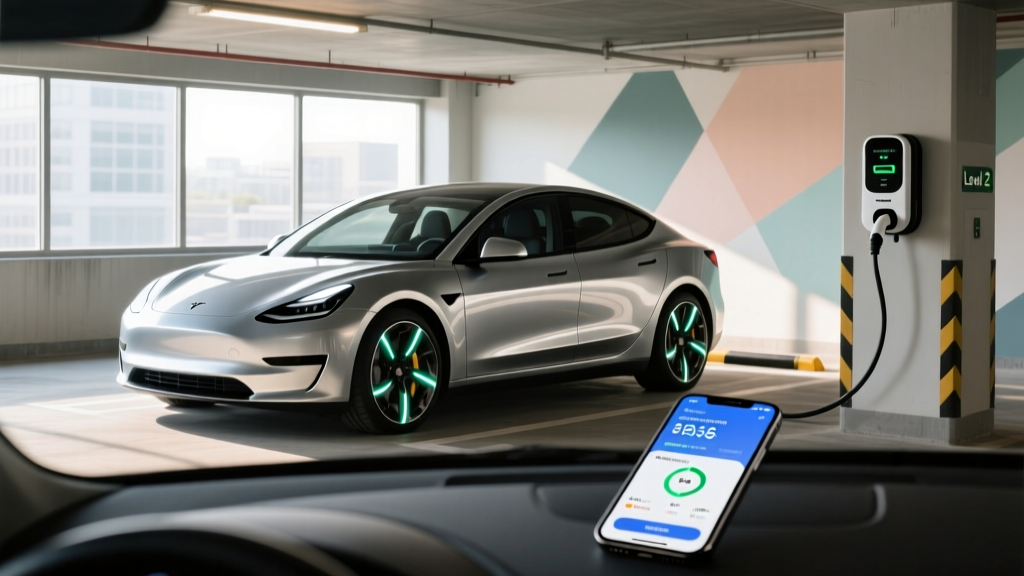
Home charging is the key unlock: The single biggest benefit to electric cars is waking up to a "full tank" every morning — but only if you can install a Level 2 charger. A 48-amp Level 2 station on a 240V circuit adds roughly 30–44 miles of range per hour of charging, easily replenishing a day's driving overnight. Installation costs range from $500 (simple outlet near the panel) to $2,500+ (panel upgrade, long conduit runs). If you live in an apartment or rely entirely on public charging, the convenience benefit shrinks considerably, and public DC fast charging at $0.30–$0.50 per kWh can erase your fuel cost advantage.
Common Misconceptions — Myth vs. Fact
| Myth | Fact with Data |
|---|---|
| "EV batteries need replacing every few years." | Federal law mandates battery warranties of at least 8 years/100,000 miles. Modern NMC and LFP packs routinely retain 85–90% capacity at 100,000 miles. Full replacement costs $8,000–$18,000 but is rarely needed within typical ownership. |
| "EVs are worse for the environment because of battery mining." | Lifecycle analyses from Argonne National Laboratory show EVs produce fewer total emissions than gas cars over their lifetime, even accounting for battery manufacturing, in every U.S. grid region. The advantage grows as the grid decarbonizes. |
| "The tax credit gives everyone $7,500." | The §30D credit has income caps ($150K single / $300K joint), MSRP caps ($55K sedans / $80K SUVs/trucks), and critical mineral + battery component sourcing requirements that disqualify some models. It can be transferred at point of sale. Check IRS guidelines before purchasing. |
| "EVs can't handle road trips." | With 200+ kW DC fast charging, a 300-mile EV adds ~200 miles in 15–20 minutes. The Tesla Supercharger and Electrify America networks cover major interstate corridors. Planning apps like A Better Routeplanner make multi-stop trips straightforward. |
| "Charging an EV takes too long." | Home Level 2 charging happens while you sleep — zero active time. For road trips, 15–25 minute fast-charge stops align with natural rest breaks on a 4+ hour drive. |
Battery Longevity and Warranty Protection
Battery degradation is real but slower than most buyers fear. Two dominant chemistries shape the ownership experience:
- NMC (Nickel Manganese Cobalt): Higher energy density, lighter weight, better cold-weather performance. Typical degradation: ~10–15% over 100,000 miles. Found in most long-range models.
- LFP (Lithium Iron Phosphate): Lower energy density but superior cycle life — can handle daily 100% charging with minimal degradation. Typical degradation: ~5–10% over 150,000+ miles. Used in standard-range Tesla Model 3/Y and some competitors.
All new EVs carry a minimum 8-year/100,000-mile battery warranty covering capacity loss below a threshold (usually 70% of original). Some manufacturers offer longer coverage. This warranty protects you against premature failure, but understand that normal gradual degradation is expected and not a defect.
Decision Framework: Is an EV Right for Your Situation?
Choose a battery electric vehicle if:
- You have access to home charging (garage, driveway, or employer-installed Level 2)
- Your daily driving is under 80 miles round-trip (well within any modern EV's range)
- You want the lowest per-mile operating cost and minimal maintenance
- You qualify for the §30D tax credit or your state offers meaningful incentives
- You take road trips fewer than 4–5 times per year and can plan charging stops
Choose a plug-in hybrid (PHEV) if:
- You lack reliable home charging but want electric commuting
- You frequently drive 300+ miles in a day and don't want to plan charging
- You want electric-only range (25–45 miles) for daily errands with gas backup for longer trips
- You live in an area with sparse DC fast-charging infrastructure
Stick with a gas or conventional hybrid (HEV) if:
- You have no access to any form of plug-in charging at home, work, or nearby public stations
- Your budget cannot accommodate the higher upfront cost even after incentives
- You regularly tow heavy loads over long distances (though EV towing is improving)
- You live in extreme cold climate with minimal garage access and drive long distances daily
What First-Time EV Buyers Must Know Before Purchasing
- Verify your electrical panel: A Level 2 charger typically requires a 240V/50-amp circuit. If your panel is 100 amps or near capacity, an upgrade to 200 amps adds $1,500–$3,500 to installation costs. Get a licensed electrician's assessment before buying.
- Check tax credit eligibility BEFORE you buy: Battery sourcing requirements change periodically. A vehicle that qualified in January may not qualify in June. Confirm on the IRS clean vehicle portal at the time of purchase.
- Insurance quote first: Get an insurance quote on the specific EV model before signing. Premiums vary wildly — some EVs cost 30%+ more to insure than their gas equivalents.
- Test the charging ecosystem: Download the apps for ChargePoint, EVgo, and Electrify America. Map the chargers near your home, workplace, and frequent destinations. Reliability varies by network and location.
- Understand preconditioning: Most EVs let you warm the battery before arriving at a DC fast charger (or schedule it via the app). This can shave 5–10 minutes off your charging time in cold weather by bringing the battery to optimal temperature.
Frequently Asked Questions
Do electric cars save money in the long run?
Yes, for most owners with home charging. Fuel and maintenance savings of $800–$1,400 per year typically offset a higher purchase price within 4–7 years, faster if you qualify for the $7,500 federal tax credit. Without home charging, public charging costs can erode or eliminate fuel savings.
How long do EV batteries actually last?
Modern EV batteries are designed to last the life of the vehicle. Real-world data shows most packs retain 85–90% of original capacity at 100,000 miles. LFP chemistry packs may retain 90%+ at 150,000 miles. Federal warranty minimums are 8 years/100,000 miles with coverage for capacity loss below ~70%.
What happens if I can't charge at home?
Public Level 2 chargers (at workplaces, shopping centers, or apartment complexes) can work for daily needs if conveniently located. Relying solely on DC fast charging is expensive ($0.30–$0.50/kWh) and adds wear to the battery from frequent high-rate charging. If home charging is impossible, a PHEV may be a better fit.
Are EVs good in cold weather?
EVs function in cold weather but lose 20–35% of rated range in freezing temperatures due to battery chemistry and cabin heating demands. Heat pump equipped models (increasingly standard) reduce this penalty. Preconditioning while plugged in mitigates range loss. If you live in sub-zero climates and drive long distances, plan for reduced range or consider a PHEV.
Is an EV better than a hybrid?
A BEV offers lower operating costs, zero tailpipe emissions, and a smoother driving experience — but requires charging access. A hybrid (HEV) like the Toyota Prius (57 MPG combined) offers excellent efficiency with zero lifestyle change and no charging needed. A PHEV splits the difference. The right choice depends on your charging access, driving patterns, and budget.