The Short Answer: What Are the Benefits of Electric Cars?
The core benefits of electric cars come down to three things: lower per-mile energy cost (roughly $0.04–$0.06 per mile on home electricity vs. $0.12–$0.16 per mile on gasoline), dramatically reduced maintenance (no oil changes, no transmission fluid, regenerative braking extends pad life to 80,000+ miles), and instant torque delivery that makes even modest-power EVs feel quick in daily driving. A 2026 EV like the Hyundai Ioniq 6 SE Long Range (EPA 361 miles, 77.4 kWh battery, starting around $42,500) can cost under $600 per year to "fuel" on residential electricity — compared to roughly $1,800 annually for a comparable gas sedan averaging 30 MPG at $3.50/gallon. Add the federal §30D tax credit (up to $7,500 for qualifying models and buyers) and the total-cost-of-ownership gap narrows further, often within 3–4 years.
But the benefits depend heavily on your situation. Home charging access, local electricity rates, climate, and driving patterns all shape whether an EV saves you money or creates friction. Below, we break down the real numbers.
Energy Cost: Electricity vs. Gasoline, Mile for Mile
The single most quantifiable benefit of an electric car is the cost to move it one mile. Let's run the numbers using current 2026 averages.
| Metric | EV (e.g., Tesla Model 3 RWD) | Gas Sedan (e.g., Honda Civic 2.0L) |
|---|---|---|
| EPA Efficiency | 132 MPGe / 25 kWh/100mi | 33 MPG combined |
| Energy Cost (Home Charging / Gas) | $0.16/kWh (US avg residential) | $3.40/gallon (US avg regular) |
| Annual Energy Cost | $600 | $1,545 |
| Cost Per Mile | $0.04 | $0.103 |
| 5-Year Energy Cost | $3,000 | $7,725 |
Source: Efficiency figures from fueleconomy.gov. Electricity rate based on EIA 2025 residential average; gas price based on AAA national average.
The savings widen if you have access to time-of-use (TOU) utility rates, where off-peak overnight charging can drop to $0.08–$0.10/kWh — bringing annual fuel cost below $400. They narrow if you rely primarily on public DC fast charging, where rates of $0.35–$0.55/kWh can push per-mile cost to $0.09–$0.14, nearly matching gasoline.
Real-world caveat: If you drive a larger, less efficient EV (like a Ford F-150 Lightning at 48–50 kWh/100mi combined), your electricity cost per mile rises to roughly $0.08 at home — still below gas, but the gap shrinks. Efficiency matters as much as the power source.
Maintenance Savings: Where the Money Really Adds Up
Beyond fuel, EVs eliminate entire categories of routine maintenance. Internal combustion engines have hundreds of moving parts; electric drivetrains have roughly 20. Here's what disappears from your service schedule:
- Oil changes: Eliminated entirely. A gas car needs 2–3 per year at $50–$90 each — that's $100–$270 annually saved.
- Transmission fluid: Most EVs use a single-speed reduction gear with sealed, lifetime fluid. No flushes, no replacements.
- Brake pads: Regenerative braking handles 80–90% of deceleration, so friction brake pads routinely last 80,000–120,000 miles on EVs vs. 30,000–50,000 on gas cars.
- Spark plugs, timing belts, exhaust components, fuel pumps, catalytic converters: None exist on a BEV.
- Emissions testing: Not required for electric vehicles in any US state.
According to a Consumer Reports analysis, EV owners spend approximately 50% less on maintenance and repair over the vehicle's lifetime compared to gas-car owners — roughly $0.061/mile for EVs vs. $0.101/mile for ICE vehicles. Over 150,000 miles, that's a $6,000 maintenance savings.
Honest limitation: EVs are not maintenance-free. You'll still need tire rotations (EVs are heavier and wear tires ~20% faster due to instant torque), cabin air filter replacements, brake fluid flushes every 2–3 years, and windshield washer fluid. And if the traction battery degrades significantly outside warranty, replacement costs range from $5,000 (small LFP packs) to $18,000+ (large NMC packs) — though this is rare within the 8-year/100,000-mile federal warranty period.
Performance and Driving Experience Benefits
Electric motors deliver peak torque from 0 RPM. This means even a moderately powered EV feels responsive in ways that require a turbocharged or V6 gas engine to match. Some benchmarks:
| Vehicle | Powertrain | Horsepower | 0–60 mph | Drivetrain |
|---|---|---|---|---|
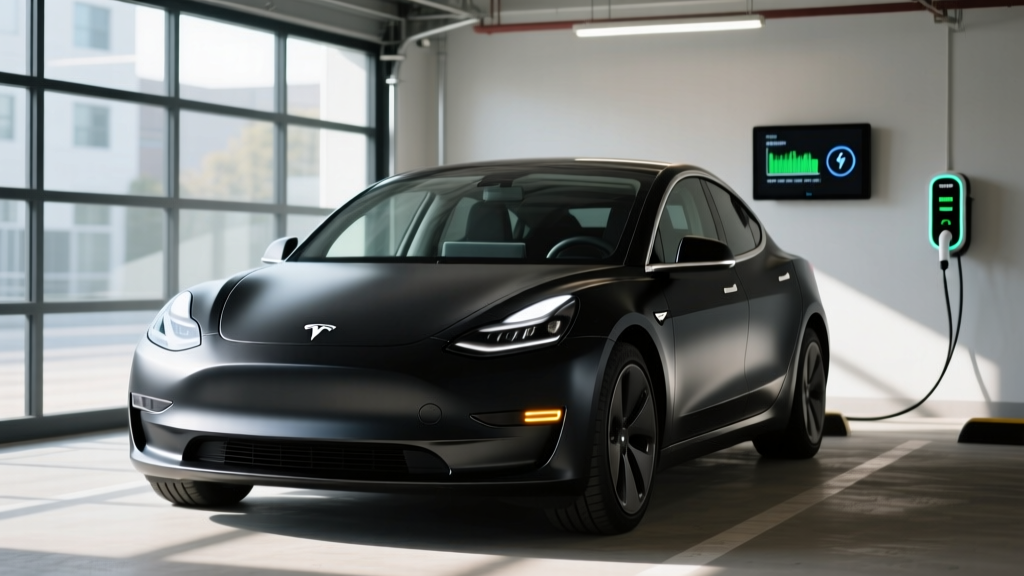
| Tesla Model 3 RWD (2026) | BEV (LFP, 60 kWh) | 271 hp | 5.8 sec | Rear-wheel drive |
| Honda Civic Sport (2026) | 2.0L I-4 Gas | 158 hp | 7.7 sec | Front-wheel drive |
| Hyundai Ioniq 5 SEL AWD (2026) | BEV (NMC, 77.4 kWh) | 320 hp | 5.1 sec | All-wheel drive |
| Toyota RAV4 XLE AWD (2026) | 2.5L I-4 Gas | 203 hp | 8.1 sec | All-wheel drive |
Beyond straight-line speed, EVs offer a lower center of gravity (battery pack mounted in the floorpan), which improves handling stability. The absence of engine noise and vibration makes cabins noticeably quieter at all speeds — a benefit you feel on every drive, not just in performance metrics.
One-pedal driving — using regenerative braking to slow the car by lifting off the accelerator — reduces fatigue in stop-and-go traffic and is a feature gas cars simply cannot replicate.
Federal Tax Credits and Incentives: What Actually Applies in 2026
The federal §30D Clean Vehicle Credit can reduce the effective purchase price of a qualifying new EV by up to $7,500 — and since 2024, it can be transferred to the dealer at point of sale as an immediate price reduction rather than claimed on your tax return. However, eligibility is not universal. The rules have tightened significantly.
§30D Credit Requirements (2026 Tax Year)
- Vehicle MSRP cap: ≤$55,000 for sedans; ≤$80,000 for SUVs, vans, and pickups
- Buyer income cap (modified AGI): ≤$150,000 single; ≤$225,000 head of household; ≤$300,000 joint filers
- Battery component sourcing: Increasing percentages of battery components must be manufactured or assembled in North America (phasing up annually through 2029)
- Critical minerals: Increasing percentages of critical minerals must be sourced from the US or FTA partners
- Foreign Entity of Concern (FEOC) restriction: Vehicles with battery components or critical minerals from FEOC entities (primarily Chinese supply chain) are disqualified
- Final assembly: Must occur in North America
Source: IRS §30D Clean Vehicle Credit rules. Always verify current-year eligibility at fueleconomy.gov before purchasing.
Practical reality: In 2026, qualifying models include the Tesla Model 3 Long Range, Ford Mustang Mach-E Select, Hyundai Ioniq 5, Chevrolet Equinox EV, and several others — but specific trims and build dates matter. A vehicle that qualified in January may not qualify in June if supply-chain sourcing changes. Always check the VIN-level eligibility tool at fueleconomy.gov before committing.
Environmental Benefits: Beyond Tailpipe Emissions
EVs produce zero tailpipe emissions, which directly improves local air quality — particularly in urban areas where NOx and particulate matter from gas engines contribute to respiratory illness. But the full environmental picture depends on your electricity grid.
On the US average grid (2025 data), driving an EV produces roughly 60–70% fewer lifecycle greenhouse gas emissions than a comparable gas car, according to the Union of Concerned Scientists' EV emissions calculator. On cleaner grids (Pacific Northwest hydro, California's increasing renewables), the reduction reaches 75–85%. Even on coal-heavy grids (parts of the Midwest), an EV still produces fewer emissions than a 30-MPG gas car because large power plants are thermodynamically more efficient than small internal combustion engines.
Additionally, EV batteries are increasingly recyclable. Companies like Redwood Materials and Li-Cycle recover 90–95% of critical minerals (lithium, cobalt, nickel) from end-of-life packs for reuse in new batteries, reducing the need for virgin mining.
Real-World Ownership Considerations: What First-Time Buyers Must Know
The benefits above assume favorable conditions. Here's where reality introduces friction — and how to evaluate whether an EV works for your situation.
Home Charging Access
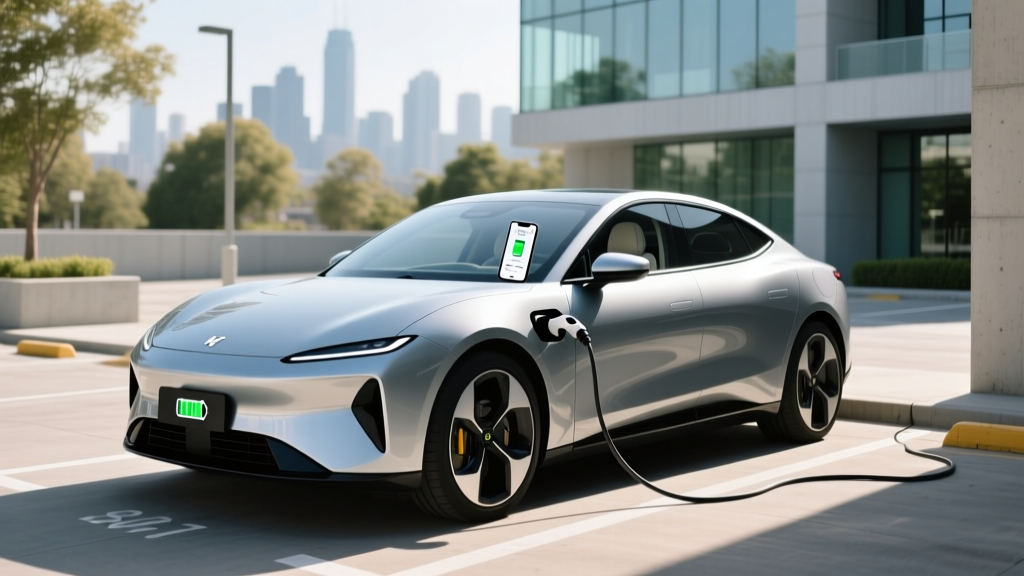
Home Level 2 charging (240V, 7–11.5 kW) is the backbone of convenient EV ownership. It adds 25–44 miles of range per hour of charging, meaning an overnight session (8–10 hours) fully replenishes virtually any EV. Installation costs range from $500–$1,500 if your electrical panel has capacity, to $2,500–$5,000+ if you need a panel upgrade from 100A to 200A service.
If you cannot charge at home (apartment, street parking, no garage), EV ownership becomes significantly less convenient. You'll rely on public Level 2 or DC fast charging, which costs more per mile and requires planning. In this scenario, a plug-in hybrid (PHEV) like the Toyota RAV4 Prime (42 miles electric-only range, then hybrid operation) may be a better bridge.
Cold-Weather Range Loss
Lithium-ion batteries lose efficiency in cold temperatures. Expect 15–30% range reduction at 20°F compared to the EPA sticker, depending on whether the EV has a heat pump (which helps significantly). A 300-mile EPA EV may deliver 210–255 real-world miles in freezing weather. EVs with heat pumps — like the Hyundai Ioniq 5, Tesla Model Y, and BMW i4 — lose closer to 15–20%, while those relying on resistive heating lose 25–30%.
Charging on Road Trips
DC fast charging adds range quickly but not instantly. A typical 2026 EV peaks at 150–250 kW and charges 10–80% in 18–28 minutes. However, charging speed tapers significantly above 80% State of Charge (SoC) to protect battery health — the final 20% can take as long as the first 80%. Plan road-trip stops around 10–80% charges and use tools like A Better Routeplanner to optimize.
Insurance Costs
EV insurance premiums run 10–25% higher than comparable gas cars, driven by higher repair costs (specialized parts, battery protection requirements) and higher vehicle purchase prices. A Model Y might cost $1,800–$2,400/year to insure vs. $1,400–$1,800 for a similarly sized gas crossover. Always get quotes before purchasing.
Common Misconceptions: Myth vs. Fact
| Myth | Fact |
|---|---|
| "EV batteries need replacing every 5 years" | Federal law mandates battery warranties of 8 years/100,000 miles (10 years/150,000 miles in CARB states). Real-world degradation data shows most packs retain 85–92% capacity at 100,000 miles. Many early Nissan Leafs and Tesla Model S vehicles exceed 150,000 miles on original packs. |
| "EVs are worse in cold weather" | Range drops 15–30%, but EVs start instantly in any temperature (no cold-crank issues), and preconditioning while plugged in warms the battery and cabin using grid power, preserving range. Remote preconditioning via app is standard on most 2026 EVs. |
| "The grid can't handle mass EV adoption" | Most charging happens overnight during off-peak hours when grid capacity is underutilized. The DOE estimates that even with 50% EV adoption, total US electricity demand would increase only ~10–15%, manageable with existing infrastructure and smart-charging programs. |
| "EVs are more expensive overall" | Higher sticker price, yes — but after §30D credit, lower fuel cost, and reduced maintenance, many EVs reach total-cost-of-ownership parity with gas cars within 3–5 years at 15,000 miles/year. |
| "Charging takes too long" | Home Level 2 charging takes 0 minutes of your active time — you plug in and sleep. For road trips, a 20-minute DC fast charge every 2–3 hours aligns with natural rest/food stops. |
Decision Framework: Is an EV Right for You?
Choose a Battery Electric Vehicle (BEV) If:
- You have reliable home Level 2 charging (garage, driveway, or workplace charger)
- Your daily driving is under 80 miles round-trip (covers 95%+ of US commutes)
- You want the lowest per-mile operating cost and minimal maintenance
- You qualify for the §30D tax credit (income and vehicle MSRP within caps)
- You take road trips 2–4 times per year and can plan 20-minute DC fast-charge stops
Choose a Plug-In Hybrid (PHEV) If:
- You lack reliable home charging but want some electric-only driving
- You frequently drive 200+ miles in a day and don't want to plan charging stops
- You want electric commuting (25–42 miles) with gas flexibility for longer trips
- You live in an area with limited public charging infrastructure
Stick with Gas or Hybrid (HEV) For Now If:
- You have no home or workplace charging access and your area has sparse public infrastructure
- Your budget is under $25,000 and you need a used vehicle (used EV market is growing but still limited at low price points)
- You regularly tow heavy loads over long distances (EV towing range drops 40–50%)
Frequently Asked Questions
How long do EV batteries actually last?
Most 2026 EV batteries are designed to retain 70–80% of original capacity after 150,000–200,000 miles. LFP (lithium iron phosphate) chemistry, used in the Tesla Model 3 RWD and standard-range Ford Mustang Mach-E, shows even slower degradation — often retaining 90%+ at 100,000 miles due to its superior cycle life. The federal warranty guarantees at least 70% capacity retention for 8 years/100,000 miles.
What does it cost to install a home charger?
A Level 2 home charger (hardwired, 48-amp, 11.5 kW) costs $400–$700 for the unit plus $500–$1,500 for electrician installation if your panel has capacity. Total: $900–$2,200. If you need a 200A panel upgrade, add $1,500–$3,000. Some utilities offer rebates of $200–$500 that offset installation cost.
Do EVs really save money compared to gas cars?
Yes, but the timeline depends on your mileage and electricity rates. At 15,000 miles/year with home charging, typical annual fuel savings are $800–$1,200, and maintenance savings add $300–$500. Combined savings of $1,100–$1,700/year mean the EV's price premium (after tax credits) is typically recovered in 3–5 years. Higher annual mileage accelerates payback.
What happens if I run out of charge on the road?
Modern EVs provide accurate range estimation and aggressive low-battery warnings. Apps like PlugShare and the vehicle's built-in navigation route you to chargers proactively. If you do deplete the battery, roadside assistance can tow you to the nearest charger — you cannot "refuel" an EV on the roadside the way you can bring a jerry can to a gas car. This is why planning matters more for EVs on long trips.
Are EVs safe in crashes?
Yes. EVs consistently earn top ratings from IIHS and NHTSA. The battery pack's floor-mounted position lowers the center of gravity, reducing rollover risk. Battery enclosures are heavily reinforced, and post-crash fire rates for EVs are significantly lower than for gasoline vehicles, according to NHTSA data and independent analyses.