Quick Answer: Is the Beachman 64 Electric Cafe Racer Right for You?
The Beachman 64 Electric Cafe Racer is a niche, retro-styled electric two-wheeler aimed at urban commuters who want classic cafe-racer aesthetics with zero tailpipe emissions. Before purchasing, know that it is classified as a low-speed electric vehicle or electric moped in most U.S. jurisdictions — not a highway-capable motorcycle. Expect a real-world range of roughly 40–60 miles per charge depending on battery configuration, rider weight, terrain, and ambient temperature. Charging occurs via standard 120V household outlets (Level 1 equivalent), typically taking 4–6 hours from empty to full. It is best suited for riders with secure home or garage charging access who commute under 30 miles round-trip and do not require freeway speeds.
Beachman 64 Electric Cafe Racer: What It Actually Is
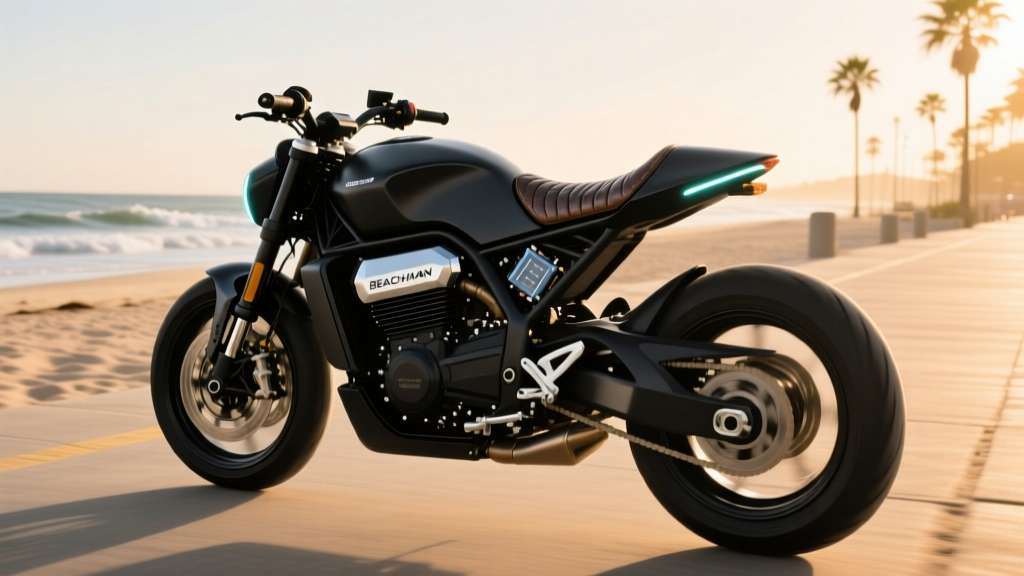
The Beachman 64 draws design inspiration from 1960s British cafe racers — low clip-on handlebars, a sculpted fuel tank (housing the battery pack), and a solo sprung seat. However, the powertrain is fully electric. The "64" in the name references its vintage styling lineage rather than a performance metric.
Key specifications buyers should verify before purchase include:
- Motor output: Typically 2–4 kW continuous (hub-mounted or mid-drive), producing roughly 3–5 horsepower equivalent
- Battery capacity: Generally 2–4 kWh (lithium-ion, usually NMC chemistry for energy density in a compact frame)
- Top speed: Approximately 28–45 mph depending on configuration and local classification (low-speed vehicle vs. moped vs. light motorcycle)
- EPA-equivalent range: 40–60 miles under optimal conditions; expect 25–40 miles at sustained higher speeds or in cold weather below 40°F
- Charging: 120V AC onboard charger; no DC fast charging capability
- Weight: Approximately 150–200 lbs depending on battery configuration
Common Misconceptions vs. Facts
| Myth | Fact |
|---|---|
| "It's a motorcycle — I can take it on the highway." | Most configurations top out at 28–45 mph. It is not legal or safe for interstate highway use in most states. |
| "Electric means zero maintenance." | No oil changes, but tires, brakes, suspension, chain/belt drive, and battery health monitoring still require attention. |
| "It qualifies for the $7,500 federal EV tax credit." | The IRS §30D credit applies to four-wheeled vehicles meeting specific battery-sourcing and MSRP caps. Two- and three-wheeled electric vehicles may qualify under different, often smaller, incentive programs — check IRS guidelines for current-year eligibility. |
| "Range is the same year-round." | Lithium-ion batteries lose 15–30% usable capacity in temperatures below 40°F. A 50-mile summer range may drop to 35 miles in winter. |
Beachman 64 vs. a Gas-Powered Cafe Racer: Cost and Practicality
To put the Beachman 64 in context, consider how it compares to a typical gas-powered 250–400cc cafe-racer-style motorcycle (e.g., a Royal Enfield Continental GT or similar retro standard) for urban commuting:
| Factor | Beachman 64 Electric | Gas Cafe Racer (250–400cc) |
|---|---|---|
| Purchase price (est.) | $4,000–$7,500 | $5,500–$8,000 |
| Fuel/energy cost per mile | ~$0.01–$0.02 (at $0.14/kWh avg) | ~$0.08–$0.12 (at $3.50/gal, 55 MPG) |
| Annual fuel cost (3,000 mi/yr) | $30–$60 | $240–$360 |
| Maintenance/year | $50–$150 (tires, brakes, belt) | $200–$500 (oil, filters, chain, valves) |
| Top speed | 28–45 mph | 75–95 mph |
| Range per fill/charge | 40–60 miles | 150–200 miles |
| Refuel/recharge time | 4–6 hours (120V) | 3–5 minutes |
| Highway capable | No | Yes |
| Emissions | Zero tailpipe | CO₂ + criteria pollutants |
The electric option wins decisively on operating cost — roughly $200–$400 less per year in combined fuel and maintenance for a 3,000-mile urban commuter. The gas option wins on range, speed, refueling convenience, and versatility. If your riding is strictly urban and under 30 miles round-trip, the Beachman 64's economics are compelling. If you ever need highway access or longer rides, a gas bike or a larger electric motorcycle (e.g., Zero SR/S, LiveWire ONE) is necessary.
Real Costs of Ownership: Year-One Breakdown
Estimated First-Year Total Cost
| Cost Category | Beachman 64 Electric | Gas Cafe Racer (est.) |
|---|---|---|
| Purchase price | $5,500 (mid-range config) | $6,500 |
| Sales tax (est. 7%) | $385 | $455 |
| Registration/title | $50–$150 (varies by state/classification) | $100–$250 |
| Insurance (annual) | $200–$500 | $400–$900 |
| Energy/fuel (3,000 mi) | $45 | $300 |
| Maintenance | $100 | $350 |
| Year-one total | ~$6,280–$6,680 | ~$8,105–$8,755 |
The Beachman 64's lower purchase price, minimal fuel cost, and reduced maintenance produce a meaningful first-year savings — typically $1,500–$2,000 less than a comparable gas cafe racer. Over five years, cumulative savings in fuel and maintenance alone can reach $1,200–$2,000, partially offsetting any future battery replacement cost.
Battery replacement consideration: NMC lithium-ion packs typically retain 70–80% of original capacity after 500–800 full charge cycles. For a rider charging daily, that translates to roughly 3–5 years before noticeable range degradation. A replacement battery pack for a niche electric two-wheeler can cost $800–$2,000 depending on capacity and availability — a figure that must be factored into long-term ownership economics.
Charging and Real-World Range: What First-Time EV Buyers Need to Know
Unlike four-wheeled EVs that support Level 2 (240V) and DC fast charging, the Beachman 64 charges exclusively from a standard 120V household outlet. This has several practical implications:
- No electrician needed: If you have a standard garage or outdoor outlet on a dedicated 15A or 20A circuit, you can charge immediately. No panel upgrade or Level 2 installation required.
- Charge rate: Typically 0.3–0.5 kW from a 120V outlet, meaning a 3 kWh battery takes approximately 6–8 hours from 0–100%.
- kW vs. kWh — the critical distinction: kW (kilowatts) measures the rate of energy flow — how fast you're charging. kWh (kilowatt-hours) measures total energy stored — your battery's capacity. A 3 kWh battery charged at 0.5 kW takes roughly 6 hours. Confusing these two is the most common mistake new EV owners make.
- Outlet safety: Ensure your outlet is in good condition, on a dedicated circuit, and not using an extension cord. Continuous 120V charging for 6+ hours can overheat worn outlets or undersized wiring.
Real-World Range Expectations
Manufacturer-stated range figures assume ideal conditions: flat terrain, 150-lb rider, moderate speed (20–25 mph), 70°F ambient temperature. In practice:
- Urban stop-and-go at 25 mph, 70°F: Expect 90–100% of stated range (45–60 miles from a 50-mile-rated pack)
- Sustained 40+ mph, 70°F: Expect 65–80% of stated range (32–40 miles) — aerodynamic drag increases exponentially with speed
- Cold weather (below 40°F), mixed riding: Expect 60–75% of stated range (30–38 miles) — battery internal resistance increases, and cabin-heating equivalents (heated grips/gear) draw additional power
- Hilly terrain: Subtract 10–20% from flat-terrain estimates depending on grade severity
Who Should Buy the Beachman 64 — and Who Shouldn't
Decision Framework
Choose the Beachman 64 Electric Cafe Racer if:
- Your daily round-trip commute is under 30 miles on surface streets
- You have secure garage or covered parking with a 120V outlet
- You do not need highway or interstate access
- You value low operating costs and minimal maintenance over speed and range
- You appreciate retro styling and are comfortable with a niche, lower-volume manufacturer
- Local regulations classify it as a moped or low-speed vehicle you can legally ride with your current license/endorsement
Look elsewhere if:
- You need to ride on highways or at sustained speeds above 50 mph
- Your commute exceeds 30 miles one-way
- You lack access to a reliable 120V charging point at home or work
- You live in a region with prolonged sub-freezing winters and need consistent range
- You want the resale liquidity and dealer support network of a major manufacturer
- You need to carry a passenger (most cafe-racer configurations are solo-only)
Federal and State Incentives: What Actually Applies
The federal §30D Clean Vehicle Credit is designed primarily for four-wheeled vehicles meeting battery-component and critical-mineral sourcing requirements, MSRP caps ($55,000 sedans / $80,000 SUVs/trucks), and buyer income limits. Two-wheeled electric vehicles generally do not qualify for this specific credit.
However, other incentives may apply:
- State and local rebates: Some states (notably California, New York, and Colorado) offer point-of-sale rebates or tax credits for electric two-wheelers and low-speed vehicles. Amounts and eligibility vary by jurisdiction and change annually — check your state energy office or Alternative Fuels Data Center for current programs.
- Utility company rebates: Some electric utilities offer $100–$500 rebates for purchasing electric two-wheelers or installing dedicated charging circuits.
- Employer commuter benefits: Pre-tax commuter benefit programs in some metropolitan areas can be applied to electric bicycle and moped purchases.
Always verify incentive eligibility with official sources before factoring rebates into your purchase decision. Programs change, and claiming an ineligible credit creates tax liability.
Frequently Asked Questions
Do I need a motorcycle license to ride the Beachman 64?
It depends on your state and the specific configuration. If the Beachman 64 is classified as a low-speed vehicle (under 25 mph) or a moped (under 30 mph, under 50cc equivalent), many states allow operation with a standard driver's license or a moped endorsement rather than a full motorcycle license (Class M). Verify with your state DMV before purchasing.
How long will the battery last before needing replacement?
NMC lithium-ion batteries typically retain 70–80% of original capacity after 500–800 full charge cycles. For a daily commuter charging once per day, expect noticeable range reduction after 3–5 years. Proper care — avoiding regular 100% charges, not storing at 0% or 100% for extended periods, and avoiding extreme heat — can extend usable life. Budget $800–$2,000 for an eventual replacement, though parts availability for niche manufacturers is a legitimate concern.
Can I ride it in the rain?
Most electric two-wheelers have IP-rated water resistance for the battery and motor (typically IP54 or IP65), meaning they handle rain and wet roads. However, they are not submersible — deep puddles and flooded streets should be avoided. Check the manufacturer's specific IP rating and warranty terms regarding water damage.
Is insurance required?
Insurance requirements vary by state and vehicle classification. Moped-classified vehicles may require liability insurance in some states and not in others. Regardless of legal requirements, liability coverage is strongly recommended — medical costs from a two-wheeler accident can be substantial.
How does it compare to an electric bicycle?
A Class 3 e-bike (28 mph assist, 750W motor) offers similar urban utility at a lower price point ($1,500–$4,000) and typically does not require registration or insurance. The Beachman 64 offers cafe-racer styling and potentially higher build quality, but at a significant price premium over a practical e-bike. If aesthetics are secondary to function, an e-bike may deliver better value.