Finding the Real Value Behind Bay Area EV Lease Deals
The San Francisco Bay Area remains one of the most EV-dense regions in the United States, with charging infrastructure, HOV lane incentives, and utility rebates that make electrification more practical here than almost anywhere else. If you've been searching for Bay Area EV lease deals, you've likely seen eye-catching monthly payments advertised for models like the Tesla Model 3, Hyundai Ioniq 6, Chevrolet Equinox EV, and Ford Mustang Mach-E. But a low monthly lease payment tells only a fraction of the ownership story.
The real question is: what does an EV actually cost you over five years when you factor in charging, insurance, maintenance, depreciation, and the federal tax credit that may or may not apply to your situation? This guide breaks down the total cost of ownership (TCO) with concrete numbers, current 2026 IRS §30D rules, and the regional incentives that make the Bay Area uniquely favorable for EV drivers.
5-Year Total Cost of Ownership: EV vs. Gas Baseline
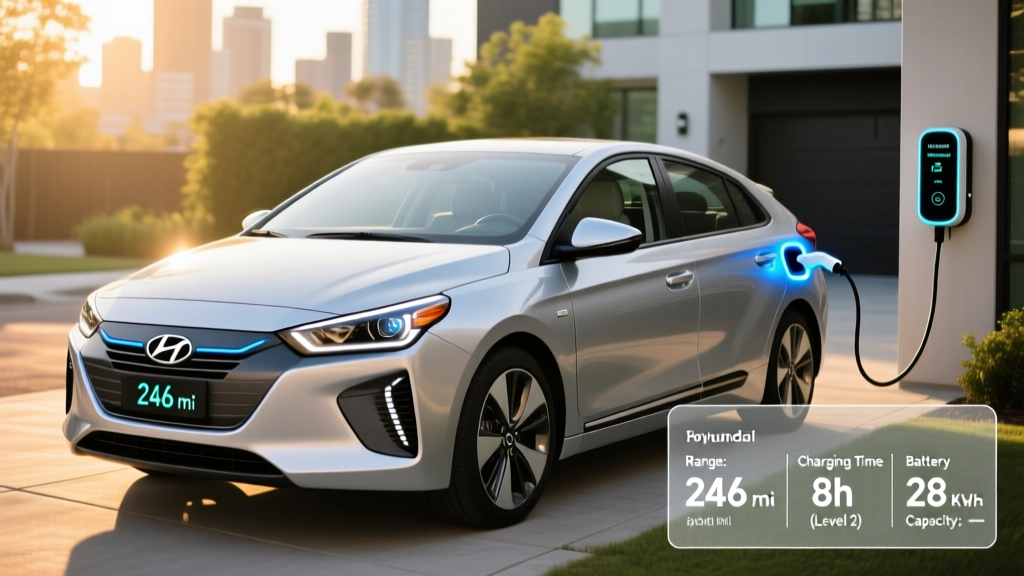
To evaluate whether a Bay Area EV lease deal makes financial sense, we need a full 5-year/75,000-mile cost model. Below is a comparison between a representative 2026 EV (using the Hyundai Ioniq 6 SE Long Range as our benchmark — 361 miles EPA range, 77.4 kWh usable battery, $42,450 MSRP) and a comparable midsize gas sedan averaging 30 MPG combined.
| Category | 2026 Hyundai Ioniq 6 SE LR (EV) | Gas Sedan (30 MPG Combined) |
|---|---|---|
| Purchase / Lease Cost (5 yr) | $24,900 (est. lease total, $415/mo × 60) | $22,500 (est. lease total, $375/mo × 60) |
| Federal Tax Credit (§30D) | −$3,000 to −$7,500 (see eligibility below) | $0 |
| Fuel / Charging (75k mi) | $3,450 (at $0.16/kWh avg, 3.5 mi/kWh) | $9,375 (at $4.50/gal, 30 MPG) |
| Maintenance | $1,200 | $3,750 |
| Insurance (5 yr) | $11,500 ($2,300/yr avg) | $9,000 ($1,800/yr avg) |
| Depreciation (if purchased) | ~50-55% over 5 yr | ~40-45% over 5 yr |
| Estimated 5-Year Total (Lease + Operating) | ~$33,550 – $37,550 | ~$35,625 |
The EV pulls ahead primarily on fuel and maintenance, but the higher insurance cost and potentially higher lease payment narrow the gap. The federal tax credit, when fully applicable, is the single biggest lever that tips the math decisively in the EV's favor. Note: on a lease, the §30D credit is technically claimed by the lessor (the financing company), but competitive Bay Area EV lease deals in 2026 typically pass this savings through as a capitalized cost reduction — effectively lowering your monthly payment or due-at-signing amount.
Federal Tax Credit §30D: Do You Actually Qualify?
The IRS §30D Clean Vehicle Credit offers up to $7,500 for new EVs and up to $4,000 for qualified used EVs. However, eligibility in 2026 depends on a matrix of requirements that trip up many buyers. You cannot assume you'll receive the full amount.
§30D New EV Credit Eligibility Checklist (2026 Rules)
- Buyer Income Caps (Modified AGI): $300,000 joint / $225,000 head of household / $150,000 single — you must fall below these thresholds in the year of delivery or the prior year (whichever is lower)
- MSRP Caps: Vans, SUVs, and pickup trucks ≤ $80,000 MSRP; sedans and other body styles ≤ $55,000 MSRP
- Battery Component Sourcing: A percentage of battery components must be manufactured or assembled in North America (this threshold increases annually — check IRS guidance for the current-year percentage)
- Critical Minerals Requirement: A percentage of critical minerals must be sourced from the U.S. or a free-trade-agreement country (also increasing annually)
- Point-of-Sale Transfer: As of 2024, you can transfer the credit to the dealer at purchase, receiving it as an immediate price reduction rather than waiting to claim it on your tax return — this also applies to lease pass-throughs
- Final Assembly: Vehicle must undergo final assembly in North America
- Foreign Entity of Concern (FEOC) Exclusion: Vehicles with battery components or critical minerals from a FEOC are disqualified
Why this matters for Bay Area EV lease deals: Many popular models — including certain Tesla Model 3 and Model Y trims, the Ford Mustang Mach-E, and the Chevrolet Equinox EV — qualify for the full $7,500 in 2026 based on current sourcing and assembly rules. However, some imported models (certain Hyundai/Kia trims built in Korea, for example) may qualify for only $3,750 (the critical-minerals half) or none at all, depending on the specific battery supply chain for that production batch. Always verify the specific VIN's eligibility at fueleconomy.gov before signing.
For used EVs, the §25E credit offers up to $4,000 (or 30% of the sale price, whichever is lower) with lower income caps ($150k joint / $112,500 HOH / $75k single) and a vehicle price cap of $25,000. This can make a pre-owned Bay Area EV lease or purchase exceptionally affordable.
Charging vs. Gas: The Per-Mile Math in the Bay Area
The Bay Area's electricity rates are among the highest in the continental U.S., with PG&E's residential rates averaging roughly $0.30–$0.40/kWh on standard tiers in 2026. However, EV-specific time-of-use (TOU) plans and off-peak charging dramatically reduce this cost. Here's the realistic breakdown:
| Scenario | Rate | Cost Per Mile | Annual Cost (15k mi) |
|---|---|---|---|
| EV — Home Level 2, Off-Peak TOU (PG&E EV rate) | $0.14/kWh | $0.040 | $600 |
| EV — Home Level 2, Blended Avg | $0.28/kWh | $0.080 | $1,200 |
| EV — Public DC Fast Charging (avg) | $0.42/kWh | $0.120 | $1,800 |
| Gas Sedan (30 MPG) | $4.50/gal | $0.150 | $2,250 |
| Gas Sedan (22 MPG — SUV/truck) | $4.50/gal | $0.205 | $3,075 |
Key takeaway: If you can charge at home on a TOU plan (which most Bay Area homeowners and many apartment dwellers with garage access can), you'll spend roughly $600–$1,200 annually on electricity versus $2,250+ on gasoline. Over five years, that's a $5,250–$8,250 fuel savings. However, if you rely exclusively on public DC fast chargers at $0.40–$0.55/kWh (common at Electrify America and EVgo stations along I-880 and US-101), the savings shrink considerably. Home charging access is the single biggest variable in EV operating economics.
For efficiency reference: the 2026 Hyundai Ioniq 6 SE LR achieves approximately 3.5 miles per kWh (144 MPGe combined per EPA data), making it one of the most efficient EVs on the market. Less aerodynamic models like the Ford F-150 Lightning average around 2.0–2.2 mi/kWh, which increases per-mile charging costs proportionally.
Maintenance Savings: Where EVs Quietly Win
EVs have roughly 20 moving parts in their drivetrain versus 2,000+ in an internal combustion engine. This translates to real, measurable maintenance savings that compound over five years.
| Service Item | EV | Gas Vehicle |
|---|---|---|
| Oil Changes (5-7 over 5 yr) | $0 | $350 – $600 |
| Transmission Fluid / Service | $0 (single-speed reduction gear) | $150 – $400 |
| Brake Pads & Rotors | $0 – $200 (regen braking extends life 2-3×) | $600 – $1,200 |
| Engine Air Filter | $0 | $100 – $200 |
| Spark Plugs | $0 | $200 – $600 |
| Coolant Flush | $100 – $150 (battery thermal loop) | $100 – $200 |
| Cabin Air Filter | $50 – $100 | $50 – $100 |
| Tire Rotation & Replacement | $800 – $1,400 (EVs wear tires ~20% faster due to weight and torque) | $600 – $1,000 |
| Total Estimated 5-Year | $1,000 – $1,800 | $2,500 – $4,500 |
The net savings of $1,500–$3,000 over five years is real, though partially offset by higher tire wear. EVs are heavier (the Ioniq 6 weighs ~4,500 lbs; a comparably sized gas sedan ~3,300 lbs) and deliver instant torque, which accelerates tire wear. Budget for one extra tire replacement set over a high-mileage ownership period.
The Insurance Reality: Higher Premiums and Why
This is the line item that surprises most new EV owners. EV insurance premiums in the Bay Area typically run 15–30% higher than equivalent gas vehicles. For a 2026 Hyundai Ioniq 6 or Tesla Model 3 in the San Jose metro area, expect annual premiums of $2,100–$2,600 for a driver with a clean record, compared to $1,600–$2,000 for a Toyota Camry.
The reasons are structural, not arbitrary:
- Higher repair costs: EV battery packs, power electronics, and specialized aluminum structures require certified technicians and OEM parts. A minor rear-end collision that would cost $2,500 to repair on a gas sedan can total an EV if the battery enclosure is compromised.
- Higher vehicle values: EVs tend to have higher MSRPs, which increases comprehensive and collision coverage costs.
- Limited aftermarket parts: Fewer third-party parts suppliers mean insurers often must use OEM components at premium pricing.
- Tesla-specific factor: Tesla's vertical integration and proprietary repair procedures have historically pushed premiums even higher for Model 3 and Model Y, though Tesla Insurance (available in California) sometimes offers competitive rates for drivers with strong safety scores.
Cost mitigation: Shop quotes from GEICO, State Farm, Progressive, and (for Tesla owners) Tesla Insurance before signing a lease. Bundling with homeowners/renters insurance and maintaining a clean driving record can bring EV premiums within 10% of gas-vehicle rates.
Depreciation and Resale Value: The Evolving Picture
EV depreciation has been a moving target. In 2023–2024, aggressive Tesla price cuts cascaded through the used EV market, depressing resale values across all brands. By 2026, the market has largely stabilized, but EVs still depreciate faster than comparable gas vehicles on average.
Current 5-year depreciation trends (percentage of original MSRP lost):
- Tesla Model 3: ~48–55% (improved from 2024 highs, but still steep)
- Hyundai Ioniq 5/6: ~45–52%
- Ford Mustang Mach-E: ~50–58%
- Chevrolet Equinox EV: ~45–50% (relatively strong due to accessible price point)
- Toyota Camry (gas, baseline): ~38–42%
- Toyota RAV4 Hybrid: ~32–38%
Why this matters for leasing: Lease payments are calculated on the vehicle's expected depreciation during the lease term plus a money factor (interest). If an EV is expected to depreciate 50% over 36 months, your lease payment reflects that steeper loss. However, when Bay Area EV lease deals include manufacturer subvention (subsidized residual values) or the pass-through of the $7,500 tax credit as a cap cost reduction, the effective monthly payment can be very competitive with gas vehicles despite higher depreciation.
On a purchase, faster depreciation means you'll have less equity at trade-in time. But if you plan to drive the vehicle 8–10 years (increasingly viable as battery longevity data shows most modern LFP and NMC packs retaining 85–90% capacity at 150,000 miles), depreciation matters less on a per-year basis.
Bay Area–Specific Incentives and Utility Rebates
Beyond the federal §30D credit, Bay Area EV buyers and lessees have access to a layered stack of regional incentives. These vary by utility, city, and air district, and availability changes frequently — always verify current programs before committing.
Common Bay Area EV Incentives (2026)
- PG&E EV Rate (E-TOU-C / EV2-A): Time-of-use electricity plans with off-peak rates as low as $0.12–$0.16/kWh overnight, cutting home charging costs by 40–60% versus standard tiers
- PG&E Used EV Rebate: Historically offered $1,000–$1,500 rebates for pre-owned EV purchases (check current availability)
- Bay Area Air Quality Management District (BAAQMD): Periodic "Drive Clean" rebates for low-income residents, often $2,000–$4,000 toward EV purchase or lease
- California Clean Fuel Reward: Previously offered up to $750 at point of sale for new EVs — check current program status as funding cycles vary
- HOV Lane Access: California's Clean Air Vehicle decals grant solo carpool-lane access for qualifying EVs (valued at significant commute time savings on I-880, US-101, and I-680)
- Municipal Utility Districts (SMUD, SVP, EBCE): Many offer $500–$1,500 rebates for home Level 2 charger installation, plus reduced TOU rates
- Clean Vehicle Rebate Project (CVRP): California's statewide rebate program — income-dependent, up to $2,000–$7,000 for lower-income households (funding availability varies)
Stacking example: A Bay Area resident leasing a 2026 Chevrolet Equinox EV (MSRP ~$33,600, qualifies for full §30D credit) with a household income under $150k might combine: $7,500 federal credit (passed through lease) + $1,000 utility rebate + $1,500 charger installation rebate + HOV decal. That's over $10,000 in combined value, dramatically improving the effective lease economics.
For the most current California incentive data, check California Energy Commission and your local utility's EV programs page.
Frequently Asked Questions
How much does it really cost to own an EV over 5 years in the Bay Area?
For a mid-range EV like the Hyundai Ioniq 6 leased at ~$415/month, expect total 5-year operating costs (charging, insurance, maintenance) of $15,000–$18,000 after the federal tax credit is applied. This compares to $14,000–$16,000 for a gas sedan — but the EV becomes cheaper when you qualify for the full $7,500 §30D credit and charge primarily at home on off-peak rates. Net advantage for the EV: $2,000–$6,000 over five years depending on your specific electricity rate and credit eligibility.
Do I qualify for the $7,500 federal EV tax credit?
You qualify for the full $7,500 if: (1) your modified AGI is under $150k single / $300k joint, (2) the vehicle MSRP is under $55k for sedans or $80k for SUVs/trucks, (3) the vehicle meets battery component and critical mineral sourcing thresholds for the current year, and (4) it was assembled in North America. Verify your specific vehicle at fueleconomy.gov and consult a tax professional for your personal situation.
How much do I save on fuel and maintenance with an EV?
Bay Area EV owners who charge at home on off-peak TOU rates save approximately $1,200–$1,650 per year on fuel versus a 30 MPG gas sedan at $4.50/gallon. Maintenance savings add another $300–$600 per year from eliminated oil changes, reduced brake wear, and fewer fluid services. Combined annual savings: $1,500–$2,250, or $7,500–$11,250 over five years.
Are EVs more expensive to insure in the Bay Area?
Yes, typically 15–30% more expensive. Expect $2,100–$2,600/year for a mid-range EV versus $1,600–$2,000 for a comparable gas sedan. This is due to higher repair costs, specialized parts, and higher vehicle values. The additional insurance cost ($2,500–$3,000 over 5 years) partially offsets fuel and maintenance savings but rarely eliminates the EV's cost advantage entirely when the federal tax credit applies.
How well do EVs hold their value compared to gas cars?
EVs currently depreciate 5–15 percentage points more over 5 years than comparable gas vehicles. A mid-range EV typically retains 45–52% of MSRP after five years versus 55–62% for a gas sedan. This gap is narrower for high-demand models and wider for luxury EVs. However, if you're leasing (where depreciation is baked into the payment and the lessor assumes residual risk) or planning to keep the vehicle 8+ years, this matters less.
Can I get the federal tax credit on an EV lease?
Technically, the §30D credit goes to the vehicle's legal owner — which in a lease is the financing company (lessor). However, most competitive Bay Area EV lease deals in 2026 pass this credit through as a capitalized cost reduction, effectively lowering your monthly payment. Confirm with the dealer that the credit is reflected in your lease terms before signing.