The GM EV1 in 30 Seconds
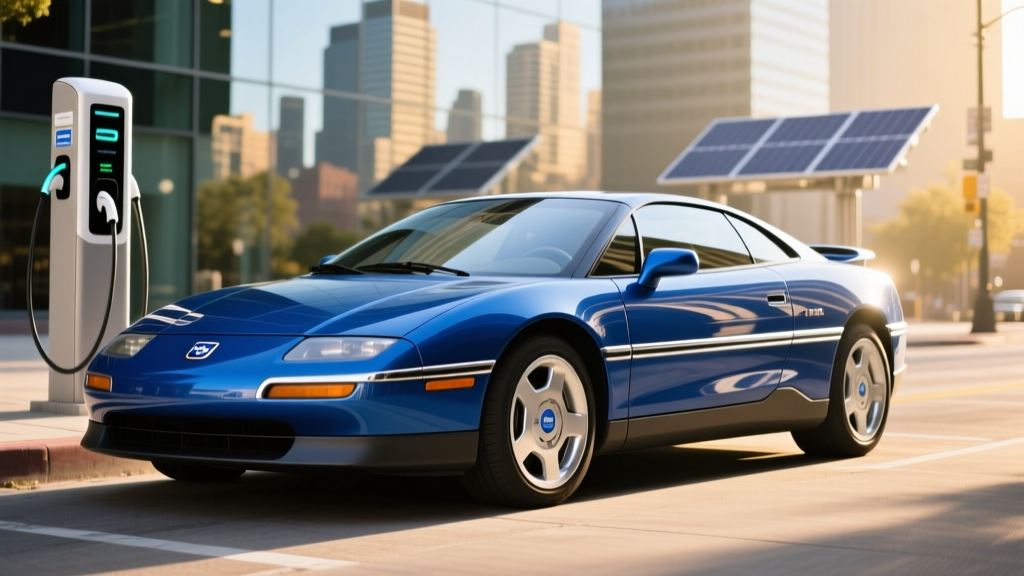
The GM EV1 was General Motors' first purpose-built electric vehicle, produced from 1996 to 1999 and leased (never sold) to about 1,117 drivers in California and Arizona. It delivered an EPA-rated range of roughly 60–70 miles on its original lead-acid battery and up to ~140 miles with the later Gen II nickel-metal hydride (NiMH) pack. GM controversially recalled and crushed nearly all units by 2003. For 2026 EV shoppers, the EV1's legacy is a masterclass in what to look for — and what to avoid — when buying a modern electric vehicle.
Why Are People Still Searching for "EV1 GM" in 2026?
Search interest in the GM EV1 persists because it represents the origin story of the modern EV movement. Documentaries like Who Killed the Electric Car? (2006) cemented its cult status. But the practical reason buyers research the EV1 today is to understand how far EV technology has come — and whether the concerns that doomed the EV1 (range, charging infrastructure, manufacturer commitment) still apply.
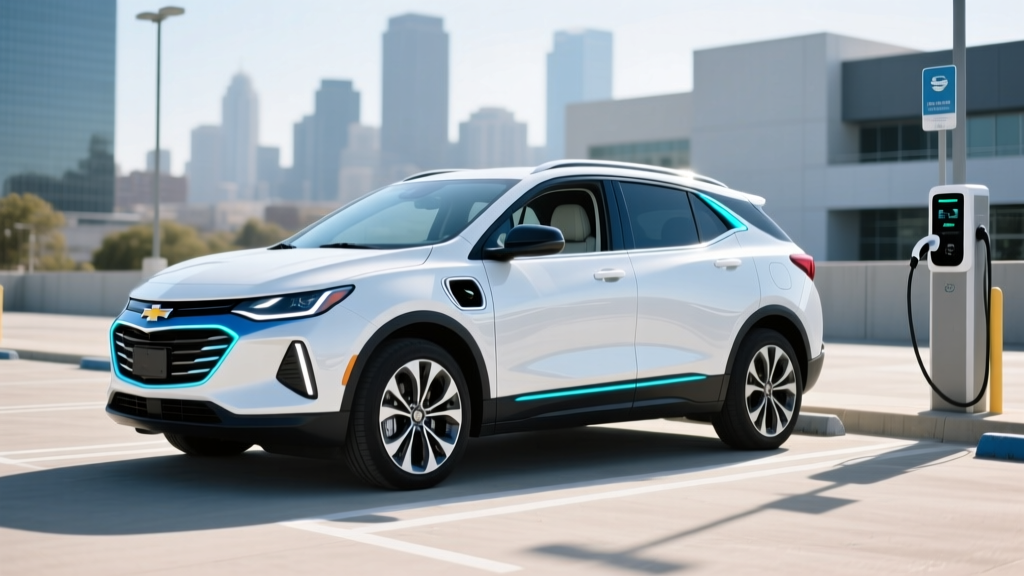
The short answer: they don't apply in the same way, but the underlying principles are identical. Let's break down the EV1's specs against a modern GM electric vehicle — the 2026 Chevrolet Equinox EV — to show exactly what's changed and what 2026 buyers should prioritize.
GM EV1 vs. 2026 Chevy Equinox EV: 30 Years of Progress in Numbers
| Specification | GM EV1 (Gen II, NiMH, 1999) | 2026 Chevy Equinox EV 3RS (AWD) |
|---|---|---|
| Battery Chemistry | Nickel-Metal Hydride (NiMH) | NCMA (Nickel Cobalt Manganese Aluminum) — Ultium platform |
| Usable Battery Capacity | ~26.4 kWh | ~85 kWh (usable) |
| EPA Range | ~75–140 mi (depending on pack & driving) | 285 mi (EPA est., FWD); ~270 mi (AWD) |
| Real-World Highway Range | ~50–60 mi | ~230–250 mi (70 mph, moderate temps) |
| Motor Power | 102 kW (~137 hp) | 213 kW (~286 hp, FWD); 265 kW (~355 hp, AWD) |
| 0–60 mph | ~8.0 seconds | ~7.9 sec (FWD); ~6.0 sec (AWD) |
| Max DC Fast Charge Rate | None (AC only, Magne Charge paddle) | ~150 kW peak (CCS/NACS adapter) |
| 10–80% DC Fast Charge Time | N/A | ~30 minutes |
| Level 2 AC Charge Rate | ~6.6 kW (inductive paddle) | ~11.5 kW (J1772/NACS) |
| Curb Weight | ~3,076 lbs | ~5,300 lbs |
| Availability | Lease-only, discontinued 2003 | On sale now; MSRP from ~$33,400 (2LT FWD) |
| Battery Warranty | None (lease included maintenance) | 8 years / 100,000 miles |
| Federal Tax Credit (§30D) | N/A (credit did not exist) | Up to $7,500 (point-of-sale transfer available; income/MSRP/sourcing rules apply per IRS §30D) |
The leap from 26.4 kWh to 85 kWh of usable capacity explains most of the range difference. But it's the charging infrastructure gap that matters most for 2026 buyers: the EV1 had zero DC fast-charging capability and relied entirely on slow AC inductive paddles, while the Equinox EV can add roughly 150 miles of range in 15 minutes at a 150 kW DC station.
What the EV1's Demise Teaches About Modern EV Ownership
The EV1 wasn't killed by a single factor. It was a convergence of limitations that 2026 buyers should understand before purchasing any EV:
1. Range Must Match Your Real Driving Pattern
The EV1's real-world 50–60 mile highway range was adequate for urban errands in 1999 Los Angeles but useless for a trip to San Diego. Today, a 285-mile EPA rating on the Equinox EV sounds generous — but real-world highway driving at 70+ mph, especially in cold weather, can reduce that by 20–30%. That means a winter road trip might yield ~190–220 miles before you need to stop.
2026 buyer rule: Take your typical longest one-way trip, add a 30% buffer for cold weather and highway speeds, and ensure the EPA range exceeds that number. If your longest trip is 200 miles one-way, you need an EV with at least ~285 miles EPA to do it comfortably without mid-trip charging.
2. Manufacturer Commitment Matters
GM recalled and crushed the EV1 fleet despite lessee protests — a decision that damaged brand trust for a generation. In 2026, the concern has shifted: will your EV manufacturer still exist and honor warranties in 10 years? Several EV startups from 2020–2023 have since filed for bankruptcy or pivoted away from consumer vehicles.
2026 buyer rule: Prioritize manufacturers with established service networks and a demonstrated multi-year commitment to EVs. Check whether parts availability and software update track records support long-term ownership. Legacy OEMs like GM, Hyundai/Kia, Ford, and Toyota carry institutional staying power, while newer brands may offer innovation but carry higher long-term support risk.
3. Charging Access Is the Real Bottleneck
EV1 owners in 1997 had essentially no public charging network. They relied entirely on home inductive paddles. In 2026, the U.S. has over 200,000 public charging ports, but reliability and access remain uneven. Electrify America, Tesla Supercharger (now open to NACS-equipped non-Tesla EVs), and regional networks cover interstates well, but rural corridors and apartment-dweller access remain pain points.
2026 buyer rule: Before buying any EV, answer these three questions:
- Can I install a Level 2 (240V) home charger? If yes, most daily driving is solved — public charging becomes a road-trip concern only.
- Is there a reliable DC fast charger within 10 miles of my home or workplace?
- Does my regular long-distance route have chargers spaced no more than ~120 miles apart?
The Real Cost of EV Ownership in 2026: EV vs. Gas vs. Hybrid
The EV1 was never sold, so there's no purchase-price comparison. But its spiritual successor — the modern GM Ultium-platform EV — competes directly with gas and hybrid alternatives. Here's a 5-year cost breakdown comparing the 2026 Chevy Equinox EV 3RS AWD (~$41,900 MSRP) against the 2026 Chevy Equinox gas AWD (~$30,500 MSRP) and the 2026 Toyota RAV4 Hybrid AWD (~$34,000 MSRP).
| Cost Category (5 Years / 75,000 mi) | Equinox EV 3RS AWD | Equinox Gas AWD | RAV4 Hybrid AWD |
|---|---|---|---|
| Purchase Price (MSRP) | $41,900 | $30,500 | $34,000 |
| Federal Tax Credit (§30D) | –$7,500 (if eligible; point-of-sale) | $0 | $0 |
| Effective Purchase Price | $34,400 | $30,500 | $34,000 |
| Fuel / Electricity (75k mi) | ~$3,750 (home L2 at $0.15/kWh, ~3.0 mi/kWh) | ~$8,440 (27 MPG avg, $3.05/gal) | ~$5,750 (39 MPG avg, $3.05/gal) |
| Maintenance (5 yr) | ~$1,200 (no oil changes; tire rotation, cabin filter, wipers) | ~$3,500 (oil, filters, brakes, transmission fluid) | ~$2,800 (oil, filters, brakes) |
| Insurance (5 yr est.) | ~$10,500 (EVs typically 10–20% higher premiums) | ~$8,750 | ~$8,500 |
| Estimated Depreciation (5 yr) | ~$16,500 (~48% of effective price) | ~$13,700 (~45%) | ~$14,600 (~43%) |
| 5-Year Total Cost of Ownership | ~$66,350 | ~$64,890 | ~$65,650 |
| Cost Per Mile | ~$0.88 | ~$0.87 | ~$0.88 |
Notes: Electricity cost assumes 80% home Level 2 charging at $0.15/kWh and 20% public DC fast charging at $0.40/kWh. Gas prices based on EIA 2025 national averages. Insurance estimates vary significantly by state, driver profile, and insurer. Depreciation figures are estimates based on current market trends and may shift as the EV market matures. Source: fueleconomy.gov, EIA.
The takeaway: at current prices and fuel costs, a well-equipped EV with the full $7,500 tax credit achieves near-parity with gas and hybrid alternatives over 5 years — but the savings are not automatic. Higher insurance and steeper depreciation can erase the fuel and maintenance savings. Buyers who charge primarily at home (where electricity is cheapest) and who keep the vehicle 7–10 years see the strongest financial case.
First-Time EV Buyer Checklist: Lessons the EV1 Made Painfully Clear
Common EV Misconceptions vs. 2026 Reality
| Myth | Fact (with data) |
|---|---|
| "EV batteries need replacing every few years." | Modern NMC and LFP packs routinely exceed 150,000+ miles with less than 10% degradation. GM's Ultium warranty covers 8 years/100,000 miles with a capacity-retention threshold. The EV1's NiMH pack degraded faster, but 2026 chemistry is fundamentally different. |
| "EVs don't work in cold weather." | Cold reduces range by 20–30% at 20°F due to battery chemistry and cabin heating demands. A 285-mile EV becomes a ~200–225-mile EV in deep cold. Preconditioning (warming the battery while plugged in) recovers some of this loss. The EV1 had no thermal management; modern EVs use active liquid heating/cooling. |
| "Charging takes too long." | Home Level 2 charging adds ~30–40 miles per hour of charging — most drivers wake up to a full battery daily. DC fast charging at 150 kW adds ~150 miles in 15 minutes. The EV1's 6.6 kW inductive paddle took 5–8 hours for a full charge with no fast-charging option. |
| "The power grid can't handle EVs." | Most EVs charge overnight when grid demand is lowest. A single EV adding ~30 kWh overnight is roughly equivalent to running a central AC unit for 8 hours. Smart charging and time-of-use rates manage peak load. Grid concerns are real at scale but manageable with current infrastructure for individual adoption. |
| "EVs are worse for the environment because of battery mining." | Lifecycle analyses (including battery production) consistently show EVs produce fewer total emissions than gas cars over their lifetime, even on coal-heavy grids. The break-even point vs. a gas car is typically 1–3 years of driving depending on the electricity source. The EV1's lead-acid and NiMH batteries had higher per-mile environmental impact than today's recyclable NMC/LFP packs. |
Actionable Decision Framework: Is an EV Right for You in 2026?
Use this if/then framework to determine whether a battery-electric vehicle, a plug-in hybrid, or a conventional hybrid is the right fit:
Choose a battery-electric vehicle (BEV) if:
- You can install a Level 2 (240V, 32A–48A) home charger — this solves 90%+ of charging needs
- Your typical daily driving is under 80 miles round-trip
- Your longest regular one-way trip is under 250 miles (or you're willing to plan DC fast-charge stops)
- You want the lowest per-mile fuel cost (~$0.05/mi on home electricity vs. ~$0.11/mi for gas)
- You qualify for the §30D federal tax credit (income under $150k single / $300k joint; vehicle MSRP under $55k cars / $80k SUVs/trucks; battery sourcing requirements met — verify at IRS.gov)
Choose a plug-in hybrid (PHEV) if:
- You lack reliable home charging access (apartment, street parking, no garage)
- You regularly drive 300+ miles one-way and don't want to plan charging stops
- You want electric-only commuting (20–50 miles) with gas-engine range for road trips
- You live in an area with extreme cold (below 0°F) where EV range loss is most severe
Choose a conventional hybrid (HEV) if:
- You cannot charge at home and public charging infrastructure near you is sparse
- Your budget is tighter and you want lower upfront cost with no charging logistics
- You want proven reliability with minimal behavioral change from a gas car
The EV1's Final Lesson: Technology Is Ready — Infrastructure and Commitment Must Match
The GM EV1 failed not because electric propulsion was fundamentally flawed, but because the ecosystem around it — charging infrastructure, battery energy density, manufacturer commitment, and policy support — wasn't mature enough. In 2026, those gaps have narrowed dramatically. Battery energy density has roughly tripled. The U.S. charging network has grown to over 200,000 public ports. Federal policy (however imperfectly) incentivizes adoption through §30D credits. And manufacturers like GM have committed billions to electrification platforms.
But the EV1's core lesson endures: buy an EV that fits your actual life, not the life an advertisement suggests. Check your real driving distances, verify your charging access, calculate your total cost of ownership with actual local electricity and insurance rates, and choose a manufacturer you trust to be there in 10 years. The EV1's drivers loved their cars — what they couldn't control was whether GM would let them keep driving them. Today's buyers have more power, more choices, and far better data. Use it.
Frequently Asked Questions
Can I still buy a GM EV1 in 2026?
No. GM recalled nearly all 1,117 EV1 units by 2003 and crushed the vast majority. A handful survive in museums (such as the Smithsonian) and a few are in private hands under non-transferable agreements or as non-drivable shells. The EV1 is not available for purchase in any functional capacity.
What was the GM EV1's top speed and acceleration?
The EV1 was electronically limited to approximately 80 mph. Its 0–60 mph time was roughly 8.0 seconds with the Gen II NiMH battery — competitive with many gas compacts of the late 1990s. The 102 kW (137 hp) AC induction motor delivered strong low-end torque, which was unusual for its era.
Why did GM recall and destroy the EV1?
GM cited insufficient market demand, high production costs, limited range, lack of charging infrastructure, and the impending expiration of California's Zero Emission Vehicle (ZEV) mandate (which was weakened after industry lobbying). The decision remains controversial and was the subject of the 2006 documentary Who Killed the Electric Car?
How does the EV1's technology compare to modern GM Ultium EVs?
The gap is enormous. The EV1's 26.4 kWh NiMH battery delivered ~75–140 real-world miles. GM's 2026 Ultium-platform vehicles use NCMA lithium-ion packs ranging from ~65 kWh to ~200+ kWh, delivering 250–400+ EPA-rated miles. Ultium supports DC fast charging at 150–350 kW (the EV1 had no DC capability), and modern thermal management systems maintain battery health across temperature extremes — something the passively-cooled EV1 could not do.
What should I look for in a 2026 EV that the EV1 didn't have?
Five critical features the EV1 lacked that are standard on most 2026 EVs: (1) Active thermal management — liquid cooling/heating to preserve range and battery longevity; (2) DC fast charging — 150+ kW capability for 15-minute road-trip stops; (3) Over-the-air software updates — continuous feature and efficiency improvements; (4) Regenerative braking with one-pedal driving — recovers energy and reduces brake wear; (5) Modern ADAS — automatic emergency braking, lane-keeping, and adaptive cruise control (all Level 2 driver-assist, not self-driving).