Quick Answer: Awake Rävik electric surfboards (priced from approximately $12,900 to $18,500 depending on the model) are high-performance personal watercraft powered by lithium-ion battery packs ranging from roughly 5.4 kWh to 7.2 kWh. They deliver 20–45 minutes of ride time per charge, reach speeds up to 34 mph, and cost roughly $0.50–$1.20 per session to charge at home on a standard 120V outlet. While not road vehicles and therefore ineligible for the federal §30D EV tax credit, Rävik boards represent a compelling electric alternative to gas-powered jet boards for buyers evaluating total ownership cost, noise restrictions, and maintenance simplicity.
At AutoEdgeView, we focus on electric vehicles and the broader electrified transport ecosystem. While the Awake Rävik lineup isn't an automobile, it sits squarely in the conversation many EV-minded buyers are having: where does electrification make the most sense for my lifestyle and budget? If you're cross-shopping a Tesla Model Y for daily driving and considering how an electric surfboard fits into your weekend routine, this guide breaks down the real numbers.
What Are the Awake Rävik Electric Surfboards?
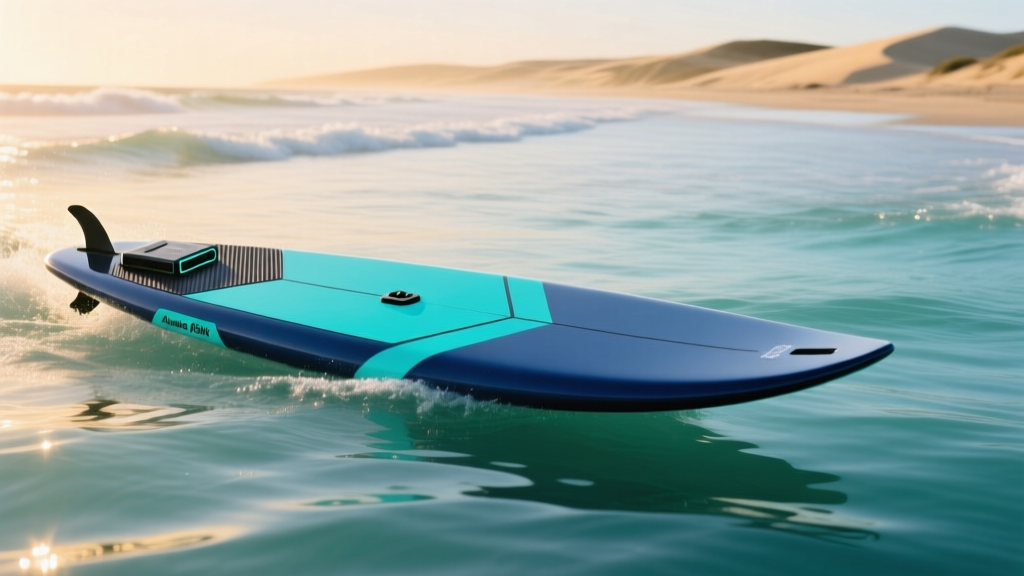
Awake Boards, a Swedish manufacturer, produces the Rävik line of electric surfboards — motorized, battery-powered personal watercraft designed for lakes, rivers, and coastal waters. The lineup has historically included several variants:
- Rävik Sport: The entry-level model, tuned for lighter riders and casual use. Approximately 15–16 kW peak motor output, top speed around 27–30 mph.
- Rävik Performance: Higher output (~22 kW peak), speeds up to 34 mph, aimed at experienced riders.
- Rävik Pro/Carbon editions: Lighter hull construction (carbon fiber), improved power-to-weight ratio, and premium battery configurations.
Unlike gas-powered jet boards (such as those from Lampuga or Radinn's earlier models), the Rävik boards produce zero direct emissions, operate nearly silently, and have far fewer moving parts — no impeller-clogging exhaust, no fuel stabilizer, no winterization with antifreeze.
Specs, Battery Chemistry, and Ride Time: The Numbers
Here's what the data actually shows across the Rävik lineup. Note that specifications vary by model year and regional configuration; always confirm with Awake Boards' official site or an authorized dealer before purchasing.
| Specification | Rävik Sport (approx.) | Rävik Performance (approx.) |
|---|---|---|
| Base MSRP | $12,900–$14,500 | $15,500–$18,500 |
| Battery Capacity | ~5.4 kWh | ~7.2 kWh |
| Battery Chemistry | NMC (Nickel Manganese Cobalt) | NMC |
| Peak Motor Output | ~15–16 kW | ~22 kW |
| Top Speed | 27–30 mph | 32–34 mph |
| Ride Time (moderate use) | 20–30 min | 30–45 min |
| Charge Time (120V household) | ~3.5–4.5 hours | ~5–6 hours |
| Weight (board + battery) | ~65–75 lbs | ~70–80 lbs |
| Warranty | 2 years (board), 1 year (battery) | 2 years (board), 1 year (battery) |
kWh vs. kW reminder: The battery capacity is measured in kilowatt-hours (kWh) — that's the total energy stored, like the size of a gas tank. The motor output is measured in kilowatts (kW) — that's the rate of power delivery, like horsepower. A 7.2 kWh battery powering a 22 kW motor at full throttle will drain in roughly 20 minutes; at moderate throttle (say, 8–10 kW average), you'll stretch that to 40+ minutes.
Cost Breakdown: Purchase, Charging, and Maintenance
| Cost Category | Awake Rävik Performance (Electric) | Comparable Gas Jet Board |
|---|---|---|
| Purchase Price | $15,500–$18,500 | $12,000–$16,000 |
| Cost Per Session (fuel/energy) | $0.80–$1.20 (45 min, $0.15/kWh avg) | $4.00–$7.00 (45 min, premium gas) |
| Annual Fuel/Energy (40 sessions) | $32–$48 | $160–$280 |
| Annual Maintenance | $50–$150 (seal inspection, impeller clean) | $300–$600 (oil, spark plugs, fuel system, winterization) |
| Battery Replacement (year 5–8 est.) | $2,500–$4,000 | N/A (engine rebuild: $1,500–$3,500) |
| 5-Year Total Cost (est.) | $17,500–$21,500 | $15,500–$22,000 |
The upfront premium for the Rävik is real — roughly $2,000–$4,000 more than a comparable gas jet board. But operating costs tell a different story. At the U.S. average residential electricity rate of roughly $0.15–$0.17 per kWh (per EIA data), fully charging a 7.2 kWh Rävik battery costs about $1.08–$1.22. Gas jet boards burning 1.5–2.5 gallons of premium fuel per session cost $5–$8 each time out.
Over five years of moderate use (40 sessions per year), the energy and maintenance savings on the Rävik can recover $2,500–$4,500 of the purchase premium. The wildcard is battery replacement: NMC cells in marine environments typically last 500–800 full charge cycles before dropping to 80% state of health (SoH). If you ride 40 times a year and fully discharge each session, you're looking at 12–20 years before meaningful degradation — but calendar aging (heat, storage conditions) can accelerate this.
How Does This Compare to Gas? The Real-World Ownership Picture
| Factor | Electric (Awake Rävik) | Gas Jet Board |
|---|---|---|
| Noise Level | Near-silent (electric motor hum) | 75–90 dB (loud, restricted on many lakes) |
| Emissions at Point of Use | Zero | Hydrocarbons, CO, NOx over water |
| Lake/Regulation Access | Allowed on most electric-only lakes | Banned or restricted on many reservoirs |
| Cold-Weather Storage | Battery must be stored at 40–60% SoC, indoors | Fuel stabilizer + fogging + winterization |
| Instant Torque | Yes — full power from zero RPM | Spool-up delay (1–2 seconds) |
| Refuel/Recharge Time | 4–6 hours (no fast-charging option) | 2 minutes (pour gas) |
| Weight | 70–80 lbs (heavier due to battery) | 55–65 lbs |
The biggest practical advantage of the Rävik isn't cost — it's access. Many U.S. lakes, particularly drinking-water reservoirs and state park waterways, prohibit gas-powered watercraft due to noise and contamination concerns. Electric surfboards bypass these restrictions entirely. If your primary riding location is an electric-only lake, a gas board isn't just more expensive to operate — it's illegal.
The biggest disadvantage is recharge time. Unlike an EV with DC fast charging that can add 200 miles of range in 20 minutes, the Rävik charges exclusively on Level 1 (120V household). There is no Level 2 or DC fast-charging pathway. If you burn through your battery in 30 minutes, you're done for the day unless you carry a spare battery pack (an additional $3,000–$4,500 investment).
Real-World Ownership Considerations
Home Charging and Electrical Requirements
Charging a Rävik is straightforward: the included charger plugs into any standard 120V / 15A household outlet. You do not need a dedicated circuit, a panel upgrade, or a 240V installation. However, charging from a standard outlet in a garage or dock-side shed means you need to plan around the 4–6 hour charge window. Riders who want back-to-back sessions should budget for a second battery.
Climate and Storage
NMC lithium-ion batteries degrade faster when stored at extreme states of charge in high heat. The practical rules:
- Summer storage: Do not leave the battery at 100% SoC in a hot garage or boat locker. Store at 50–60% SoC in a climate-controlled space.
- Winter storage: Store at 40–50% SoC, indoors, above freezing. Never charge a lithium battery below 32°F (0°C) — this causes lithium plating and permanent capacity loss.
- Water temperature: Cold water (below 55°F) increases the board's power draw as the motor works harder through denser water, reducing ride time by an estimated 10–15%.
Insurance and Registration
Motorized watercraft registration requirements vary by state. Most states require registration for any motorized vessel, including electric surfboards. Insurance typically runs $150–$400 per year for personal watercraft coverage, comparable to gas jet boards. Check with your state's boating authority for specific requirements.
Common Misconceptions About Electric Surfboards
| Myth | Fact |
|---|---|
| "Electric surfboards are slow and underpowered." | The Rävik Performance hits 34 mph with 22 kW — comparable to many gas jet boards and faster than most recreational riders need. |
| "The battery will die after two seasons." | NMC cells rated for 500–800 cycles at 80% SoH. At 40 sessions/year, that's 12+ years before significant degradation — assuming proper storage. |
| "I can charge it fast at a marina." | No DC fast charging exists for these boards. Plan for 4–6 hours on a standard 120V outlet. Bring a spare battery for all-day riding. |
| "Electric surfboards qualify for the EV tax credit." | The §30D federal tax credit applies to qualified plug-in electric motor vehicles for road use (per IRS guidelines). Watercraft do not qualify. |
| "They're completely maintenance-free." | Fewer moving parts than gas, yes — but impeller bearings, hull seals, and electrical connectors in saltwater environments still require inspection and care. |
Decision Framework: Is the Awake Rävik Right for You?
Choose the Awake Rävik (electric) if:
- Your primary riding location prohibits gas watercraft (electric-only lakes, reservoirs, some state parks).
- You value near-silent operation — for your own enjoyment or to comply with noise ordinances near residential shorelines.
- You ride 1–2 hours per outing and can plan around a 4–6 hour recharge (or invest in a second battery).
- You want to minimize per-session operating costs ($1 vs. $6+ for gas).
- You're willing to pay a $2,000–$4,000 upfront premium to recover it over 3–5 years of lower operating costs.
Choose a gas jet board if:
- You need all-day, continuous riding without carrying multiple $4,000 battery packs.
- Your riding locations have no gas-engine restrictions.
- You prioritize lighter weight for transport and handling (gas boards are typically 10–15 lbs lighter).
- You ride in remote areas with no electrical access for recharging.
What First-Time Electric Surfboard Buyers Should Know
If you're coming from the EV car world, some expectations translate and others don't:
- No fast-charging infrastructure exists. Unlike road EVs with 150–350 kW DC fast chargers, electric surfboards charge at roughly 1–1.5 kW on a household outlet. Adjust your expectations accordingly.
- Battery replacement is the long-term cost. Budget $2,500–$4,000 for a replacement pack in years 5–8, depending on usage and storage conditions. This is analogous to an EV's out-of-warranty battery replacement, just at a smaller absolute dollar figure.
- Ride time is throttle-dependent. Marketing materials cite "up to 45 minutes" — that's at moderate, consistent throttle. Aggressive riding with frequent full-power bursts can cut that to 15–20 minutes. This mirrors how aggressive highway driving reduces an EV's EPA-estimated range by 15–25%.
- Saltwater demands extra care. If you ride in ocean or brackish water, rinse the board, motor housing, and all connectors with fresh water after every session. Corrosion is the number-one killer of electric watercraft electronics.
- Try before you buy. At $13,000–$18,500, this is a significant purchase. Seek out Awake dealers or rental operations that offer demo sessions. The riding experience — balance, throttle response, hull behavior — is difficult to evaluate from spec sheets alone.
Frequently Asked Questions
Does the Awake Rävik qualify for any federal or state EV tax credits?
No. The IRS §30D clean vehicle credit applies only to qualified plug-in electric motor vehicles intended for road use, subject to MSRP caps, buyer income limits, and battery-sourcing requirements. Personal watercraft, including electric surfboards, are excluded. Some states offer separate rebates for electric off-road or marine equipment — check your state energy office for specifics.
How long does the Awake Rävik battery last before it needs replacement?
NMC lithium-ion cells in the Rävik are rated for approximately 500–800 full charge cycles before degrading to 80% of original capacity. At 40 sessions per year with proper storage, you can expect 10–15+ years of usable life. Calendar aging (degradation from time and heat, regardless of use) may necessitate replacement sooner if the board is stored improperly.
Can I charge the Rävik from a solar panel or portable power station?
Technically, yes — if your portable power station (like a Jackery or EcoFlow) can output 120V AC at sufficient amperage and has enough capacity (at least 8–10 kWh to fully charge a 7.2 kWh battery accounting for inverter losses). However, this is impractical for most users and adds significant cost and complexity.
How does the Rävik compare to other electric surfboards like the Radinn or Fliteboard?
The Fliteboard is an electric hydrofoil (e-foil), a different category — it flies above the water on a submerged wing, offering a surf-like experience at lower speeds (15–25 mph) with longer ride times (60–90 minutes). The Radinn lineup competes more directly with the Rävik in the jet-board category. Direct comparisons require matching battery capacity, motor output, and hull design; we recommend hands-on demos of both brands before committing.
Is the Awake Rävik safe for beginners?
The Rävik Sport is designed to be more approachable, with lower peak power and a more forgiving throttle map. However, any motorized watercraft at 25+ mph requires proper safety gear (life jacket, helmet recommended), swimming competence, and supervised practice. Awake offers rider training through select dealers.