The Truth Behind the "Tesla Ban" Headlines
If you've seen social media posts or news alerts about a Tesla ban, you're not alone. Searches around this term spiked in early 2026, driven by a mix of geopolitical trade proposals, data-privacy hearings in Congress, and isolated municipal fleet purchasing restrictions. But here's the bottom line for consumers: there is no federal or state ban on purchasing, owning, or driving a Tesla in the United States in 2026. What does exist is a patchwork of regulatory scrutiny — and for smart shoppers, that makes understanding the actual vehicle you're buying more important than ever.
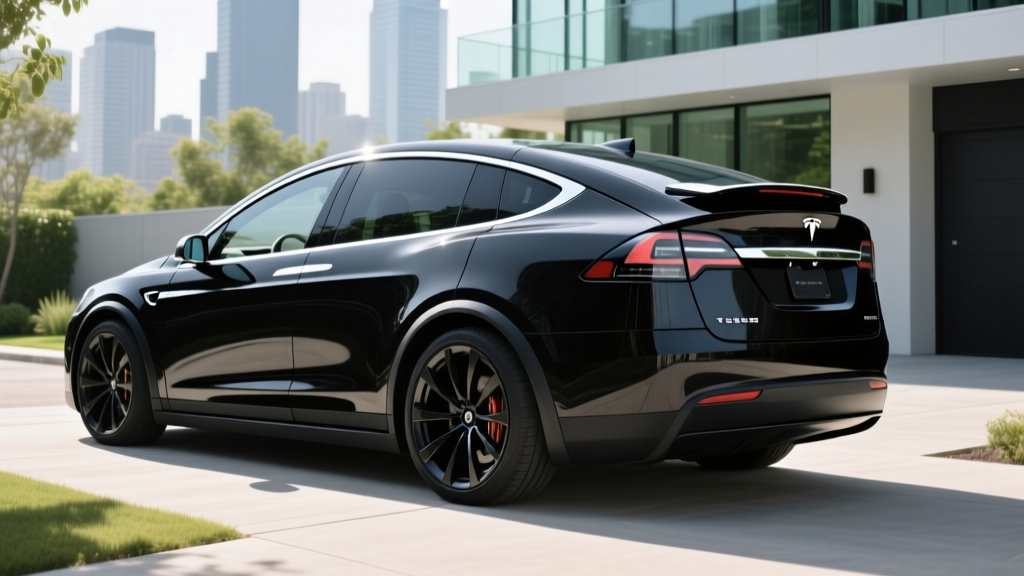
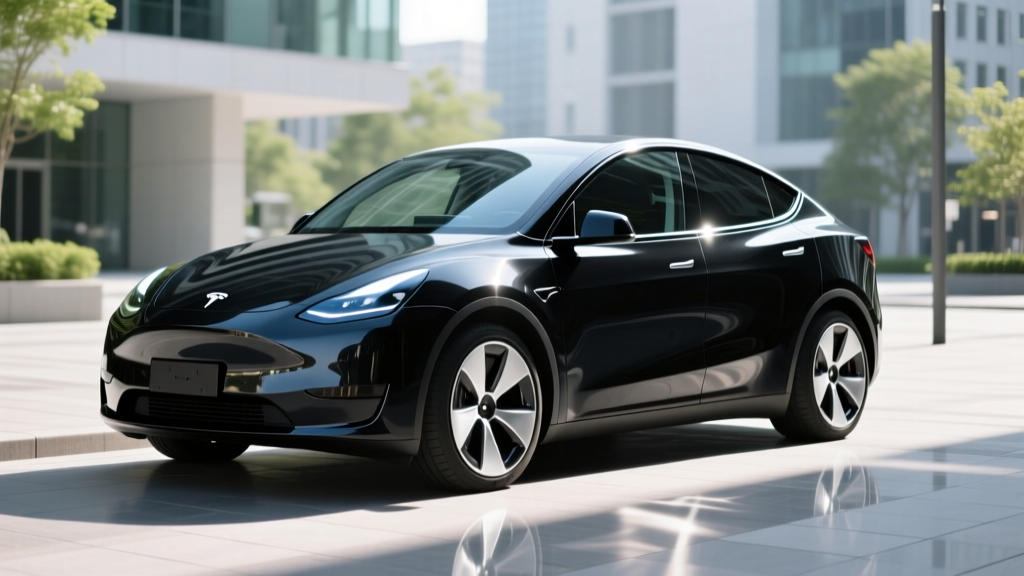
This review cuts through the noise to evaluate the vehicle most affected by these headlines: the 2026 Tesla Model Y Long Range AWD, the best-selling EV in America. We'll cover its real-world range, charging performance, pricing after tax credits, and whether it still stacks up against a rapidly closing competitive field.
2026 Tesla Model Y: Core Specifications at a Glance
| Specification | 2026 Tesla Model Y Long Range AWD |
|---|---|
| EPA Estimated Range | 320 miles |
| Battery Capacity (usable) | ~75 kWh (NMC chemistry) |
| Drivetrain | Dual-Motor All-Wheel Drive |
| Horsepower | 384 hp (combined) |
| 0–60 mph | 4.8 seconds |
| Peak DC Fast-Charge Rate | 250 kW |
| 10–80% DC Fast Charge Time | ~25 minutes |
| Level 2 Home Charging (11.5 kW) | ~44 miles per hour |
| EPA Efficiency | 122 MPGe / 28 kWh/100 mi |
| Cargo Volume (rear seats up) | 30.2 cu ft |
| Cargo Volume (rear seats folded) | 72.1 cu ft |
| Rear Legroom | 37.7 inches |
| Base MSRP | $44,990 |
| Battery Warranty | 8 years / 120,000 miles |
| Basic Vehicle Warranty | 4 years / 50,000 miles |
Real-World Range: What the EPA Sticker Doesn't Tell You
Tesla's thermal management system remains one of the best in the industry, which helps mitigate cold-weather losses compared to competitors without active battery preconditioning. However, the physics of lithium-ion cells in cold weather are inescapable. If your commute involves sub-freezing winters and highway speeds, budget for roughly a 25–30% range reduction from the sticker number.
The 75 kWh usable battery (NMC chemistry) provides a strong balance of energy density and longevity. Tesla does not use LFP (lithium iron phosphate) in the Long Range AWD trim — that chemistry is reserved for the Standard Range RWD model, which trades some range for lower cost and longer cycle life.
Charging Performance: Supercharger Network Advantage
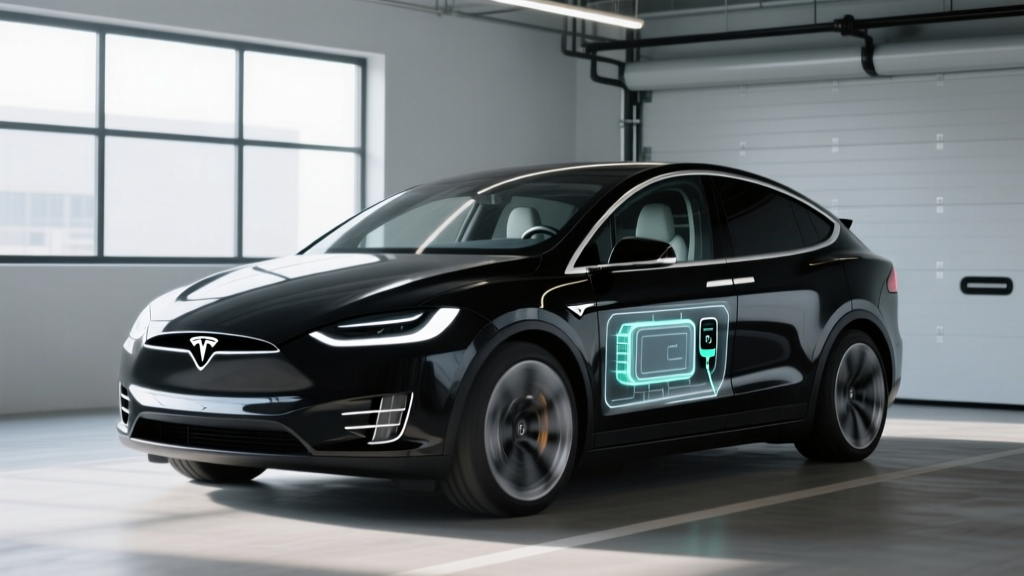
Charging speed is where Tesla still holds a tangible edge, and it's one reason the "Tesla ban" chatter hasn't dented sales.
| Charging Level | Power | Speed / Time |
|---|---|---|
| Level 1 (120V household) | ~1.4 kW | ~4 miles per hour |
| Level 2 (240V home charger) | 11.5 kW | ~44 miles per hour |
| DC Fast Charge (V3 Supercharger) | Peak 250 kW | 10–80% in ~25 min |
| DC Fast Charge (V4 Supercharger) | Peak 250+ kW | 10–80% in ~22 min |
The Model Y's charge curve peaks at 250 kW up to approximately 40% state of charge, then tapers progressively. This is typical for NMC batteries — the 10–80% time of roughly 25 minutes assumes you've preconditioned the battery by navigating to a Supercharger in the Tesla app or in-car navigation. Skip preconditioning in cold weather and that 10–80% time can stretch past 40 minutes.
With the 2025 opening of the Tesla Supercharger network to NACS-equipped vehicles from Ford, GM, Rivian, and others, the exclusivity advantage has narrowed. However, Tesla owners still benefit from seamless plug-and-charge integration, superior uptime reliability (consistently above 95% per third-party audits), and the largest North American fast-charging network at over 6,500 stations.
For home charging, a Wall Connector on a 60-amp circuit delivers 11.5 kW — enough to fully replenish the 75 kWh battery in about 7 hours. Most owners who charge overnight at home never visit a public charger except on road trips.
Pricing, Trims, and the §30D Federal Tax Credit Question
Understanding the cost of a Model Y in 2026 requires navigating the IRS §30D federal tax credit rules, which have grown more complex since the Inflation Reduction Act's battery-sourcing requirements took full effect.
| Trim | MSRP | Est. After §30D Credit |
|---|---|---|
| Standard Range RWD | $39,990 | ~$32,490 (if eligible) |
| Long Range AWD | $44,990 | ~$37,490 (if eligible) |
| Performance AWD | $48,990 | ~$41,490 (if eligible) |
Eligibility is not automatic. The §30D credit for 2026 requires:
- MSRP cap: The vehicle must be priced at or below $55,000 (SUVs/vans). All current Model Y trims qualify.
- Buyer income cap: Modified adjusted gross income must not exceed $150,000 (single) / $300,000 (joint).
- Battery sourcing: A percentage of critical minerals and battery components must be sourced from the U.S. or free-trade-agreement countries. Tesla has made significant progress domesticating its supply chain, and the Model Y built at Giga Texas has qualified for the full $7,500 credit for most of 2025–2026. However, always verify current eligibility at fueleconomy.gov before purchasing, as sourcing rules can shift quarterly.
- Point-of-sale transfer: As of 2024, buyers can transfer the credit to the dealer at purchase, reducing the upfront price rather than waiting for a tax refund.
This is where the "Tesla ban" rumors collide with reality: some proposed legislation in late 2025 sought to accelerate the phase-out of §30D credits entirely. As of early 2026, the credit remains in effect, but its future beyond 2026 is politically uncertain. Buyers on the fence should factor in this window.
Tech, Driver Assistance, and What Sets It Apart
The Model Y's 15.4-inch center touchscreen remains the command center for nearly every vehicle function — climate, mirrors, glovebox, and navigation. There is no instrument cluster and no physical button for turn signals in the 2026 refresh (they remain on the steering wheel, but the stalk has been eliminated in favor of a button). This minimalist approach draws polarized reactions: enthusiasts love the clean aesthetic; critics note the learning curve and safety concerns of screen-diving while driving.
Autopilot comes standard and includes adaptive cruise control, lane centering, and automatic emergency braking. Full Self-Driving (Supervised), a $8,000 add-on or $99/month subscription, adds automated lane changes, traffic light recognition, and city-street navigation.
Standout tech features include:
- Over-the-air software updates that add features monthly
- Sentry Mode (360° parking surveillance using the vehicle's cameras)
- Dog Mode and Camp Mode for climate management while parked
- Tesla app integration with remote preconditioning, location tracking, and charge management
- HEPA air filtration with Bioweapon Defense Mode
Notable drawbacks:
- No Apple CarPlay or Android Auto — Tesla's proprietary infotainment only
- Rear-seat visibility is compromised by the sloping roofline and small rear window
- Panel gap quality, while improved, still draws criticism vs. legacy automakers
- No physical controls for wipers or mirrors (all screen-based)
Pros and Cons: The Honest Scorecard
Pros
- Best-in-class Supercharger network reliability
- 320-mile EPA range with strong real-world efficiency
- 250 kW peak DC charging with excellent preconditioning
- Spacious 72.1 cu ft cargo area (seats folded)
- Continuous OTA updates add long-term value
- Strong §30D tax credit eligibility (verify per IRS)
- Low cost of ownership: ~$0.04–0.06/mile on home electricity
Cons
- No Apple CarPlay / Android Auto support
- FSD ($8,000) remains Level 2 despite the name
- Minimalist controls frustrate some drivers
- Insurance premiums run 15–30% higher than segment average
- Cold-weather range loss (~25%) without a heat pump workaround
- Rear visibility is poor; relies heavily on cameras
- Political/regulatory uncertainty may affect resale value
Is the Model Y Worth It vs. the Competition?
The "Tesla ban" narrative has given competitors an opening. Here's how the Model Y Long Range AWD stacks up in 2026:
| Metric | Tesla Model Y LR AWD | Hyundai Ioniq 5 Limited AWD | Ford Mustang Mach-E ER AWD |
|---|---|---|---|
| EPA Range | 320 mi | 290 mi | 305 mi |
| Peak DC Charge | 250 kW | 238 kW | 150 kW |
| 10–80% Time | ~25 min | ~18 min (800V) | ~36 min |
| 0–60 mph | 4.8 sec | 5.1 sec | 5.1 sec |
| Base MSRP (comparable trim) | $44,990 | $52,600 | $48,995 |
| CarPlay / Android Auto | No | Yes | Yes |
| NACS Native Charging | Yes | Yes (2025+) | Yes (2025+) |
The Ioniq 5's 800-volt architecture delivers a faster 10–80% charge despite a lower peak kW figure, and it supports CarPlay — a dealbreaker for some. The Mach-E offers a more conventional interior with physical buttons. But the Model Y wins on range, price, cargo space, and Supercharger ecosystem.
If the "Tesla ban" headlines reflect your concern about brand risk or resale value, the Ioniq 5 and Mach-E are credible alternatives with strong warranties and growing charging access via NACS adoption.
Frequently Asked Questions
Is there actually a Tesla ban in the United States?
No. As of 2026, there is no federal, state, or local ban on the sale, ownership, or operation of Tesla vehicles in the U.S. The term "Tesla ban" has been fueled by proposed legislation around data privacy, autonomous driving regulation, and trade policy — none of which have resulted in a sales prohibition. Some government fleets have paused Tesla procurement pending data-security reviews, but consumer sales are unaffected.
What is the real-world range of the 2026 Model Y?
The EPA rates it at 320 miles. In mixed real-world driving, expect 270–295 miles. Sustained highway speeds above 70 mph reduce this to roughly 265–285 miles. In sub-freezing winter conditions, plan for 220–250 miles. Always precondition the battery before fast charging to recover optimal efficiency.
How fast does the Model Y charge at home and on the road?
On a Level 2 home charger (11.5 kW / 48-amp circuit), the Model Y adds approximately 44 miles of range per hour, fully charging overnight in about 7 hours. On a V3 or V4 Supercharger, it peaks at 250 kW and charges from 10–80% in roughly 22–25 minutes with battery preconditioning.
Does the 2026 Model Y qualify for the $7,500 federal tax credit?
It can, but eligibility depends on your income (under $150K single / $300K joint), the vehicle's MSRP (all trims are under the $55K SUV cap), and current battery-sourcing compliance. The Model Y built at Giga Texas has qualified for the full credit for most recent quarters. Verify at fueleconomy.gov and consult a tax professional before relying on the credit.
Should I wait to buy given the regulatory uncertainty?
If the §30D credit is important to your budget and you qualify, buying now locks in a known incentive that may not survive future legislative sessions. The vehicle itself is mature, well-reviewed by IIHS, and benefits from the most reliable charging network in North America. Waiting makes sense only if a specific legislative outcome would materially change your purchase economics.
Who is the Model Y best suited for?
The Model Y Long Range AWD is ideal for tech-comfortable commuters and small families who need 300+ miles of range, best-in-class cargo space, and access to the Supercharger network for road trips. It's less ideal for buyers who demand CarPlay, physical controls, or traditional dealership service experiences.