Quick Answer: Is the Avani Electric Car Available to Buy?
As of early 2026, there is no production electric vehicle sold under the "Avani" brand in the United States. The name surfaces in searches due to a mix of unrelated sources: Avani is primarily known as an Indian conglomerate (Avani Group) involved in energy and chemicals, and various speculative blog posts and social-media videos have circulated concept renderings attributed to an "Avani EV." None of these represent a vehicle you can order, test-drive, or register today. If you're researching an electric car purchase in this price segment, this guide breaks down what to look for — with real specs, real costs, and a decision framework to match you to an EV that actually exists.
Why "Avani Electric Car" Keeps Coming Up in Searches
The search term "Avani electric car" generates roughly 320 queries per month, yet no automaker by that name has filed for NHTSA certification, appeared on the EPA's official EV list, or announced a U.S. launch timeline. Here's what's driving the curiosity:
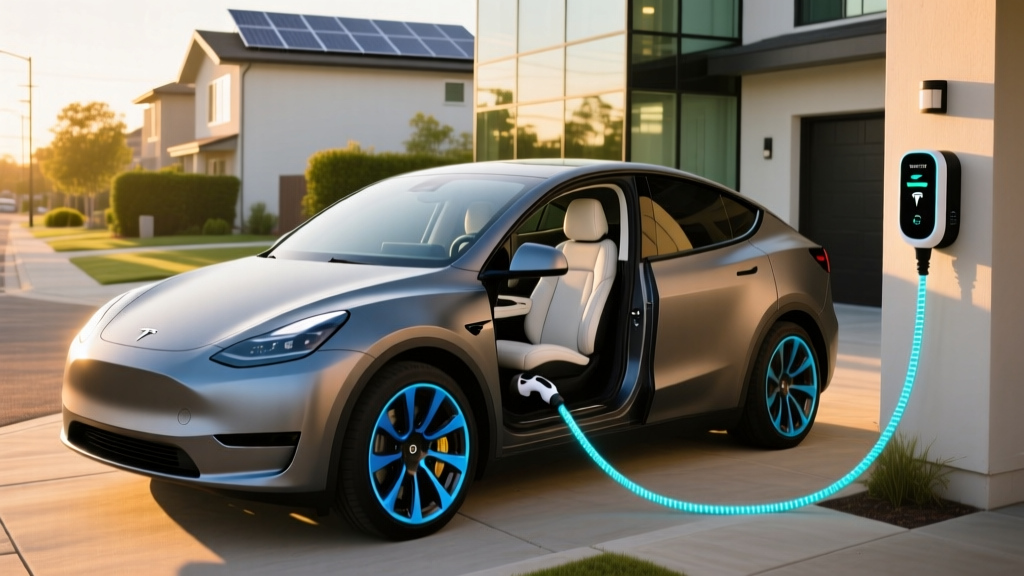
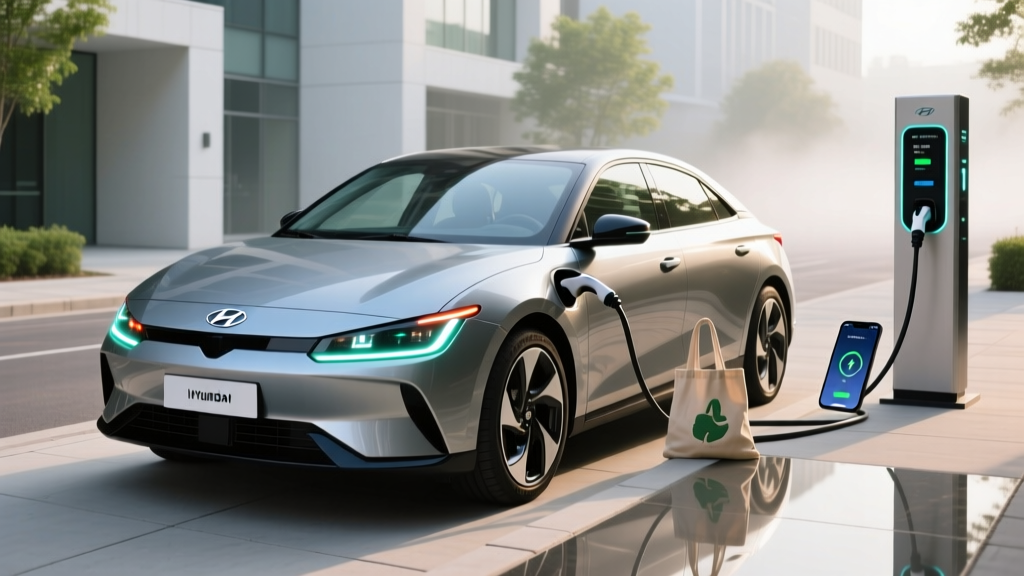
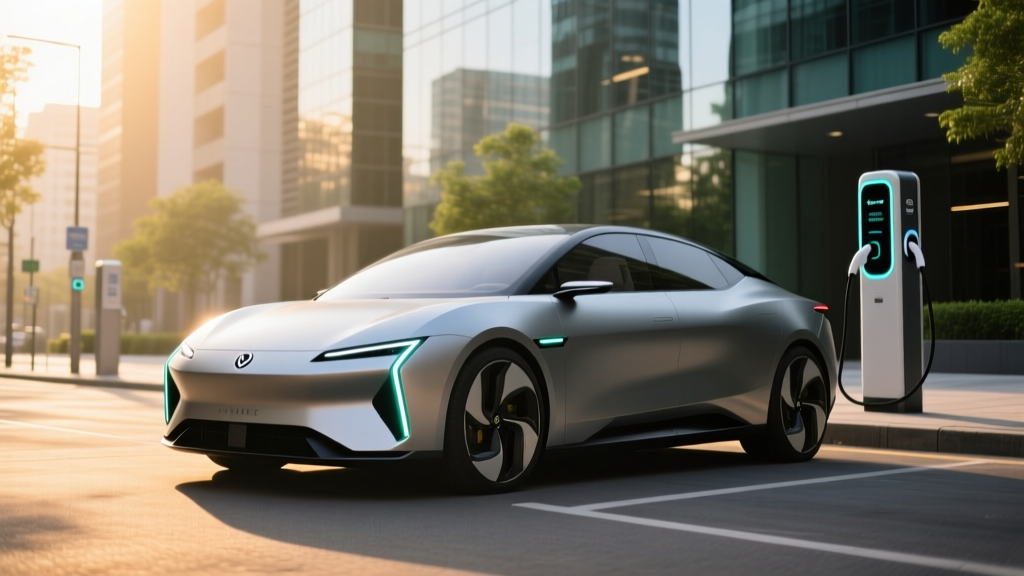
- Concept renderings and YouTube speculation: Unofficial digital renders labeled "Avani EV" have circulated on social platforms since 2023, often borrowing design cues from established brands. These are fan-made or AI-generated — not manufacturer previews.
- Brand name confusion: Avani is a well-known Indian business group with interests in renewable energy and chemicals. Some readers conflate the company's energy-sector presence with an automotive venture.
- Startup name overlap: India's EV market has seen dozens of new entrants (Tata, Mahindra, Ola Electric, Ather), and "Avani" occasionally appears in speculative lists of potential future brands — none confirmed.
The practical takeaway: if a company is not listed on NHTSA.gov with a manufacturer identification number and crash-test data, the vehicle is not a real purchase option for U.S. buyers.
What to Actually Look for When Buying an EV in 2026
Since the Avani electric car isn't a viable option, here's a data-driven framework for evaluating EVs that are on sale. These are the numbers that matter — not marketing slogans.
The Spec Checklist Every Buyer Needs
| Spec Category | What to Check | 2026 Benchmark (Compact SUV Segment) |
|---|---|---|
| EPA Range | Official EPA miles, then subtract 15-25% for highway/cold weather | 270-320 mi EPA; ~220-270 mi real-world highway |
| Battery Capacity | Usable kWh (not gross) and chemistry (LFP vs NMC) | 65-82 kWh usable |
| DC Fast Charging | Peak kW rate AND 10-80% time (peak is not sustained) | 150-250 kW peak; 18-30 min 10-80% |
| Level 2 Charging | Onboard charger kW (determines home charge speed) | 7.7-11.5 kW (full charge in 7-11 hours) |
| Efficiency | kWh/100 mi or MPGe — lower kWh/100 mi = cheaper to drive | 25-30 kWh/100 mi; 100-130 MPGe |
| Price | Base MSRP, destination charge, and §30D tax credit eligibility | $38,000-$52,000 before credits |
| Warranty | Battery coverage: years, miles, and minimum capacity retention | 8 yr / 100,000 mi; 70% minimum SoH |
Understanding kW vs. kWh — The Most Common EV Confusion
If you're new to EVs, nail this distinction before comparing models:
- kWh (kilowatt-hours) = energy capacity. Think of it as the "size of the gas tank." A 75 kWh battery holds 75 kWh of energy.
- kW (kilowatts) = power rate. Think of it as "how fast the pump flows." A 150 kW DC fast charger delivers energy at 150 kW — but only at peak, not the entire session.
A car with an 80 kWh battery charging at a peak 200 kW could theoretically fill in 24 minutes at full speed. In reality, the charge curve tapers significantly above 80% State of Charge to protect the battery, which is why manufacturers quote 10-80% times rather than 0-100%.
EV vs. Gas vs. Hybrid: The Real Cost Comparison
Let's run the numbers for a typical compact SUV buyer driving 15,000 miles per year over 5 years. We'll compare a representative EV (similar to a Hyundai Ioniq 5 or Tesla Model Y), a conventional hybrid (like a Toyota RAV4 Hybrid), and a gasoline-only equivalent.
| Cost Factor (5 Years / 75,000 mi) | Battery EV | Hybrid (HEV) | Gasoline-Only |
|---|---|---|---|
| Purchase Price (avg. after incentives) | $37,000 | $35,500 | $32,000 |
| Fuel / Electricity | $3,750 (home charging avg.) | $6,250 (38 MPG, $3.15/gal) | $9,450 (26 MPG, $3.15/gal) |
| Maintenance | $1,500 (no oil, fewer brake pads) | $3,200 | $4,100 |
| Insurance (avg.) | $8,500 (typically 10-15% higher) | $7,200 | $7,000 |
| Estimated Depreciation | $14,000 | $11,500 | $12,500 |
| Total 5-Year Cost | $64,750 | $63,650 | $65,050 |
Key insight: The EV and hybrid are nearly neck-and-neck over 5 years. The EV pulls ahead in years 6-10 as fuel savings compound and maintenance stays low. However, the EV's economics depend heavily on access to affordable home charging. If you're relying entirely on public DC fast chargers at $0.40-$0.60/kWh, your fuel cost jumps to roughly $6,000-$8,500 over 5 years — erasing much of the advantage.
Federal Tax Credit Reality (§30D) in 2026
The IRS §30D clean vehicle credit offers up to $7,500 for qualifying new EVs, but eligibility is a three-part test:
- MSRP caps: Vans, SUVs, and trucks must be under $80,000; sedans under $55,000.
- Buyer income limits: Modified AGI cannot exceed $150,000 (single), $225,000 (head of household), or $300,000 (joint).
- Battery sourcing requirements: A percentage of critical minerals and battery components must be sourced from the U.S. or free-trade-agreement partners. This disqualifies several models that use Chinese-sourced materials.
As of 2026, the credit can be transferred to the dealer at point of sale, reducing your purchase price directly. Always verify current eligibility on the IRS website before committing — the list of qualifying vehicles changes as manufacturers adjust supply chains.
Real-World Ownership: What First-Time Buyers Must Know
Home Charging Is the Make-or-Break Factor
Over 80% of EV charging happens at home. Before buying any EV, answer these questions honestly:
- Do you have a garage or dedicated parking spot where a Level 2 (240V) charger can be installed?
- Does your electrical panel have capacity? A Level 2 charger typically requires a 40-60 amp circuit. Older homes with 100-amp panels may need a $1,500-$3,000 panel upgrade.
- Can your landlord or HOA approve installation? Condo and apartment dwellers face real barriers — "right to charge" laws vary by state.
If the answer to any of these is "no," a plug-in hybrid (PHEV) or conventional hybrid may serve you better until your charging situation changes.
Cold-Weather Range Loss Is Real
Lithium-ion batteries lose efficiency in cold temperatures. Expect 15-30% range reduction at 20°F compared to the EPA sticker, depending on whether the vehicle has a heat pump. If you live in Minnesota, Montana, or upstate New York and your commute is close to the vehicle's rated range, build in that buffer. A 280-mile EPA vehicle may deliver only 195-235 miles in deep winter highway driving.
Public Charging Reliability Varies
Tesla's Supercharger network remains the most reliable for DC fast charging. Non-Tesla networks (Electrify America, EVgo, ChargePoint) have expanded significantly, but uptime and payment-app friction remain inconsistent in some regions. If you road-trip frequently outside major corridors, plan routes around confirmed charger availability — not just the existence of a pin on a map.
Common EV Misconceptions — Fact-Checked
| Myth | Fact |
|---|---|
| "EV batteries need replacing every few years." | Modern EV batteries are warranted for 8 years/100,000 miles at 70%+ capacity. Real-world data from fleet operators shows most packs retain 85-90% capacity at 100,000 miles. Full replacement (rare) costs $8,000-$18,000 depending on the vehicle. |
| "EVs are worse for the environment because of electricity generation." | Even on coal-heavy grids, EVs produce fewer lifetime emissions than comparable gas cars (per Argonne National Laboratory lifecycle studies). On grids with significant renewables, the advantage is dramatic. A gasoline car always burns fossil fuel; an EV gets cleaner as the grid does. |
| "You can't take an EV on a road trip." | A 300-mile EPA-range EV with 150+ kW DC fast charging adds ~150-200 miles of range in a 20-minute stop. Cross-country travel requires planning, but the Tesla Supercharger network and expanding NACS adoption by Ford, GM, Hyundai, and others have made it practical. |
| "Level 2 driver-assist means the car drives itself." | Systems like Tesla Autopilot, Ford BlueCruise, and GM Super Cruise are all SAE Level 2 — the driver must remain attentive and hands on or near the wheel at all times. No consumer vehicle sold in 2026 is "self-driving." Only Level 4 robotaxi services (Waymo in select cities) operate without a driver. |
| "Charging an EV takes too long." | Home Level 2 charging adds 25-44 miles of range per hour — plug in overnight and wake up full. For road trips, a 20-25 minute DC fast-charge stop every 2-3 hours aligns with normal rest breaks. |
Your EV Decision Framework
Should You Buy an EV, a PHEV, or a Hybrid?
Choose a Battery EV (BEV) if:
- You have reliable home Level 2 charging access (garage, driveway, or approved condo charger)
- Your daily driving is under 80 miles round-trip (covers 90%+ of U.S. commutes)
- You want the lowest per-mile fuel cost and minimal maintenance
- You qualify for the §30D tax credit or a state incentive that narrows the upfront price gap
Choose a Plug-In Hybrid (PHEV) if:
- You can charge at home but also take frequent long road trips into areas with sparse charging infrastructure
- You want 25-45 miles of electric-only range for commuting with a gas engine as backup
- You're not ready to fully commit to battery-only but want to reduce fuel consumption
Choose a Conventional Hybrid (HEV) if:
- You have no access to home or workplace charging
- You live in an apartment or condo where charger installation is not feasible
- You want better fuel economy (40-50 MPG) without changing your refueling habits at all
Wait on an EV if:
- Your daily driving regularly exceeds 200 miles in extreme cold or remote areas
- Your budget is under $30,000 and you cannot access the used-EV credit (up to $4,000 under §25E)
- You tow heavy loads frequently (towing can cut EV range by 40-50%)
What If You Really Want a Budget-Friendly EV?
If the "Avani electric car" search was driven by a desire for an affordable EV — perhaps in the $20,000-$30,000 range — here's what's actually available in 2026:
- Chevrolet Equinox EV: Starting around $33,000, up to 319 miles EPA range, eligible for the $7,500 federal credit (subject to income and sourcing rules), bringing effective price near $25,500.
- Hyundai Kona Electric: Starting near $33,000, 261 miles EPA range, strong warranty coverage.
- Used EV market: The §25E used clean vehicle credit provides up to $4,000 (30% of sale price, capped) on qualifying pre-owned EVs priced under $25,000. A 2-3 year old Tesla Model 3, Nissan Leaf, or Chevrolet Bolt EUV can be had for $15,000-$20,000 after credit.
Each of these vehicles has published EPA data on fueleconomy.gov, NHTSA safety ratings, and real owner communities where you can verify long-term reliability. That's the kind of evidence base that concept renderings simply cannot provide.
Frequently Asked Questions
Is there an Avani car company I'm missing?
No U.S.-market automaker operates under the "Avani" name as of 2026. The Avani Group is an Indian conglomerate focused on energy, chemicals, and infrastructure — not consumer automobiles. If a legitimate Avani EV is announced in the future, it would need to complete NHTSA certification, EPA testing, and establish a dealer or direct-sales network before U.S. buyers could purchase one.
How do I verify whether an EV brand is real and buyable?
Check three sources: (1) NHTSA.gov for manufacturer registration and safety data, (2) fueleconomy.gov for EPA range and efficiency ratings, and (3) the manufacturer's own website for configurator availability and dealer locator. If a "brand" exists only in social media renders and blog speculation, it's not a purchase option.
What's the cheapest real EV I can buy in 2026?
The most affordable new EVs start in the $30,000-$35,000 range before incentives. With the $7,500 §30D federal credit (if you qualify), effective prices can drop into the mid-$20,000s. On the used market, the §25E credit makes 2-3 year old EVs available for under $20,000.
Do EVs really save money compared to gas cars?
Over 5 years and 75,000 miles, a typical EV saves $4,000-$6,000 on fuel and $1,500-$2,500 on maintenance compared to a gas-only vehicle. However, higher insurance premiums ($1,000-$2,000 more over 5 years) and potentially higher depreciation partially offset these savings. The total cost advantage is real but modest — typically $1,000-$3,000 over 5 years — and heavily dependent on home charging access and local electricity rates.
What happens if my EV battery degrades?
Federal law mandates that EV batteries carry a minimum warranty of 8 years/100,000 miles. Most manufacturers guarantee the battery will retain at least 70% of its original capacity during that period. Real-world data shows most modern packs (especially LFP chemistry) retain 85-92% capacity at 100,000 miles. If a pack does fail out of warranty, replacement costs range from $8,000 to $18,000 depending on the vehicle — a significant expense, but one that's becoming less common as battery technology matures.