Quick Answer: AVA Bike Electric Program Application
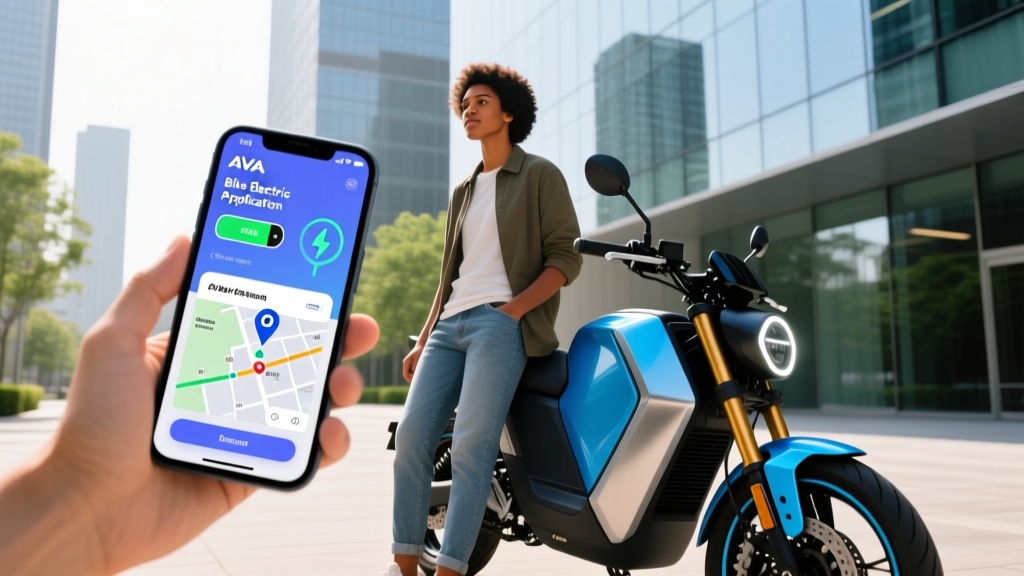
The AVA Bike Electric Program application process involves submitting an online form with proof of income, residency, and intended use case. Most applicants receive approval within 5-7 business days. The program typically offers subsidized e-bike purchases or lease-to-own options, with discounts ranging from $300-$1,500 depending on income level and local incentive stacking. However, this program focuses on electric bicycles and micromobility—not electric vehicles (EVs) like cars, trucks, or SUVs.
If you're actually researching electric cars and landed here searching for EV purchase programs, you'll want to explore federal §30D tax credits (up to $7,500 for qualifying new EVs), state rebates, and manufacturer incentive programs instead. This guide covers both paths.
Understanding the AVA Bike Electric Program vs. EV Purchase Programs
The AVA Bike Electric Program targets urban commuters, students, and last-mile delivery workers seeking affordable electric bicycle access. These programs have gained traction since 2023 as cities push for reduced car dependency and lower transportation emissions. However, the search term "ava bike electric program application" often reflects broader confusion about electrified transportation incentives.
Here's what separates e-bike programs from electric vehicle purchase programs:
| Program Type | Vehicle Category | Typical Subsidy | Eligibility Focus | Application Timeline |
|---|---|---|---|---|
| E-Bike Programs (AVA-style) | Class 1-3 electric bicycles | $300-$1,500 | Income, residency, commuter status | 5-14 days |
| Federal EV Tax Credit (§30D) | BEVs, PHEVs, FCEVs | Up to $7,500 | Income caps, MSRP limits, battery sourcing | Point-of-sale (instant) or tax filing |
| State EV Rebates | BEVs, PHEVs | $1,000-$7,500 (varies) | Residency, income (some states) | 30-90 days post-purchase |
| Utility EV Incentives | BEVs, home chargers | $250-$2,500 | Customer of participating utility | 30-60 days |
Real Costs: E-Bike Programs vs. Electric Vehicle Ownership
Let's break down what you're actually signing up for with each option. The economics diverge sharply based on your transportation needs.
5-Year Transportation Cost Comparison (Annual: 12,000 miles)
| Cost Category | E-Bike (with AVA subsidy) | Compact EV (2026 Chevrolet Equinox EV) | Gas Car (2026 Honda Civic) |
|---|---|---|---|
| Purchase Price (after incentives) | $800-$1,700 | $28,900 (after $7,500 credit) | $24,500 |
| Fuel/Energy (5 years) | $150 (electricity) | $3,200 ($0.13/kWh avg) | $9,500 ($3.50/gal, 32 MPG) |
| Maintenance (5 years) | $400 | $1,800 | $3,500 |
| Insurance (5 years) | $0-$300 | $9,500 | $7,800 |
| Total 5-Year Cost | $1,350-$2,550 | $43,400 | $45,300 |
The e-bike route wins on pure economics if your commute is under 15 miles round-trip and weather permits year-round riding. But this comparison assumes you don't need a car for passengers, cargo, highway travel, or adverse weather—scenarios where the Equinox EV's 319-mile EPA range (real-world: ~260-280 miles highway, ~220 miles in freezing temps) becomes essential.
EV Ownership Considerations Most Buyers Overlook
If you're pivoting from e-bike research to actual EV shopping, here are the make-or-break factors that don't appear in brochure specs:
Home Charging Access Is Non-Negotiable for Most Owners
Level 2 home charging (240V, 32-48 amps, 7.7-11.5 kW) adds 25-37 miles of range per hour. A typical overnight charge (8 hours) restores 200-300 miles—covering most daily driving. But installation costs vary wildly:
- Best case: $500-$1,200 if your electrical panel has spare capacity and the charger mounts near the panel
- Typical case: $1,200-$2,500 including permit, 50-amp circuit, and 40-foot wire run
- Worst case: $3,000-$5,000+ if you need a panel upgrade from 100A to 200A service
Renters and condo dwellers face additional hurdles: landlord approval, shared electrical infrastructure, and HOA restrictions. If you can't install home charging, public DC fast charging (150-350 kW) costs $0.30-$0.50/kWh—roughly double home rates—and requires 20-40 minute stops every 200-250 miles.
Cold Weather Cuts Range 20-40%
Lithium-ion batteries lose efficiency below 40°F. At 20°F, expect 25-30% range reduction; at 0°F, losses hit 35-40% without a heat pump. The 2026 Hyundai Ioniq 5 (305-mile EPA) delivers ~215 miles in freezing highway driving. Vehicles with heat pumps (Tesla Model Y, Ioniq 5, Ford Mustang Mach-E) lose 15-25% instead.
Charging Speed Matters More Than Peak kW Claims
Manufacturers advertise "peak 250 kW charging" but don't mention charge-curve taper. Real-world DC fast charging looks like this:
- 10-30% SoC: Peak rate (e.g., 235 kW on Ioniq 5)
- 30-60% SoC: Sustained ~180-200 kW
- 60-80% SoC: Tapers to 100-130 kW
- 80-100% SoC: Drops to 30-50 kW (never charge past 80% on road trips)
Result: The Ioniq 5's "18-minute 10-80% charge" is accurate, but a 10-100% charge takes 45+ minutes. Plan road-trip stops around 20-25 minute sessions, not full charges.
Decision Framework: E-Bike, EV, Hybrid, or Gas?
Choose Your Path Based on Real Needs
Apply for AVA Bike Electric Program IF:
- Your daily round-trip commute is under 15 miles
- You live in a mild climate (rare snow/ice)
- You have secure bike parking at home and work
- You don't regularly carry passengers or cargo over 20 lbs
- Your household already has a car for longer trips
Buy a Battery Electric Vehicle (BEV) IF:
- You can install Level 2 home charging
- 95% of your driving is under 250 miles round-trip
- You qualify for the §30D tax credit (income under $150K single / $300K joint, vehicle MSRP under $55K cars / $80K SUVs/trucks)
- You're replacing a gas car and drive 10,000+ miles annually (fuel savings offset higher purchase price)
Buy a Plug-in Hybrid (PHEV) IF:
- You lack reliable home charging but want some electric driving
- You frequently take 400+ mile road trips and hate charging stops
- You want electric commute (25-40 miles) with gas-engine flexibility
- Examples: 2026 Toyota RAV4 Prime (42-mile electric range, 38 MPG gas), Chrysler Pacifica Hybrid (32-mile electric, 30 MPG)
Stick with Gas/Hybrid (HEV) IF:
- You're a renter with zero charging access
- You drive under 8,000 miles annually (fuel savings won't offset EV premium)
- You regularly tow over 3,500 lbs (EV towing cuts range 40-50%)
- You live in a charging desert (rural areas with sparse DC fast infrastructure)
Federal EV Tax Credit: What Actually Qualifies in 2026
The §30D Clean Vehicle Credit offers up to $7,500 for new EVs and $4,000 for used EVs, but the rules have tightened significantly since 2023. Here's the 2026 eligibility checklist:
| Requirement | 2026 Rule | Common Misconception |
|---|---|---|
| Buyer Income Cap | $150K single / $225K head of household / $300K joint (modified AGI) | "Everyone gets the credit" — high earners are excluded |
| Vehicle MSRP Cap | $55,000 (cars) / $80,000 (SUVs, trucks, vans) | "Any EV qualifies" — luxury models like Tesla Model S don't |
| Battery Sourcing | Critical minerals + battery components must meet % thresholds from US/FTA countries | "All EVs made in America qualify" — many fail sourcing rules |
| Final Assembly | Must be assembled in North America | "Imported EVs qualify" — Hyundai Ioniq 5 (Korea-built) doesn't |
| Point-of-Sale Transfer | Buyers can transfer credit to dealer for instant price reduction | "I have to wait until tax season" — you can take it upfront |
Vehicles that typically qualify (2026): Tesla Model Y, Model 3, Chevrolet Equinox EV, Ford F-150 Lightning, Chrysler Pacifica Hybrid. Always verify current eligibility at fueleconomy.gov before purchasing—sourcing compliance changes quarterly.
Vehicles that don't qualify: Hyundai Ioniq 5/6 (Korea assembly), Kia EV6 (Korea), most BMW/Mercedes/Audi EVs (income/MSRP/sourcing failures).
Frequently Asked Questions
Is the AVA Bike Electric Program available nationwide?
AVA-style e-bike incentive programs are typically city or county-level initiatives, not federal programs. Major cities like Denver, Portland, and Minneapolis have launched similar programs, but availability varies. Check your local transportation department or sustainability office. If you're actually seeking EV incentives, the federal §30D credit is nationwide (subject to income/MSRP/sourcing rules), and 38 states offer additional rebates.
Can I stack e-bike incentives with EV tax credits?
Yes, if you're purchasing both an e-bike (through a local program) and an EV (using §30D). They're separate incentive categories. However, you cannot apply the federal EV tax credit to an e-bike purchase—§30D only covers four-wheeled vehicles with at least four wheels and gross vehicle weight under 14,000 lbs.
What if I don't qualify for the EV tax credit due to income?
If your modified AGI exceeds the caps ($150K single / $300K joint), you're ineligible for §30D regardless of vehicle choice. In this case, focus on state rebates (some have no income caps), utility incentives, and total cost of ownership. EVs still save $800-$1,500 annually on fuel and maintenance vs. gas cars, even without tax credits—but the payback period extends from 3-4 years to 6-8 years.
Do e-bikes require insurance and registration?
Class 1-2 e-bikes (under 20 mph motor-assisted) require no license, registration, or insurance in most states. Class 3 e-bikes (28 mph) may require helmets and have age restrictions but still don't need auto insurance. This contrasts sharply with EVs, where insurance averages $1,800-$2,200 annually (20-30% higher than gas cars due to repair costs and battery replacement risk).
What's the real-world range of a 300-mile EPA EV?
EPA range assumes mixed city/highway driving at moderate temperatures. Real-world expectations: highway-only driving at 70-75 mph yields 240-270 miles; freezing weather (20°F) cuts this to 200-220 miles; towing a 2,000-lb trailer drops it to 160-180 miles. Always plan road trips around 200-220 miles between charging stops, not the EPA sticker.
Should I wait for solid-state batteries?
Solid-state EVs won't reach mass-market pricing until 2028-2030. Current lithium-ion batteries (NMC and LFP chemistries) already deliver 250,000+ mile lifespans with 10-15% degradation. If you need an EV now, buy now—waiting 4+ years for marginal gains rarely makes financial sense given current fuel costs and available incentives.
Bottom Line: Match the Program to Your Actual Transportation Need
The "ava bike electric program application" search reflects a real need: affordable, efficient urban transportation. If your commute is short, weather cooperates, and you don't need car capabilities, e-bike incentive programs offer unbeatable economics ($1,000-$2,000 total cost vs. $40,000+ for an EV).
But if you need highway range, passenger space, cargo capacity, or all-weather reliability, pivot your research to EV purchase incentives. The 2026 landscape offers $7,500 federal credits, $1,000-$7,500 state rebates, and $600-$1,200 annual fuel savings—making EVs cost-competitive with gas cars over 5-7 years of ownership.
For detailed EV model comparisons, charging infrastructure guides, and state-specific incentive databases, explore our EV reviews and charging setup guides. The right choice depends on your miles, climate, charging access, and budget—not marketing hype.