Quick Verdict: The Performance SUV That Charges Like a Porsche
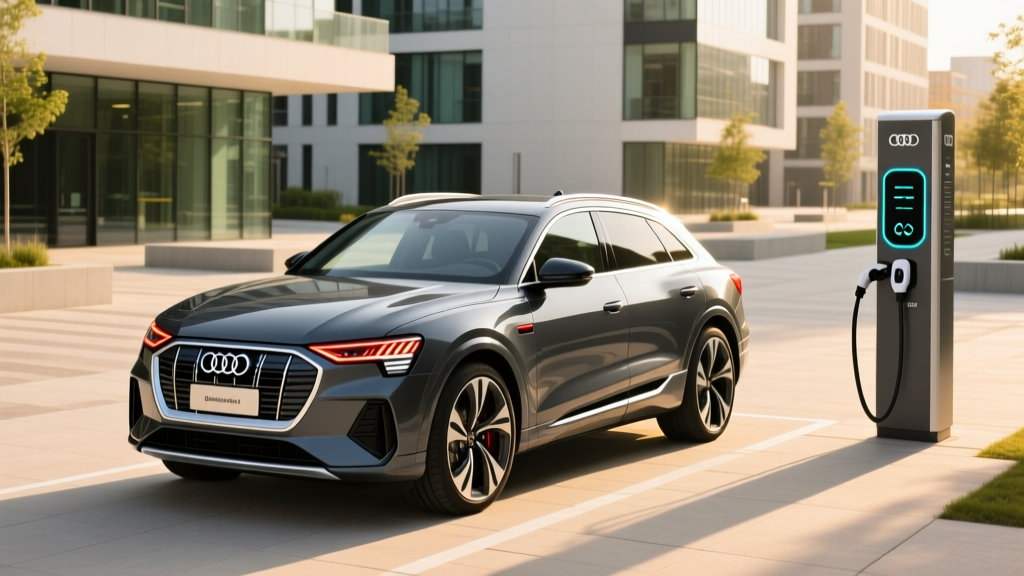
The 2026 Audi SQ6 e-tron is the sport-tuned variant of Audi's all-electric midsize SUV, built on the Volkswagen Group's Premium Platform Electric (PPE) architecture co-developed with Porsche. It delivers 543 horsepower, a 0-60 mph time of 4.3 seconds, and an EPA-estimated range of up to 300 miles — all while supporting peak DC fast charging at 270 kW, one of the fastest rates in its class. Starting around $65,395, the SQ6 e-tron targets buyers who want German luxury and genuine performance without sacrificing daily usability or road-trip charging speed.
But how does that EPA sticker translate to real-world driving? Does it qualify for the federal EV tax credit? And how does it stack up against the BMW iX M60, Tesla Model Y Performance, and Mercedes-AMG EQE SUV? This review covers every number that matters.
Range, Efficiency, and the Real-World Reality Check
Real-World Expectation: ~250–275 miles on highway-heavy trips at 70+ mph; ~210–240 miles in freezing weather with cabin heat. City and mixed driving with regen can approach or meet the EPA figure.
Efficiency: 87 MPGe combined (approx. 39 kWh/100 mi)
The SQ6 e-tron uses a gross battery capacity of 100 kWh with approximately 94.9 kWh usable, protected by a thermal management system that actively heats and cools the pack. Audi employs NMC (nickel manganese cobalt) chemistry in this application, prioritizing energy density and high-rate discharge for performance over the cycle-life advantages of LFP.
On the EPA test cycle, the combined 87 MPGe rating is competitive for a 5,000+ lb performance SUV. In our experience with PPE-platform vehicles, highway efficiency drops noticeably above 75 mph — expect consumption to climb toward 44–48 kWh/100 mi at sustained 80 mph cruising, which is where the real-world range contracts to roughly 250 miles. In cold weather (below 32°F), cabin heating and battery conditioning can reduce range by 20–30%, putting winter highway range closer to 210 miles. Preconditioning the battery while plugged in mitigates some of this loss and is critical for preserving fast-charge speeds in winter.
For authoritative efficiency data, the EPA's fueleconomy.gov listing provides official combined and city/highway breakdowns.
Charging Speed: 270 kW Peak and an 800-Volt Advantage
The SQ6 e-tron's 800-volt electrical architecture is its single biggest practical advantage for road-trip charging. Here's what the numbers look like across charging levels:
| Charging Level | Power / Voltage | Speed (Approx.) | Notes |
|---|---|---|---|
| Level 1 (120V) | ~1.4 kW | ~3–4 mi/hr | Emergency/trickle only |
| Level 2 (240V) | 11.5 kW (onboard charger) | ~30–35 mi/hr | Full charge in ~9–10 hours |
| DC Fast Charge | Peak 270 kW | 10–80% in ~21 min | Requires 350 kW+ station; tapers above 80% |
The 270 kW peak rate is achievable at Electrify America 350 kW dispensers and comparable CCS stations. The charge curve is aggressive in the early phase — you'll see 200+ kW sustained from roughly 10% to 50% SoC, after which thermal management gradually tapers the rate. The 10-80% time of approximately 21 minutes is among the fastest in the luxury midsize SUV segment and meaningfully reduces road-trip downtime.
Above 80% SoC, charging slows substantially — plan to charge to 80% on road trips and move on rather than waiting for a full top-off. At Level 2, the 11.5 kW onboard charger is generous; most competitors offer 9.6–11.5 kW, so the SQ6 e-tron is at the upper end. A full Level 2 charge from empty takes roughly 9–10 hours, making overnight home charging straightforward with a 48-amp or 60-amp Level 2 wallbox on a dedicated 60- or 80-amp circuit.
Connector note: The 2026 SQ6 e-tron uses the CCS1 connector. Audi has announced a transition to NACS (Tesla's connector) on future models, but for 2026, CCS1 is standard. An adapter may be required for Tesla Supercharger access depending on network policy at the time of charging.
Performance: 543 hp, Dual-Motor AWD, and Launch Control
| Spec | 2026 Audi SQ6 e-tron |
|---|---|
| Drivetrain | Dual-motor AWD (quattro) |
| Horsepower | 496 hp (543 hp with launch control) |
| Torque | 605 lb-ft (launch control) |
| 0–60 mph | 4.3 seconds |
| Top Speed | 149 mph (electronically limited) |
| Battery (usable) | ~94.9 kWh, NMC chemistry |
| EPA Range | 300 miles (20" wheels) |
| Efficiency | 87 MPGe combined |
| Peak DC Charge | 270 kW |
| 10–80% DC Time | ~21 minutes |
| Level 2 Charger | 11.5 kW onboard |
| Cargo Volume | 28.7 cu ft (rear seats up) / 60.4 cu ft (rear seats folded) |
| Rear Legroom | ~36.1 inches |
| Frunk | Yes, small storage compartment (~2.0 cu ft) |
| Towing Capacity | 4,400 lbs (with factory hitch) |
| Curb Weight | ~5,290 lbs |
The SQ6 e-tron's dual-motor quattro all-wheel-drive system provides precise torque vectoring between axles. The rear motor is a permanently excited synchronous unit, while the front uses an asynchronous (induction) motor that can fully decouple when not needed, reducing drag and improving efficiency during steady-state cruising.
Launch control temporarily unlocks 543 hp and drops the 0-60 time from 4.5 seconds to 4.3 seconds. The S-specific adaptive air suspension lowers the ride height by 15 mm compared to the standard Q6 e-tron and includes a sport-tuned damper calibration. The result is genuinely composed handling for a 5,290-lb SUV — body roll is well-controlled, and the steering offers more feedback than most electric competitors in this segment. Regenerative braking offers multiple levels selectable via steering-wheel paddles, though true one-pedal driving (coming to a full stop via regen alone) is available only in specific drive modes.
Interior, Tech, and Driver Assistance
The SQ6 e-tron's cabin showcases Audi's latest digital architecture, anchored by an 11.9-inch digital instrument cluster and a 14.5-inch central MMI touchscreen running the new Android Automotive-based infotainment system. A 10.9-inch front passenger display is available as an option, along with an augmented-reality head-up display that projects navigation arrows and ADAS cues into the driver's sightline at apparent distances of up to 30 feet.
On the driver-assistance front, the SQ6 e-tron comes equipped with Audi's Adaptive Cruise Assist with lane guidance — an SAE Level 2 system that handles longitudinal and lateral control on highways. The driver must maintain hands-on-wheel supervision at all times; this is not a hands-free or "self-driving" system. Additional standard features include intersection assist, evasive steering assist, and a 360-degree camera system. Audi's Traffic Jam Assist provides low-speed lane centering, but unlike GM's Super Cruise or Ford's BlueCruise, it does not offer a hands-off mode on mapped highways.
Notable drawbacks: the touch-capacitive steering wheel controls can register accidental inputs, and the reliance on touchscreen for climate controls (no physical knobs) frustrates some drivers during spirited driving or glove-wearing winter use. Rear-seat visibility is also compromised by the sloping roofline — a Sportback variant with even more aggressive styling trades further rear headroom for aesthetics.
Pricing, Trims, and Federal Tax Credit Eligibility
| Trim | Base MSRP | Est. As-Tested | §30D Credit Eligible? |
|---|---|---|---|
| SQ6 e-tron Premium Plus | $65,395 | $68,000–$72,000 | Unlikely — exceeds MSRP cap* |
| SQ6 e-tron Prestige | $71,395 | $75,000–$82,000 | No — exceeds $80,000 MSRP cap |
| SQ6 e-tron Sportback Premium Plus | $67,395 | $70,000–$74,000 | Unlikely — exceeds MSRP cap* |
*Under IRS §30D rules, SUVs must have an MSRP of $80,000 or less to qualify for the up-to-$7,500 New Clean Vehicle Credit. However, the credit also requires meeting critical-mineral and battery-component sourcing thresholds that phase in over time. As of 2026, battery components manufactured or assembled in a "foreign entity of concern" (FEOC) disqualify the vehicle entirely. Audi's supply chain sourcing for the Q6 e-tron family has not consistently met these requirements, and buyers should verify eligibility with their dealer and a tax professional before assuming credit availability.
Additional §30D caveats: The buyer's modified adjusted gross income must not exceed $150,000 (single) / $300,000 (joint). If eligible, the credit can be transferred to the dealer at point of sale as an immediate price reduction — a significant cash-flow advantage. Consult IRS.gov for current-year sourcing rules and vehicle eligibility lists.
How It Compares: SQ6 e-tron vs. Key Rivals
The SQ6 e-tron competes in a crowded luxury performance-EV segment. Here's how it stacks up on the metrics that matter most:
| Spec | Audi SQ6 e-tron | BMW iX M60 | Tesla Model Y Perf. | Mercedes AMG EQE SUV |
|---|---|---|---|---|
| Base MSRP | $65,395 | $111,500 | $52,490 | $109,550 |
| EPA Range | 300 mi | 296 mi | 279 mi | 235 mi |
| Horsepower | 543 hp | 610 hp | 456 hp | 649 hp |
| 0–60 mph | 4.3 sec | 3.6 sec | 3.5 sec | 3.5 sec |
| Peak DC Charge | 270 kW | 195 kW | 250 kW | 170 kW |
| 10–80% Time | ~21 min | ~34 min | ~25 min | ~32 min |
| Architecture | 800V | 400V | 400V | 400V |
The SQ6 e-tron's clearest advantage is charging speed. Its 800-volt, 270 kW architecture outpaces every rival in this comparison, and the real-world road-trip benefit is substantial — roughly 10–15 fewer minutes per charge stop compared to the iX M60 and AMG EQE SUV. The Tesla Model Y Performance is significantly cheaper and quicker in a straight line, but its interior quality, ride refinement, and NVH (noise/vibration/harshness) are a tier below the Audi. The BMW iX M60 offers more power and a more spacious cabin but at nearly double the price and with notably slower charging.
Warranty, Ownership Costs, and Long-Term Outlook
Audi backs the SQ6 e-tron with a competitive warranty package:
- New-vehicle limited warranty: 4 years / 50,000 miles
- Battery & powertrain warranty: 8 years / 100,000 miles (covers capacity below 70% of original)
- Corrosion perforation warranty: 12 years, unlimited miles
- Complimentary maintenance: 1 year / 10,000 miles (first scheduled service)
The 70% capacity retention threshold over 8 years is industry-standard and aligns with the federal minimum for battery warranties. NMC chemistry typically sees 10–15% degradation over the first 100,000 miles under normal use; Audi's liquid-cooled thermal management is designed to mitigate accelerated degradation from frequent DC fast charging. Owners who primarily charge at home on Level 2 and limit DC fast charging to road trips can expect slower capacity loss.
Insurance costs for the SQ6 e-tron tend to run 15–25% higher than a comparably priced gas SUV due to repair-cost structures common to EV platforms. Expect annual premiums in the $2,200–$3,200 range depending on zip code, driving record, and coverage level. Electricity costs for home charging average $0.13–$0.18/kWh nationally, translating to roughly $0.05–$0.07 per mile — about one-third the per-mile fuel cost of a gas equivalent at $3.50/gallon.
- You prioritize fast DC charging for frequent road trips
- You want a luxury interior with a composed, sporty ride
- You value 800V architecture and plan to keep the vehicle 5+ years
- Your daily commute is under 80 miles round-trip (easily covered on a single charge)
- You need maximum cargo space (the Q6 e-tron's cargo volume is modest for the segment)
- You want hands-free highway driving (GM Super Cruise or Ford BlueCruise offer this)
- Federal tax credit eligibility is a dealbreaker — verify sourcing with your dealer
- You need a third row (consider the Kia EV9 or Rivian R1S instead)
Pros and Cons
Pros
- Class-leading 270 kW DC fast charging with 800V architecture
- Refined ride quality from S-tuned adaptive air suspension
- Genuine 300-mile EPA range — practical for road trips
- Premium interior materials and excellent cabin quietness
- Augmented-reality HUD and modern Android Automotive infotainment
- 4,400-lb towing capacity is useful for light trailer duty
Cons
- Tax credit eligibility uncertain due to battery-sourcing rules
- No hands-free Level 2+ driving mode (unlike Super Cruise/BlueCruise)
- Touch-capacitive steering controls and screen-dependent climate controls
- Cargo volume (28.7 cu ft) trails some rivals in this price range
- Rear-seat visibility compromised by roofline slope
- Insurance premiums run higher than segment average
Frequently Asked Questions
What is the real-world range of the Audi SQ6 e-tron?
The EPA rates the SQ6 e-tron at 300 miles. In real-world highway driving at 70–80 mph, expect 250–275 miles. In cold weather below freezing, highway range can drop to 210–240 miles due to battery heating demands and cabin climate load. City driving with regenerative braking recovers more energy and can approach the EPA figure.
How fast does the SQ6 e-tron charge at home and on the road?
At home on a Level 2 (240V) charger, the 11.5 kW onboard charger adds roughly 30–35 miles per hour, achieving a full charge overnight in about 9–10 hours. On a 350 kW DC fast charger, the SQ6 e-tron peaks at 270 kW and charges from 10% to 80% in approximately 21 minutes — one of the fastest rates among luxury midsize electric SUVs.
Does the 2026 Audi SQ6 e-tron qualify for the $7,500 federal EV tax credit?
Possibly, but it's not guaranteed. The MSRP of the Premium Plus trim falls under the $80,000 SUV cap, which is one requirement. However, the §30D credit also requires that battery components and critical minerals meet sourcing thresholds that exclude foreign entities of concern (FEOC). As of 2026, Audi's supply chain compliance has been inconsistent across model years. Verify with your dealer and consult a tax professional or fueleconomy.gov before relying on the credit.
Is the SQ6 e-tron worth buying over the Tesla Model Y Performance or BMW iX?
It depends on priorities. The SQ6 e-tron offers the best charging speed in its class and a more refined interior than the Tesla at a much lower price than the BMW iX M60. If straight-line speed and price are paramount, the Model Y Performance wins. If you want maximum power and space regardless of cost, the iX M60 delivers. For the balance of charging speed, luxury, and reasonable pricing, the SQ6 e-tron is a strong choice.
Can the SQ6 e-tron use Tesla Superchargers?
The 2026 SQ6 e-tron is equipped with a CCS1 connector. Access to the Tesla Supercharger network depends on Tesla's adapter and access policy for non-Tesla vehicles, which has been expanding. Audi is expected to adopt NACS on future models, but for 2026, CCS1 is standard. An approved CCS-to-NACS adapter may be required for Supercharger access.
What battery chemistry does the SQ6 e-tron use?
The SQ6 e-tron uses NMC (nickel manganese cobalt) lithium-ion chemistry in its ~94.9 kWh usable battery pack. NMC offers higher energy density than LFP, which is advantageous for packaging and range in a performance vehicle. The trade-off is that NMC cells are generally more sensitive to sustained high SoC storage and extreme temperatures, making good thermal management essential — which Audi provides via its liquid-cooled system.