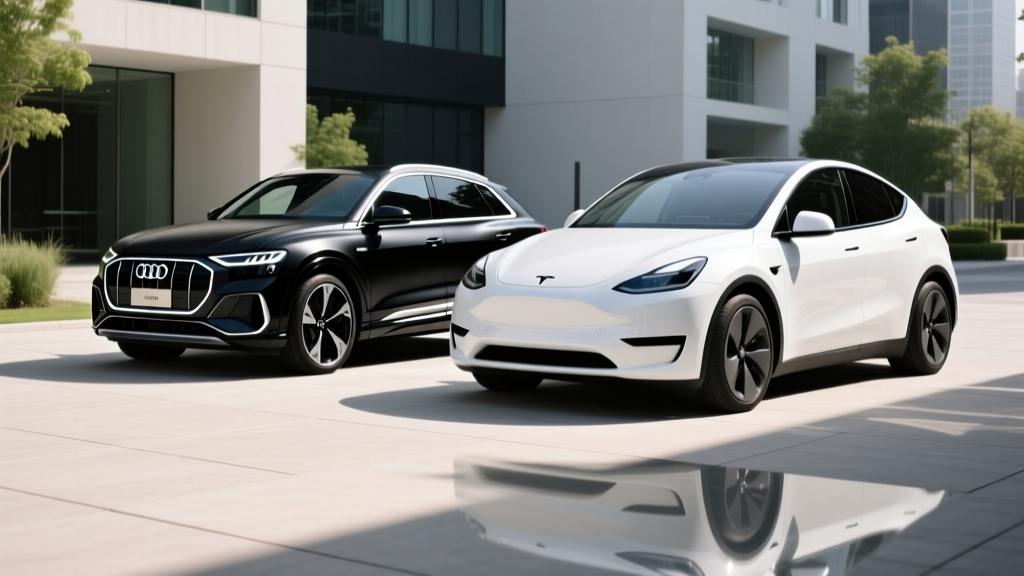
Searches for a tron update tesla comparison usually come from buyers cross-shopping two very different philosophies of electric luxury SUV. On one side: the 2026 Audi Q8 e-tron, a refined, quietly premium EV that prioritizes ride comfort and build quality. On the other: the Tesla Model Y Juniper refresh, a tech-forward efficiency leader with the industry's best charging network. Both seat five, both offer all-wheel drive, and both land in the $60,000–$75,000 corridor before incentives. But their real-world ownership experiences diverge sharply.
This review breaks down every number that matters — EPA range, actual highway range, DC fast-charge curves, battery chemistry, cargo space, and federal tax credit eligibility under current IRS §30D rules — so you can decide which one fits your driving life.
Quick Verdict: Two EVs, Two Philosophies
The 2026 Audi Q8 e-tron is the luxury traditionalist's EV: whisper-quiet cabin, air suspension standard, a real instrument cluster, and dealer-based service. The Tesla Model Y (Juniper generation) is the efficiency maximalist: more range per kWh, faster DC charging, OTA updates that add features post-purchase, and access to 60,000+ Supercharger stalls globally.
If your priority is ride refinement, interior materials, and a conventional luxury experience, the Q8 e-tron wins. If you want maximum range, fastest charging, and lowest cost-per-mile, the Model Y is the clear pick. Neither is wrong — they serve different owners.
Range & Efficiency: EPA Stickers vs. Real-World Miles
Audi Q8 e-tron (Premium Plus, 20" wheels): EPA 308 miles. Expect ~250–270 miles on a highway road trip at 70 mph, and as low as ~215 miles in sub-freezing winter conditions.
Tesla Model Y Long Range AWD: EPA 320 miles. Expect ~275–290 miles highway, and roughly ~240 miles in cold weather. Tesla's heat pump and superior thermal management narrow the winter gap.
The Q8 e-tron's 114.0 kWh battery pack (106.0 kWh usable) uses NMC (nickel manganese cobalt) chemistry. It's a large pack, but the Audi's 5,300-pound curb weight and less aerodynamic profile (0.28 Cd vs. Tesla's 0.23 Cd) mean it burns more energy per mile. On fueleconomy.gov, the Q8 e-tron posts 81 MPGe combined (42 kWh/100 mi).
The Model Y Long Range uses a ~78 kWh usable NMC pack (CATL-sourced cells in a structural battery pack for 2026). Its efficiency is class-leading: 122 MPGe combined, or roughly 28 kWh/100 mi. That's 33% less energy consumed per mile than the Audi — a meaningful difference if you road-trip often or pay for public DC charging.
| Spec | Audi Q8 e-tron Premium Plus | Tesla Model Y LR AWD |
|---|---|---|
| EPA Range | 308 mi | 320 mi |
| Battery (usable) | 106.0 kWh NMC | ~78 kWh NMC |
| Efficiency | 81 MPGe / 42 kWh/100mi | 122 MPGe / 28 kWh/100mi |
| Peak DC Charge | 170 kW | 250 kW |
| 10–80% DC Time | ~31 min | ~25 min |
| Level 2 Rate | 19.2 kW (~52 mi/hr) | 11.5 kW (~44 mi/hr) |
| 0–60 mph | 5.6 sec | 4.8 sec |
| Horsepower | 402 hp | 384 hp |
| Drivetrain | Dual-motor AWD (quattro) | Dual-motor AWD |
| Cargo (rear seats up) | 28.5 cu ft | 30.2 cu ft |
| Cargo (seats folded) | 56.4 cu ft | 72.1 cu ft |
| Rear Legroom | 39.4 in | 41.6 in |
| Base MSRP | $74,400 | $48,990 |
| Battery Warranty | 8 yr / 100,000 mi | 8 yr / 120,000 mi |
Charging Speed: 170 kW vs 250 kW — What It Means on the Road
This is where the Tesla's advantage becomes tangible on road trips.
| Charging Level | Audi Q8 e-tron | Tesla Model Y |
|---|---|---|
| Level 1 (120V) | ~3 mi/hr | ~3 mi/hr |
| Level 2 (240V home) | 19.2 kW / ~52 mi/hr | 11.5 kW / ~44 mi/hr |
| DC Fast Charge (peak) | 170 kW | 250 kW |
| 10–80% DC time | ~31 minutes | ~25 minutes |
| Connector | CCS1 (NACS adapter avail.) | NACS (native) |
The charging-curve reality: Neither vehicle sustains peak kW for the full session. The Audi holds ~150 kW from 10–40% SoC, then tapers to ~100 kW by 60%, and drops below 50 kW past 80%. The Tesla peaks at 250 kW only briefly (roughly 15–25% SoC), then sustains ~170 kW through 50%, tapering to ~80 kW near 80%. This is why the 10–80% time — not the peak kW number — is the metric that matters.
Network access matters too. For 2026, the Model Y uses NACS natively and accesses Tesla's Supercharger network directly — over 60,000 stalls globally with industry-leading uptime (~97%). The Q8 e-tron ships with CCS1 but Audi provides a NACS adapter, enabling Supercharger access. However, third-party CCS networks (Electrify America, EVgo) still have inconsistent uptime in many corridors. If road-trip charging reliability is a top priority, Tesla's integrated ecosystem is the safer bet.
One area where the Audi actually leads: home Level 2 charging. Its 19.2 kW onboard charger (vs. Tesla's 11.5 kW) means a full overnight replenishment in roughly 5.5 hours on a hardwired 80-amp circuit, versus ~8 hours for the Tesla. If you have a 100-amp+ electrical panel and a short commute, this is a genuine daily convenience advantage.
Performance, Ride & Daily Drivability
The Model Y hits 60 mph in 4.8 seconds — nearly a full second quicker than the Q8 e-tron's 5.6 seconds. On paper, 384 hp (Tesla) trails 402 hp (Audi), but the Tesla's lighter weight (~4,400 lbs vs. ~5,300 lbs) gives it the edge in acceleration and handling agility.
But straight-line speed isn't where the Audi makes its case. The Q8 e-tron's standard adaptive air suspension absorbs highway expansion joints and potholes with a composure the Tesla can't match. Road noise is noticeably lower — Audi uses acoustic laminated glass and extensive sound deadening. On a 300-mile highway drive, the Audi leaves you less fatigued.
Driver assistance: Both vehicles offer SAE Level 2 systems — meaning the driver must remain engaged at all times. Audi's Adaptive Cruise Assist with lane centering is smooth and predictable. Tesla's Autopilot (included) and optional FSD (Supervised) are more capable in complex scenarios but can be overly assertive. Neither system is self-driving; both require hands on or near the wheel and constant visual attention.
Interior, Cargo & Tech
The cabins reveal the widest gap between these two vehicles.
Audi Q8 e-tron: Traditional luxury execution — real leather standard, open-pore wood trim, a 10.1" upper touchscreen with haptic feedback, physical volume knob, and a 12.3" Virtual Cockpit digital instrument cluster. The MMI interface is responsive and supports wireless Apple CarPlay/Android Auto. Rear seat passengers get 39.4" of legroom and dedicated climate vents.
Tesla Model Y (Juniper): Minimalist by design — a single 15.4" center touchscreen handles everything (climate, media, navigation, vehicle settings). The Juniper refresh added ventilated front seats, ambient lighting, a rear-seat touchscreen, and improved materials over the pre-2025 model. But there's no instrument cluster, no physical buttons, and no Apple CarPlay (Tesla's native software replaces it). Rear legroom is generous at 41.6".
Cargo: The Model Y wins decisively — 30.2 cu ft behind the rear row and 72.1 cu ft with seats folded, plus a small front trunk (frunk). The Q8 e-tron offers 28.5 / 56.4 cu ft and no frunk (the space is occupied by EV power electronics). For families hauling strollers, groceries, or camping gear, the Tesla's hatchback design and flat load floor are more practical.
Pricing, Trims & Federal Tax Credit Eligibility
| Trim | MSRP | Est. After §30D Credit |
|---|---|---|
| Tesla Model Y LR AWD | $48,990 | ~$41,490 (if eligible) |
| Tesla Model Y Performance | $53,490 | ~$45,990 (if eligible) |
| Audi Q8 e-tron Premium | $74,400 | ~$66,900 (if eligible) |
| Audi Q8 e-tron Premium Plus | $79,900 | ~$72,400 (if eligible) |
| Audi Q8 e-tron Prestige | $86,300 | ~$78,800 (if eligible) |
Does it qualify for the federal EV tax credit? This is where 2026 IRS §30D rules add complexity. As of the current tax year, the up-to-$7,500 clean vehicle credit requires:
- MSRP cap: SUVs must be under $80,000. All Q8 e-tron trims and all Model Y trims currently clear this cap.
- Buyer income cap: Modified AGI must not exceed $150,000 (single), $225,000 (head of household), or $300,000 (joint). Exceed these and the credit is $0.
- Battery sourcing: A percentage of critical minerals and battery components must be sourced from the US or FTA partners. Tesla's vertically integrated supply chain has generally met these thresholds; Audi's global supply chain compliance varies by build date. Always verify current-year eligibility on the IRS clean vehicle credit page before purchasing.
- Point-of-sale transfer: Both vehicles are eligible for the credit to be applied as a discount at the dealership (or Tesla delivery), reducing your out-of-pocket cost immediately rather than waiting for tax filing.
The $25,000+ price gap between a Model Y LR and a Q8 e-tron Premium Plus is not fully bridged by the tax credit. The Audi costs substantially more regardless. Whether the refinement premium is worth it depends entirely on your priorities.
Warranty, Ownership Costs & Longevity
Both manufacturers provide 8-year battery and powertrain warranties, but the details differ:
- Audi: 8 years / 100,000 miles, guaranteeing ≥70% battery capacity retention.
- Tesla: 8 years / 120,000 miles (Long Range), guaranteeing ≥70% capacity retention.
Tesla's 20,000 additional miles of coverage matter for high-mileage commuters. However, Audi's dealer network provides in-person service appointments — an advantage if you're uncomfortable with Tesla's mobile-ranger-and-service-center model.
Insurance: Expect higher premiums on both vehicles vs. comparable gas SUVs. Tesla insurance costs have historically been elevated due to repair complexity; the Model Y averages ~$2,400–$3,000/year depending on state and driving record. The Q8 e-tron is similar or slightly higher due to its MSRP. Get quotes from your carrier before committing.
Depreciation: The Model Y has shown steeper depreciation in the 2024–2025 market correction, partly driven by Tesla price cuts affecting used values. The Q8 e-tron depreciates heavily too (luxury EVs broadly do), but from a higher starting point. Neither is a strong choice if resale value is paramount.
✓ Audi Q8 e-tron Pros
- Class-leading ride comfort with air suspension
- Quiet, well-insulated cabin with premium materials
- 19.2 kW Level 2 charging (fastest in class)
- Traditional controls and dealer service network
- Strong towing capacity (4,000 lbs)
✗ Audi Q8 e-tron Cons
- Low efficiency (42 kWh/100mi) raises charging costs
- 170 kW peak DC charge is slower than rivals
- $74,400+ starting price — $25K more than Model Y
- No frunk; less total cargo volume
- Infotainment learning curve with dual-screen MMI
✓ Tesla Model Y Pros
- Best-in-class efficiency (28 kWh/100mi)
- 250 kW DC fast charging, ~25 min 10–80%
- Native NACS + Supercharger network access
- 72.1 cu ft cargo with seats folded
- OTA updates continuously add features
✗ Tesla Model Y Cons
- Firm ride quality — road imperfections are felt
- No physical buttons; all controls via touchscreen
- No Apple CarPlay or Android Auto
- Higher insurance costs in many states
- Service center availability varies by region
Who Should Buy Which?
Decision Framework
Choose the Audi Q8 e-tron if: You prioritize ride comfort, cabin quietness, and traditional luxury materials. You tow occasionally (4,000-lb rating). You have home Level 2 charging and mostly drive under 200 miles between charges. You prefer dealer-based service and physical controls.
Choose the Tesla Model Y if: You road-trip regularly and want the fastest charging + most reliable public network. You value cargo versatility and efficiency. You're comfortable with a minimalist, touchscreen-centric interface. You want the lowest cost-per-mile and a lower entry price.
Frequently Asked Questions
What is the real-world range of the Audi Q8 e-tron vs Tesla Model Y?
The Q8 e-tron's EPA rating is 308 miles, but expect 250–270 miles on highway road trips and ~215 miles in cold weather. The Model Y's 320-mile EPA rating translates to ~275–290 highway miles and ~240 in freezing temps. Tesla's heat pump gives it a meaningful winter edge.
How fast do these EVs charge at home and on the road?
On DC fast chargers, the Tesla peaks at 250 kW (10–80% in ~25 minutes) while the Audi peaks at 170 kW (~31 minutes). At home on Level 2, the Audi's 19.2 kW onboard charger actually replenishes faster (~52 miles of range per hour) than Tesla's 11.5 kW (~44 mi/hr).
Does the Audi Q8 e-tron qualify for the $7,500 federal tax credit?
It can, but eligibility depends on your income (≤$300K joint AGI), the vehicle's MSRP (under $80K for SUVs — all trims qualify), and battery critical-mineral/component sourcing, which varies by build date. Check the IRS clean vehicle credit page and confirm with your Audi dealer before purchase. The credit can be transferred at point of sale.
Is the Audi Q8 e-tron worth the premium over the Tesla Model Y?
If you measure value in refinement, the Audi justifies its ~$25,000 premium with a quieter cabin, air suspension, premium materials, and dealer service. If you measure value in range-per-dollar and charging speed, the Model Y wins clearly. Neither is objectively "better" — they optimize for different owners.
Can the Audi Q8 e-tron use Tesla Superchargers?
Yes. For 2026, Audi provides a NACS adapter that enables access to Tesla's V3 and V4 Supercharger stalls. Charging speeds will be limited to the Q8 e-tron's 170 kW peak. Native CCS charging remains available at Electrify America and other networks.
Which has lower 5-year ownership costs?
The Model Y, primarily due to its $25K lower purchase price and 33% better energy efficiency. Over 5 years and 75,000 miles, the Tesla saves roughly $1,500–$2,500 in electricity costs alone (depending on your local rates and DC charging usage), plus lower insurance in some states. The Audi's higher depreciation from a higher starting price widens the total-cost gap further.