Verdict: The Q6 e-tron Is a Safety-First Luxury EV That Charges Like a Porsche
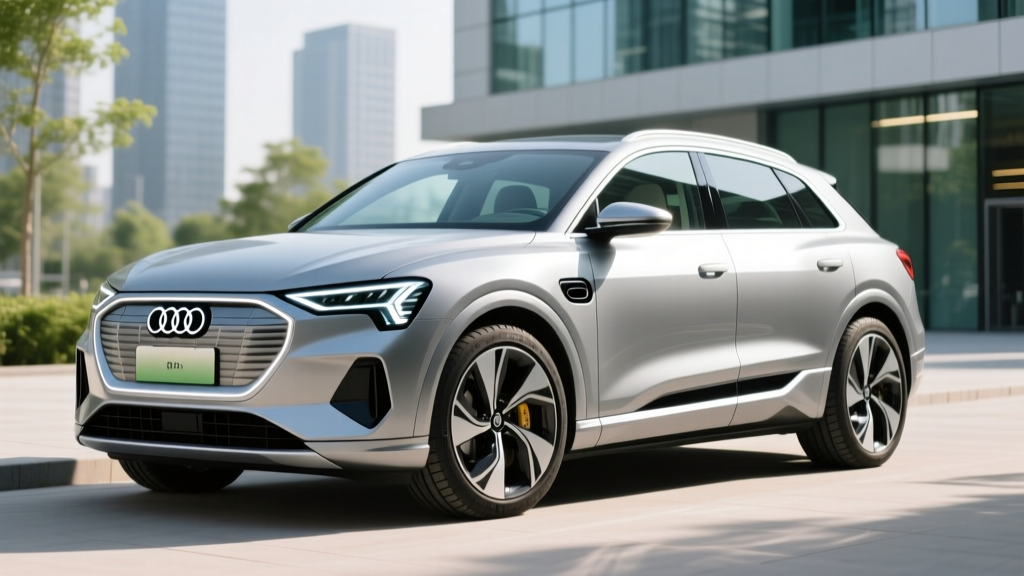
The 2026 Audi Q6 e-tron arrives on Volkswagen Group's Premium Platform Electric (PPE) architecture — the same 800-volt backbone underpinning the Porsche Macan EV — and it shows. With a peak 270 kW DC fast-charging rate, a 100 kWh battery (94.9 kWh usable), and an EPA-estimated range of up to 321 miles in rear-wheel-drive form, this mid-size luxury SUV targets the exact buyer who wants German engineering rigor without the Tesla ecosystem lock-in. But for family shoppers, the headline is Audi's comprehensive active-safety suite and its pursuit of top crash-test ratings. Here's everything you need to know about the Audi Q6 e-tron's safety credentials, real-world efficiency, and ownership economics before you visit a dealer.
| Spec | Q6 e-tron Premium (RWD) | Q6 e-tron quattro (AWD) | SQ6 e-tron (Perf. AWD) |
|---|---|---|---|
| EPA Range | 321 mi | 308 mi | 284 mi |
| Battery (usable/total) | 94.9 kWh usable / 100 kWh total — NMC (nickel-manganese-cobalt) | ||
| Peak DC Fast Charge | 270 kW (800V architecture) | ||
| 10–80% DC Charge Time | ~21 minutes (ideal conditions) | ||
| Level 2 Home Charge (11.5 kW) | ~10.5 hours (0–100%) | ||
| Horsepower | 358 hp (launch control: 383 hp) | 436 hp (456 hp) | 509 hp (543 hp) |
| 0–60 mph | 5.8 sec | 4.9 sec | 4.2 sec |
| Drivetrain | RWD, single motor | AWD, dual motor | AWD, dual motor (performance) |
| MPGe (combined) | 110 MPGe | 103 MPGe | 95 MPGe |
| Efficiency | 31 kWh/100 mi | 33 kWh/100 mi | 35 kWh/100 mi |
| Base MSRP | $65,095 | $68,895 | $76,595 |
| Battery/Powertrain Warranty | 8 years / 100,000 miles | ||
Audi Q6 e-tron Safety Ratings and Active-Safety Technology
The search for Audi Q6 e-tron safety information leads directly to two areas: crash-test performance and the onboard driver-assistance hardware. The Q6 e-tron was engineered to target top marks from both the Insurance Institute for Highway Safety (IIHS) and the National Highway Traffic Safety Administration (NHTSA). Audi's PPE platform positions the battery pack low in the chassis as a structural element, contributing to a rigid passenger cell and a low center of gravity that aids rollover resistance.
Standard Active-Safety Suite
Every 2026 Q6 e-tron ships with Audi pre sense® basic and pre sense® front as standard equipment. The full roster includes:
- Adaptive Cruise Assist with Lane Guidance: Combines adaptive cruise control, lane-centering, and stop-and-go functionality. This is a Level 2 SAE driver-assist system — you must keep hands on the wheel and eyes on the road at all times.
- Audi pre sense® front: Forward collision warning with automatic emergency braking, pedestrian and cyclist detection.
- Audi pre sense® rear: Monitors approaching traffic from behind and pre-tensions seatbelts, closes windows, and activates hazard lights if a rear collision is imminent.
- Intersection Assist: Detects cross-traffic when pulling into an intersection and can apply brakes autonomously.
- Turn Assist: Prevents left turns into oncoming traffic at intersections.
- Exit Warning: Alerts occupants if opening a door would intersect with a cyclist or approaching vehicle.
- Side Assist (Blind-Spot Monitoring): Includes rear cross-traffic alert with braking intervention.
- Park Assist Plus with Surround-View Cameras: Available with remote parking — the vehicle can maneuver into tight spaces while you stand outside using the myAudi app.
⚠️ SAE Automation Level: Level 2
Audi's Adaptive Cruise Assist is a Level 2 driver-assist system per SAE International classification. It controls steering, acceleration, and braking under driver supervision, but it is not self-driving. The driver remains fully responsible for the vehicle at all times. True Level 4 driverless operation is limited to geofenced robotaxi services like Waymo.
Structural and Passive Safety
The Q6 e-tron's body structure uses a mix of hot-stamped ultra-high-strength steel and aluminum, with the battery enclosure integrated into the floor pan to increase torsional rigidity. Eight airbags are standard: front, side-impact, curtain, and a center airbag between the front seats to prevent head clashes in side impacts. The high-voltage battery is automatically disconnected from the cabin within milliseconds of a detected crash event.
Real-World Range and Efficiency: Beyond the EPA Sticker
The EPA rates the rear-wheel-drive Q6 e-tron Premium at 321 miles of combined range — a strong figure for a luxury SUV in this weight class. But as with every EV, your real-world mileage will vary based on driving style, climate, and route profile.
📊 Real-World Range Expectations (Q6 e-tron Premium RWD)
- EPA Combined: 321 miles
- Highway (70–80 mph, 75°F): ~265–285 miles — aerodynamic drag at sustained highway speeds reduces efficiency by roughly 12–17%.
- City/Suburban (mixed, 75°F): ~310–330 miles — regenerative braking recaptures energy in stop-and-go traffic.
- Cold Weather (20°F, highway): ~210–245 miles — expect 25–35% range reduction in freezing temperatures. The standard heat pump mitigates cabin-heating energy draw, but battery chemistry slows and cabin preconditioning still consumes kWh.
- Towing (max 4,400 lbs): ~170–200 miles — towing roughly halves range; plan charging stops accordingly.
At 31 kWh per 100 miles (110 MPGe combined), the RWD model is efficient for a 5,000+ lb luxury SUV. The quattro and SQ6 variants trade range for performance, dropping to 103 and 95 MPGe respectively. For context, the BMW iX xDrive50 achieves 87 MPGe combined, while the Tesla Model X Long Range manages 102 MPGe — the Q6 e-tron RWD sits near the top of its segment on efficiency.
Charging Speed: The 800-Volt Advantage Explained
The Q6 e-tron's 800-volt electrical architecture is its most underappreciated spec. Most mainstream EVs use 400-volt systems, which cap DC fast-charging speeds around 150–200 kW. The Q6 e-tron's 800V platform allows it to accept up to 270 kW at compatible DC fast chargers — translating to a 10–80% charge in approximately 21 minutes under ideal conditions.
| Charging Level | Power (kW) | Connector | Speed (mi/hr added) | Notes |
|---|---|---|---|---|
| Level 1 (120V household) | ~1.4 kW | J1772 adapter | ~4 mi/hr | Emergency/trickle only; 0–100% in ~68 hours |
| Level 2 (240V home/public) | 11.5 kW (onboard charger max) | J1772 / NACS (with adapter) | ~34 mi/hr | Full charge in ~10.5 hours; ideal overnight |
| DC Fast Charge | Up to 270 kW peak | CCS1 (native) / NACS (with adapter) | Up to ~850 mi/hr (peak) | 10–80% in ~21 min; tapers significantly above 80% |
Understanding the Charge Curve
Peak 270 kW is not sustained across the entire session. The Q6 e-tron's charge curve holds above 200 kW from roughly 10% to 40% State of Charge (SoC), then gradually tapers. From 60–80%, you'll see rates closer to 100–130 kW. This is normal lithium-ion behavior — the battery management system reduces current to protect cell longevity. Total 10–80% time of ~21 minutes accounts for this taper. If you arrive at a charger with a warm, preconditioned battery (use the route planner in the MMI system to trigger preconditioning ~30 minutes before arrival), you'll see the best rates.
For home charging, the 11.5 kW onboard charger is generous. On a 48-amp Level 2 circuit (60-amp breaker), you'll add roughly 34 miles of range per hour — enough to fully replenish overnight. We recommend a hardwired Level 2 station like the ChargePoint Home Flex or EnelX JuiceBox over a plug-in NEMA 14-50 outlet for reliability and sustained high-amperage delivery.
Pricing, Trim Levels, and Federal Tax Credit Eligibility
The 2026 Q6 e-tron lineup spans three core trims with two powertrain configurations. Pricing starts at $65,095 including destination for the RWD Premium model and climbs to over $85,000 for a fully loaded SQ6 e-tron Prestige.
| Trim | Drivetrain | Base MSRP | As-Tested (typical options) |
|---|---|---|---|
| Premium | RWD | $65,095 | $68,500 |
| Premium Plus | RWD | $70,495 | $75,200 |
| Premium | quattro AWD | $68,895 | $73,000 |
| Premium Plus | quattro AWD | $74,295 | $80,500 |
| Prestige | quattro AWD | $79,895 | $86,000 |
| SQ6 e-tron Premium Plus | Performance AWD | $76,595 | $83,500 |
| SQ6 e-tron Prestige | Performance AWD | $82,995 | $89,000 |
Does the Q6 e-tron Qualify for the Federal EV Tax Credit?
Federal tax credit eligibility under IRS §30D is one of the most complex aspects of buying any EV in 2026. Here's the framework for the Q6 e-tron:
- MSRP Cap: SUVs must have an MSRP at or below $80,000. The Q6 e-tron Premium and Premium Plus trims (RWD and quattro) fall under this cap. The Prestige and SQ6 trims exceed it and are not eligible.
- Buyer Income Cap: Modified adjusted gross income must not exceed $300,000 (joint filers), $225,000 (head of household), or $150,000 (single).
- Battery Sourcing Requirements: The credit splits into two $3,750 halves — one for critical-minerals sourcing and one for battery-component manufacturing. These requirements tighten annually. Audi's NMC cells are manufactured in partnership with Samsung SDI, and sourcing compliance varies by model year. Confirm current-year eligibility on the IRS clean vehicle credit list before purchasing.
- Point-of-Sale Transfer: If eligible, you can transfer the credit to the dealer at purchase, reducing your out-of-pocket cost immediately rather than waiting to claim it on your tax return.
- Lease Loophole (§45W): Leased Q6 e-trons may qualify for the $7,500 commercial clean vehicle credit regardless of MSRP caps, income limits, or battery sourcing — passed through as a lease capital-cost reduction. Ask your dealer how Audi Financial Services is handling this.
⚠️ Tax Credit Disclaimer
Federal EV tax credit rules under §30D are subject to change and depend on battery-sourcing compliance that shifts quarterly. The information above reflects 2026 rules as of publication. Always verify your personal eligibility with a tax professional and cross-reference the IRS official clean vehicle credit page before committing to a purchase.
Cargo, Passenger Space, and Interior Practicality
The Q6 e-tron slots between the Q4 e-tron and Q8 e-tron in Audi's EV lineup, and its interior dimensions reflect that mid-size positioning. Thanks to the PPE platform's flat floor and pushed-out wheels, cabin space is generous:
- Front Headroom: 40.2 inches
- Front Legroom: 41.1 inches
- Rear Headroom: 38.8 inches
- Rear Legroom: 38.0 inches — sufficient for two 6-foot adults on long drives
- Cargo (rear seats up): 28.7 cu ft
- Cargo (rear seats folded): 60.4 cu ft
- Frunk (front trunk): 2.3 cu ft — enough for charging cables and a small bag
The interior features Audi's latest MMI touch-response system on an 11.9-inch OLED driver display and a 14.5-inch curved central touchscreen. A 10.9-inch passenger display is available on Premium Plus and standard on Prestige trims. Physical controls are limited — most climate and vehicle settings route through the touchscreen, which some buyers find frustrating for on-the-road adjustments. Wireless Apple CarPlay and Android Auto are standard. The available Bang & Olufsen 3D audio system uses 20 speakers and headrest-mounted drivers for immersive sound.
Driving Impressions: Performance, Ride, and Refinement
Even in base RWD form with 358 horsepower, the Q6 e-tron moves with the effortless torque characteristic of single-speed EV drivetrains. The 0–60 mph sprint in 5.8 seconds is quick but not thrilling — this is a luxury cruiser, not a sports car. The SQ6 e-tron's 4.2-second run changes that character entirely, delivering genuine performance-SUV punch.
Ride quality is where the Q6 e-tron distinguishes itself. The standard adaptive air suspension (included on Premium Plus and above) absorbs pavement imperfections with a suppleness that the stiffer BMW iX and firmer Tesla Model X don't match. Road noise is exceptionally well-managed — Audi uses acoustic-laminated glass on all four doors and extensive underbody shielding. Steering is light and precise but offers minimal feedback, consistent with Audi's comfort-oriented tuning.
Regenerative braking offers three levels selectable via steering-wheel paddles, plus an adaptive mode that uses radar and navigation data to modulate regen automatically. One-pedal driving is achievable in the strongest setting, though the brake-pedal blending feels slightly artificial during the transition from regen to friction braking — a common quirk in VW Group EVs.
✅ Pros
- Class-leading 270 kW DC fast charging — 10–80% in ~21 min
- 321-mile EPA range (RWD) is competitive with the best in class
- Comprehensive standard safety suite with intersection and turn assist
- Quiet, refined ride quality with standard air suspension (Premium Plus+)
- 800V architecture future-proofs charging compatibility
- Point-of-sale tax credit transfer available on eligible trims
❌ Cons
- MSRP exceeds $80K on Prestige/SQ6 — eliminates federal credit eligibility
- Rear cargo space (28.7 cu ft) trails the BMW iX (35.5 cu ft)
- Touchscreen-heavy interior limits physical climate controls
- CCS1 native port requires adapter for Tesla Supercharger access
- Cold-weather range loss of 25–35% is significant in northern climates
- Base Premium trim lacks air suspension and several driver-assist features
Who Should Buy the Audi Q6 e-tron?
The Q6 e-tron is best suited for luxury SUV buyers who prioritize safety technology, ride comfort, and fast public charging over maximum cargo space or cutting-edge infotainment. It's an excellent choice for:
- Commuters with DC fast-charger access: The 270 kW peak rate means 15-minute stops add ~150 miles — genuine road-trip capability.
- Families prioritizing active safety: The standard safety suite is one of the most comprehensive in the segment.
- Luxury upgraders from BMW X5 or Mercedes GLE: The Q6 e-tron's ride quality and cabin materials match or exceed those benchmarks.
It's less ideal for buyers who need maximum cargo volume (the BMW iX offers 35.5 cu ft), want access to Tesla's Supercharger network without an adapter, or plan to tow frequently — the 4,400-lb tow rating is adequate for a small boat or trailer but not a large camper.
2026 Audi Q6 e-tron FAQ
What is the real-world highway range of the Audi Q6 e-tron?
Expect 265–285 miles at sustained 70–80 mph speeds in moderate temperatures for the RWD model (EPA rated at 321 mi combined). In freezing conditions, highway range drops to roughly 210–245 miles. The heat pump helps but doesn't eliminate cold-weather losses.
How fast does the Q6 e-tron charge at home?
On a 240V Level 2 home charger delivering the full 11.5 kW, you'll add about 34 miles of range per hour. A full 0–100% charge takes approximately 10.5 hours — easily achievable overnight. We recommend a 48-amp hardwired station on a 60-amp breaker.
Does the Audi Q6 e-tron qualify for the $7,500 federal tax credit?
Possibly, depending on trim and your income. Premium and Premium Plus trims fall under the $80,000 SUV MSRP cap. You must also meet IRS income limits and the vehicle must satisfy battery-sourcing requirements, which change periodically. Verify on the IRS clean vehicle credit page before purchasing. Leasing may bypass MSRP and sourcing restrictions under the §45W commercial credit.
Is the Q6 e-tron self-driving?
No. Audi's Adaptive Cruise Assist is an SAE Level 2 driver-assist system. It handles steering, acceleration, and braking on highways, but you must remain attentive with hands on the wheel. No production Audi offers Level 3 or higher autonomous driving in the U.S. as of 2026.
How does the Q6 e-tron compare to the BMW iX and Tesla Model X?
The Q6 e-tron charges faster than both (270 kW vs. ~200 kW for the iX, ~250 kW for the Model X). The Model X offers more range (348 mi EPA) and a third-row option. The iX provides more cargo space. The Q6 e-tron's ride comfort and safety-tech breadth are competitive advantages. Price-wise, all three cluster in the $65K–$90K range depending on trim.
What battery chemistry does the Q6 e-tron use?
The Q6 e-tron uses NMC (nickel-manganese-cobalt) lithium-ion cells supplied by Samsung SDI. NMC offers high energy density, which is why the 100 kWh pack fits in this vehicle's footprint. NMC batteries benefit from staying between 20–80% SoC for daily use; use the charge-limit setting in the MMI to cap at 80% for routine driving and charge to 100% only before long trips.
What is the battery replacement cost?
Full high-voltage battery replacement for the Q6 e-tron is estimated at $18,000–$25,000 out of warranty, though individual module replacement is significantly cheaper. Audi's 8-year/100,000-mile battery warranty covers defects and excessive capacity loss (typically below 70% State of Health). Based on PPE-platform degradation data from early European models, expect roughly 8–12% capacity loss over 100,000 miles under normal use.