Quick Verdict: The Q6 e-tron Quattro at a Glance
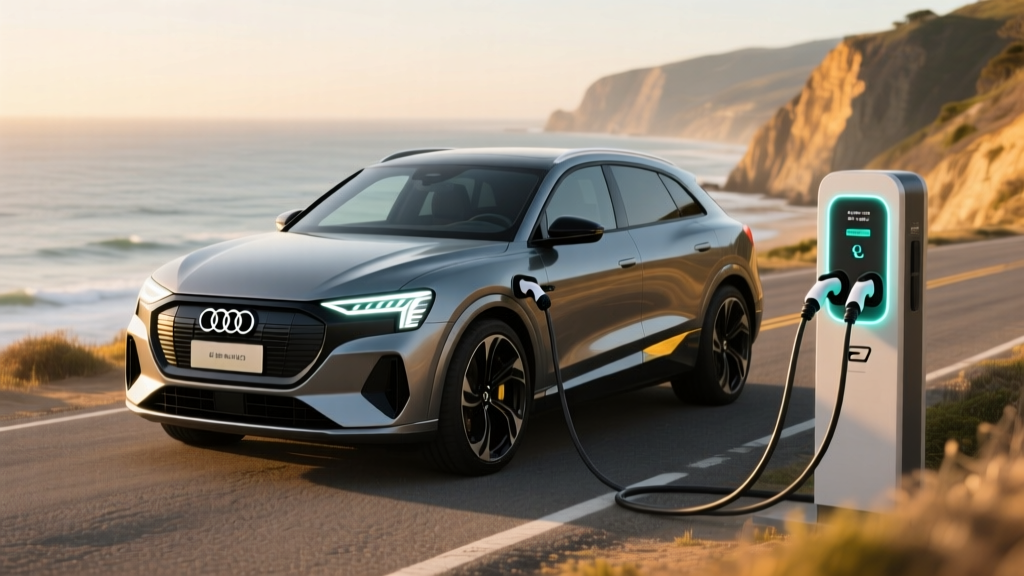
The 2026 Audi Q6 e-tron Quattro lands in the crowded luxury electric SUV segment with a compelling blend of Porsche-derived engineering, genuine fast-charging capability, and Audi's trademark interior refinement. Built on the Volkswagen Group's Premium Platform Electric (PPE) architecture — co-developed with Porsche — the Q6 e-tron Quattro pairs a 100 kWh gross battery pack with dual-motor all-wheel drive to deliver 456 horsepower and an EPA-estimated 321 miles of range in its most efficient configuration.
But the spec sheet only tells part of the story. After spending time with the Q6 e-tron Quattro on highway loops, city commutes, and at DC fast chargers, the real question isn't whether it's a capable luxury EV — it's whether its $65,095 starting price and competitive segment make it the right choice over the BMW iX, Mercedes EQB, or Genesis Electrified GV70. Here's everything you need to know, with exact numbers and no marketing fluff.
| Spec | Value |
|---|---|
| EPA Range | 321 miles (Premium Plus, 19" wheels) |
| Battery (gross / usable) | 100 kWh / ~94.9 kWh (NMC) |
| Drivetrain | Dual-motor AWD (Quattro) |
| Horsepower | 456 hp (422 hp standard, boost function) |
| 0–60 mph | 4.9 seconds |
| Max DC Fast Charge | 270 kW |
| 10–80% DC Charge Time | ~21 minutes |
| Level 2 Home Charging | 11.5 kW (~35 mi/hr) |
| MPGe (combined) | 96 MPGe |
| Cargo Volume | 28.7 cu ft (rear seats up) / 60.4 cu ft (folded) |
| Base MSRP | $65,095 (Premium Plus) |
| Battery Warranty | 8 years / 100,000 miles |
Range and Efficiency: EPA Sticker vs. Real-World Miles
The EPA rates the 2026 Q6 e-tron Quattro at 321 miles with the Premium Plus trim on 19-inch wheels. Step up to the Prestige trim or opt for the 21-inch wheel package, and that number drops to approximately 308 miles due to increased rolling resistance and added weight from higher-spec equipment.
- City / mixed driving (65°F+): ~300–315 miles — regen braking in stop-and-go traffic helps recoup energy.
- Highway (70–75 mph, moderate temps): ~265–285 miles — aerodynamic drag at sustained speeds reduces efficiency by roughly 12–17%.
- Cold weather (25–35°F, highway): ~230–255 miles — battery heating demands and cabin HVAC can cut range 20–28% versus EPA.
The Q6 e-tron Quattro's heat pump (standard equipment) mitigates cold-weather losses compared to EVs without one, but physics still applies: expect a meaningful reduction below freezing, especially on highway road trips.
Efficiency lands at approximately 96 MPGe combined, translating to about 35 kWh per 100 miles. That's respectable for a 4,900-pound luxury AWD SUV, though the BMW iX xDrive50 edges slightly ahead at 86 MPGe combined with a larger battery and longer range. The Q6 e-tron's NMC (nickel manganese cobalt) battery chemistry prioritizes energy density over the cycle-life longevity of LFP cells — a trade-off common in premium EVs where range per charge matters more than 20-year durability.
Charging Performance: 270 kW Peak and the Real Charge Curve
The Q6 e-tron Quattro's PPE platform enables 800-volt architecture, which is the engineering reason it can accept up to 270 kW at a DC fast charger. That peak number is impressive, but sustained charge rate matters more for actual road trips.
| Charging Level | Power | Speed (approx.) |
|---|---|---|
| Level 1 (120V household) | 1.4 kW | ~4–5 miles per hour |
| Level 2 (240V home / public) | 11.5 kW | ~35 miles per hour (full charge ~9 hrs) |
| DC Fast Charge (peak) | 270 kW | 10–80% in ~21 min (on 350 kW charger) |
| DC Fast Charge (50 kW station) | 50 kW | 10–80% in ~90 min |
The charge curve reality: The Q6 e-tron holds near its 270 kW peak from roughly 10% to 30% state of charge, then tapers progressively. Between 30–60% SoC, expect ~175–200 kW sustained. Above 80%, the rate drops sharply to protect the battery — typically below 50 kW. This is standard for NMC chemistry but means that charging from 80–100% at a DC station is rarely worth the time. For road trips, plan 10–80% stops of about 20 minutes each, and you'll add roughly 200 miles per stop.
For home charging, the onboard 11.5 kW AC charger is competitive. On a 48-amp Level 2 circuit (the most common home installation), you'll recover about 35 miles of range per hour, meaning an overnight charge from 20–80% takes roughly 5–6 hours. If your electrical panel supports a 60-amp dedicated circuit, you can max out the 11.5 kW rate. A licensed electrician should evaluate your panel capacity before installation — a 200-amp service upgrade can add $1,500–$3,000 to the project.
Performance and Driving Dynamics
The dual-motor Quattro powertrain produces 422 horsepower in standard driving, with a launch-control boost function that temporarily raises output to 456 hp. The result is a 4.9-second 0–60 mph time — quick enough to merge confidently and pass without drama, though not in the same league as the Tesla Model Y Performance (3.5 seconds) or the BMW iX M60 (3.6 seconds).
Where the Q6 e-tron Quattro earns its Audi badge is ride quality. The standard adaptive air suspension absorbs highway imperfections with composure, and the steering is weighted appropriately for a luxury cruiser. This is not a sport-first EV — it's a comfort-oriented grand tourer that happens to be electric. The regenerative braking system offers three levels of recuperation, selectable via steering-wheel paddles, but Audi does not offer true one-pedal driving with a full stop hold. You'll still use the brake pedal in stop-and-go traffic more than you would in a Nissan Leaf or Chevrolet Equinox EV.
Towing capacity is rated at 4,400 pounds with the factory tow package — adequate for a small boat trailer or lightweight camper, but below the Rivian R1S (7,700 lb) and the F-150 Lightning's class-leading capability.
Interior, Tech, and Cargo Space
Audi redesigned the interior architecture for the Q6 e-tron around a new infotainment platform. The driver faces an 11.9-inch digital instrument cluster, while a 14.5-inch central touchscreen handles navigation, media, and vehicle settings. A secondary 10.9-inch passenger display is available on Prestige trims, letting the front passenger control entertainment without distracting the driver.
The MMI system is responsive and logically structured, though some climate and drive-mode controls are buried in touchscreen submenus rather than physical buttons — a common frustration in modern luxury EVs. Wireless Apple CarPlay and Android Auto are standard, along with four USB-C ports and a wireless charging pad.
Driver assistance: The Q6 e-tron comes standard with Audi's Adaptive Cruise Assist with lane-centering, which is an SAE Level 2 system. This means you must keep your hands on the wheel and eyes on the road at all times. It is not self-driving. The system performs competently on divided highways but does not offer hands-free operation like GM's Super Cruise or Ford's BlueCruise. Audi has announced a future "adaptive cruise with lane change" feature, but as of the 2026 model year, it requires manual lane-change confirmation.
Cargo space measures 28.7 cubic feet behind the second row and 60.4 cubic feet with the 40/20/40 split rear seats folded. There is no front trunk (frunk) — the PPE platform's front-end packaging reserves that space for HVAC and power electronics. Rear legroom is 38.1 inches, which accommodates adults comfortably but falls slightly short of the Hyundai Ioniq 5's generous 41.7 inches.
Pricing, Trims, and Federal Tax Credit Eligibility
The 2026 Q6 e-tron Quattro is offered in two primary trims:
| Trim | Base MSRP | Est. As-Tested | §30D Credit Eligible? |
|---|---|---|---|
| Premium Plus | $65,095 | $66,500–$69,000 | See eligibility below |
| Prestige | $70,895 | $73,000–$76,000 | See eligibility below |
Federal tax credit (IRS §30D): Whether the Q6 e-tron Quattro qualifies for the full $7,500 federal EV tax credit depends on three factors that change periodically, so always verify against the latest IRS guidance. As of early 2026, the key requirements include:
- MSRP cap: SUVs must have an MSRP at or below $80,000. Both trims of the Q6 e-tron Quattro fall under this cap at base, but heavily optioned Prestige models could approach the limit.
- Buyer income cap: Modified adjusted gross income must not exceed $150,000 (single), $225,000 (head of household), or $300,000 (joint filers).
- Battery sourcing: A percentage of critical minerals and battery components must be sourced from the U.S. or free-trade-agreement countries. Audi's supply chain for the U.S.-market Q6 e-tron has been structured to comply, but the exact credit amount ($3,750 or $7,500) depends on the model year's phase-in of sourcing rules. Check the DOE's qualifying vehicle list at the time of purchase.
- Point-of-sale transfer: The credit can now be transferred to the dealer at purchase, reducing your out-of-pocket cost immediately rather than waiting for a tax return.
If you qualify for the full $7,500, the effective starting price of the Premium Plus drops to approximately $57,595 — a significant value proposition against similarly equipped competitors.
How It Compares: Q6 e-tron Quattro vs. Key Rivals
| Spec | Audi Q6 e-tron Quattro | BMW iX xDrive50 | Genesis Electrified GV70 |
|---|---|---|---|
| EPA Range | 321 mi | 324 mi | 236 mi |
| Battery (usable) | ~94.9 kWh (NMC) | ~105.2 kWh (NMC) | ~74.0 kWh (NMC) |
| Max DC Charge | 270 kW | 150 kW | 350 kW |
| 10–80% Time | ~21 min | ~34 min | ~18 min |
| 0–60 mph | 4.9 sec | 4.4 sec | 4.5 sec |
| Base MSRP | $65,095 | $87,250 | $67,800 |
| Cargo (rear up) | 28.7 cu ft | 35.5 cu ft | 28.7 cu ft |
The Q6 e-tron Quattro occupies a strategic middle ground. It undercuts the BMW iX by over $20,000 while offering comparable range and significantly faster DC charging (270 kW vs. 150 kW). Against the Genesis Electrified GV70, the Audi delivers far more range (321 vs. 236 miles) at a similar price point, though the Genesis charges even faster at 350 kW. The iX wins on cargo space; the GV70 is the most affordable entry point but range is its Achilles' heel.
- 270 kW DC fast charging — among the fastest in the luxury midsize segment
- 321-mile EPA range is competitive for the price
- Refined ride quality with standard air suspension
- Modern, responsive infotainment with passenger display option
- Under $66K base price undercuts most German rivals
- No front trunk (frunk) for additional storage
- No true one-pedal driving mode
- Rear legroom is tighter than some competitors
- Driver assist is competent but not hands-free capable
- Cargo volume trails the BMW iX noticeably
Who Should Buy the Q6 e-tron Quattro?
Choose the Q6 e-tron Quattro if: You want a luxury-badged EV with fast road-trip charging, a comfortable highway ride, and a starting price that stays under the §30D MSRP cap. It's ideal for commuters with home Level 2 charging who take 2–4 road trips per year and value the Audi interior experience over maximum cargo space.
Look elsewhere if: You need maximum cargo volume (BMW iX), hands-free highway driving (GM Super Cruise / Ford BlueCruise vehicles), or more than 300 miles of real-world highway range in cold climates (consider the Lucid Gravity or a long-range Tesla Model X). If you tow frequently, the 4,400-pound limit may be restrictive.
Frequently Asked Questions
What is the real-world range of the Audi Q6 e-tron Quattro?
The EPA estimates 321 miles for the Premium Plus trim on 19-inch wheels. In real-world highway driving at 70–75 mph in moderate temperatures, expect roughly 265–285 miles. In cold weather (below 35°F) on the highway, plan for 230–255 miles. City driving with regenerative braking gets closest to the EPA sticker.
How fast does the Q6 e-tron Quattro charge at home and on the road?
At a DC fast charger rated 350 kW or higher, the Q6 e-tron peaks at 270 kW and charges from 10–80% in approximately 21 minutes. At home on a 240V Level 2 charger, the 11.5 kW onboard charger delivers about 35 miles of range per hour, fully replenishing the battery overnight. A standard 120V outlet adds only 4–5 miles per hour — useful for topping off but not for daily use if you drive more than 30 miles round-trip.
Does the Q6 e-tron Quattro qualify for the $7,500 federal EV tax credit?
Both trims fall under the $80,000 SUV MSRP cap. Eligibility depends on your income (under $150K single / $300K joint), the vehicle's battery-sourcing compliance for the specific model year, and whether you have not already exceeded the credit's per-manufacturer or personal-use limits. Verify current eligibility on irs.gov before purchasing. The credit can be applied at the point of sale to reduce your purchase price directly.
Is the Q6 e-tron Quattro worth buying over the BMW iX or Genesis GV70?
It depends on your priorities. The Q6 e-tron offers the best value proposition — comparable range to the iX at $22,000 less, and far more range than the GV70 at a similar price. The BMW iX wins on cargo space and slightly quicker acceleration. The Genesis GV70 charges fastest but its 236-mile range is limiting for road trips. If fast charging and price matter most, the Audi is the strongest pick in this trio.
What is the battery warranty on the Q6 e-tron Quattro?
Audi covers the high-voltage battery for 8 years or 100,000 miles, whichever comes first. The warranty guarantees a minimum capacity retention of 70% — if the battery degrades below that threshold within the warranty period, Audi will repair or replace it. This is consistent with industry norms (Tesla, BMW, and Hyundai all offer 8-yr/100,000-mi battery warranties with similar retention thresholds).
Does the Q6 e-tron have a frunk (front trunk)?
No. The PPE platform's front-end design houses the HVAC system, power electronics, and the secondary electric motor in the space where a frunk would typically be. All storage is in the rear cargo area (28.7 cu ft) and the cabin's interior compartments.