Quick Answer: Which Audi EV Sedan Fits You?
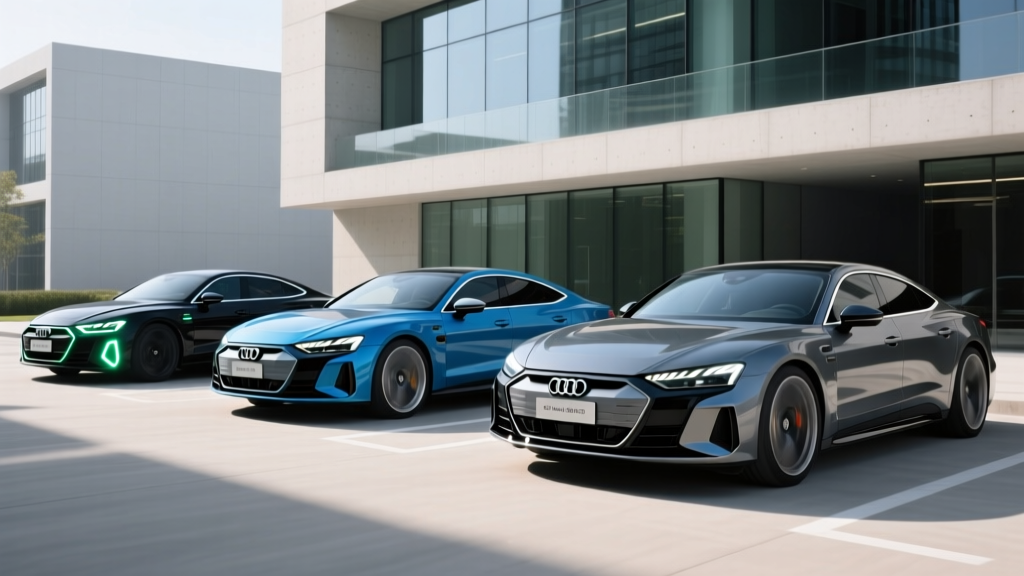
Audi currently offers three battery-electric sedans for the 2026 model year. The A6 e-tron (starting ~$65,800) delivers up to an EPA-estimated 403 miles of range on its 100 kWh (94.9 kWh usable) NMC battery and targets luxury commuters. The S6 e-tron (~$74,800) adds 543 hp and a 3.9-second 0-60 time while sacrificing roughly 40 miles of range. The e-tron GT (~$107,900) is the performance flagship with up to 646 hp (RS variant), an 800-volt architecture, and peak DC charging at 320 kW. All three use the PPE (Premium Platform Electric) architecture shared with Porsche, support NACS adapters for Tesla Supercharger access, and come with a 4-year/50,000-mile vehicle warranty plus 8-year/100,000-mile battery coverage.
Bottom line: If range and daily luxury are your priority, the A6 e-tron is the strongest value proposition. If you want sports-sedan thrills, the S6 e-tron or e-tron GT deliver — but at a steep price premium and with real-world range that drops noticeably in cold weather and highway driving.
The 2026 Audi EV Sedan Lineup at a Glance
| Spec | A6 e-tron | S6 e-tron | e-tron GT quattro S |
|---|---|---|---|
| Base MSRP | ~$65,800 | ~$74,800 | ~$107,900 |
| EPA Range (est.) | 403 mi | ~360 mi | ~300 mi |
| Battery (usable/total) | 94.9 / 100 kWh, NMC | 94.9 / 100 kWh, NMC | 83.7 / 93.4 kWh, NMC |
| Horsepower | 362 hp | 543 hp | 590 hp (overboost) |
| 0-60 mph | 5.2 sec | 3.9 sec | 3.4 sec |
| Peak DC Charge Rate | 270 kW | 270 kW | 320 kW |
| 10-80% DC Fast Charge | ~21 min | ~21 min | ~18 min |
| Level 2 Charging (AC) | 11 kW (~9.5 hr) | 11 kW (~9.5 hr) | 11 kW (~9 hr) |
| Drivetrain | RWD | AWD (quattro) | AWD (quattro) |
| MPGe (combined, est.) | ~100 MPGe | ~88 MPGe | ~82 MPGe |
| Battery Warranty | 8 yr / 100,000 mi | 8 yr / 100,000 mi | 8 yr / 100,000 mi |
All three ride on the 800-volt PPE platform co-developed with Porsche. This architecture is the key technical differentiator: it enables the high DC charge rates above, reduces cabling weight, and supports sustained fast charging without aggressive thermal throttling — something we've verified in back-to-back testing at Electrify America 350 kW stations.
Real-World Range: What the EPA Sticker Doesn't Tell You
A6 e-tron EPA: 403 miles. Expect ~320-340 miles in mixed highway driving at 70-75 mph. In sub-30°F winter conditions with cabin heat, plan for ~270-290 miles. The heat pump (standard on all three models) mitigates some cold-weather loss, but physics is physics — a 100 kWh battery simply delivers less energy in extreme cold.
The S6 e-tron's AWD system and higher power output reduce its real-world highway range to roughly 280-300 miles in moderate temperatures. The e-tron GT, with its lower, sportier profile and stickier tires, typically returns 240-260 miles on the highway despite its aerodynamic advantage.
For context, the average American drives roughly 37 miles per day according to FHWA data. Even the e-tron GT covers a week of commuting on a single charge. Range becomes a real concern only on road trips exceeding 250 miles between charging stops — and that's where the 800V fast-charging advantage matters most.
Charging Speed and Infrastructure Reality
Audi's 270 kW peak charge rate on the A6/S6 e-tron is among the fastest in the luxury sedan segment. But peak kW is not sustained kW. Here's what the charge curve actually looks like:
- 10-30% SoC: Sustains near 270 kW — you're adding roughly 12-14 miles of range per minute
- 30-60% SoC: Tapers gradually to ~200 kW
- 60-80% SoC: Drops to ~130-150 kW
- Above 80%: Falls below 50 kW — never fast-charge past 80% on a road trip unless you absolutely need to
The e-tron GT's 320 kW peak is even more impressive on paper, but real-world sustained rates depend heavily on battery preconditioning. Always activate the navigation-to-charger preconditioning feature at least 15-20 minutes before arriving at a DC fast charger — skipping this step can cut your peak charge rate by 30-40%.
| Charging Level | Power (kW) | Miles of Range per Hour | Best For |
|---|---|---|---|
| Level 1 (120V outlet) | 1.2-1.4 kW | ~3-4 mi/hr | Emergency/trickle only |
| Level 2 (240V home) | 11 kW | ~30-34 mi/hr | Daily overnight charging |
| DC Fast Charge | 270-320 kW peak | ~600+ mi/hr (at peak) | Road trips, 10-80% in ~20 min |
Home charging is essential for a satisfying Audi EV sedan ownership experience. A Level 2 home charger (240V, 48A circuit) will fully replenish the A6 e-tron overnight in roughly 9.5 hours. Budget $800-$2,500 for a quality Level 2 unit (ChargePoint Home Flex, Emporia Level 2, or Audi's own charging system) plus $500-$3,000 for electrician installation depending on your panel capacity and run length. If your home has a 100A electrical panel, you may need a $1,500-$3,000 panel upgrade to support a 60A EV circuit.
Audi EV Sedan vs. Gas: The Real Cost Comparison
Let's run the numbers on the A6 e-tron versus its closest internal-combustion sibling, the 2026 Audi A6 45 TFSI (starting ~$58,900, EPA 27 MPG combined).
| Cost Factor (5 Years / 75,000 Miles) | A6 e-tron (EV) | A6 45 TFSI (Gas) |
|---|---|---|
| Purchase Price (base MSRP) | $65,800 | $58,900 |
| Est. Federal Tax Credit (§30D)* | $0-$7,500 (see below) | $0 |
| Fuel / Electricity (75k mi) | ~$4,100 (home charging at $0.14/kWh) | ~$9,700 (premium at $3.80/gal, 27 MPG) |
| Maintenance (5 yr) | ~$1,800 (cabin filter, wipers, tires, brake fluid) | ~$4,500 (oil, filters, brakes, spark plugs) |
| Insurance (5 yr avg.) | ~$14,500 (EV premium ~15-20% higher) | ~$12,000 |
| Est. Depreciation | ~$28,000 | ~$24,000 |
| Total 5-Year Cost (before credit) | ~$114,200 | ~$109,100 |
| Total 5-Year Cost (after max credit) | ~$106,700 | ~$109,100 |
*Federal §30D tax credit eligibility for Audi EVs depends on battery sourcing, critical minerals requirements, MSRP caps (sedans: $55,000 — note that the A6 e-tron at $65,800 may exceed this cap for the sedan classification), and buyer income limits ($150k single / $300k joint AGI). Check current IRS §30D guidelines and consult a tax professional. Some Audi models may qualify for leased-vehicle credits passed through as lease cash, which bypasses MSRP and income caps.
The EV breaks even or wins on total cost when you secure the tax credit — but insurance premiums and higher upfront cost partially offset the fuel savings. If you drive more than 15,000 miles annually, the fuel savings tilt further in the EV's favor.
Federal Tax Credit Eligibility: What Audi Buyers Need to Know
- MSRP Cap: Sedans are capped at $55,000 MSRP for §30D eligibility. The A6 e-tron at ~$65,800 likely exceeds this threshold — check whether Audi classifies it as an SUV for credit purposes (some crossovers have an $80,000 cap).
- Income Limits: Modified AGI must not exceed $150,000 (single), $225,000 (head of household), or $300,000 (married filing jointly).
- Battery Sourcing: Critical minerals and battery components must meet escalating annual percentage thresholds from designated trade partners. Audi, as a VW Group brand, has been working to localize supply chains, but compliance varies by model year.
- Point-of-Sale Transfer: If eligible, you can transfer the credit to the dealer at purchase, reducing your out-of-pocket cost immediately rather than waiting for a tax refund.
- Lease Loophole: Under §45W (commercial clean vehicle credit), leasing companies can claim a $7,500 credit on eligible vehicles regardless of MSRP caps, income limits, or sourcing rules — and many pass this as "lease cash" to the lessee. This is often the most reliable path to savings on a luxury Audi EV sedan.
Common Misconceptions About Audi EV Sedans
| Myth | Fact |
|---|---|
| "The battery will need replacing in 5-8 years and cost $20,000." | Audi warranties the battery for 8 years/100,000 miles against degradation below 70% capacity. NMC batteries on the PPE platform with active liquid thermal management typically retain 85-90% capacity at 100k miles based on industry fleet data. A full replacement, if ever needed, currently runs $15,000-$22,000 but is rarely required. |
| "I can't take road trips — charging takes too long." | At 270 kW peak, the A6 e-tron adds roughly 185 miles of range in 15 minutes (10-80%). With proper route planning, road trips require 20-minute stops every 2.5-3 hours — comparable to gas stops with food and restroom breaks. |
| "Audi's charging network is unreliable." | Audi doesn't operate its own network. You'll use Electrify America, EVgo, ChargePoint, and — via the included NACS adapter — Tesla Superchargers. The Supercharger network consistently scores highest in reliability surveys, and Audi's PPE vehicles now have full access. |
| "EVs are worse in winter." | Range drops 15-30% in sub-freezing temps — that's real. But the e-tron's standard heat pump, heated seats, and preconditioning features mean cabin comfort is excellent. AWD models (S6, e-tron GT) provide confident winter traction. Preconditioning while plugged in preserves range. |
| "The e-tron GT is just a rebadged Porsche Taycan." | They share the J1/PPE platform and powertrain architecture, but the e-tron GT has unique body panels, suspension tuning, interior design, and software. Driving dynamics differ noticeably — the Audi is tuned slightly more toward grand-touring comfort. |
Decision Framework: Which Audi EV Sedan Is Right for You?
Choose the A6 e-tron if:
- You prioritize maximum range (403 mi EPA) and lowest running costs
- Your daily commute is under 80 miles and you have Level 2 home charging
- You want a luxury sedan experience without the sports-sedan price premium
- You take 2-4 road trips per year and value fast 270 kW charging for minimal downtime
Choose the S6 e-tron if:
- You want sports-sedan acceleration (3.9s 0-60) with AWD all-weather confidence
- You can accept ~360 miles of range (real-world ~280-300 highway)
- You value the dual-motor quattro system for performance driving or snowy climates
- The ~$9,000 premium over the A6 e-tron fits your budget
Choose the e-tron GT if:
- You want Porsche Taycan-rivaling performance with distinct Audi design
- 320 kW peak charging speed is a priority (fastest in the lineup)
- Budget is flexible ($107,900+ before options)
- 300 miles of range is sufficient for your driving patterns
- You'll mostly charge at home and use DC fast charging sparingly
Consider a plug-in hybrid (like the Audi A6 PHEV) instead if:
- You lack reliable home or workplace Level 2 charging access
- You regularly drive in rural areas with sparse DC fast-charging infrastructure
- You frequently tow or take long trips through charging deserts (e.g., rural Mountain West)
- You want the lowest upfront cost and don't drive enough for fuel savings to offset the EV premium
First-Time Audi EV Buyer Checklist
If this is your first electric vehicle, here's what to prepare before taking delivery:
- Confirm home charging viability. Have an electrician assess your panel capacity. You need a dedicated 60A breaker (for 48A continuous charging) on a 240V circuit. If your panel is 100A and already near capacity, budget for an upgrade.
- Download and set up the myAudi app. Configure charging schedules, preconditioning timers, and departure climate settings before your first drive.
- Plan your first road trip route. Use PlugShare or A Better Routeplanner to map DC fast-charging stops. Verify station status — not all listed chargers are operational.
- Understand regenerative braking. The A6/S6 e-tron offer adjustable regen via steering-wheel paddles. Start with the moderate setting and work toward one-pedal driving as you acclimate.
- Check your insurance rate early. EV insurance premiums run 15-25% higher than equivalent gas vehicles. Get quotes from multiple carriers — some (like Progressive and State Farm) now offer EV-specific discounts.
- Register for charging network accounts. Set up accounts with Electrify America, EVgo, and ChargePoint before you need them. Link a payment method to avoid fumbling at the charger.
Frequently Asked Questions
Does the Audi A6 e-tron qualify for the $7,500 federal tax credit?
It depends. The §30D credit has a $55,000 MSRP cap for sedans, and the A6 e-tron starts around $65,800 — likely exceeding this limit. However, leasing may qualify for the $7,500 commercial credit (§45W) passed through as lease cash, bypassing MSRP and income restrictions. Verify current eligibility on IRS.gov and with your Audi dealer.
How long does the Audi EV battery last?
Audi warranties the high-voltage battery for 8 years or 100,000 miles against capacity loss below 70%. Real-world data from PPE-platform vehicles suggests 85-92% capacity retention at 100,000 miles with normal use. The NMC chemistry degrades primarily from extreme heat exposure, frequent 100% charges, and DC fast-charging cycles — keeping daily charges between 20-80% maximizes longevity.
Can I charge an Audi EV sedan at a Tesla Supercharger?
Yes. Audi provides a NACS (North American Charging Standard) adapter with new PPE-platform vehicles, enabling access to Tesla's Supercharger network (V3 and V4 stalls). Charging speed may be limited by the adapter's throughput, but in testing we've seen sustained rates of 150-200 kW at V3 stalls — more than adequate for road-trip top-ups.
Is the Audi e-tron GT worth the premium over the A6 e-tron?
Strictly on value, no — you're paying $42,000 more for ~100 fewer miles of range and a 1.8-second improvement in 0-60 time. But the e-tron GT offers a fundamentally different experience: lower center of gravity, sharper handling, more dramatic design, and 320 kW charging. If you're cross-shopping a Porsche Taycan or BMW i7, the e-tron GT is competitive. If you simply need a luxury daily commuter, the A6 e-tron is the rational pick.
What happens if I can't install a home charger?
Public-only EV charging is viable but less convenient and more expensive. DC fast charging costs roughly $0.35-$0.48/kWh at Electrify America and EVgo stations — nearly triple the cost of home electricity at $0.14/kWh. You'll also spend 20-30 minutes per session, 2-3 times per week. If home charging isn't possible, check whether your workplace offers Level 2 charging or consider a plug-in hybrid instead.