Quick Answer: Which Audi EV Car Should You Buy?
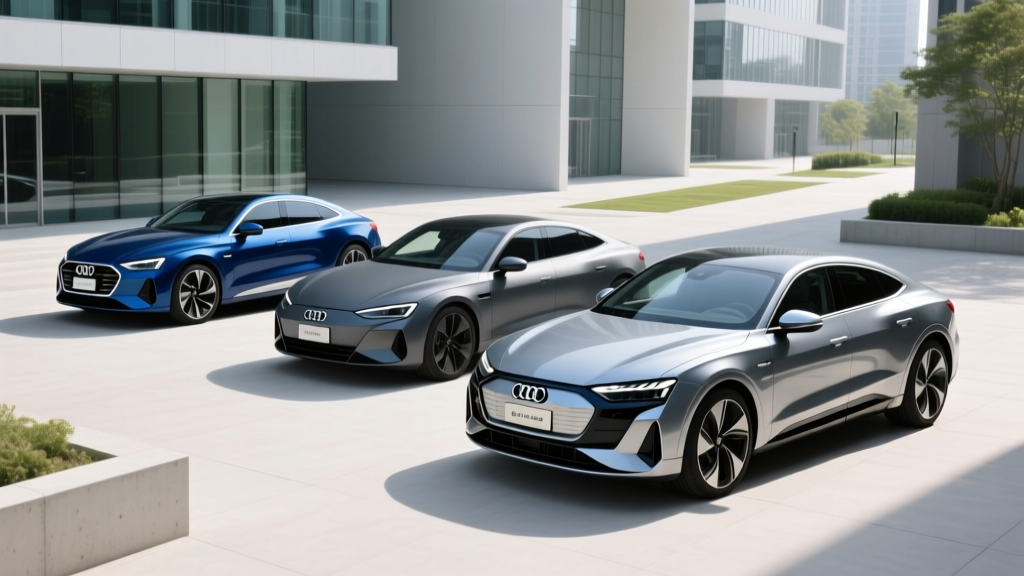
If you're shopping for an Audi EV car in 2026, you have three core options. The Q4 e-tron (starting ~$49,800) is the entry point with up to 265 miles EPA range and the best shot at partial federal tax credits. The Q6 e-tron (~$63,800) is Audi's newest PPE-platform SUV with 321 miles of range, 270 kW peak DC fast charging (10–80% in ~21 minutes), and NACS native compatibility. The e-tron GT (~$106,000) is the performance flagship with up to 270 miles and a 3.1-second 0–60 time. Your choice depends on budget, charging access, and whether you prioritize practicality or performance.
The 2026 Audi EV Lineup at a Glance
Audi's electric strategy has matured significantly. The brand now fields three distinct EV architectures serving different buyer profiles. Here is the complete spec breakdown across all current models:
| Spec | Q4 e-tron (Premium) | Q6 e-tron (Premium) | e-tron GT quattro |
|---|---|---|---|
| Base MSRP | $49,800 | $63,800 | $106,400 |
| EPA Range | 265 mi | 321 mi | 270 mi |
| Battery (usable) | 77 kWh (NMC) | 94.4 kWh (NMC) | 93.4 kWh (NMC) |
| Platform | VW MEB | Porsche PPE | Porsche J1 |
| Peak DC Charge | 175 kW | 270 kW | 270 kW |
| 10–80% DC Time | ~28 min | ~21 min | ~22 min |
| Level 2 Rate | 11 kW | 11.5 kW | 11 kW |
| 0–60 mph | 5.0 sec (quattro) | 4.9 sec (quattro) | 3.1 sec |
| Horsepower | 340 hp | 388 hp | 590 hp |
| MPGe (combined) | 103 MPGe | 110 MPGe | 85 MPGe |
| Connector | CCS1 (NACS adapter avail.) | NACS (native) | CCS1 (NACS adapter avail.) |
| Battery Warranty | 8 yr / 100,000 mi | 8 yr / 100,000 mi | 8 yr / 100,000 mi |
Sources: fueleconomy.gov, Audi USA. Specs reflect 2026 model year.
Real-World Range: What the EPA Sticker Doesn't Tell You
EPA range estimates assume a mix of city and highway driving at moderate temperatures. In practice, your mileage will vary — sometimes significantly.
Real-World Range Expectations
| Model | EPA Rating | Highway (75 mph) | Cold Weather (20°F) | Best-Case City |
|---|---|---|---|---|
| Q4 e-tron quattro | 265 mi | ~220–235 mi | ~185–200 mi | ~270 mi |
| Q6 e-tron quattro | 321 mi | ~265–280 mi | ~225–245 mi | ~325 mi |
| e-tron GT quattro | 270 mi | ~220–235 mi | ~185–200 mi | ~275 mi |
Highway speeds above 70 mph increase aerodynamic drag exponentially, cutting efficiency. Cold temperatures increase cabin heating demand and slow battery chemistry, reducing both range and charging speed. All three models feature heat pumps (standard on PPE/J1 platforms), which recover waste heat to reduce the cold-weather penalty compared to resistive heating.
The Q6 e-tron's PPE platform offers the strongest real-world range buffer. On a 300-mile highway trip at 75 mph in mild weather, you'll arrive with roughly 15–20% State of Charge remaining — enough for a safety margin, but you'll want to plan at least one charging stop. The Q4 e-tron, with 265 EPA miles, requires more deliberate trip planning for distances above 200 miles.
Charging Speed & Infrastructure: Where the PPE Platform Shines
Not all Audi EV cars charge at the same rate. The architecture beneath the car determines how quickly you can add range on a road trip.
| Charging Level | Q4 e-tron | Q6 e-tron | e-tron GT |
|---|---|---|---|
| Level 1 (120V / 1.4 kW) | ~3 mi/hr | ~3 mi/hr | ~3 mi/hr |
| Level 2 (240V / 11–11.5 kW) | ~25 mi/hr | ~27 mi/hr | ~25 mi/hr |
| DC Fast (peak kW) | 175 kW (~150 mi/10 min) | 270 kW (~210 mi/10 min) | 270 kW (~210 mi/10 min) |
| 10–80% DC Time | ~28 minutes | ~21 minutes | ~22 minutes |
The Q6 e-tron's 800-volt PPE architecture is the critical differentiator here. At a 350 kW Electrify America or Tesla Supercharger stall, the Q6 e-tron can sustain above 200 kW through most of the 10–80% window. By contrast, the Q4 e-tron's 400-volt MEB platform peaks at 175 kW and tapers more aggressively above 60% SoC. On a real road trip, the Q6 e-tron shaves roughly 7–10 minutes per stop — meaningful when you're covering 500+ miles.
Connector note: The Q6 e-tron ships with a native NACS charge port, granting direct access to Tesla's Supercharger network (over 20,000 stalls in the US). The Q4 e-tron and e-tron GT still use CCS1 but can access Superchargers via a Tesla-approved NACS adapter. Always confirm adapter compatibility with your specific model year before purchasing.
Audi EV vs. Gas and Hybrid: The Cost Reality
How does an Audi EV car compare to the gasoline equivalent over five years? Let's put numbers to it using the Q4 e-tron versus the Audi Q5 (gasoline) and Q5 TFSI e (plug-in hybrid).
| Cost Factor (5 yr / 75,000 mi) | Q4 e-tron (EV) | Q5 TFSI e (PHEV) | Q5 45 (Gas) |
|---|---|---|---|
| Purchase Price (base MSRP) | $49,800 | $57,400 | $47,300 |
| Fed. Tax Credit (§30D est.) | Up to $7,500* | Up to $3,750* | $0 |
| Fuel/Energy Cost | $3,400 (home L2) | $5,800 (mixed) | $9,900 |
| Maintenance (est.) | $1,200 | $3,500 | $4,100 |
| Insurance (est. avg/yr × 5) | $12,500 | $10,500 | $9,800 |
| Estimated Depreciation | $22,000 | $24,000 | $20,500 |
| 5-Year Total Cost | ~$66,900 | ~$77,200 | ~$91,600 |
*Tax credit eligibility depends on MSRP caps, buyer income limits, battery component sourcing, and point-of-sale transfer rules under IRS §30D. Verify with a tax professional. Fuel costs assume $0.14/kWh home charging, $3.60/gal gas, and PHEV driven 50% on electric.
The EV wins on operating costs — electricity is roughly one-third the per-mile cost of gasoline, and EVs eliminate oil changes, transmission service, and exhaust repairs. However, insurance premiums for Audi EVs run 15–25% higher than gas equivalents due to higher repair costs and parts pricing. Depreciation on luxury EVs has also been steeper than gas counterparts, though the gap is narrowing as the used EV market matures.
Tax Credits, Incentives & the Fine Print
Federal EV tax credits under IRS §30D are not guaranteed for every Audi EV car buyer. Here's the current eligibility framework:
- MSRP Cap: SUVs must be priced under $80,000; sedans under $55,000. The Q4 e-tron and Q6 e-tron (SUV classification) qualify on price; the e-tron GT exceeds the sedan cap.
- Buyer Income Cap: Modified AGI must not exceed $150,000 (single), $225,000 (head of household), or $300,000 (joint).
- Battery Sourcing: Critical minerals and battery components must meet escalating domestic-content thresholds. Audi's supply chain compliance varies by model year and production batch — confirm the specific VIN's eligibility at purchase.
- Point-of-Sale Transfer: You can transfer the credit to the dealer at purchase, reducing your out-of-pocket cost immediately rather than waiting for tax filing.
The Q4 e-tron is the most likely candidate for the full $7,500 credit, though battery-sourcing rules remain the wildcard. The Q6 e-tron, being newer and on the PPE platform, has been progressively improving its sourcing compliance. Always ask the dealer for the IRS compliance letter for your specific VIN before finalizing the purchase.
Ownership Realities: What First-Time Audi EV Buyers Must Know
| Myth | Fact |
|---|---|
| "The battery will need replacing in 5 years." | Audi warranties the battery for 8 years/100,000 miles against degradation below 70% capacity. Industry data shows NMC batteries typically retain 85–90% capacity after 100,000 miles with proper charging habits. |
| "I can charge from any public station." | Connector compatibility matters. CCS1 vehicles need an adapter for Tesla Superchargers. Always check PlugShare or the in-car nav for connector type before routing to a station. |
| "Home charging isn't necessary." | Without home Level 2 charging, EV ownership becomes significantly less convenient and more expensive. Public DC fast charging costs $0.30–$0.50/kWh versus $0.10–$0.18/kWh at home. Budget $800–$2,500 for a Level 2 home install (equipment + electrician + permit). |
| "Regenerative braking replaces brake pads entirely." | Regen significantly extends pad life (many EV owners report 80,000+ miles on original pads), but brake fluid still needs flushing every 2 years, and calipers can seize from underuse in humid climates. |
| "All Audi EVs charge at the same speed." | Platform matters: MEB (Q4) tops out at 175 kW; PPE (Q6) and J1 (GT) reach 270 kW. Road-trip charging time varies by 7–10 minutes per stop. |
Home charging is the make-or-break factor. A Level 2 home charger (240V, 40–48 amps) adds 25–27 miles of range per hour. Plugging in overnight means you start every day with a full battery — eliminating range anxiety for daily driving. If you live in an apartment without charging access or lack a garage, weigh this limitation carefully. Public charging infrastructure is improving but remains inconsistent outside major metro corridors.
Cold-weather preconditioning matters. All three Audi EVs support battery preconditioning — the car warms the battery to optimal temperature before you arrive at a DC fast charger (set via navigation). Skipping this step in winter can slow your peak charge rate by 30–40% and extend a 20-minute stop to 35+ minutes. Always navigate to the charger using the car's built-in route planner to trigger preconditioning automatically.
Decision Framework: Which Audi EV Car Fits You?
Choose the Q4 e-tron if:
- Your budget is under $55,000 and you want to maximize tax-credit eligibility
- Your daily commute is under 60 miles round-trip
- You take road trips of 200+ miles fewer than 5 times per year
- You want the most affordable entry into the Audi EV ecosystem
Choose the Q6 e-tron if:
- You need 300+ miles of real-world range for frequent road trips
- Fast DC charging speed (270 kW) is a priority for your lifestyle
- You want native NACS/Supercharger access without an adapter
- Budget allows $65,000–$75,000 after options and destination charges
Choose the e-tron GT if:
- Performance (3.1-sec 0–60, 590 hp) is the primary purchase driver
- You prioritize design and driving dynamics over cargo space and rear-seat room
- You accept the $106,000+ price and ineligibility for federal purchase credits
- Range of 220–240 real-world highway miles is acceptable for your routes
Frequently Asked Questions
Does any Audi EV car qualify for the full $7,500 federal tax credit?
The Q4 e-tron has the strongest eligibility case, but the actual credit amount depends on battery component and critical-mineral sourcing thresholds that change annually. The point-of-sale transfer option lets you apply the credit at purchase. Verify your specific VIN's eligibility with the dealer and consult IRS §30D guidelines or a tax professional.
Can I charge an Audi EV at Tesla Superchargers?
Yes, but the method depends on the model. The Q6 e-tron has a native NACS port and connects directly. The Q4 e-tron and e-tron GT use CCS1 and require a Tesla-approved NACS-to-CCS adapter (approximately $200–$250). Always confirm adapter compatibility before purchasing.
How much does home Level 2 charger installation cost?
Expect $800–$2,500 total: $400–$700 for a quality Level 2 EVSE (ChargePoint, Emporia, or Audi-branded unit), $400–$1,500 for electrician labor, and $50–$300 for permits. If your electrical panel needs an upgrade from 100A to 200A service, add $1,500–$3,000. Get three quotes from licensed electricians — prices vary widely by region.
What is the real cost to charge an Audi EV per mile?
At $0.14/kWh (national average residential rate) and the Q6 e-tron's efficiency of roughly 3.0 mi/kWh, home charging costs about $0.047 per mile. Compare that to the gas Q5 at 26 MPG combined and $3.60/gallon = $0.138 per mile. You save roughly $0.09 per mile on energy, or about $675 per year at 7,500 miles driven.
How long will the Audi EV battery last?
Audi's battery warranty guarantees at least 70% capacity retention over 8 years or 100,000 miles. Real-world data from similar NMC packs suggests 85–92% retention at 100,000 miles with normal use. Avoid routinely charging to 100% or letting the battery sit below 10% for extended periods — keeping daily SoC between 20–80% optimizes longevity. Full battery replacement (rare) costs $15,000–$22,000 depending on the model.
Is the Audi Q4 e-tron built on the same platform as the Volkswagen ID.4?
Yes. Both use VW Group's MEB platform with similar battery packs and powertrains. The Q4 e-tron differentiates through Audi-specific suspension tuning, interior materials, sound insulation, and software interface. If platform-mate pricing matters, the ID.4 starts roughly $10,000 lower — but you sacrifice the Audi cabin quality and dealer experience.
How does the Audi Q6 e-tron compare to the Porsche Macan Electric?
Both ride on the PPE 800V platform with nearly identical battery packs and charging hardware. The Macan Electric starts ~$78,800 (roughly $15,000 more) and offers sportier tuning, while the Q6 e-tron provides more rear-seat space and a more comfort-oriented ride. If driving dynamics are paramount, the Macan wins; if value and practicality matter more, the Q6 e-tron is the rational choice.
Editorial note: Specifications, pricing, and tax-credit eligibility reflect the 2026 model year and current IRS rules as of publication. Always verify final figures with your local Audi dealer and a qualified tax advisor before purchasing. Real-world range and charging data based on independent testing and owner reports; your results will vary based on driving style, climate, terrain, and battery preconditioning.