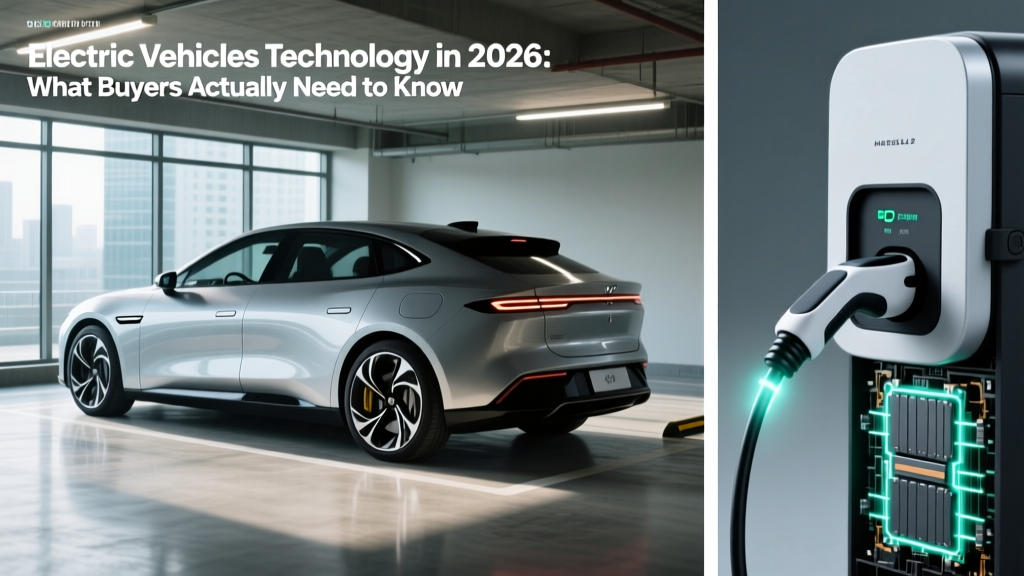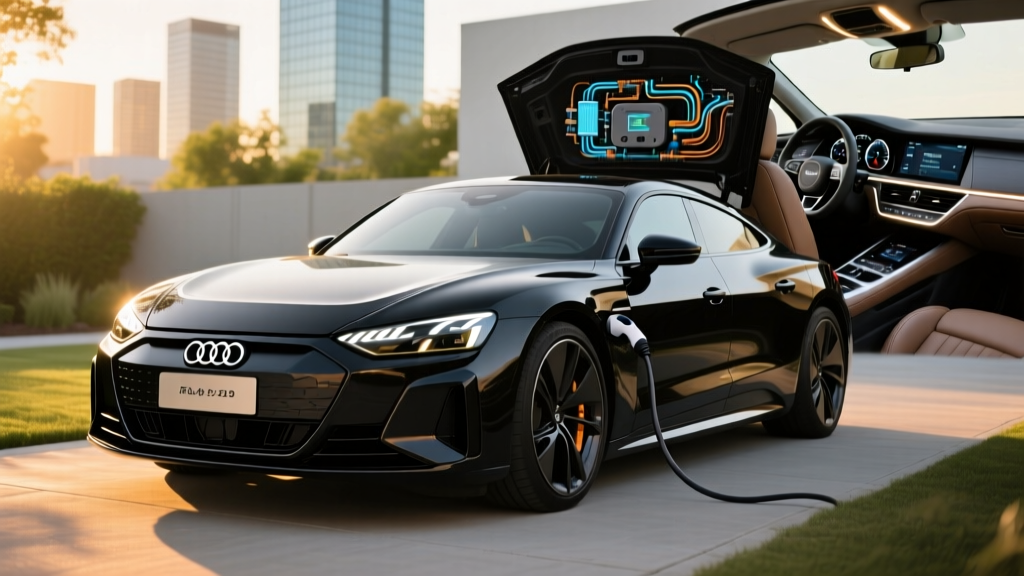
The 2023 Audi e-tron GT occupies a narrow but compelling space in the EV market: it's a luxury grand tourer that shares its J1 performance platform with the Porsche Taycan, yet delivers a distinctly more comfort-oriented, daily-drivable experience. If you're cross-shopping high-end electric sedans and want something that prioritizes ride refinement over track lap times, the e-tron GT deserves a serious look — but its range, cargo space, and tax credit situation require honest discussion before you sign a lease or purchase agreement.
This review breaks down the 2023 e-tron GT's real-world range, charging behavior, ownership costs, and where it stands against rivals like the Tesla Model S, Porsche Taycan, and Lucid Air in 2026's used and remaining-new market.
2023 Audi e-tron GT: Key Specs at a Glance
| Spec | e-tron GT Premium Plus | e-tron GT Prestige | RS e-tron GT |
|---|---|---|---|
| EPA Range | 238 mi | 232 mi | 232 mi |
| Battery (usable) | 85 kWh (NMC) | 85 kWh (NMC) | 85 kWh (NMC) |
| Horsepower | 469 hp (522 hp launch) | 469 hp (522 hp launch) | 590 hp (637 hp launch) |
| 0-60 mph | 3.9 sec | 3.9 sec | 3.1 sec |
| Drivetrain | Dual-motor AWD | Dual-motor AWD | Dual-motor AWD |
| Max DC Charge Rate | 270 kW | 270 kW | 270 kW |
| 10-80% DCFC Time | ~22.5 min | ~22.5 min | ~22.5 min |
| Level 2 Rate | 9.6 kW (~29 mi/hr) | 9.6 kW (~29 mi/hr) | 9.6 kW (~29 mi/hr) |
| MPGe (combined) | 82 MPGe | 81 MPGe | 79 MPGe |
| Base MSRP (2023) | $104,900 | $110,900 | $147,500 |
| Battery Warranty | 8 yr / 100,000 mi | 8 yr / 100,000 mi | 8 yr / 100,000 mi |
Real-World Range: What the EPA Number Doesn't Tell You
Real-World Expectation: 195–220 mi highway at 70+ mph; 170–195 mi in cold weather (below 32°F); up to 245 mi city driving with regen.
The EPA figure for the 2023 e-tron GT is competitive with the Porsche Taycan 4S (227 mi EPA) but trails the Tesla Model S Long Range (405 mi EPA) and Lucid Air Pure (410 mi EPA) by a wide margin. According to fueleconomy.gov, the e-tron GT Premium Plus returns 82 MPGe combined, which translates to roughly 39 kWh per 100 miles — respectable for a 5,139-pound AWD performance sedan, but not class-leading.
In practice, the 85 kWh usable battery (gross capacity is 93.4 kWh with a buffer to protect longevity) means highway road trips require planning. At sustained 75-80 mph speeds in moderate temperatures, expect roughly 200–210 miles before you'll want to stop. In winter conditions, lithium-ion chemistry loses efficiency to cabin heating and increased internal resistance — plan for 170–195 miles of usable range. The heat pump (standard on 2023 models) mitigates some of this loss, but physics is physics.
For daily commuting under 80 miles round-trip, the e-tron GT is perfectly adequate and you'll charge at home overnight without a second thought. For frequent 300+ mile road trips, the range is a genuine limitation compared to a Lucid Air or Model S.
Charging Speed: 270 kW Peak, But Read the Curve
The e-tron GT's 800-volt architecture is its charging ace. The J1 platform supports a peak DC fast-charge rate of 270 kW, which Audi claims delivers a 10-80% charge in approximately 22.5 minutes. That's legitimate — and among the fastest in its class.
| Charge Level | Power | Miles Added per Hour | Notes |
|---|---|---|---|
| Level 1 (120V) | ~1.2 kW | ~3 mi/hr | Emergency/trickle only; full charge in ~70+ hours |
| Level 2 (240V, 40A) | 9.6 kW | ~29 mi/hr | Full charge in ~9 hours; ideal overnight home setup |
| DC Fast Charge | Up to 270 kW | ~180 mi in 22 min (10-80%) | Requires 350 kW-capable station; CCS1 connector |
However, the charge curve matters more than the peak number. The e-tron GT sustains roughly 200–250 kW from 10% to about 55% state of charge, then tapers progressively. By 80%, you're looking at roughly 70–90 kW. This means the advertised 22.5-minute 10-80% time is achievable at a high-power Electrify America or EVgo station — but only if the battery is properly preconditioned (the e-tron GT does this automatically when a DC fast charger is set as your navigation destination).
At home on a Level 2 charger (9.6 kW / 40 amps), a full charge from empty takes roughly 9 hours. That's standard for the segment and works well for overnight charging. Installation of a 240V/50A circuit for home Level 2 charging typically runs $800–$2,000 depending on your panel's proximity to the garage and whether a panel upgrade is needed.
The e-tron GT uses a CCS1 connector for DC fast charging. With the industry's shift toward NACS (Tesla's connector), Audi has not offered a factory NACS port on the 2023 model. A CCS-to-NACS adapter is available for Supercharger access, though charge rates may be limited by the adapter and station power delivery.
Performance and Driving Dynamics
The base e-tron GT produces 469 horsepower in normal driving and 522 hp with launch control engaged — enough for a 3.9-second 0-60 mph time. The RS e-tron GT bumps that to 590 hp (637 hp on launch) and a 3.1-second sprint, putting it firmly in supercar-sedan territory alongside the Porsche Taycan Turbo.
Both variants use a dual-motor AWD setup with a two-speed transmission on the rear axle — a distinctive engineering choice shared with the Taycan. First gear provides aggressive acceleration off the line, while second gear optimizes highway efficiency. This is one reason the e-tron GT feels so urgent from a stoplight while remaining composed at interstate speeds.
The driving experience leans grand touring rather than sports car. Air suspension is standard, and the ride quality is noticeably more compliant than the Taycan's firmer setup. The steering is precise if slightly numb, and the cabin isolation at 80 mph is exceptional. If you want a canyon carver, the Taycan GTS is sharper. If you want a luxury EV you can drive 500 miles in without fatigue, the e-tron GT makes a stronger case.
Interior, Cargo, and Daily Practicality
The 2023 e-tron GT's cabin uses Audi's dual-screen MMI layout (10.1-inch upper touchscreen, 8.6-inch lower climate/controls screen) with the 12.3-inch Virtual Cockpit digital instrument cluster. Materials are premium — standard leatherette with available Nappa leather, real aluminum or carbon-fiber trim, and excellent fit-and-finish throughout. The Bang & Olufsen 710-watt audio system (Prestige trim) is one of the best in any EV.
However, practicality is where the GT reveals its grand-tourer compromises:
- Cargo volume: 9.2 cu ft (rear trunk) + 3.5 cu ft (front trunk/frunk) — tight for a car in the $100K+ range. The Taycan offers 14.3 cu ft rear + 3.0 cu ft frunk. A Model S delivers 28 cu ft behind the rear seats.
- Rear legroom: 32.6 inches — adequate for adults on shorter trips but snug compared to the Lucid Air (36.3 in) or Model S (40.9 in). The sloping roofline also cuts into rear headroom for taller passengers.
- Front legroom: 41.3 inches — generous and comfortable for long drives.
- Driver assists: Audi Adaptive Cruise Assist with lane guidance is a competent SAE Level 2 system, but it requires hands-on-wheel engagement and doesn't offer the hands-free highway capability of GM's Super Cruise or Ford's BlueCruise.
Pricing, Trims, and Federal Tax Credit Eligibility
The 2023 e-tron GT launched with three configurations:
- e-tron GT Premium Plus: $104,900 MSRP (including destination)
- e-tron GT Prestige: $110,900 MSRP — adds B&O audio, head-up display, matrix LED headlights, upgraded interior trim
- RS e-tron GT: $147,500 MSRP — 590/637 hp, unique styling, carbon-fiber options, sport-tuned suspension
Options like the $2,500 Carbon Optic package, $1,750 21-inch wheels, and $4,500 Nappa leather can push a Prestige model past $120,000 as-tested.
Federal EV Tax Credit (§30D) — The Hard Truth
Under current IRS §30D rules, the 2023 e-tron GT faces significant tax credit hurdles:
- MSRP cap: Sedans must be priced at or below $55,000 to qualify. The e-tron GT starts at $104,900 — well above the cap. This alone disqualifies it from the new-vehicle credit.
- Buyer income cap: Even if it qualified on price, AGI limits are $150,000 (single), $225,000 (head of household), $300,000 (joint).
- Battery sourcing: Critical minerals and battery component requirements further restrict eligibility, though this is moot given the price disqualification.
The e-tron GT does not qualify for the $7,500 federal new-vehicle tax credit due to its MSRP. Buyers should consult a tax professional for state-level incentives, which vary significantly by jurisdiction. Some states (California, Colorado, New York) offer their own EV rebates that may apply regardless of MSRP caps.
On the used market, a separate used EV credit of up to $4,000 (30% of sale price, capped at $4,000) applies to vehicles sold for $25,000 or less through a licensed dealer — a threshold the e-tron GT has not reached as of 2026.
Who Should Buy the 2023 Audi e-tron GT?
2023 Audi e-tron GT vs. Key Competitors
| Spec | Audi e-tron GT Prestige | Porsche Taycan 4S | Tesla Model S LR | Lucid Air Pure |
|---|---|---|---|---|
| EPA Range | 232 mi | 227 mi | 405 mi | 410 mi |
| Battery (usable) | 85 kWh | 79.2 kWh | ~95 kWh | 88 kWh |
| 0-60 mph | 3.9 sec | 3.8 sec | 3.1 sec | 5.0 sec |
| Horsepower | 522 (launch) | 522 (launch) | 670 | 430 |
| Max DCFC | 270 kW | 270 kW | 250 kW | 220 kW |
| Cargo (total) | 12.7 cu ft | 17.3 cu ft | 28+ cu ft | 32 cu ft |
| Base MSRP (2023) | $110,900 | $106,550 | $89,990 | $87,400 |
The e-tron GT's closest sibling is the Taycan — they share the J1 platform, battery architecture, and powertrain fundamentals. The Taycan is slightly sharper to drive and offers more cargo space, while the e-tron GT provides a more comfortable ride and a more traditional luxury interior. The Model S and Lucid Air blow both German sedans away on range and interior volume at lower prices, but neither matches the Audi or Porsche on build quality, ride refinement, or DC charging speed.
Warranty and Long-Term Ownership
Audi covers the 2023 e-tron GT with:
- Basic warranty: 4 years / 50,000 miles
- Powertrain warranty: 4 years / 50,000 miles
- Battery warranty: 8 years / 100,000 miles (guarantees minimum 70% capacity retention)
- Corrosion warranty: 12 years, unlimited miles
The battery warranty's 70% retention threshold is industry-standard (Tesla and Porsche use the same benchmark). The NMC chemistry in the e-tron GT has demonstrated solid longevity in the Taycan — early 2020–2021 Taycan models with 60,000+ miles show roughly 5–8% degradation, suggesting the e-tron GT should follow a similar trajectory. The large 8 kWh gross-to-usable buffer (93.4 kWh gross, 85 kWh usable) provides a meaningful degradation cushion before you'd notice range loss in daily driving.
Insurance costs run higher than average for the segment. Expect $2,800–$3,600 annually depending on your profile — comparable to the Taycan but roughly 30% more than a Model S Long Range, based on typical insurer quotes for luxury performance EVs.
Pros and Cons
- Exceptional ride quality with standard air suspension
- 270 kW DC fast charging among the fastest available
- 800V architecture enables sustained high charge rates
- Striking design with premium interior materials
- 3.9-second 0-60 (base) / 3.1-second (RS) performance
- Quiet, composed highway cruiser
- 8-year/100,000-mile battery warranty
- 238-mile EPA range trails rivals significantly
- Tight rear seat (32.6 in legroom) and small cargo area (12.7 cu ft total)
- No federal tax credit eligibility (MSRP exceeds $55K sedan cap)
- CCS1 connector requires adapter for Tesla Supercharger access
- Level 2 ADAS requires hands-on-wheel — no hands-free driving
- Infotainment system feels dated vs. Tesla, Lucid, or newer Audis
- High insurance and maintenance costs relative to mainstream EVs
Frequently Asked Questions
What is the real-world range of the 2023 Audi e-tron GT?
The EPA rates the e-tron GT Premium Plus at 238 miles and the Prestige/RS at 232 miles. In real-world highway driving at 70-80 mph, expect 195–220 miles. In cold weather below freezing, plan for 170–195 miles. City driving with frequent regenerative braking can stretch range to or slightly above the EPA estimate.
How fast does the e-tron GT charge at home and on the road?
On a DC fast charger (350 kW capable), the e-tron GT peaks at 270 kW and charges from 10-80% in roughly 22.5 minutes. At home on a Level 2 (9.6 kW / 240V) charger, it adds about 29 miles per hour, filling the battery overnight in approximately 9 hours. Level 1 (120V) charging is impractical for daily use at roughly 3 miles per hour.
Does the 2023 Audi e-tron GT qualify for the federal EV tax credit?
No. Under IRS §30D rules, new sedans must have an MSRP at or below $55,000 to qualify. The e-tron GT starts at $104,900, which disqualifies it entirely. State-level incentives may still apply — check your local energy office or DMV for details.
How much does the e-tron GT cost after incentives?
Without the federal credit, the 2023 e-tron GT Premium Plus costs its full $104,900 MSRP minus any applicable state incentives (e.g., California's CVRP has been restructured; some utility rebates of $500–$1,500 may apply). Fully loaded Prestige models with options can exceed $120,000. On the used market (2026), expect $65,000–$85,000 depending on mileage and condition — still above the $25,000 threshold for the used-EV credit.
Is the e-tron GT worth buying over the Porsche Taycan or Tesla Model S?
If you value ride comfort, cabin quietness, and understated design over maximum range or cargo space, the e-tron GT is arguably the best grand-touring EV sedan available. Choose the Taycan if you want sharper handling and more cargo room. Choose the Model S if range (405 mi EPA), interior space, and lower cost matter more than luxury materials. The Lucid Air Pure offers the best range-per-dollar ratio in the segment at 410 miles EPA and a lower starting price.
What's the battery replacement cost for the e-tron GT?
Out of warranty, a full high-voltage battery replacement for the J1 platform (shared with the Taycan) is estimated at $20,000–$30,000 based on current dealer pricing. However, the 8-year/100,000-mile warranty and the chemistry's demonstrated longevity (roughly 5–8% degradation at 60,000+ miles in early Taycans) suggest most owners will never face this cost. Individual module replacement — if a single cell group fails — is significantly less expensive than a full pack swap.