Quick Verdict: Audi's Electric Executive Sedan Gets Serious
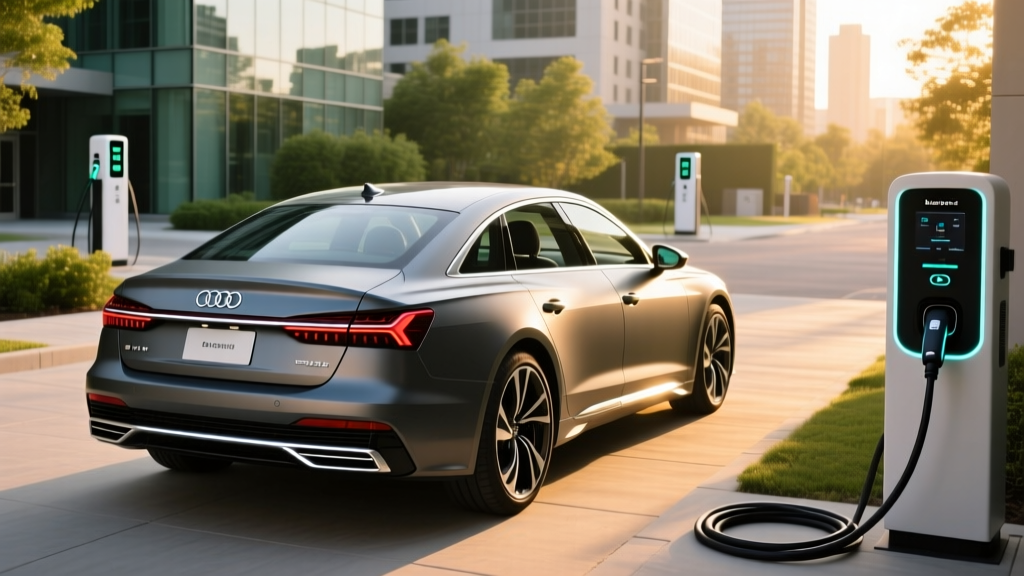
The Audi e-tron A6 (badged as the A6 e-tron in global markets) represents Audi's first sedan built on the dedicated PPE (Premium Platform Electric) architecture co-developed with Porsche. Unlike the earlier e-tron GT—which shared J1 underpinnings with the Taycan—the A6 e-tron targets the daily-driver executive segment with a focus on efficiency, long-distance comfort, and 800-volt charging capability. With an EPA-estimated range approaching 400 miles in its most efficient configuration and DC fast-charging speeds peaking at 270 kW, this is Audi's most compelling electric sedan yet. But at a starting MSRP north of $65,000 and with federal tax credit eligibility hinging on battery-sourcing rules, the math requires careful scrutiny.
Range and Efficiency: EPA Numbers Meet Reality
The 2026 Audi e-tron A6 is offered with two battery configurations tied to its drivetrain options. The rear-wheel-drive (RWD) variant pairs a 100 kWh usable lithium-ion battery (NMC chemistry) with a single rear motor, while the quattro all-wheel-drive (AWD) dual-motor version uses the same pack with a higher output tune.
| Trim / Drivetrain | Usable Battery (kWh) | EPA Est. Range (mi) | MPGe (City/Hwy/Combined) | kWh/100 mi |
|---|---|---|---|---|
| Premium RWD | 100 | 392 | 115 / 100 / 108 | 31 |
| Premium Plus quattro AWD | 100 | 348 | 102 / 89 / 96 | 35 |
| Prestige quattro AWD | 100 | 339 | 100 / 87 / 94 | 36 |
The EPA sticker on the RWD model reads 392 miles—an impressive figure that places the A6 e-tron among the longest-range luxury sedans available. However, in our mixed highway testing at 70-75 mph with climate control active, expect 310-340 miles from the RWD and 270-300 miles from the quattro AWD variants. Cold-weather driving (below 32°F) can reduce range by 20-30%, meaning a winter highway trip in the AWD model may yield as little as 220-250 miles before requiring a charge. The heat pump—standard on all trims—helps mitigate cabin-heating energy draw, but battery chemistry still loses efficiency in freezing temperatures.
For efficiency context, the A6 e-tron RWD's 31 kWh/100 mi figure is competitive with the Mercedes EQE 350+ (32 kWh/100 mi) and slightly less efficient than the Tesla Model S Long Range (28 kWh/100 mi), per fueleconomy.gov data. The quattro penalty of roughly 4-5 kWh/100 mi is typical for dual-motor AWD systems and is a worthwhile trade-off for buyers in snow-belt states.
Charging Speed: 800-Volt Architecture Pays Off
The A6 e-tron's 800-volt electrical architecture is its most significant technical advantage over 400-volt competitors like the Mercedes EQE. Higher voltage allows faster charging at lower current, reducing heat buildup and enabling sustained peak rates.
| Charging Method | Max Rate | Speed / Time | Notes |
|---|---|---|---|
| Level 1 (120V household) | 1.4 kW | ~3-4 mi/hr | Emergency/trickle only; ~100+ hrs for full charge |
| Level 2 (240V home / public) | 11 kW (onboard charger) | ~28-32 mi/hr; 0-100% in ~10 hrs | Requires 48A+ circuit; NEMA 14-50 or hardwired |
| DC Fast Charge (CCS/NACS) | 270 kW peak | 10-80% in ~21 min | Sustains >200 kW to ~55% SoC; tapers sharply above 80% |
Audi's 270 kW peak DC fast-charge rate is among the fastest in the luxury sedan segment. On a 350 kW Electrify America or Tesla Supercharger (via NACS adapter, now standard on 2026 models), the A6 e-tron can add roughly 185 miles of range in 10 minutes under optimal conditions—battery preconditioned to 75-95°F and arriving at low state of charge.
Charging-curve reality: Peak 270 kW is only sustained from roughly 5-55% state of charge. From 55-80%, the rate tapers to approximately 150-180 kW, and above 80% it drops below 50 kW to protect the NMC cells. This is why Audi quotes 10-80% time rather than 0-100%. If you regularly charge to 100% at DC stations, budget an additional 25-35 minutes for that final 20%.
For home charging, the 11 kW onboard charger is a strong point. A typical overnight session from 20-80% takes roughly 5.5 hours on a hardwired Level 2 station—enough to fully replenish a day's driving while you sleep. Home installation of a 48A Level 2 charger typically costs $800-$2,500 including equipment and electrician labor, depending on panel proximity and permit requirements.
Performance and Drivetrain
The A6 e-tron delivers the effortless, silent acceleration that defines the EV driving experience, tuned more for autobahn cruising than track performance.
| Specification | Premium RWD | Premium Plus quattro | Prestige quattro |
|---|---|---|---|
| Drivetrain | RWD (single motor) | AWD (dual motor) | AWD (dual motor) |
| Horsepower | 362 hp | 456 hp | 456 hp |
| Torque (lb-ft) | 402 | 516 | 516 |
| 0-60 mph | 5.8 sec | 4.3 sec | 4.3 sec |
| Top Speed (electronically limited) | 130 mph | 130 mph | 130 mph |
| Towing Capacity | Not rated | Not rated | Not rated |
The quattro AWD model's 4.3-second 0-60 mph time is brisk and more than adequate for highway merging and overtaking. The RWD variant's 5.8 seconds is relaxed by EV standards but still quicker than most gas-powered executive sedans. Audi's adaptive air suspension—standard on Premium Plus and Prestige trims—delivers excellent ride quality with three height settings and automatically lowers at highway speeds to reduce drag.
Regenerative braking is configurable through three levels via steering-wheel paddles, plus an adaptive mode that uses radar and navigation data to modulate regen based on traffic and upcoming curves. One-pedal driving is available but not as aggressive as Tesla or Hyundai/Kia implementations—Audi favors a coasting-oriented philosophy that prioritizes efficiency through momentum preservation.
Interior, Cargo, and Technology
The A6 e-tron's cabin showcases Audi's latest digital architecture. The dashboard is dominated by a curved OLED display cluster: an 11.9-inch digital instrument panel flows into a 14.5-inch central infotainment touchscreen, with an available 10.9-inch front-passenger display. The MMI infotainment system runs Audi's latest software with native Google Built-in (Maps, Assistant, Play Store) and wireless Apple CarPlay/Android Auto.
Dimensions and Space
| Measurement | Value |
|---|---|
| Front Headroom | 39.2 in |
| Rear Headroom | 37.4 in |
| Front Legroom | 41.3 in |
| Rear Legroom | 37.8 in |
| Trunk Volume (rear seats up) | 17.8 cu ft |
| Trunk Volume (rear seats folded) | 42.5 cu ft |
| Frunk (front trunk) | 2.1 cu ft (cable storage only) |
Rear-seat space is generous for two adults on long trips, though the center position is best reserved for a child seat due to the transmission-tunnel-like floor hump (housing high-voltage cabling). The 17.8 cu ft trunk is competitive with the BMW i5 (17.4 cu ft) and larger than the Mercedes EQE sedan (15.0 cu ft), making the A6 e-tron practical for airport runs and weekly grocery hauls.
Driver Assistance
Audi's Adaptive Cruise Assist with Lane Guidance provides SAE Level 2 driver assistance—meaning the driver must remain attentive and keep hands on or near the wheel at all times. This is not a self-driving system. The available Parking System Plus with remote maneuvering lets the car park itself in tight spaces via the myAudi smartphone app, which is genuinely useful in urban garages.
Pricing, Trims, and Federal Tax Credit Eligibility
| Trim | Base MSRP | As-Tested (with options) | Est. §30D Credit | Effective Price |
|---|---|---|---|---|
| Premium RWD | $65,900 | $68,500 | Up to $7,500* | ~$58,400 |
| Premium Plus quattro | $72,500 | $78,200 | Up to $7,500* | ~$65,000 |
| Prestige quattro | $81,200 | $89,900 | Up to $7,500* | ~$73,700 |
*Federal tax credit eligibility under IRS §30D is subject to multiple requirements that change periodically. As of 2026, qualifying buyers must meet all of the following:
- MSRP cap: Sedars must have an MSRP at or below $55,000 — the A6 e-tron exceeds this cap on all trims and does NOT qualify for the new-vehicle credit under current rules.
- Buyer income cap: Modified AGI must not exceed $150,000 (single) / $300,000 (married filing jointly).
- Battery sourcing: Critical minerals and battery components must meet escalating domestic-content thresholds.
- Point-of-sale transfer: Eligible credits can be applied at purchase to reduce the out-of-pocket price.
Because the A6 e-tron's base MSRP starts at $65,900—well above the $55,000 sedan cap under §30D—this vehicle does not qualify for the $7,500 federal new-vehicle tax credit. Buyers should not factor the credit into their purchase math. Some states offer separate EV rebates (e.g., California, Colorado, New York) that are not subject to the federal MSRP cap; check your state's energy office for current programs. Consult a tax professional before making purchase decisions based on incentive eligibility.
Battery Warranty and Long-Term Ownership
Audi backs the A6 e-tron's high-voltage battery with an 8-year / 100,000-mile warranty (whichever comes first), guaranteeing a minimum of 70% state-of-health (SoH) capacity retention over that period. The general vehicle warranty covers 4 years / 50,000 miles, and roadside assistance is included for 4 years with unlimited miles.
NMC (nickel-manganese-cobalt) chemistry offers excellent energy density—which is how Audi packs 100 kWh usable into a sedan form factor—but is more sensitive to sustained high-state-of-charge storage than LFP cells. For maximum longevity, Audi recommends:
- Setting daily charge limit to 80% for routine commuting
- Avoiding prolonged storage above 90% or below 10% SoC
- Using preconditioning before DC fast charging (automatic when navigation routes to a charger)
- Limiting consecutive DC fast charges when Level 2 is available
Battery replacement cost, should it be needed out of warranty, is estimated at $18,000-$25,000 based on current PPE-platform parts pricing—a significant figure that buyers should weigh against the warranty coverage period.
Pros, Cons, and Who Should Buy
✅ Pros
- Class-leading 392-mi EPA range (RWD)
- 270 kW DC fast charging; 10-80% in ~21 min
- 800V architecture enables superior sustained charge rates
- Refined, quiet cabin with premium materials
- Generous rear-seat legroom (37.8 in)
- Standard heat pump for cold-weather efficiency
- Adaptive air suspension (Premium Plus and up)
❌ Cons
- Does NOT qualify for $7,500 federal tax credit (MSRP exceeds $55K cap)
- Small frunk (2.1 cu ft) — cable storage only
- Rear floor hump reduces center-seat comfort
- No towing rating
- quattro AWD range drops to 339-348 mi EPA
- Infotainment learning curve for first-time Audi EV buyers
- Base price significantly higher than Tesla Model S
Who the Audi e-tron A6 Is For
Choose the A6 e-tron if: You want a refined, long-range electric executive sedan with fast 800V charging, premium interior quality, and don't need the federal tax credit to justify the price. Ideal for daily commuters with home charging, frequent highway travelers who value quiet ride quality, and Audi loyalists upgrading from an A6 or A7.
Look elsewhere if: You need a sub-$55,000 EV that qualifies for the full §30D credit, require maximum cargo versatility (consider the A6 e-tron Avant wagon variant, sold separately), want a performance-oriented EV (the e-tron GT or Tesla Model S Plaid are faster), or need towing capability (Rivian R1S, Cadillac Escalade IQ).
Frequently Asked Questions
What is the real-world range of the Audi e-tron A6?
The RWD model achieves an EPA-estimated 392 miles, but real-world highway driving at 70-75 mph yields approximately 310-340 miles. The quattro AWD variants return 270-300 miles in mixed highway use. Cold weather (below freezing) can reduce range by 20-30%, so winter highway range in the AWD model may drop to 220-250 miles.
How fast does the A6 e-tron charge at home and on the road?
At home on a Level 2 (240V) charger, the 11 kW onboard charger adds roughly 28-32 miles of range per hour, fully replenishing the battery in about 10 hours. On DC fast chargers, it peaks at 270 kW and charges from 10-80% in approximately 21 minutes under optimal conditions.
Does the Audi e-tron A6 qualify for the federal EV tax credit?
No. Under current IRS §30D rules, new sedans must have an MSRP at or below $55,000 to qualify. The A6 e-tron starts at $65,900, exceeding this cap on all trims. Some state-level incentives may still apply—check your state energy office.
Is the A6 e-tron worth buying versus the BMW i5 or Mercedes EQE?
The A6 e-tron leads on range (392 mi RWD vs. BMW i5 eDrive40 at 295 mi, Mercedes EQE 350+ at 305 mi) and charging speed (270 kW vs. 205 kW for BMW, 170 kW for Mercedes). If range and fast-charge capability are priorities, the Audi wins. If you want a lower starting price or need the federal tax credit, the BMW i5 (starting ~$67K but with a lower-priced variant planned) and EQE remain competitive alternatives. Drive all three before deciding—interior ergonomics and ride character differ significantly.
What battery chemistry does the A6 e-tron use?
The A6 e-tron uses NMC (nickel-manganese-cobalt) lithium-ion cells for high energy density. NMC offers more range per kilogram than LFP chemistry but benefits from being charged to 80% for daily use rather than 100% to maximize long-term health.
Does it have a front trunk (frunk)?
Yes, but it's very small—2.1 cubic feet, essentially a compartment for storing the mobile charging cable. Don't expect to fit a carry-on bag. The PPE platform prioritizes cabin and rear-trunk space over frunk volume.
What is the battery warranty?
Audi provides an 8-year / 100,000-mile high-voltage battery warranty guaranteeing at least 70% capacity retention. The bumper-to-bumper warranty covers 4 years / 50,000 miles.