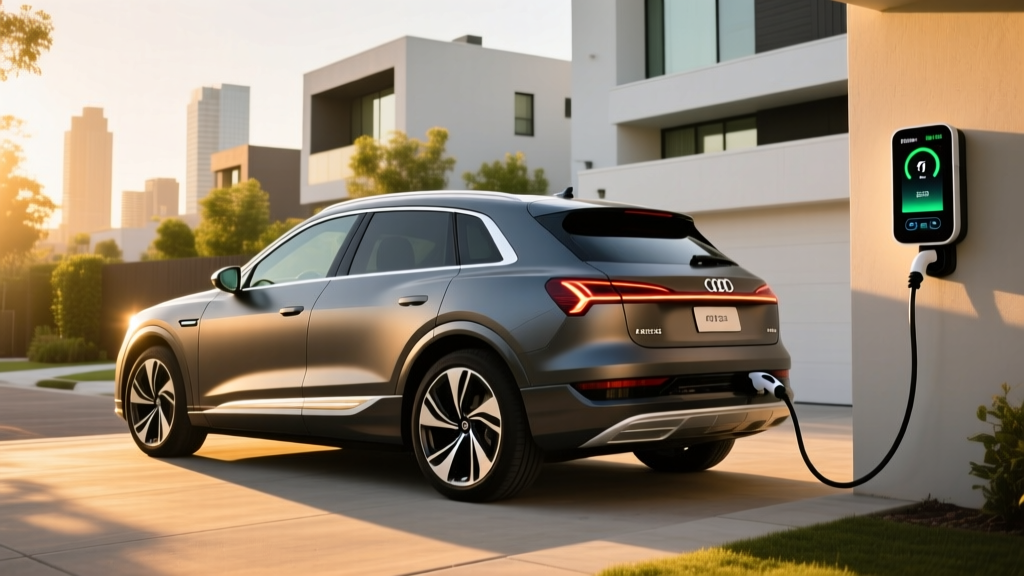
The Audi e-tron SUV — rebranded as the Q8 e-tron for the 2024 model year and continuing through 2026 — occupies a specific niche in the luxury EV market: it's the electric crossover that drives, rides, and feels most like a traditional Audi. If you're researching an Audi e-tron SUV lease, you're likely weighing German build quality and cabin refinement against competitors with longer range or faster charging. This review gives you the exact numbers — EPA range, charging curves, real-world efficiency, pricing, and tax credit eligibility — so you can decide whether the math works for your situation.
2026 Audi Q8 e-tron at a Glance: Key Specs
| Specification | 2026 Audi Q8 e-tron (Premium Plus) |
|---|---|
| EPA Range | 236 miles (285 mi Sportback variant) |
| Battery (Usable) | 106 kWh (NMC chemistry) |
| Max DC Fast Charge | 170 kW peak |
| 10–80% DC Charge Time | ~31 minutes |
| Level 2 Home Charging | 11.5 kW (~27 mi/hr) |
| 0–60 mph | 5.5 seconds |
| Horsepower | 402 hp (Boost mode) |
| Drivetrain | Dual-motor AWD (quattro) |
| MPGe (Combined) | 75 MPGe |
| Efficiency | 44 kWh/100 mi |
| Cargo Volume | 28.5 cu ft (rear seats up) / 56.4 cu ft (folded) |
| Base MSRP | $76,500 (Premium Plus) |
| Battery Warranty | 8 years / 100,000 miles (70% capacity retention) |
Real-World Range: What to Actually Expect
Real-World Highway (70 mph, mild weather): ~200–215 miles
Real-World City/Suburban: ~220–235 miles
Cold Weather (below 32°F): ~165–190 miles (20–30% reduction)
The Q8 e-tron's 106 kWh usable battery is one of the largest in its class, but its 5,300-pound curb weight and boxy SUV aerodynamics mean it consumes more energy per mile than rivals. At 44 kWh/100 miles, it's roughly 15% less efficient than a BMW iX xDrive50 (37 kWh/100 mi). On highway road trips at sustained 70–75 mph speeds, expect to see closer to 200 miles before needing a charge stop. In cold weather, resistance heating and battery thermal management draw additional power — plan for 165–190 miles of usable range if you're driving in sub-freezing conditions without preconditioning.
The Sportback variant's sloped roofline improves the drag coefficient enough to push EPA range to 285 miles, making it the better choice if range is your priority over maximum rear headroom.
Charging Speed: Home, DC Fast, and the Charge Curve
| Charging Level | Power (kW) | Miles Added per Hour | Notes |
|---|---|---|---|
| Level 1 (120V outlet) | 1.3 kW | ~3 mi/hr | Emergency/trickle only |
| Level 2 (240V home) | 11.5 kW | ~27 mi/hr | Full charge in ~9.5 hours |
| DC Fast Charge | 170 kW peak | ~200 mi in 30 min | 10–80% in ~31 min |
The Q8 e-tron's 170 kW peak DC fast-charging rate is respectable, but the charge curve matters more than the peak number. Audi's thermal management system holds the charge rate near 150 kW from roughly 10% to about 60% state of charge, then tapers progressively. The 10–80% time of approximately 31 minutes is competitive with the BMW iX but trails Hyundai/Kia's E-GMP platform vehicles (which achieve 10–80% in roughly 18 minutes at 350 kW chargers).
For home Level 2 charging, the 11.5 kW onboard charger is a strong point — it's among the fastest in its class. A full overnight charge from near-empty takes about 9.5 hours on a 48-amp Level 2 circuit. You'll need a NACS connector for 2026 models (Audi transitioned to NACS for the North American market), though CCS1 adapters remain widely available at Electrify America and other networks. Home Level 2 installation typically costs $800–$2,500 depending on panel capacity and run length — factor this into your lease budget.
Performance, Ride Quality, and Drivetrain
The dual-motor quattro powertrain delivers 402 horsepower and 490 lb-ft of torque in Boost mode (activated via the S gear position). The 5.5-second 0–60 mph time is adequate for a luxury cruiser but trails the BMW iX xDrive50 (4.4 seconds) and the Tesla Model X Long Range (3.8 seconds). Where the Q8 e-tron excels is ride quality: the standard adaptive air suspension absorbs road imperfections with a composure that feels distinctly Audi. Cabin isolation is excellent, with minimal wind and tire noise at highway speeds.
Towing capacity is rated at 4,000 pounds with the factory tow package — sufficient for a small boat or utility trailer but below the Model X (5,000 lb) and Rivian R1S (7,700 lb).
Interior, Technology, and Driver Assistance
The Q8 e-tron's cabin is where Audi's value proposition becomes clearest. Materials quality — open-pore wood, available Valcona leather, aluminum accents — surpasses the Tesla Model X and matches the BMW iX. The dual-touchscreen MMI system (10.1-inch upper, 8.6-inch lower) is responsive but requires more menu diving than BMW's iDrive rotary controller for common functions like climate adjustments.
Standard driver-assistance features include adaptive cruise control with stop-and-go, lane-centering assist, and traffic-sign recognition. This is an SAE Level 2 system — the driver must remain engaged with hands on the wheel and eyes on the road at all times. The available Audi Adaptive Cruise Assist with lane guidance is competent for highway commuting but does not approach the hands-free capability of GM's Super Cruise or Ford's BlueCruise on mapped highways.
Cargo space measures 28.5 cubic feet behind the second row and 56.4 cubic feet with rear seats folded. The small 2.1-cubic-foot frunk is useful for charging cables but won't hold much else. Rear legroom of 39.1 inches is generous for adults.
Pricing, Trims, and Federal Tax Credit Eligibility
| Trim | MSRP | Est. Lease (36 mo) | §30D Credit Eligible? |
|---|---|---|---|
| Premium Plus | $76,500 | $899–$1,099/mo | Check sourcing rules* |
| Prestige | $82,300 | $999–$1,199/mo | Check sourcing rules* |
| Sportback Premium Plus | $79,900 | $949–$1,149/mo | Check sourcing rules* |
*Federal tax credit eligibility under IRS §30D depends on battery-critical-mineral sourcing and battery-component manufacturing requirements that change annually. The Q8 e-tron's MSRP falls below the $80,000 SUV cap, but buyer income limits ($300K joint / $150K single modified AGI) and North American battery-sourcing rules apply. Consult a tax professional and verify current-year eligibility on the IRS website before signing.
Lease payments for the Q8 e-tron typically range from $899 to $1,199 per month depending on trim, money factor, residual value (typically 52–56% at 36 months), and any manufacturer-to-dealer incentives. A critical leasing advantage: under current IRS guidance, the commercial clean vehicle credit (§45W) may allow the leasing company to claim a $7,500 credit and pass it through as a capitalized-cost reduction — even if the vehicle wouldn't qualify for the consumer §30D credit due to sourcing rules. Ask the dealer whether this "lease loophole" pass-through is available and reflected in your quoted payment.
How It Compares: Q8 e-tron vs. Key Competitors
Against the BMW iX xDrive50 ($87,250, 307 mi EPA, 200 kW charging), the Q8 e-tron sacrifices roughly 70 miles of range and 30 kW of peak charge rate but wins on cabin material quality, ride comfort, and a lower starting price. The iX is the more efficient and tech-forward choice; the Q8 e-tron is the more traditional luxury experience.
Against the Tesla Model X Long Range ($79,990, 335 mi EPA, 250 kW charging), the Q8 e-tron trails significantly on range and charging speed but offers superior fit-and-finish, a quieter cabin, and a more intuitive service-dealer network. The Model X wins on efficiency and Supercharger access; the Q8 e-tron wins on build quality and driving refinement.
Against the Mercedes-Benz EQE SUV ($77,900, 250 mi EPA, 170 kW charging), the Q8 e-tron offers similar pricing and charging speeds but slightly less range. The EQE SUV's Hyperscreen dashboard is more visually striking; the Q8 e-tron's physical button layout is more practical for daily use.
Pros, Cons, and Who Should Lease the Q8 e-tron
Pros
- Best-in-class ride quality and cabin quietness
- 11.5 kW Level 2 charging (fastest in class for overnight home charging)
- Strong build quality and premium materials throughout
- Competitive MSRP below the §30D SUV cap
- Air suspension standard across all trims
- Lease pass-through credit may bypass §30D sourcing restrictions
Cons
- 236-mile EPA range trails rivals by 50–100 miles
- 44 kWh/100 mi efficiency means higher electricity costs
- 170 kW peak DC charging is mid-pack, not class-leading
- MMI dual-screen interface requires more attention than competitors
- Frunk is impractically small (2.1 cu ft)
- Heavy at 5,300 lb — affects tire wear and braking distances
Best suited for: Luxury-commuter buyers who prioritize ride refinement, cabin quality, and brand prestige over maximum range. Ideal if your daily driving is under 80 miles round-trip with reliable home Level 2 charging. The Q8 e-tron is a strong lease candidate for drivers who want a premium EV experience without long-term battery-degradation concerns (the lease transfers residual risk to the lessor).
Look elsewhere if: You regularly drive 300+ miles between charging stops, live in a region with sparse DC fast-charging infrastructure, or prioritize efficiency and lowest cost-per-mile above cabin luxury.
Frequently Asked Questions
What is the real-world range of the 2026 Audi Q8 e-tron?
Expect 200–215 miles on highway trips at 70 mph in mild weather, and 165–190 miles in sub-freezing temperatures. The EPA estimate of 236 miles is achievable primarily in city and suburban driving with regenerative braking assistance.
How fast does it charge at home and on the road?
At home on a 240V Level 2 charger (11.5 kW), you'll add roughly 27 miles of range per hour, or a full charge in about 9.5 hours. On DC fast chargers, it peaks at 170 kW and charges from 10–80% in approximately 31 minutes.
Does the Audi Q8 e-tron qualify for the $7,500 federal tax credit?
It may, but eligibility under IRS §30D depends on your modified adjusted gross income, the vehicle's battery-critical-mineral sourcing compliance for the current tax year, and the MSRP cap ($80,000 for SUVs). The leasing "pass-through" loophole may allow the lessor to claim the commercial credit regardless of sourcing rules — confirm with your dealer and a tax professional.
Is leasing the Q8 e-tron better than buying?
For many buyers, yes. Leasing shields you from EV depreciation risk (luxury EVs can lose 45–55% of value over three years), may unlock the $7,500 credit via the §45W commercial pass-through, and avoids long-term battery-replacement exposure. The trade-off is no equity at lease-end and mileage restrictions (typically 10,000–15,000 mi/year).
How does the Q8 e-tron compare to the BMW iX for a lease?
The BMW iX offers roughly 70 more miles of EPA range and faster DC charging but costs ~$10,000 more at the base level. If range and efficiency are your top priorities, the iX wins. If cabin quality, ride comfort, and a lower monthly payment matter more, the Q8 e-tron is the stronger lease value.
What's the battery warranty coverage?
Audi covers the high-voltage battery for 8 years or 100,000 miles, whichever comes first, with a capacity-retention threshold of 70%. If the battery degrades below 70% of its original capacity within the warranty period, Audi will repair or replace it at no cost.