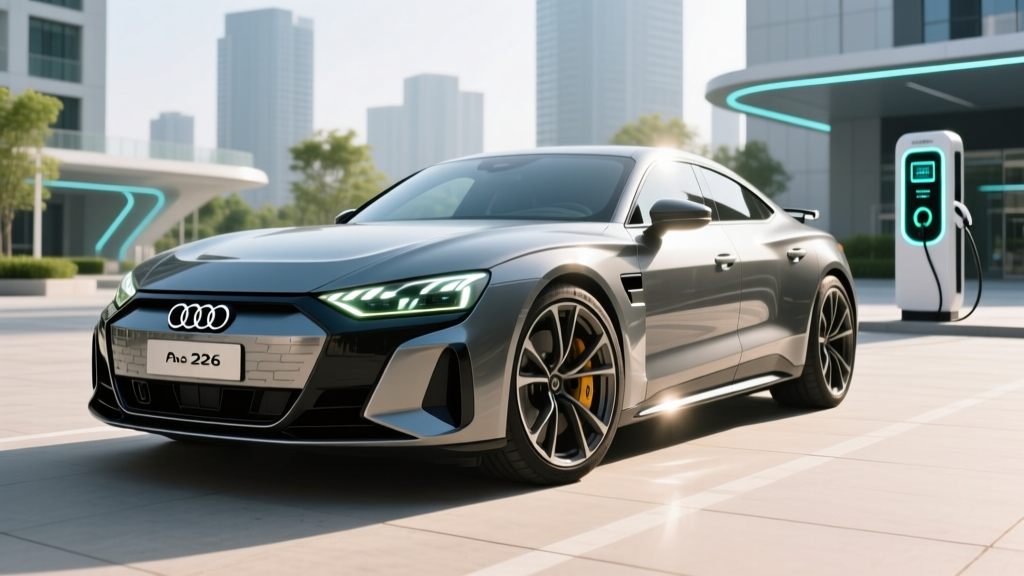
Audi e-tron RS GT at a Glance: Verdict and Positioning
The Audi e-tron RS GT occupies a rare intersection in the EV market: a luxury grand tourer with genuine supercar acceleration, a usable EPA range north of 230 miles, and an 800-volt architecture that keeps DC fast-charging stops brief. For 2026, Audi continues the RS GT lineup with the standard RS e-tron GT and the higher-output RS e-tron GT Performance, both riding on the J1 platform shared with the Porsche Taycan. If you're cross-shopping high-performance electric sedans and prioritize build quality, ride refinement, and charging speed over maximum range or cargo utility, this car deserves a serious look.
But the e-tron RS GT is not without trade-offs. Rear-seat headroom is tight, cargo space is modest, and the starting price places it firmly in six-figure territory — well above the IRS §30D federal tax credit MSRP cap. Below, we break down every number that matters, from real-world range to sustained charging curves, so you can decide whether Audi's electric flagship earns a spot in your garage.
Spec Table: 2026 Audi e-tron RS GT Key Numbers
| Specification | RS e-tron GT | RS e-tron GT Performance |
|---|---|---|
| EPA Range | 232 mi | 232 mi (est.) |
| Battery (usable / gross) | 83.7 kWh / 93.4 kWh | 83.7 kWh / 93.4 kWh |
| Battery Chemistry | NMC (nickel manganese cobalt) | NMC |
| Drivetrain | Dual-motor AWD | Dual-motor AWD |
| Horsepower (boost) | 637 hp | 912 hp |
| 0–60 mph | 3.1 sec | 2.5 sec |
| Max DC Fast Charge | 270 kW | 270 kW |
| 10–80% DC Charge Time | ~22.5 min | ~22.5 min |
| Level 2 Home Charge Rate | 11 kW (~32 mi/hr) | 11 kW (~32 mi/hr) |
| MPGe (combined) | 81 MPGe | ~79 MPGe (est.) |
| Efficiency | 41 kWh/100 mi | ~43 kWh/100 mi (est.) |
| Base MSRP | $149,800 | $186,200 |
| Battery Warranty | 8 yr / 100,000 mi | 8 yr / 100,000 mi |
Sources: fueleconomy.gov, Audi USA specifications. Performance trim figures are preliminary estimates based on Audi's announced output ratings.
Range and Efficiency: EPA Sticker vs. Real-World Expectations
Real-World Expectation: Plan for approximately 200–215 miles on highway-heavy trips at 70–80 mph. In cold weather (below 32°F), expect a further 15–25% reduction, dropping effective range to roughly 170–190 miles. City driving with regenerative braking can push closer to or slightly above the EPA figure.
The e-tron RS GT's 93.4 kWh gross battery (83.7 kWh usable) uses NMC chemistry optimized for energy density and high discharge rates — the right choice for a performance vehicle, though it trades some cycle longevity versus LFP. Audi's thermal management system actively conditions the pack, which helps preserve range consistency across seasons, but physics still governs: a 4,500-pound sedan pushing over 600 hp will consume electrons quickly at sustained highway speeds.
Efficiency lands at roughly 41 kWh per 100 miles in mixed driving, which translates to 81 MPGe combined per the EPA. That's competitive with the Porsche Taycan Turbo S but noticeably thirstier than a Tesla Model S Plaid (roughly 30 kWh/100 mi). If efficiency is your primary metric, this isn't the segment winner. If driving dynamics and charging speed matter more, the trade-off is rational.
Charging Performance: 800-Volt Architecture in Practice
The e-tron RS GT's J1 platform supports an 800-volt electrical architecture, enabling DC fast-charge rates up to 270 kW at compatible stations. That peak rate is impressive, but as with every EV, the sustained charge curve matters more than the headline number.
| Charging Level | Power / Rate | Miles Added per Hour | Typical Use Case |
|---|---|---|---|
| Level 1 (120V) | ~1.4 kW | ~3–4 mi/hr | Emergency / overnight trickle |
| Level 2 (240V, 48A) | 11 kW | ~32 mi/hr | Home daily charging |
| DC Fast Charge | Peak 270 kW | Up to ~180 mi in 10 min | Road-trip stops |
DC fast-charging reality: The pack pulls close to 270 kW from roughly 10% to 40% state of charge, then progressively tapers. From 10–80%, expect approximately 22–23 minutes at a 350 kW Electrify America or compatible station. Above 80%, charging slows dramatically to protect the NMC cells — a 10–100% session will take closer to 40 minutes. For road trips, plan 10–80% stops and skip the topping charge unless you're parked for a meal.
Home charging: At 11 kW on a 48-amp Level 2 circuit (NACS connector, as Audi has adopted for North America), a full charge from 10% takes roughly 8 hours — easily manageable overnight. Installation of a 240V/60A circuit typically runs $800–$2,500 depending on panel proximity and local permit requirements. If your home electrical panel is older or maxed out, a panel upgrade could add $1,500–$3,000.
The e-tron RS GT ships with a NACS inlet for 2026, granting native access to Tesla Supercharger stations (V3 and V4) alongside Electrify America and other networks. This is a significant practical advantage over CCS-only vehicles as the Supercharger network remains the most reliable DC fast-charging infrastructure in the U.S.
Performance and Driving Dynamics
The dual-motor all-wheel-drive system in the RS e-tron GT delivers 637 hp in launch-control boost mode (590 hp continuous). The Performance variant pushes that to an extraordinary 912 hp, making it one of the most powerful production sedans ever sold. Both versions feature a two-speed rear axle transmission — a rarity in EVs — that gives the car a harder initial launch while keeping high-speed efficiency reasonable.
Acceleration figures are brutal in the best sense: 3.1 seconds to 60 mph for the standard RS, and 2.5 seconds for the Performance model. The instant torque delivery, combined with Audi's quattro torque-vectoring, means traction is rarely an issue even on damp surfaces. Braking feels progressive and confidence-inspiring, with the regen system blending seamlessly into the friction brakes — a calibration that many competitors still struggle with.
Ride quality benefits from standard adaptive air suspension, which keeps the GT composed over rough pavement while allowing you to drop the ride height for highway cruising. This is a grand tourer first and a track car second: the steering communicates well but doesn't quite match a Taycan's surgical precision. For daily commuting and cross-country trips, the Audi's compliance and cabin isolation are arguably the better compromise.
Interior, Cargo, and Technology
Audi's interior execution is a strong suit. The cabin features standard leather-free upholstery (Dinamica microfiber and synthetic leather), a 10.1-inch upper infotainment display with haptic-touch feedback, and a 12.3-inch Virtual Cockit Plus instrument cluster. Wireless Apple CarPlay and Android Auto are standard, as is a head-up display with augmented-reality navigation overlays.
Passenger space: Front-seat comfort is excellent with 16-way power-adjustable sport seats standard. Rear accommodations are where compromises appear: headroom is tight for anyone over 6 feet due to the sloping roofline, and legroom measures roughly 32.5 inches — adequate for children or shorter adults but not a limousine. This is a 2+2 grand tourer in spirit.
Cargo capacity: The trunk offers approximately 9.2 cubic feet of space, supplemented by a small front trunk (frunk) at roughly 3.5 cubic feet. Combined, that's around 12.7 cubic feet — enough for two carry-on bags and a soft duffel for a weekend trip. If you regularly haul cargo or need folding rear seats for larger items, an SUV-format EV will serve you better.
Driver assistance: The e-tron RS GT includes Audi's Adaptive Cruise Assist with lane guidance, which is an SAE Level 2 system. This means the car can manage speed and steering on highways, but you must keep your hands on the wheel and remain fully engaged. It is not self-driving, and Audi does not market it as such. The system is competent but not class-leading compared to GM's Super Cruise or Ford's BlueCruise on mapped highways.
Pricing, Tax Credits, and Ownership Costs
The 2026 Audi RS e-tron GT starts at $149,800 (including destination), while the RS e-tron GT Performance begins at $186,200. Options such as carbon-fiber trim packages, the Executive package (ventilated/massage seats, night vision), and Audi exclusive paint can push as-tested prices well above $200,000.
Short answer: No, for most buyers. The §30D new clean vehicle credit has an MSRP cap of $80,000 for sedans. At $149,800+, the e-tron RS GT exceeds this cap and does not qualify for the up-to-$7,500 federal credit regardless of buyer income or battery sourcing.
Additionally, §30D imposes buyer income limits (modified AGI of $150,000 single / $300,000 joint filers) and battery critical-mineral sourcing requirements. Even if the MSRP cap did not apply, many buyers in this price bracket would exceed income thresholds.
State incentives may still apply. Some states offer rebates or HOV-lane access regardless of MSRP. Check your state's energy office or DMV for current programs.
Source: IRS §30D New Clean Vehicle Credit. Tax rules change — consult a tax professional for your specific situation.
Total cost of ownership considerations: Insurance premiums for the RS e-tron GT run significantly higher than average — expect $3,500–$5,500 annually depending on your profile and state. Audi includes four years / 50,000 miles of basic warranty coverage and eight years / 100,000 miles on the high-voltage battery (with a capacity-retention threshold of 70%). Scheduled maintenance is minimal compared to a combustion equivalent, but tire replacement costs are steep: the standard 21-inch performance tires can run $400–$600 per corner and may need replacement every 15,000–20,000 miles given the vehicle's weight and torque.
Pros and Cons
- 270 kW DC fast charging — among the fastest in production
- 800V architecture with NACS connector (Supercharger access)
- Exceptional build quality and cabin materials
- Adaptive air suspension delivers GT-level ride comfort
- 637–912 hp with composed AWD traction
- 8-year/100,000-mile battery warranty
- EPA range of 232 mi trails Tesla Model S and Lucid Air
- Efficiency of 41 kWh/100 mi is high for the segment
- Rear seat headroom and legroom are cramped
- Cargo space limited to ~12.7 cu ft total
- No federal tax credit eligibility (MSRP cap)
- Insurance and tire costs are substantial
- Driver-assist tech lags behind GM Super Cruise
Who Should Buy the Audi e-tron RS GT?
Choose the RS e-tron GT if:
- You want supercar acceleration wrapped in a daily-drivable luxury sedan
- Fast DC charging speed matters more to you than maximum range
- You primarily drive solo or with one passenger
- You value interior craftsmanship and ride quality over cargo practicality
- You want native Tesla Supercharger access via NACS
Look elsewhere if:
- You need 300+ miles of range for frequent road trips (consider Lucid Air or Tesla Model S)
- You regularly carry rear-seat passengers or cargo (consider an electric SUV)
- Federal tax credit eligibility is a deal-breaker (no luxury sedan above $80K qualifies)
- You prioritize the most advanced hands-free highway driving assist (GM Super Cruise vehicles)
Frequently Asked Questions
What is the real-world range of the Audi e-tron RS GT?
The EPA rates the RS e-tron GT at 232 miles. In real-world highway driving at 70–80 mph, expect roughly 200–215 miles. Cold weather (below freezing) can reduce that to 170–190 miles. City driving with regenerative braking may match or slightly exceed the EPA figure.
How fast does the e-tron RS GT charge at home and on the road?
On a Level 2 home charger (11 kW / 48A), the battery adds approximately 32 miles of range per hour, reaching a full charge overnight in about 8 hours from 10%. On a DC fast charger, the car peaks at 270 kW and charges from 10–80% in roughly 22–23 minutes, though the rate tapers significantly above 80%.
Does the Audi e-tron RS GT qualify for the $7,500 federal EV tax credit?
No. The IRS §30D credit has an $80,000 MSRP cap for sedans, and the e-tron RS GT starts at $149,800. Buyer income limits ($150K single / $300K joint) also disqualify many buyers in this price range. State-level incentives may still be available — check your local programs.
Is the Audi e-tron RS GT worth buying versus the Porsche Taycan or Tesla Model S?
The e-tron RS GT shares its platform with the Porsche Taycan and offers similar performance with a more comfort-oriented tune. The Tesla Model S Plaid delivers more range (402 mi EPA) and a lower starting price but can't match Audi's interior quality or charging speed. If cabin refinement, 270 kW charging, and understated design are priorities, the Audi is a strong choice. If range or value leads your decision, the Model S or Lucid Air Pure may be better fits.
What is the battery warranty on the e-tron RS GT?
Audi covers the high-voltage battery for 8 years or 100,000 miles, whichever comes first, with a minimum capacity-retention threshold of 70%. The basic vehicle warranty is 4 years / 50,000 miles.
Does the e-tron RS GT use NACS or CCS for charging?
For 2026, the Audi e-tron RS GT is equipped with a NACS (North American Charging Standard) connector, providing native access to Tesla Supercharger stations as well as Electrify America and other networks that have deployed NACS cables. This eliminates the need for a CCS-to-NACS adapter.