Quick Verdict: The Audi e-tron Refined for 2026
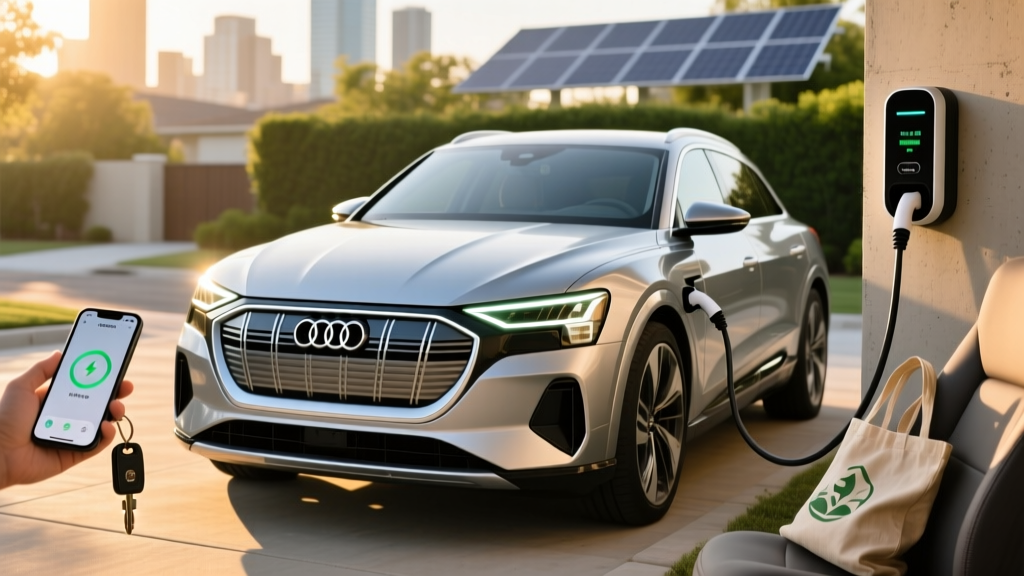
Audi rebranded its original e-tron SUV as the Q8 e-tron for the 2024 model year, and the 2026 Audi electric car e-tron lineage continues with meaningful improvements in efficiency and range over the original 2019-2023 version. The Q8 e-tron slots into the mid-size luxury EV SUV segment alongside the BMW iX, Mercedes EQE SUV, and Tesla Model X, trading outright range dominance for cabin refinement, build quality, and a ride that feels genuinely premium. If you're searching for an Audi electric car e-tron in 2026, you're looking at a vehicle that prioritizes comfort and everyday usability over spec-sheet theatrics.
| Spec | Q8 55 e-tron | SQ8 e-tron |
|---|---|---|
| EPA Range | 285 mi (Premium Plus) | 253 mi |
| Battery (usable/total) | 106 kWh / 114 kWh (NMC) | 106 kWh / 114 kWh (NMC) |
| Horsepower | 402 hp (boost) | 496 hp (boost) |
| 0-60 mph | 5.5 sec | 4.4 sec |
| Drivetrain | Dual-motor AWD (quattro) | Dual-motor AWD (quattro) |
| Max DC Fast Charge | 170 kW | 170 kW |
| 10-80% DC Time | ~31 min | ~31 min |
| Level 2 Rate | 19.2 kW (48A) | 19.2 kW (48A) |
| MPGe (combined) | 83 MPGe | 73 MPGe |
| Efficiency | 41 kWh/100 mi | 46 kWh/100 mi |
| Cargo (rear seats up/down) | 28.5 / 56.4 cu ft | 28.5 / 56.4 cu ft |
| Base MSRP | $75,695 | $97,495 |
| Battery Warranty | 8 yr / 100,000 mi | 8 yr / 100,000 mi |
Range & Efficiency: EPA Numbers Meet Reality
The 2026 Q8 55 e-tron carries an EPA-estimated 285 miles of range on the Premium Plus trim with 20-inch wheels. The Prestige trim and 21-inch wheel options drop that figure slightly, to roughly 273 miles. The performance-oriented SQ8 e-tron sacrifices range for power, landing at an EPA-estimated 253 miles.
EPA estimate: 285 miles (Q8 55 e-tron, 20" wheels)
Expect in mixed highway driving (70-75 mph): ~245-260 miles. The Q8 e-tron's aerodynamic drag (0.27 Cd is good for an SUV but still substantial) and 5,800+ lb curb weight take a toll at sustained highway speeds.
Expect in cold weather (below 32°F): ~210-230 miles. NMC chemistry loses roughly 20-25% of capacity in freezing temps without preconditioning. Use the vehicle's preconditioning feature before departure to recover 5-10% of that loss.
City/regenerative driving: ~270-285 miles — closer to EPA thanks to regen recapturing energy in stop-and-go traffic.
Efficiency is rated at 83 MPGe combined (41 kWh per 100 miles) for the Q8 55 e-tron, per fueleconomy.gov. That's mid-pack for the segment — the BMW iX xDrive50 achieves 86 MPGe combined, while the heavier Tesla Model X lands at 102 MPGe. The Q8 e-tron isn't the most efficient luxury EV SUV, but its thermal management system (standard heat pump) helps mitigate cold-weather losses compared to competitors without one.
Charging Speed: DC Fast, Level 2, and the Charge Curve
Audi equips the 2026 Q8 e-tron with a CCS1 connector (the North American standard before NACS adoption) and a maximum DC fast-charge rate of 170 kW. That's competitive with the BMW iX (up to 200 kW on newer models) but falls behind Hyundai/Kia's E-GMP platform vehicles at 240-350 kW.
| Charging Level | Power | Speed | Notes |
|---|---|---|---|
| Level 1 (120V household) | ~1.4 kW | ~4 mi/hr | Emergency/trickle only; full charge takes 70+ hours |
| Level 2 (240V, 48A) | 11.5 kW (vehicle-limited on 40A circuit) / 19.2 kW (with 80A circuit + Audi charger) | ~30-50 mi/hr | Full charge in ~7-10 hours depending on circuit |
| DC Fast Charge | Peak 170 kW | 10-80% in ~31 min | Sustains ~150 kW to 50% SoC, tapers to ~100 kW by 70%, then ~50 kW above 80% |
The charge curve matters more than peak kW. The Q8 e-tron's thermal management does an excellent job preconditioning the battery, allowing it to sustain strong charging rates through the mid-SoC range. In real-world testing at Electrify America and similar 350 kW stations, the Q8 e-tron typically holds 140-155 kW from 10-50% state of charge before tapering. That means the 10-80% time of roughly 31 minutes is achievable under good conditions (warm battery, station delivering full power).
Home charging note: The onboard charger supports up to 19.2 kW on Level 2, but that requires an 80-amp dedicated circuit and hardwired Audi charging unit. Most homes with a standard NEMA 14-50 outlet on a 50-amp circuit will deliver ~9.6 kW (about 25 miles per hour of charging), which is sufficient for overnight replenishment of daily driving. Budget $500-$2,000 for Level 2 installation depending on your panel capacity — consult a licensed electrician for a site assessment.
Performance & Driving Dynamics
The Q8 55 e-tron's dual-motor quattro all-wheel-drive system produces 402 horsepower and 490 lb-ft of torque in boost mode, delivering a 5.5-second 0-60 mph time. That's brisk but not breathtaking — the BMW iX xDrive50 hits 60 in 4.4 seconds, and the Tesla Model X Dual Motor in 3.8 seconds. The SQ8 e-tron closes the gap with 496 hp and a 4.4-second sprint.
Where the Q8 e-tron distinguishes itself is ride quality. The standard adaptive air suspension absorbs road imperfections with genuine composure, and the cabin isolation at highway speeds is among the best in the segment. Steering is precise but light — this is a grand tourer, not a sports SUV. Regenerative braking is adjustable through three levels via steering-wheel paddles, though it doesn't offer true one-pedal driving to a full stop in all conditions like a Nissan Leaf or Tesla.
Interior, Tech & Cargo
Audi's interior execution remains a strong point. The Q8 e-tron features the dual-touchscreen MMI response setup (10.1-inch upper, 8.6-inch lower) with haptic feedback, a 12.3-inch Virtual Cockpit digital instrument cluster, and available head-up display. Wireless Apple CarPlay and Android Auto are standard. The materials, fit, and finish are a clear step above the Tesla Model X and competitive with the BMW iX.
Cargo space measures 28.5 cubic feet behind the second row and 56.4 cubic feet with the rear seats folded — adequate for a family SUV but smaller than the Tesla Model X (up to 88 cu ft). There is no front trunk (frunk); the space under the hood houses electronics and the HVAC system.
Driver-assistance tech includes Audi's Adaptive Cruise Assist with lane guidance (SAE Level 2 — the driver must remain engaged and hands on the wheel at all times), intersection assist, and traffic sign recognition. This is a competent highway companion, but it is not autonomous driving.
Audi Adaptive Cruise Assist is an SAE Level 2 driver-assistance system. It does not replace the driver. You must keep your hands on the steering wheel and remain fully attentive at all times. It does not handle construction zones, unmapped roads, or complex urban intersections without driver input. Never treat any Level 2 system as "self-driving."
Pricing, Trims & Federal Tax Credit Eligibility
The 2026 Q8 55 e-tron starts at $75,695 (Premium Plus), with the Prestige trim at approximately $81,195. The SQ8 e-tron begins at $97,495. These prices represent a significant premium over the segment's value option (Tesla Model X at ~$79,990) but are competitive with the BMW iX xDrive50 (~$87,250).
| Trim | Base MSRP | Federal Credit (§30D) | Est. Net Price* |
|---|---|---|---|
| Q8 55 e-tron Premium Plus | $75,695 | Up to $7,500 | ~$68,195 |
| Q8 55 e-tron Prestige | $81,195 | Up to $7,500 | ~$73,695 |
| SQ8 e-tron Premium Plus | $97,495 | Up to $7,500 | ~$89,995 |
*Net price assumes full §30D credit eligibility. Actual credit depends on battery sourcing, buyer income, and MSRP cap compliance. See IRS rules below.
- MSRP Cap: SUVs/vans/pickups must have MSRP ≤ $80,000. The Q8 55 e-tron Premium Plus ($75,695) qualifies; the Prestige and SQ8 e-tron exceed the cap and are not eligible.
- Buyer Income Cap: Modified AGI must not exceed $150,000 (single), $225,000 (head of household), or $300,000 (married filing jointly).
- Battery Sourcing: The credit is split into two halves ($3,750 each) based on critical-mineral sourcing and battery-component manufacturing requirements. Sourcing rules tighten annually — verify current-year compliance on IRS.gov.
- Point-of-Sale Transfer: Eligible buyers can transfer the credit to the dealer at purchase for an immediate price reduction, rather than waiting to claim it on their tax return.
- Assembly: Vehicle must undergo final assembly in North America. The Q8 e-tron is assembled in Brussels, Belgium — this may disqualify it from the §30D new-vehicle credit. Always verify current assembly and sourcing status on the IRS eligible vehicle list before purchasing.
Critical note: Because the Q8 e-tron is assembled in Belgium, it likely does not qualify for the §30D new clean vehicle credit under current rules, which require North American final assembly. Some buyers have accessed partial credits through leasing (the commercial clean vehicle credit, §45W, applies to lessors and may be passed through as a lease discount). Consult a tax professional and check the latest fueleconomy.gov tax credit listings before committing.
Warranty & Long-Term Ownership
Audi provides a competitive warranty package for the Q8 e-tron:
- High-voltage battery: 8 years / 100,000 miles, covering defects and capacity degradation below 70% of original capacity
- Limited vehicle warranty: 4 years / 50,000 miles
- Powertrain (e-motors, onboard charger): 4 years / 50,000 miles
- Roadside assistance: 4 years / unlimited miles
The 70% battery capacity retention threshold is standard for the industry (matching Tesla, BMW, and Mercedes). Real-world NMC degradation data from the original 2019-2023 e-tron platform shows approximately 5-8% capacity loss over 100,000 miles of typical use — well within the warranty threshold. The larger 114 kWh gross battery in the Q8 e-tron provides a bigger buffer, meaning usable range should remain adequate even with moderate degradation over a decade of ownership.
Pros, Cons & Who Should Buy
- Excellent ride quality with standard air suspension
- Quiet, well-built cabin with premium materials
- Strong 19.2 kW Level 2 onboard charging capability
- Effective heat pump for cold-weather efficiency
- Sustained DC fast-charge performance (good thermal management)
- Comfortable seating for five adults
- EPA range trails key competitors (BMW iX, Tesla Model X)
- Assembled in Belgium — likely ineligible for §30D federal credit
- No frunk (front trunk) for additional cargo
- CCS1 connector (not native NACS; requires adapter for Tesla Superchargers)
- Higher starting price than segment value leaders
- Regen braking doesn't offer full one-pedal driving to a stop
Choose the Q8 e-tron if: You prioritize ride comfort, cabin quietness, and build quality over maximum range. You have reliable home Level 2 charging and primarily drive 40-80 miles daily. You value the Audi dealership experience and brand prestige.
Look elsewhere if: Maximum range is your top priority (consider the BMW iX xDrive50 at 324 mi EPA or Tesla Model X at 335 mi). You need the federal tax credit and can't access it through leasing. You frequently take 400+ mile road trips and want the fastest possible DC charging (Hyundai Ioniq 5 or Kia EV6 at 350 kW).
Frequently Asked Questions
What is the real-world range of the 2026 Audi Q8 e-tron?
The EPA estimates 285 miles for the Q8 55 e-tron on 20-inch wheels. In real-world highway driving at 70-75 mph, expect roughly 245-260 miles. In freezing temperatures, that drops to 210-230 miles without battery preconditioning. City driving with regenerative braking gets you closest to the EPA sticker at around 270-285 miles.
How fast does the Audi Q8 e-tron charge?
On a DC fast charger, the Q8 e-tron peaks at 170 kW and charges from 10-80% in approximately 31 minutes under optimal conditions. At home on a Level 2 charger with a 50-amp circuit (NEMA 14-50), expect about 9.6 kW and roughly 25 miles of range added per hour — enough for a full overnight charge. With a hardwired 80-amp circuit, the full 19.2 kW onboard charger delivers about 50 miles per hour.
Does the Audi Q8 e-tron qualify for the federal EV tax credit?
Likely not for purchase. The §30D credit requires North American final assembly, and the Q8 e-tron is built in Brussels, Belgium. However, leasing the vehicle may allow you to benefit from the commercial clean vehicle credit (§45W), which lessors sometimes pass through as a capitalized-cost reduction. Always verify current eligibility on IRS.gov and consult a tax professional.
Is the Audi Q8 e-tron worth buying vs. the BMW iX or Tesla Model X?
The Q8 e-tron wins on ride comfort, cabin quietness, and interior material quality. The BMW iX xDrive50 offers more range (324 mi EPA), slightly faster DC charging (200 kW), and a more distinctive design — at a similar price point. The Tesla Model X offers the most range (335 mi), the fastest acceleration, access to the Supercharger network natively (NACS), and more cargo space, but its interior quality and service experience don't match Audi's. Your decision should hinge on whether comfort and refinement (Audi), range and tech (Tesla), or a balance of both (BMW) matter most to you.
What battery chemistry does the Q8 e-tron use?
The Q8 e-tron uses NMC (nickel manganese cobalt) lithium-ion cells, which offer higher energy density than LFP (lithium iron phosphate) but are more sensitive to sustained high states of charge and extreme temperatures. For long-term battery health, Audi recommends daily charging to 80% and using the full 100% only for longer trips.
Can I charge the Audi Q8 e-tron at Tesla Superchargers?
Yes, but with an adapter. The Q8 e-tron uses the CCS1 connector, and Tesla has opened select Supercharger stations to non-Tesla EVs via CCS adapters. Audi does not currently include a NACS adapter with the vehicle, but third-party CCS-to-NACS adapters (such as those from Lectron or A2Z) are available. Confirm station compatibility through the Tesla app before relying on Superchargers for road trips.