The Short Answer on the New Electric Escalade
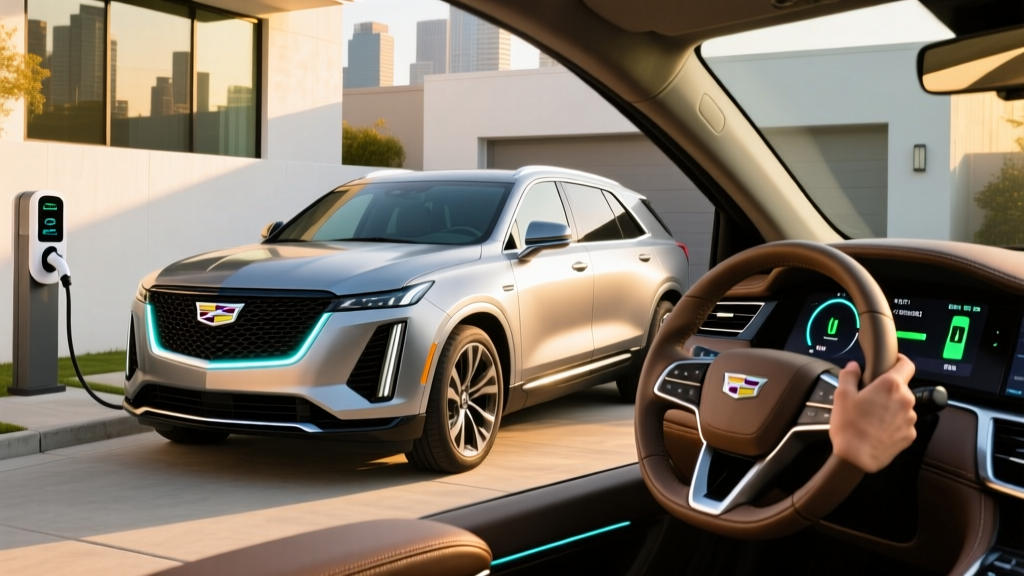
The 2026 Cadillac Escalade IQ is a full-size luxury electric SUV built on GM's Ultium platform, packing a ~200 kWh battery pack, up to 750 horsepower, and an EPA-estimated range of approximately 460 miles. It starts around $130,000, seats up to seven, and targets buyers who want Escalade presence and capability without the $6,000+ annual fuel bill of its gas counterpart. The catch: it weighs nearly 9,000 lbs, requires a robust home Level 2 charger to realize its convenience, and does not qualify for the §30D federal tax credit due to its MSRP exceeding the $80,000 SUV cap.
Specs That Define the Escalade IQ
The Escalade IQ is not a converted gas SUV — it's a ground-up electric vehicle on GM's BT1 electric truck platform (shared with the Silverado EV and Sierra EV). Here are the numbers that matter for purchase decisions:
| Specification | Escalade IQ Luxury | Escalade IQ Sport |
|---|---|---|
| Base MSRP | $129,990 | $130,690 |
| Battery (usable) | ~200 kWh (NMC, Ultium) | ~200 kWh (NMC, Ultium) |
| EPA Range | ~460 miles | ~450 miles |
| Horsepower | 615 hp (normal) / 750 hp (Velocity Max) | 615 hp / 750 hp |
| 0-60 mph | ~4.9 sec (Velocity Max: ~3.8 sec) | ~4.9 sec / ~3.8 sec |
| Peak DC Fast Charge | ~350 kW (800V architecture) | ~350 kW |
| 10-80% DC Charge Time | ~20 minutes (preconditioned) | ~20 minutes |
| Level 2 Charging (19.2 kW) | ~11.5 hours (0-100%) | ~11.5 hours |
| Towing Capacity | Up to 8,000 lbs | Up to 8,000 lbs |
| Drivetrain | e4WD (dual motor) | e4WD (dual motor) |
| Battery Warranty | 8 years / 100,000 miles | 8 years / 100,000 miles |
A few notes on interpreting these specs. The 200 kWh battery is one of the largest in any production passenger vehicle — for context, a Tesla Model S uses roughly 100 kWh. That capacity is what enables the 460-mile EPA figure, but it also means home charging from empty to full on a standard 11.5 kW Level 2 charger takes nearly a full day. A 19.2 kW Level 2 unit (the highest common residential rate) cuts this to about 11.5 hours, which is manageable for overnight replenishment of typical daily driving.
The 800-volt architecture enables peak charging rates of ~350 kW at compatible DC fast chargers. In practice, expect the charge curve to taper significantly above 80% state of charge (SoC). The quoted 10-80% time of ~20 minutes assumes a preconditioned battery and a 350 kW-capable station — such as Electrify America's newest 350 kW dispensers or Tesla Supercharger V4 stations with Magic Dock for non-Tesla vehicles.
Real-World Range Expectations
EPA Estimate: ~460 miles (Luxury trim)
Highway driving (75 mph, moderate temps): Expect ~380-410 miles. Large, boxy SUVs suffer disproportionate aerodynamic drag at speed.
Cold weather (below 30°F): Plan for 320-370 miles. The massive battery has more thermal mass to manage, and cabin heating in a vehicle this size draws significant energy.
Towing (loaded trailer, ~6,000 lbs): Range can drop to 200-250 miles. This is physics, not a flaw — towing cuts EV range roughly in half across all platforms.
Escalade IQ vs. Gas Escalade: Ownership Cost Breakdown
The 2026 gas Cadillac Escalade starts around $84,000 and is equipped with a 6.2L V8 returning roughly 16 MPG combined per fueleconomy.gov. Here's how five years of ownership stacks up, assuming 15,000 miles per year, $3.50/gallon regular fuel, and $0.14/kWh home electricity:
| Cost Category | Gas Escalade (6.2L V8) | Escalade IQ (EV) |
|---|---|---|
| Purchase Price (base) | $84,000 | $129,990 |
| Federal Tax Credit (§30D) | $0 | $0 (MSRP exceeds $80K SUV cap) |
| Fuel/Energy (5 yr / 75K mi) | $16,400 (4,688 gal × $3.50) | $3,150 (22,500 kWh × $0.14) |
| Maintenance (5 yr) | $3,500 (oil, filters, brakes, plugs) | $1,200 (cabin filter, wipers, tires, fluid top-offs) |
| Insurance (5 yr est.) | $12,000 | $15,500 (higher replacement cost) |
| Estimated Depreciation (5 yr) | $38,000 | $58,000 |
| 5-Year Total Cost | $153,900 | $207,840 |
| Cost Per Mile | $2.05 | $2.77 |
The math is clear: the Escalade IQ does not save money over the gas Escalade in a five-year window. The ~$46,000 higher purchase price is not offset by the ~$13,250 fuel savings and ~$2,300 maintenance savings. Where the IQ wins is in daily running cost (energy is roughly 80% cheaper per mile), refinement (instant torque, silent operation, no idle vibration), and the experience of never visiting a gas station.
Buyers should view the Escalade IQ as a luxury upgrade with lower operating costs, not a budget play. If your priority is total cost of ownership, the gas Escalade — or a less expensive EV — wins. If your priority is driving a flagship luxury EV with 460-mile range and 750 hp, the IQ stands nearly alone in its segment.
Tax Credit and Incentive Reality
Here's where many luxury EV buyers encounter disappointment. Under current IRS §30D rules, the federal clean vehicle credit has an MSRP cap: $80,000 for SUVs, vans, and pickup trucks, and $55,000 for sedans. The Escalade IQ's starting price of ~$130,000 puts it well above this threshold, making it ineligible for the $7,500 federal tax credit regardless of battery sourcing or buyer income.
There is also a buyer income cap ($300,000 joint / $150,000 single for new vehicles) and critical-mineral/battery-component sourcing requirements — but those are moot here since the MSRP cap eliminates eligibility first.
Some states offer additional incentives that are not MSRP-capped. Check your state's energy office or department of revenue for current programs. However, do not factor a $7,500 credit into your purchase budget for this vehicle — it is not available.
Home Charging: What You Actually Need
A 200 kWh battery changes the home-charging calculus significantly. Most EV owners with 75-100 kWh batteries do fine with an 11.5 kW (48-amp) Level 2 charger, adding roughly 35-40 miles of range per hour of charging. The Escalade IQ's battery is roughly double that size.
| Charging Level | Power (kW) | Miles Added Per Hour | 0-100% Time |
|---|---|---|---|
| Level 1 (120V outlet) | ~1.4 kW | ~3-4 miles | ~60+ hours |
| Level 2 (240V, 32A) | 7.7 kW | ~20 miles | ~26 hours |
| Level 2 (240V, 48A) | 11.5 kW | ~30 miles | ~17 hours |
| Level 2 (240V, 80A) | 19.2 kW | ~50 miles | ~11.5 hours |
| DC Fast Charge (350 kW peak) | Up to 350 kW | ~700+ miles/hr (peak) | 10-80% in ~20 min |
For Escalade IQ ownership, a 19.2 kW (80-amp) Level 2 charger is strongly recommended. This requires a 100-amp dedicated circuit, which may necessitate an electrical panel upgrade if your home currently has a 100-amp or 150-amp main panel. Budget $1,500-$3,500 for a quality 80A hardwired charger (e.g., ChargePoint Home Flex, FLO Home X8, or GM-approved Ultium Home charger) plus $1,000-$4,000 for electrician labor depending on run length and panel capacity.
If you drive 40-50 miles per day (the US average is ~37 miles per the FHWA), even an 11.5 kW charger replenishes your daily use overnight. The 19.2 kW unit matters most for days when you arrive home nearly empty and need a full charge by morning.
Apartment and condo dwellers: If you cannot install a Level 2 charger at home, owning a 200 kWh vehicle means relying on public DC fast charging or workplace charging. At a 350 kW station, a 10-80% session takes ~20 minutes — manageable once or twice a week, but the cost per kWh at public stations ($0.35-$0.55 in most metro areas) significantly erodes the fuel-cost advantage.
Common Misconceptions Addressed
| Myth | Fact |
|---|---|
| "It qualifies for the $7,500 federal tax credit." | It does not. The MSRP cap for SUVs under §30D is $80,000. The IQ starts at ~$130,000. |
| "460 miles of range means I'll get 460 miles." | The EPA test cycle includes low-speed urban driving. Expect 380-410 on the highway, less in winter or while towing. |
| "I can charge it on a regular wall outlet." | Technically yes, at ~1.4 kW (Level 1). But a full charge would take 60+ hours. A Level 2 installation is effectively mandatory. |
| "The battery will need replacing in a few years." | GM warranties the Ultium pack for 8 years / 100,000 miles against degradation below 60% capacity. NMC chemistry in a thermally managed pack typically retains 85-90% after 100K miles based on industry data. |
| "It can tow as far as the gas Escalade." | Towing capacity is similar (~8,000 lbs), but towing range is cut roughly in half for EVs. Plan for 200-250 miles between charges with a loaded trailer. |
| "Super Cruise means it drives itself." | GM's Super Cruise is an SAE Level 2 driver-assistance system. You must remain attentive and keep your hands available. It is not autonomous driving. |
Who Should Buy the Escalade IQ — and Who Shouldn't
Decision Framework
Buy the Escalade IQ if:
- You want a full-size three-row luxury SUV and prefer EV operation (silent, instant torque, no gas station visits)
- You have home charging access or can install a 19.2 kW Level 2 unit
- You drive under 350 miles between overnight stops on most trips
- You value the 460-mile EPA range as a buffer against range anxiety on road trips
- Your budget accommodates a $130,000+ vehicle without relying on tax credits
- You want 750 hp and a sub-4-second 0-60 time in a seven-seat SUV
Stick with the gas Escalade (or look elsewhere) if:
- Total cost of ownership is a primary purchase criterion — the gas model is ~$54,000 cheaper over 5 years
- You cannot charge at home and your area has limited DC fast charging infrastructure
- You regularly tow heavy trailers over long distances (range drops to ~200 mi)
- You live in an area with extreme winters and no garage — cold-weather range loss on a 200 kWh pack still means 320+ miles, but charging takes longer in freezing temps
- You want a vehicle under the §30D MSRP cap to qualify for the $7,500 federal credit
Consider alternatives if:
- You want a large luxury EV SUV but at a lower price — the Tesla Model X (~$80,000, eligible for credit depending on sourcing), Rivian R1S (~$80,000-$100,000), or the upcoming electric Mercedes GLS may fit
- You need maximum towing range — a gas or diesel SUV still wins for long-haul trailer pulls
What First-Time EV Buyers Need to Know
If the Escalade IQ is your first electric vehicle, a few ownership realities differ from the gas-car experience:
Preconditioning matters. The Escalade IQ's battery thermal management system works best when the pack is warmed before fast charging. Use the navigation system to route to a DC fast charger — the vehicle will automatically precondition the battery, enabling the ~350 kW peak rate. Without preconditioning, peak charge rates in cold weather can be cut by 50% or more.
The 80% rule. DC fast charging slows dramatically above 80% SoC to protect battery health. On road trips, charge from 10-80% (~20 minutes at a 350 kW station) and move on rather than waiting for a full charge. The last 20% can take as long as the first 70%.
Regenerative braking. The IQ offers adjustable regen, including one-pedal driving mode. This recaptures kinetic energy during deceleration and reduces brake wear. Expect brake pads to last well over 100,000 miles.
Tires wear faster. At nearly 9,000 lbs with 750 hp available, the Escalade IQ will consume tires faster than a gas Escalade. Budget $1,500-$2,500 for a set of replacement tires every 25,000-35,000 miles depending on driving style.
Insurance costs more. EV insurance premiums run 15-30% higher than equivalent gas vehicles due to higher repair costs and battery replacement risk. Get a quote before purchasing to avoid surprises.
Super Cruise and Driver Assistance
SAE Level 2 — Driver Assistance, Not Self-Driving. The Escalade IQ comes equipped with GM's Super Cruise, which enables hands-free driving on over 750,000 miles of mapped highways in the US and Canada. However, the driver must remain attentive — an infrared camera monitors eye gaze and will issue escalating alerts if attention lapses. This is not SAE Level 4 autonomy. You are responsible for the vehicle at all times.
Super Cruise is among the best Level 2 systems available, with smooth lane-keeping, automatic lane changes, and adaptive cruise that handles stop-and-go traffic competently. For the Escalade IQ buyer, it significantly reduces fatigue on long highway drives. But it does not eliminate the need for a licensed, attentive driver.
Frequently Asked Questions
Does the new electric Escalade qualify for any tax credits?
No federal §30D credit is available — the MSRP cap for SUVs is $80,000, and the Escalade IQ starts at ~$130,000. Some state-level incentives may apply; check your state's energy or revenue department. Consult a tax professional for personalized guidance.
How long does it take to charge the Escalade IQ at home?
On a 19.2 kW (80A) Level 2 charger, approximately 11.5 hours from 0-100%. On a standard 11.5 kW (48A) unit, roughly 17 hours. For typical daily driving of 40-50 miles, overnight charging on either unit fully replenishes daily use.
What is the real-world highway range?
The EPA estimates ~460 miles. In real-world highway driving at 70-75 mph in moderate temperatures, expect 380-410 miles. In cold weather (below 30°F), plan for 320-370 miles. Towing reduces range to approximately 200-250 miles.
How does the Escalade IQ compare to the Tesla Model X?
The Model X starts around $80,000 and may qualify for the federal credit. It offers ~335 miles of EPA range, faster 0-60 times (Plaid: ~2.5 sec), and access to the Supercharger network natively. The Escalade IQ offers significantly more interior space, a more traditional luxury interior, and nearly 130 more miles of EPA range. The IQ is larger, heavier, and more expensive — it competes more directly with ultra-luxury SUVs than with the Model X.
Can I tow with the Escalade IQ?
Yes — up to 8,000 lbs, matching the gas Escalade. However, towing cuts EV range approximately in half. Expect 200-250 miles between charges with a loaded 6,000-lb trailer. Plan charging stops accordingly on long towing trips.
What is the battery replacement cost?
GM has not published an exact replacement figure for the Escalade IQ's ~200 kWh Ultium pack. For context, large EV battery replacements currently range from $15,000-$30,000+ depending on capacity and chemistry. The 8-year/100,000-mile warranty covers defects and degradation below 60% of original capacity. Given the Ultium platform's modular design, partial-pack repairs may be possible, reducing worst-case costs.
Is the Escalade IQ available now?
The 2026 Escalade IQ began production in late 2025, with customer deliveries starting in early 2026. Availability varies by dealer. Contact your local Cadillac dealer for current inventory and reservation status.