Quick Verdict: The Audi e-tron Premium in 2026
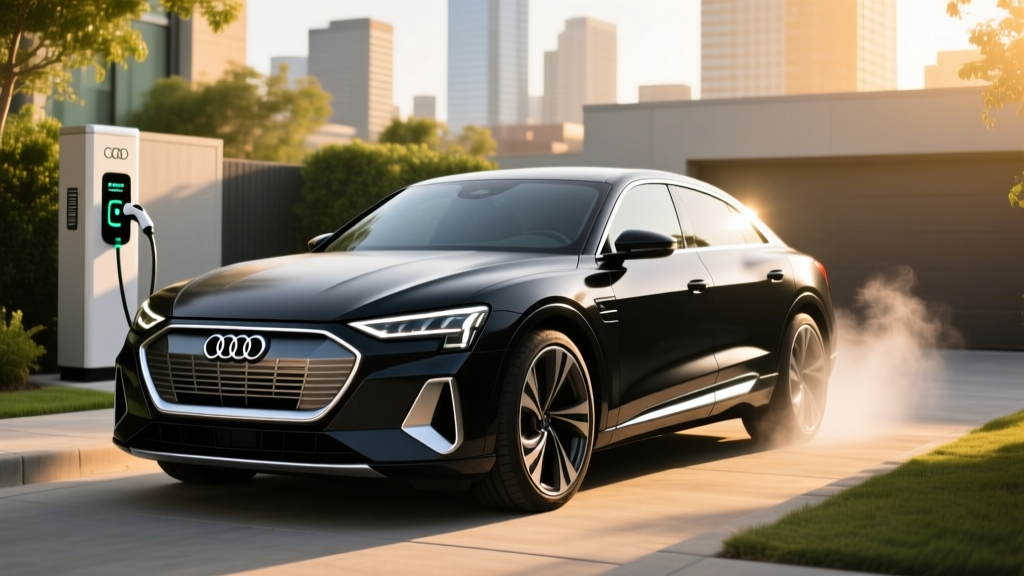
The Audi e-tron — now firmly in its second generation as a dedicated EV on the PPE (Premium Platform Electric) architecture — occupies a specific niche in the luxury electric SUV market. The Audi e-tron Premium trim serves as the entry point to Audi's electric lineup, pairing quattro all-wheel drive, a refined cabin, and competitive DC fast-charging speeds into a package that prioritizes comfort over outright performance. For 2026, the e-tron Premium continues with a 100 kWh battery pack (95.4 kWh usable, NMC chemistry), an EPA-estimated range of 236 miles, and a starting MSRP of $75,695.
It's not the longest-range luxury EV in its class, nor the quickest. But for buyers who value build quality, ride refinement, and Audi's dealer and service network, the e-tron Premium delivers a compelling — if conservative — electric ownership experience.
| Spec | Value |
|---|---|
| EPA Range | 236 miles |
| Battery (usable / gross) | 95.4 kWh / 100 kWh (NMC) |
| Drivetrain | Dual-motor quattro AWD |
| Horsepower / Torque | 402 hp / 490 lb-ft |
| 0–60 mph | 5.5 seconds |
| Max DC Fast Charge | 150 kW (peak) |
| 10–80% DC Charge Time | ~28 minutes |
| Level 2 Home Charge Rate | 11.5 kW (~25 mi/hr) |
| Efficiency | 82 MPGe combined / 41 kWh/100 mi |
| Cargo (rear seats up / folded) | 28.5 cu ft / 57.0 cu ft |
| Base MSRP | $75,695 |
| Battery Warranty | 8 years / 100,000 miles |
Range and Efficiency: What the EPA Number Doesn't Tell You
The EPA rates the 2026 Audi e-tron Premium at 236 miles of combined range. That figure comes from a 95.4 kWh usable battery paired with a relatively heavy curb weight (~5,800 lbs) and permanent dual-motor AWD. Efficiency lands at 82 MPGe combined, or 41 kWh per 100 miles — middling for the class, trailing the BMW iX xDrive50 (86 MPGe) and the Tesla Model X (102 MPGe).
Real-World Range Expectations
EPA sticker: 236 miles
Highway (70–80 mph, moderate temps): ~200–215 miles
City / suburban mixed driving: ~225–240 miles
Cold weather (below 32°F, highway): ~165–185 miles
Audi's thermal management system includes a heat pump (standard on 2026 models), which mitigates some cold-weather range loss compared to resistance-heated EVs. But physics is physics: a heavy AWD SUV with NMC cells will shed 20–30% of range in sustained sub-freezing highway driving. Plan accordingly if you live in northern climates.
On a real-world 250-mile highway loop at 75 mph in 65°F conditions, expect to arrive with roughly 15–25 miles of buffer remaining — tight, but doable. For road trips exceeding 200 miles between charges, you'll want to plan at least one DC fast-charge stop.
Charging Speed: DC Fast and Home Level 2
Charging capability is where the e-tron Premium remains competitive, if not class-leading. The PPE platform supports a peak DC fast-charge rate of 150 kW, with a well-managed charge curve that sustains strong speeds through the mid-SoC range.
| Charging Level | Power (kW) | Speed (miles of range per hour) | Notes |
|---|---|---|---|
| Level 1 (120V household) | 1.4 kW | ~3 mi/hr | Emergency/trickle only; ~67 hours for full charge |
| Level 2 (240V home) | 11.5 kW | ~25 mi/hr | Full charge in ~8.5 hours; requires 50A circuit |
| DC Fast Charge (CCS/NACS) | 150 kW peak | ~180 mi/hr (at peak) | 10–80% in ~28 min; tapers significantly above 85% |
The 10–80% DC charge time of approximately 28 minutes is respectable. Audi's charge curve holds near peak power from roughly 10% to 55% SoC before tapering — a common pattern with NMC cells managed conservatively for longevity. Above 80%, charging slows dramatically to protect battery health, so plan to unplug at 80% on road trips unless you need the extra range.
For home charging, the 11.5 kW onboard charger means a Level 2 installation (typically a 48A wall connector on a 60A dedicated circuit) will replenish the battery overnight in roughly 8.5 hours. If your home has a 200A electrical panel with capacity, installation typically runs $800–$2,000 for equipment and electrician labor, depending on run length and local permitting. A panel upgrade to 200A or higher can add $1,500–$4,000 if needed.
For 2026, Audi has transitioned U.S. e-tron models to the NACS (Tesla) connector, granting access to Tesla Supercharger stations with native compatibility. This is a significant practical advantage over the previous CCS-only models, as Tesla's Supercharger network remains the most reliable DC fast-charging infrastructure in the U.S.
Performance and Driving Dynamics
The e-tron Premium's dual-motor quattro powertrain produces 402 horsepower and 490 lb-ft of torque, good for a 0–60 mph time of 5.5 seconds. That's brisk but not thrilling by EV standards — the Tesla Model X Plaid does it in 2.5 seconds, and even the BMW iX M60 hits 60 in 3.6 seconds. But Audi has never chased straight-line numbers with the e-tron; the focus is refinement.
Ride quality is a standout. The standard adaptive air suspension (included on the Premium trim for 2026) delivers a compliant, quiet highway cruise that rivals anything in the luxury SUV segment. Road noise is exceptionally well-managed, and the cabin remains a sanctuary at 80 mph. Steering is light and precise, though it lacks the feedback enthusiasts seek.
Regenerative braking offers three levels selectable via steering-wheel paddles, but Audi does not offer true one-pedal driving with full stop-hold capability. You'll still use the brake pedal regularly. Towing capacity is rated at 4,000 lbs when properly equipped — adequate for a small trailer or pair of dirt bikes, but less than the Rivian R1S (7,700 lbs) or Model X (5,000 lbs).
Interior, Tech, and Cargo Space
Inside, the e-tron Premium features Audi's dual-touchscreen MMI response setup: an 11.6-inch upper display for navigation and media, and a 10.1-inch lower display for climate controls and handwriting input. The system is responsive and logically laid out, though the lower touchscreen's haptic-feedback buttons require a deliberate press that some drivers find distracting while driving.
The 12.3-inch Virtual Cockit Plus digital instrument cluster is standard, offering configurable displays including a dedicated EV energy-flow and range screen. Wireless Apple CarPlay and Android Auto are included. A head-up display is available on the Premium Plus trim but not the base Premium.
Cargo volume measures 28.5 cubic feet behind the second row and 57.0 cubic feet with the rear seats folded — competitive with the BMW iX but notably less than the Tesla Model X (74.4 cu ft max). There is no front trunk (frunk); the space under the hood houses power electronics. Rear legroom is generous at 38.1 inches, and the flat floor (thanks to the dedicated EV platform) makes the middle seat usable for adults on shorter trips.
Driver assistance comes via Audi's Adaptive Cruise Assist with lane guidance — a Level 2 SAE system that handles highway speed and steering when the driver keeps hands on the wheel. It's smooth and competent but requires active supervision. This is not a hands-free system like GM's Super Cruise or Ford's BlueCruise; the e-tron demands hand-on-wheel contact at all times.
Pricing, Trims, and Federal Tax Credit Eligibility
| Trim | MSRP | Est. After Federal Credit* |
|---|---|---|
| Premium | $75,695 | $68,195 |
| Premium Plus | $81,295 | $73,795 |
| Prestige | $87,895 | $80,395 |
*Federal credit eligibility requires meeting all §30D criteria. See checklist below.
The e-tron Premium starts at $75,695 (including destination), placing it firmly in luxury EV territory. For context, the BMW iX xDrive50 starts around $87,250, and the Tesla Model X Long Range begins at $79,990 — so the Audi undercuts both, though it also offers less range and performance.
Federal EV Tax Credit: §30D Eligibility Checklist
The 2026 Audi e-tron may qualify for up to $7,500 under the IRS §30D Clean Vehicle Credit, but eligibility depends on several factors that change annually. Per the IRS guidelines, buyers must meet all of the following:
- MSRP cap: SUVs must have an MSRP at or below $80,000. The Premium ($75,695) and Premium Plus ($81,295) trims are close to this threshold — the Premium qualifies on price, while the Premium Plus exceeds it unless optioned carefully or reclassified.
- Buyer income cap: Modified AGI must not exceed $150,000 (single), $225,000 (head of household), or $300,000 (joint filers).
- Battery sourcing: A percentage of critical minerals and battery components must be sourced from the U.S. or free-trade-agreement countries. These thresholds increase annually and may reduce or eliminate the credit depending on Audi's supply chain for the specific build month.
- Point-of-sale transfer: As of 2024, buyers can transfer the credit to the dealer at purchase, reducing the purchase price directly rather than waiting for a tax refund.
Because battery-sourcing requirements tighten each year, verify current eligibility on fueleconomy.gov for the specific VIN before purchasing. Consult a tax professional for your individual situation.
Pros, Cons, and Who Should Buy
Pros
- Exceptional ride quality with standard air suspension
- Quiet, well-built cabin with premium materials
- NACS connector for native Tesla Supercharger access (2026)
- Strong DC charge curve; 10–80% in ~28 min
- Generous rear legroom and flat floor
- Comprehensive 8-year/100,000-mile battery warranty
Cons
- EPA range (236 mi) trails key competitors
- No one-pedal driving with stop-hold
- No frunk for additional cargo
- Efficiency (82 MPGe) is below class average
- Base price still high; tax credit eligibility uncertain on upper trims
- Lower touchscreen climate controls distract while driving
Who This EV Suits Best
The Audi e-tron Premium is ideal for luxury-oriented daily commuters and families who prioritize cabin refinement, ride comfort, and brand prestige over maximum range or performance. If your typical daily drive is under 60 miles and you have home Level 2 charging, the 236-mile range is more than sufficient. It's also well-suited for buyers in Audi's dealer network who value the service experience and want a proven luxury brand rather than a startup.
It's less suited for frequent long-distance road trippers (the range and efficiency require more stops than a Model X or iX), performance-focused drivers (5.5 seconds to 60 is leisurely by EV standards), or buyers who need maximum cargo capacity (no frunk, and rear cargo trails the Model X).
How It Compares: e-tron Premium vs. Key Rivals
| Spec | Audi e-tron Premium | BMW iX xDrive50 | Tesla Model X LR |
|---|---|---|---|
| EPA Range | 236 mi | 307 mi | 335 mi |
| Battery (usable) | 95.4 kWh (NMC) | 105.2 kWh (NMC) | 100 kWh (est.) |
| 0–60 mph | 5.5 sec | 4.4 sec | 3.8 sec |
| Max DC Charge | 150 kW | 200 kW | 250 kW |
| 10–80% Time | ~28 min | ~24 min | ~20 min |
| Efficiency | 82 MPGe | 86 MPGe | 102 MPGe |
| Cargo (max) | 57.0 cu ft | 64.5 cu ft | 74.4 cu ft |
| Base MSRP | $75,695 | $87,250 | $79,990 |
The e-tron Premium's primary advantage is price: it undercuts the iX by over $11,000 and the Model X by roughly $4,300. It also wins on ride quality and cabin quietness. But the BMW iX delivers 71 more miles of EPA range, faster charging, and more cargo space — a compelling package if the budget stretches. The Tesla Model X offers the most range, the fastest charging, and the most cargo, though its interior quality and service experience don't match Audi's.
Frequently Asked Questions
What is the real-world range of the 2026 Audi e-tron Premium?
The EPA rates it at 236 miles combined. In real-world highway driving at 70–80 mph in moderate temperatures, expect 200–215 miles. In cold weather (below freezing), highway range drops to approximately 165–185 miles. City and suburban driving typically yields 225–240 miles thanks to regenerative braking at lower speeds.
How fast does the e-tron Premium charge at home and on the road?
On a DC fast charger, it peaks at 150 kW and charges from 10–80% in roughly 28 minutes. At home on a Level 2 (240V, 48A) charger, it charges at 11.5 kW, adding about 25 miles of range per hour and fully recharging in approximately 8.5 hours. The 2026 model uses the NACS connector, granting native access to Tesla Superchargers.
Does the Audi e-tron Premium qualify for the $7,500 federal EV tax credit?
It may, but eligibility depends on your income (capped at $150K single / $300K joint), the vehicle's MSRP (must be ≤$80,000 for SUVs — the Premium trim qualifies), and current battery-sourcing requirements under IRS §30D. The credit can be transferred to the dealer at point of sale. Always verify the specific VIN on fueleconomy.gov and consult a tax professional.
Is the e-tron Premium worth buying over the BMW iX or Tesla Model X?
Choose the e-tron Premium if ride quality, cabin quietness, and a lower starting price are your priorities. Choose the BMW iX if you need more range (307 mi EPA) and faster charging. Choose the Tesla Model X if maximum range, performance, and cargo space matter most — and you can accept a less traditional luxury experience.
What is the battery warranty on the Audi e-tron?
Audi covers the high-voltage battery for 8 years or 100,000 miles (whichever comes first), warranting it against capacity loss below 70% of original capacity. The limited vehicle warranty is 4 years / 50,000 miles. This battery warranty is standard for the luxury EV segment and aligns with BMW, Mercedes, and Tesla coverage.
Does the e-tron have a frunk (front trunk)?
No. The space under the hood is occupied by power electronics and the HVAC system. All cargo must go in the rear cargo area, which offers 28.5 cu ft behind the second row and 57.0 cu ft with seats folded.