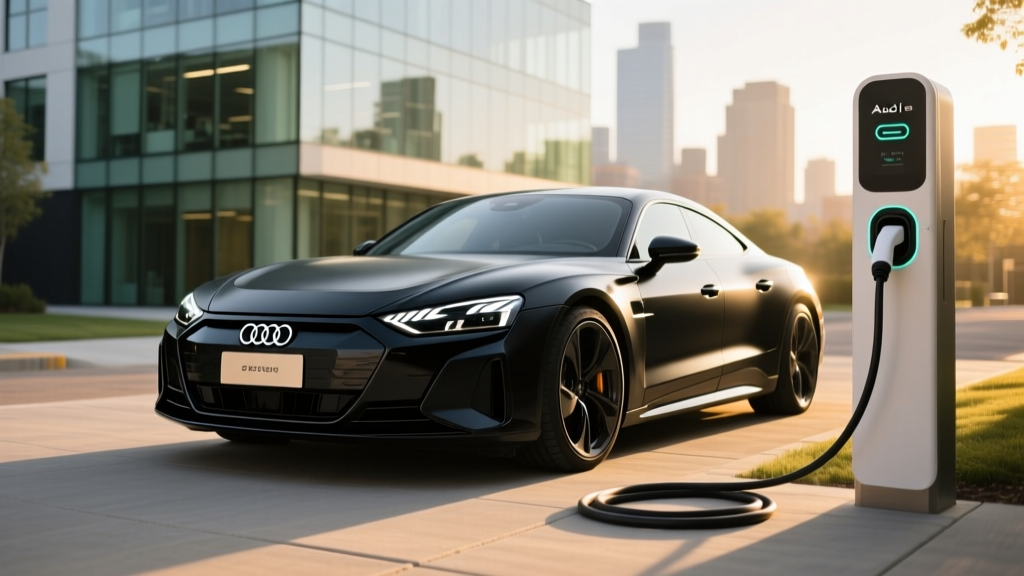
The Audi e-tron GT occupies a rare corner of the electric-vehicle market: a luxury grand tourer that shares its J1 performance platform with the Porsche Taycan but wraps it in a more understated, daily-drivable package. For 2026, Audi has streamlined the lineup while pushing battery capacity and charging speed higher. But with a starting price well into six figures, buyers need to know exactly what they're getting — and whether the numbers justify the badge.
This review covers every figure that matters: EPA range, real-world efficiency, DC fast-charging curves, home charging speeds, tax credit eligibility, and how the e-tron GT stacks up against the Taycan, Lucid Air, and Tesla Model S.
2026 Audi e-tron GT Lineup and MSRP Breakdown
Audi offers the 2026 e-tron GT in three trims, each with dual-motor all-wheel drive and the same 800-volt architecture. Here is what the pricing looks like before destination charges, options, or incentives:
| Trim | MSRP | Horsepower (Launch) | 0-60 mph | EPA Range |
|---|---|---|---|---|
| e-tron GT quattro Premium Plus | $108,195 | 523 hp | 3.9 sec | 270 mi |
| e-tron GT quattro Prestige | $116,395 | 523 hp | 3.9 sec | 266 mi |
| RS e-tron GT performance | $149,095 | 912 hp | 2.5 sec | 258 mi |
All prices include the $1,195 destination charge. The Prestige trim adds Audi's full LED matrix headlights, a head-up display, and upgraded leather — accounting for the $8,200 jump. The RS performance variant is essentially a different animal, with a tri-motor setup and track-tuned suspension that sacrifices a few miles of range for supercar acceleration.
Range, Efficiency, and Real-World Expectations
The 2026 e-tron GT uses a 97.0 kWh gross battery pack (approximately 89.0 kWh usable) with NMC (nickel manganese cobalt) chemistry. Audi has moved to a higher-nickel cell formulation for 2026, improving energy density without changing the pack's physical footprint.
The EPA rates the e-tron GT quattro Premium Plus at 270 miles combined. In real-world highway driving at 70-75 mph, expect approximately 225-245 miles before needing to charge. In freezing temperatures (below 30°F), range can drop to 185-210 miles depending on cabin heating demand and whether you precondition the battery. City driving with regenerative braking can push range to 280+ miles in mild weather.
The e-tron GT's efficiency is rated at 82 MPGe combined (quattro Premium Plus), translating to roughly 41 kWh per 100 miles. That is respectable for a 5,100-pound luxury sedan but trails the Lucid Air Pure (146 MPGe) and Tesla Model S Long Range (124 MPGe) significantly. The tradeoff is the Audi's superior ride quality and noise isolation — efficiency is not this car's primary mission.
Charging Speed: DC Fast and Home Level 2
The e-tron GT's 800-volt electrical architecture remains one of its strongest technical assets. Here is the complete charging picture:
| Charging Method | Power | Speed | Notes |
|---|---|---|---|
| Level 1 (120V household) | 1.4 kW | ~4 mi/hr | Emergency use only; full charge in 60+ hours |
| Level 2 (240V home) | 11.0 kW (48A) | ~31 mi/hr | Full charge in ~8.5 hours; onboard charger max is 11 kW |
| DC Fast Charge (peak) | 270 kW | 10-80% in ~22 min | Requires 350 kW CCS station; sustained rate averages ~190 kW |
A critical nuance: the 270 kW peak rate only holds between roughly 10-40% state of charge. Above 55%, the charge curve tapers significantly — by 80%, you're pulling roughly 110 kW, and above 90%, it drops below 50 kW to protect the NMC cells. If you're road-tripping, plan your stops to charge from 10-80% and skip the top-off unless you need the final miles to reach your destination.
The e-tron GT uses the CCS1 connector for DC fast charging and J1772 for Level 2. Audi includes a NACS adapter for access to Tesla Supercharger stalls, though Supercharger V3 stalls (250 kW max) will not unlock the Audi's full 270 kW potential — you'll need Electrify America or IONITY 350 kW stations for that.
For home charging, the 11 kW onboard charger is competitive. A full overnight charge on a Level 2 wallbox (such as the ChargePoint Home Flex or Wallbox Pulsar Plus set to 48 amps) adds roughly 31 miles per hour of charging — more than enough to replenish a full day's driving overnight. Budget $800-$2,000 for a professional Level 2 installation depending on your electrical panel's proximity to the garage, per Energy.gov home charging guidelines.
Performance and Driving Dynamics
The e-tron GT quattro's dual-motor AWD system produces 523 horsepower (with launch control engaged) and 472 lb-ft of torque. The 3.9-second 0-60 time is brisk but deliberately restrained compared to the RS variant — Audi tunes the standard GT for grand-touring composure rather than drag-strip dominance.
The RS e-tron GT performance is the halo model: 912 hp and a 2.5-second 0-60 time that rivals a Lamborghini Huracán. It uses a three-motor layout (one front, two rear) with torque vectoring on the rear axle. The tradeoff is 12 fewer miles of EPA range and a $41,000 price premium.
All trims feature standard adaptive air suspension, rear-axle steering (up to 2.8 degrees), and Audi's progressive steering ratio. The ride is notably supple for a performance sedan — more compliant than a Taycan Turbo in normal mode, which is the entire point of the GT designation.
Cargo, Interior Space, and Daily Livability
The e-tron GT is a low-slung four-door coupe, and the packaging reflects that priority. Rear headroom is tight for anyone over 6 feet, and the center rear seat is best reserved for short trips or a child seat.
- Cargo (rear trunk): 9.2 cu ft
- Frunk (front trunk): 3.2 cu ft
- Total cargo: 12.4 cu ft
- Rear legroom: 32.7 inches
- Front legroom: 41.3 inches
- Rear headroom: 36.5 inches (tight for tall passengers)
For comparison, the Tesla Model S offers 28.0 cu ft of rear cargo with the hatch open, and the Lucid Air provides 22.1 cu ft. The e-tron GT's trunk is a traditional sedan lid, not a hatch, which limits practicality for bulky items. This is a grand tourer for two adults and weekend luggage — not a family hauler.
The interior materials are excellent: standard Valcona leather, aluminum or carbon-fiber trim, and a 10.1-inch MMI touchscreen running Audi's latest MIB3+ infotainment. Wireless Apple CarPlay and Android Auto are standard, as is a 12.3-inch Virtual Cockit digital instrument cluster. The Prestige trim adds a head-up display with augmented-reality navigation arrows projected onto the windshield.
Federal Tax Credit and Total Cost
The IRS §30D federal tax credit is complex for vehicles in this price range. Here is the reality for the 2026 e-tron GT:
- MSRP cap: Sedans must be under $55,000 — the e-tron GT exceeds this cap at $108,195+ and does NOT qualify for the federal tax credit based on price alone.
- Income cap (if it did qualify): $300,000 joint / $225,000 head of household / $150,000 individual MAGI.
- Battery sourcing: NMC cells are assembled in Germany; critical-mineral sourcing requirements would need annual verification.
- Point-of-sale transfer: Not applicable — the vehicle exceeds the MSRP cap.
Bottom line: the 2026 Audi e-tron GT does not qualify for the $7,500 federal EV tax credit because its MSRP exceeds the $55,000 sedan cap. Some state incentives may still apply — California's CVRP, for example, has its own income and price thresholds, and Colorado offers a state credit without a strict MSRP cap. Consult your state's energy office and a tax professional for current local incentives.
| Trim | MSRP | Federal Credit | Effective Price |
|---|---|---|---|
| GT quattro Premium Plus | $108,195 | $0 | $108,195 |
| GT quattro Prestige | $116,395 | $0 | $116,395 |
| RS e-tron GT performance | $149,095 | $0 | $149,095 |
Warranty and Battery Longevity
Audi backs the e-tron GT with the following warranty coverage:
- Basic vehicle warranty: 4 years / 50,000 miles
- Battery and powertrain: 8 years / 100,000 miles
- Battery capacity retention guarantee: 70% of original capacity within the warranty period
- Roadside assistance: 4 years / unlimited miles
- Corrosion perforation: 12 years / unlimited miles
The 70% capacity threshold is industry-standard for NMC packs. Based on degradation data from similar J1-platform vehicles (Porsche Taycan, original e-tron GT), owners can expect approximately 5-8% capacity loss over the first 100,000 miles under normal charging habits. To minimize degradation, avoid routinely charging above 90% for daily use and limit DC fast charging to road trips when possible.
How It Compares: e-tron GT vs. Key Rivals
| Spec | 2026 Audi e-tron GT quattro | 2026 Porsche Taycan 4S | 2026 Lucid Air Pure | 2026 Tesla Model S LR |
|---|---|---|---|---|
| MSRP | $108,195 | $107,300 | $75,900 | $79,990 |
| EPA Range | 270 mi | 268 mi | 419 mi | 402 mi |
| Battery (usable) | 89.0 kWh | 89.0 kWh | 112.0 kWh | 100.0 kWh |
| 0-60 mph | 3.9 sec | 3.8 sec | 5.0 sec | 3.1 sec |
| Peak DC Charge | 270 kW | 270 kW | 250 kW | 250 kW |
| 10-80% Time | ~22 min | ~22 min | ~25 min | ~27 min |
| Cargo (total) | 12.4 cu ft | 14.3 cu ft | 22.1 cu ft | 28.0 cu ft |
| Federal Credit | $0 | $0 | $0 | $0 |
The e-tron GT and Taycan 4S are mechanical twins — same platform, same battery, same charging architecture. The Audi is slightly more comfortable and less aggressive in its styling; the Porsche offers sharper handling and a hatchback trunk. Neither qualifies for the federal credit.
The Lucid Air Pure is the efficiency and range champion at 419 miles EPA, and it costs $32,000 less. But it lacks the Audi's build quality, air suspension, and brand cachet. The Tesla Model S offers the most cargo space and a strong Supercharger network advantage but feels dated in interior materials and panel-gap consistency.
Pros, Cons, and Who Should Buy
- Class-leading ride comfort and noise isolation for a performance EV sedan
- 270 kW DC fast charging — among the fastest in the luxury segment
- 800V architecture enables sustained high-speed charging without excessive heat
- Standard air suspension and rear-axle steering across all trims
- Understated, elegant design that ages better than aggressive competitors
- Excellent interior materials and build quality
- No federal tax credit eligibility — MSRP exceeds $55,000 sedan cap
- Limited cargo space (12.4 cu ft total) and sedan trunk, not a hatch
- Tight rear headroom for tall passengers
- Efficiency trails Lucid Air and Tesla Model S significantly
- CCS1 connector with NACS adapter — not native Tesla plug
- Infotainment screen (10.1") feels small for this price point
- Choose the e-tron GT if you want a luxurious, quiet, comfortable grand tourer for two, prioritize ride quality over outright range, have reliable home charging, and don't need hatchback cargo space.
- Choose the Taycan 4S if you want the same platform with sharper handling, a hatchback trunk, and don't mind a slightly firmer ride.
- Choose the Lucid Air Pure if range (419 mi), interior space, and value ($75,900) matter more than brand prestige and air suspension.
- Choose the Tesla Model S if Supercharger access, cargo versatility, and performance-per-dollar are your top priorities.
Frequently Asked Questions
What is the real-world range of the 2026 Audi e-tron GT?
The EPA rates the e-tron GT quattro at 270 miles combined. In real-world highway driving at 70-75 mph, expect 225-245 miles. In cold weather below 30°F, that drops to approximately 185-210 miles. City driving with regenerative braking can yield 280+ miles in mild conditions. The range-realworld-callout above details these scenarios.
How fast does the e-tron GT charge at home and on the road?
On a Level 2 home charger (240V, 48A), the e-tron GT charges at up to 11.0 kW, adding roughly 31 miles of range per hour. A full charge takes about 8.5 hours. On a 350 kW DC fast charger, it peaks at 270 kW and charges from 10-80% in approximately 22 minutes. Note that charge speed tapers significantly above 55% state of charge.
Does the Audi e-tron GT qualify for the federal EV tax credit?
No. Under current IRS §30D rules, the federal tax credit for sedans is capped at vehicles with an MSRP under $55,000. The e-tron GT starts at $108,195, disqualifying it entirely on price. Some state-level incentives may still apply depending on your residence and income.
Is the Audi e-tron GT worth buying over the Porsche Taycan?
They share the same J1 platform, battery, and powertrain, so the decision comes down to character. The e-tron GT is tuned for comfort and understated luxury; the Taycan leans sportier with a hatchback trunk. If ride quality and a more discreet design matter, the Audi is the better pick. If you want sharper handling and more cargo versatility, choose the Porsche. The MSRP difference is negligible.
What are the biggest drawbacks of the e-tron GT?
The primary limitations are cargo space (12.4 cu ft with a sedan trunk, not a hatchback), tight rear headroom, no federal tax credit, and efficiency that trails the Lucid Air by over 60 MPGe. It also uses CCS1 with a NACS adapter rather than a native Tesla plug, which adds a step when using Superchargers.
How long will the e-tron GT battery last?
Audi warranties the battery for 8 years or 100,000 miles, guaranteeing at least 70% of original capacity. Based on data from J1-platform vehicles, expect 5-8% degradation over the first 100,000 miles with normal charging habits. Avoiding routine charges above 90% and minimizing DC fast charging will extend long-term battery health.