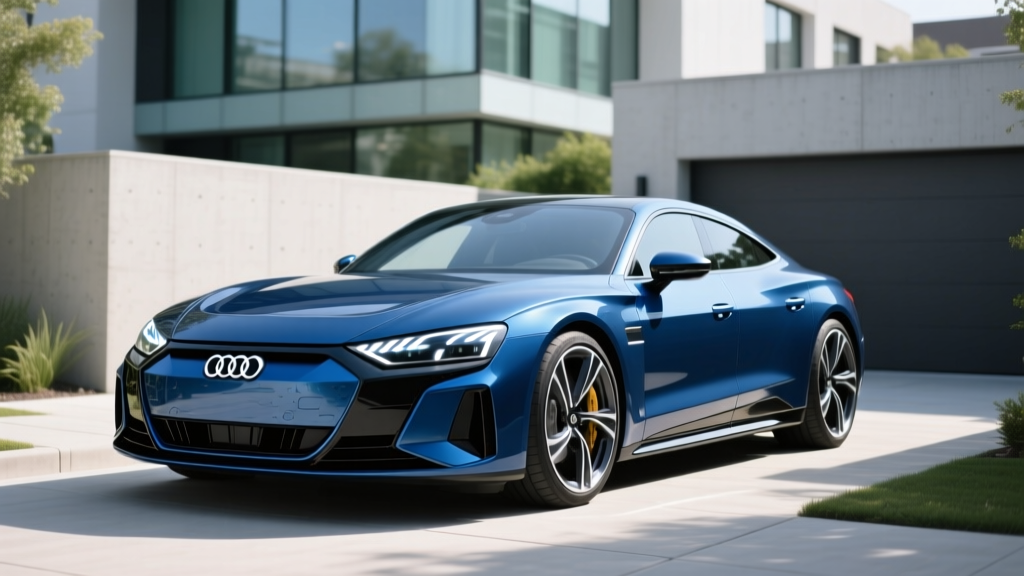
The Audi e-tron GT occupies a rare space in the electric-vehicle market: a genuine luxury grand tourer that can credibly serve as a company car. For business buyers weighing an Audi e-tron GT business lease, the calculus involves more than sticker price — it requires understanding real-world range, charging logistics, tax-credit mechanics under IRS §30D, and how this four-door coupe stacks up against the Porsche Taycan, Tesla Model S, and Mercedes-AMG EQS on total cost of ownership.
Below is a data-driven profile of the 2026 Audi e-tron GT lineup, built for fleet managers, business owners, and professionals evaluating a luxury EV lease.
2026 Audi e-tron GT at a Glance: Full Spec Sheet
| Specification | e-tron GT quattro | RS e-tron GT | RS e-tron GT Performance |
|---|---|---|---|
| Base MSRP | $107,900 | $150,700 | $190,700 |
| EPA Range | 270 mi | 254 mi | 232 mi (est.) |
| Battery (usable / gross) | 83.7 kWh / 93.4 kWh (NMC) | 83.7 kWh / 93.4 kWh (NMC) | 92.1 kWh / 105 kWh (NMC, est.) |
| Drivetrain | Dual-motor AWD | Dual-motor AWD | Dual-motor AWD |
| Horsepower | 522 hp | 637 hp | 912 hp |
| 0-60 mph | 3.9 sec | 3.1 sec | 2.5 sec |
| Max DC Fast Charge | 270 kW | 270 kW | 320 kW (est.) |
| 10-80% DC Charge Time | ~18 min | ~18 min | ~16 min (est.) |
| Level 2 Home Charge | 11 kW (AC) | 11 kW (AC) | 11 kW (AC), optional 22 kW |
| MPGe (combined) | 85 MPGe | 81 MPGe | ~77 MPGe (est.) |
| Efficiency | 40 kWh/100 mi | 42 kWh/100 mi | ~44 kWh/100 mi (est.) |
| Battery Warranty | 8 yr / 100,000 mi | 8 yr / 100,000 mi | 8 yr / 100,000 mi |
Sources: EPA fueleconomy.gov, Audi USA. "Est." values are preliminary based on Audi announcements for the updated Performance variant.
Real-World Range: What the EPA Sticker Doesn't Tell You
EPA Estimated: 270 miles
Real-World Highway (70 mph, moderate climate): ~225–240 miles
Real-World City / Mixed Commuting: ~245–260 miles
Cold-Weather (below 30°F): ~190–215 miles (20–25% reduction typical for NMC packs without aggressive preconditioning)
The e-tron GT's 83.7 kWh usable battery (in the standard and RS trims) uses NMC (nickel manganese cobalt) chemistry, which offers higher energy density than LFP but is more sensitive to cold-weather capacity loss. Audi equips the GT with an advanced thermal management system and a heat pump, which mitigates winter range drop compared to competitors lacking active battery preconditioning.
On a 300-mile highway drive at sustained 75–80 mph speeds, expect to arrive with roughly 10–15% state of charge remaining in temperate conditions. In winter, plan a mid-route DC fast-charge stop. The GT's efficiency of 40 kWh/100 mi (combined) is respectable for a 5,100-lb luxury sedan, but it trails the Tesla Model S Long Range (33 kWh/100 mi) due to the Audi's heavier curb weight and less slippery aerodynamics.
Charging Speed: DC Fast, Level 2, and the Charge Curve Reality
Charging speed is where the e-tron GT's 800-volt architecture pays dividends. Unlike 400V competitors that taper sharply after 50% SoC, the GT sustains high charge rates deep into the curve.
| Charging Level | Power | Speed / Time | Notes |
|---|---|---|---|
| Level 1 (120V household) | ~1.4 kW | ~3 mi/hr | Emergency / overnight trickle only |
| Level 2 (240V home) | 11 kW | ~25 mi/hr; full charge in ~8.5 hr | Requires 48A circuit (60A breaker) |
| Level 2 (optional 22 kW onboard) | 22 kW | ~50 mi/hr; full charge in ~4.5 hr | Requires 3-phase AC (rare in US homes) |
| DC Fast Charge (peak) | 270 kW | 10–80% in ~18 min | Requires 350 kW-capable CCS station |
| DC Fast (sustained average 10-80%) | ~210 kW avg | Adds ~180 mi in 18 min | Curve tapers above 80%; 80-100% adds ~12 min |
Key insight for business fleets: The 270 kW peak charge rate only materializes at Electrify America 350 kW stalls or equivalent CCS stations with adequate power delivery. At a typical 150 kW DC fast charger — still common at many highway rest stops — the GT will charge at 150 kW, extending the 10-80% session to approximately 28 minutes. Always precondition the battery via the MMI navigation-based route planner before arriving at a fast charger; skipping preconditioning can add 5–8 minutes to your session in cold weather.
The e-tron GT uses the CCS1 connector standard. As of 2026, Audi has not adopted NACS (Tesla's connector) natively, though CCS-to-NACS adapters are available for Supercharger access at reduced speeds (~150 kW max through the adapter).
Performance, Interior, and Technology
Even the base e-tron GT quattro delivers 522 hp and a 3.9-second 0-60 mph time — numbers that would have defined a supercar a decade ago. The dual-motor AWD system provides torque vectoring and a rear-biased character in Dynamic mode. The RS variant's 637 hp drops the sprint to 3.1 seconds, while the new Performance trim's 912 hp pushes into hypercar territory at 2.5 seconds.
Inside, the GT seats four adults comfortably, though the sloping roofline compromises rear headroom for passengers above 6'1".
- Front legroom: 41.3 inches
- Rear legroom: 34.5 inches
- Cargo (rear trunk): 12.9 cu ft
- Frunk (front trunk): 3.5 cu ft
- Total cargo: 16.4 cu ft
The cargo space is modest for a car of this size — a direct trade-off for the GT's dramatic proportions. Two carry-on bags fit in the rear trunk; the frunk holds a charging cable bag and a small laptop case. For business users who need to haul presentation materials or client packages, this is workable but tight compared to the Mercedes EQS (22 cu ft trunk).
Standout technology:
- 10.1-inch MMI touchscreen with wireless Apple CarPlay/Android Auto
- Audi virtual cockpit plus (12.3-inch digital cluster)
- Matrix-design LED headlights with laser spot high beams (optional)
- Audi adaptive air suspension with adjustable ride height
- Adaptive cruise assist with lane guidance (SAE Level 2 — driver must remain engaged)
- Park assist plus with remote parking via smartphone
Notable drawbacks:
- Infotainment lacks haptic feedback on the lower touchscreen — easy to mis-tap while driving
- No over-the-air updates for core vehicle functions (limited to infotainment)
- Rear visibility is poor; the rear camera is essential for parking
- Regenerative braking is conservative — one-pedal driving is not as aggressive as Tesla or Hyundai's i-Pedal
Pricing, Lease Costs, and Federal Tax Credit Eligibility
Business leasing introduces variables that personal buyers don't face: the tax credit flows to the lessor (the leasing company), who may or may not pass it through as a capitalized-cost reduction. Under current IRS §30D rules, the e-tron GT faces several eligibility hurdles.
| Item | e-tron GT quattro | RS e-tron GT |
|---|---|---|
| Base MSRP | $107,900 | $150,700 |
| As-Tested (typical options) | $118,500 | $165,000+ |
| §30D MSRP Cap (sedans) | $55,000 — EXCEEDS CAP | |
| §30D Credit Eligible? | No — MSRP exceeds $55K sedan cap | |
| Commercial Clean Vehicle Credit (§45W) | Up to $7,500 for business/fleet use (different rules apply) | |
| Typical 36-mo Business Lease | $1,450–$1,750/mo | $2,100–$2,500/mo |
| Estimated Money Factor | 0.00125–0.00175 | 0.00150–0.00200 |
| Residual Value (36-mo, 10K mi/yr) | ~52–55% | ~48–51% |
Critical tax credit note: The IRS §30D credit caps eligible sedans at $55,000 MSRP. Every e-tron GT trim exceeds this threshold, making it ineligible for the consumer new-vehicle credit. However, businesses purchasing (not leasing) the e-tron GT for fleet or commercial use may qualify for the Commercial Clean Vehicle Credit (§45W), which offers up to $7,500 for vehicles under 14,000 lbs GVWR. Consult a tax professional — §45W has its own sourcing and use-case requirements.
For a business lease, the primary financial advantages come from:
- Section 179 deduction: Potentially deductible lease payments as a business expense
- Depreciation avoidance: Luxury EVs depreciate heavily in years 1-3; leasing transfers residual risk to the lessor
- State incentives: Some states (CA, CO, NJ, NY) offer additional rebates or HOV-lane access that apply regardless of federal credit eligibility — check your state's energy office for current programs
Who Is the e-tron GT Business Lease For?
- You want a luxury EV that projects prestige at client meetings without the Tesla ubiquity
- Your typical daily driving is under 200 miles with access to home or office Level 2 charging
- You value ride quality, cabin silence, and build precision over raw efficiency or cargo space
- You can absorb $1,500+/month lease payments as a business expense
- You need 300+ miles of real-world range for frequent long-distance travel (consider the Mercedes EQS 450+ at 350 mi EPA or Tesla Model S at 402 mi)
- Cargo versatility matters (the Porsche Taycan Cross Turismo or BMW i5 offer more utility)
- You want maximum federal tax-credit benefit — the e-tron GT doesn't qualify under §30D
- You prioritize infotainment tech and OTA updates (Tesla Model S leads here)
Competitor Comparison: e-tron GT vs. Taycan, Model S, and EQS
| Metric | Audi e-tron GT quattro | Porsche Taycan 4S | Tesla Model S LR | Mercedes EQS 450+ |
|---|---|---|---|---|
| Base MSRP | $107,900 | $108,750 | $79,990 | $105,550 |
| EPA Range | 270 mi | 254 mi | 402 mi | 350 mi |
| Battery (usable) | 83.7 kWh | 83.7 kWh | 95 kWh | 107.8 kWh |
| 0-60 mph | 3.9 sec | 3.8 sec | 3.1 sec | 5.9 sec |
| Max DC Charge | 270 kW | 270 kW | 250 kW | 200 kW |
| 10-80% Time | ~18 min | ~18 min | ~25 min | ~31 min |
| Cargo Total | 16.4 cu ft | 14.3 cu ft | 28.0 cu ft | 22.0 cu ft |
| §30D Eligible? | No (MSRP cap) | No (MSRP cap) | No (MSRP cap) | No (MSRP cap) |
The e-tron GT and Taycan share the J1 platform and nearly identical powertrain hardware, making them mechanical twins. The Audi differentiates with a slightly more comfortable ride, a quieter cabin, and more understated styling. The Model S wins on range and cargo by wide margins. The EQS leads in rear-seat comfort and technology but charges more slowly.
Warranty and Long-Term Battery Outlook
Audi backs the e-tron GT with:
- Basic warranty: 4 years / 50,000 miles
- Powertrain warranty: 4 years / 50,000 miles
- Battery warranty: 8 years / 100,000 miles (covers capacity loss below 70% of original)
The 70% capacity retention threshold is standard among European manufacturers but less generous than Hyundai/Kia's 65% threshold over 10 years/100,000 miles. NMC batteries in the e-tron GT platform have demonstrated approximately 5–8% degradation over the first 50,000 miles based on owner-reported data from 2022–2024 model-year vehicles, suggesting most owners will remain well within warranty coverage during a typical 3-year lease term.
For business lessees, battery degradation is largely a lessor concern — you return the car at lease-end. However, excess wear-and-tear assessments can flag battery health if the vehicle shows abnormal range loss, so avoid habitual DC fast-charging to 100% and storing the car at high SoC in hot climates.
Frequently Asked Questions
What is the real-world range of the Audi e-tron GT?
The EPA rates the e-tron GT quattro at 270 miles. In real-world mixed driving at moderate temperatures, expect 245–260 miles. Sustained highway driving at 75+ mph reduces this to roughly 225–240 miles, and cold weather (below 30°F) can drop range to 190–215 miles. The RS trim sacrifices about 16 miles of EPA range due to wider tires and higher output.
How fast does the e-tron GT charge at home and on the road?
At home on a Level 2 (240V, 48A) charger, the GT adds about 25 miles per hour, fully recharging overnight in roughly 8.5 hours. On a 350 kW-capable DC fast charger, it peaks at 270 kW and charges from 10–80% in approximately 18 minutes. At more common 150 kW chargers, expect a 10-80% session of about 28 minutes.
Does the Audi e-tron GT qualify for the federal EV tax credit?
No — under IRS §30D, new clean vehicle credits are capped at $55,000 MSRP for sedans. Every e-tron GT trim starts well above that. However, businesses purchasing the vehicle for commercial or fleet use may qualify for the §45W Commercial Clean Vehicle Credit (up to $7,500). Always consult a tax professional for eligibility specific to your business structure.
Is it worth leasing vs. buying the e-tron GT for business?
Leasing is generally the smarter financial play for luxury EVs. The e-tron GT will likely lose 40–48% of its value in the first three years. A business lease lets you deduct payments as an operating expense, avoids residual-value risk, and keeps you in a current-generation vehicle with warranty coverage. The trade-off: you build no equity and face mileage penalties (typically $0.20–$0.30/mile over the limit).
How does the e-tron GT compare to the Porsche Taycan for business use?
They share the same 800V platform, battery, and powertrain. The e-tron GT is slightly more comfortable and understated; the Taycan offers sharper handling and a more driver-focused interior. Pricing is nearly identical. Neither qualifies for the §30D consumer credit. Your choice comes down to brand preference and whether your clients respond better to four rings or a crest badge.
What are the biggest pros and cons of the e-tron GT?
- Class-leading 270 kW DC fast charging
- Exceptional build quality and cabin silence
- Air suspension delivers a refined, adaptive ride
- 800V architecture future-proofs charging compatibility
- Strong brand cachet without Tesla ubiquity
- Heat pump standard for cold-climate efficiency
- No §30D federal tax credit eligibility (MSRP too high)
- Cargo space (16.4 cu ft total) trails every rival
- Rear headroom is tight for tall passengers
- Infotainment lacks polish compared to Tesla or Mercedes MBUX
- Limited OTA update capability
- Conservative regen braking — no true one-pedal mode
For current IRS incentive rules, see irs.gov/credits-for-new-clean-vehicles. For safety ratings, check NHTSA and IIHS. State and local incentives vary — consult your state energy office or the AFDC incentive database for current programs.