Quick Verdict: The Audi e-tron GT's Performance Promise
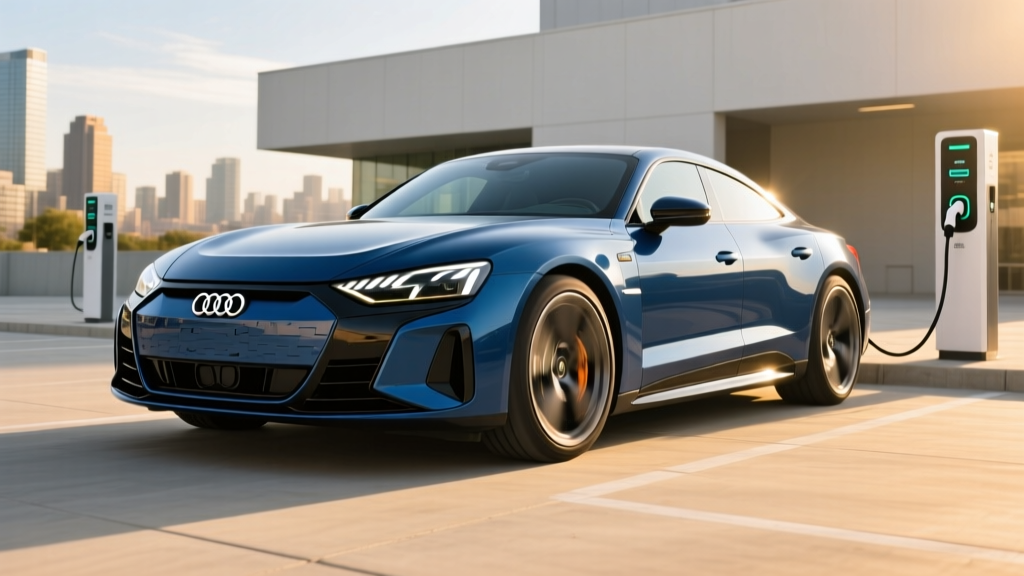
The Audi e-tron GT has always been the luxury sedan that could embarrass a supercar at a stoplight while coddling four adults in hand-stitched leather. For the 2026 model year, Audi has sharpened the formula with revised battery thermal management, slightly updated software, and a clearer trim hierarchy. If you've been searching for Audi e-tron GT 0-60 times, the short answer is that the standard GT Premium Plus hits 60 mph in 3.9 seconds while the RS e-tron GT Performance demolishes the benchmark in 2.3 seconds — putting it in hypercar territory. But straight-line speed is only one chapter. This review covers the real-world range, charging behavior, ownership costs, and whether the federal tax credit actually applies to a six-figure EV.
2026 Audi e-tron GT at a Glance: Full Spec Sheet
| Specification | e-tron GT Premium Plus | RS e-tron GT Performance |
|---|---|---|
| Drivetrain | Dual-motor AWD (quattro) | Dual-motor AWD (quattro) |
| Horsepower | 522 hp (with launch control) | 912 hp (with launch control) |
| Torque | 472 lb-ft | 737 lb-ft |
| 0-60 mph | 3.9 seconds | 2.3 seconds |
| Top Speed | 152 mph | 155 mph (electronically limited) |
| Usable Battery Capacity | 97.0 kWh (NMC) | 97.0 kWh (NMC) |
| Gross Battery Capacity | 105.0 kWh | 105.0 kWh |
| EPA Range | 270 miles | 255 miles |
| Efficiency (MPGe) | 85 MPGe combined | 79 MPGe combined |
| Efficiency (kWh/100 mi) | 40 kWh/100 mi | 43 kWh/100 mi |
| Max DC Fast Charge | 270 kW | 270 kW |
| 10-80% DCFC Time | ~22 minutes | ~22 minutes |
| Level 2 Charge Rate | 11 kW (AC onboard charger) | 11 kW (AC onboard charger) |
| Base MSRP | $108,995 | $152,695 |
| Battery/Powertrain Warranty | 8 years / 100,000 miles | 8 years / 100,000 miles |
Real-World Range: What the EPA Number Doesn't Tell You
The EPA rates the 2026 Audi e-tron GT Premium Plus at 270 miles and the RS e-tron GT Performance at 255 miles. Those numbers come from fueleconomy.gov and represent a combined city/highway cycle under moderate temperatures. But EPA stickers rarely match what you'll see on a long highway run or a cold January morning.
- City / suburban mixed driving (60-75°F): 260-280 miles — regen braking in stop-and-go traffic recovers energy effectively.
- Highway sustained at 75 mph (70°F): 215-235 miles — aerodynamic drag dominates at higher speeds, and the GT's sleek profile still can't overcome physics.
- Highway in cold weather (20-35°F): 170-200 miles — battery resistance increases, cabin heating draws power, and you'll see 25-35% range reduction.
- Aggressive / spirited driving: 160-190 miles — 912 hp is thrilling, but it consumes electrons at an alarming rate.
The 97 kWh usable battery uses NMC (nickel manganese cobalt) chemistry, which prioritizes energy density and performance over the cycle-life longevity of LFP cells. Audi maintains an ~8 kWh buffer (the difference between gross and usable capacity) to protect long-term battery health. In practice, this means you'll rarely see the battery drop below a few percent or charge past a true 100% — the buffer does the protecting for you.
Charging Speed: 270 kW Peak, But Mind the Curve
The e-tron GT's 800-volt architecture enables a peak DC fast-charge rate of 270 kW, which is among the fastest in the luxury EV sedan segment. However, peak rate is not sustained rate. Here's what a typical charging session looks like:
| Charging Level | Power / Rate | Miles Added Per Hour | Typical Use Case |
|---|---|---|---|
| Level 1 (120V household) | 1.4 kW | ~3-4 miles/hr | Emergency top-up only |
| Level 2 (240V home, 48A circuit) | 11 kW | ~30-33 miles/hr | Daily overnight charging — 0-100% in ~9 hours |
| DC Fast Charge (50 kW station) | 50 kW | ~120 miles/hr | Older public chargers, moderate speed |
| DC Fast Charge (150 kW station) | ~130 kW sustained avg. | ~310 miles/hr | Common Electrify America / EA stations |
| DC Fast Charge (350 kW station) | Up to 270 kW peak | ~650 miles/hr (peak) | Fastest available — 10-80% in ~22 min |
The charging curve matters more than the peak number. The e-tron GT sustains above 200 kW from roughly 10% to 40% state of charge, then progressively tapers. From 60% to 80%, you're typically seeing 100-140 kW. Above 80%, the rate drops sharply to protect the NMC cells — this is why we quote 10-80% times rather than 0-100%. If you're road-tripping, plan to charge from 10-80% and move on rather than waiting for the last 20%, which can add 25+ minutes for minimal range gain.
For home charging, the 11 kW onboard AC charger is generous. A full charge from empty takes roughly 9 hours on a 48-amp Level 2 circuit (requiring a 60-amp breaker). Most owners will arrive home with 40-60% remaining and wake up fully charged in 4-5 hours. If your home electrical panel is older or limited to 100 amps total, an electrician may recommend a panel upgrade — budget $1,500-$3,000 for that work on top of the $500-$1,200 for the Level 2 charger installation itself.
Performance Deep Dive: 0-60 and Beyond
Let's address the keyword directly. The Audi e-tron GT 0-60 times vary significantly by trim, and the gap is the widest in Audi's EV lineup:
- e-tron GT Premium Plus: 3.9 seconds to 60 mph. This is comfortably quicker than a base Porsche Taycan (4.5s) and trades blows with the BMW i5 M60 (3.7s). The dual-motor quattro system provides relentless grip off the line.
- RS e-tron GT Performance: 2.3 seconds to 60 mph. This is the flagship, and the number is staggering. It matches or beats a Tesla Model S Plaid (2.3s) and a Rimac Nevera in certain tests. The 912-hp output is available only with launch control engaged and a sufficiently charged battery (above ~80% SoC recommended for peak output).
The two-speed rear axle transmission — a rarity in EVs — gives the e-tron GT a mechanical advantage. First gear multiplies torque for explosive launches; second gear optimizes high-speed efficiency. You can feel the shift during hard acceleration, and it's one of the engineering details that separates this platform from single-speed competitors.
Adaptive air suspension is standard across all trims, with a 3-chamber system that adjusts ride height and damping in real time. The GT sits lower at speed for aerodynamic efficiency and raises for speed bumps and steep driveways. Rear-wheel steering (optional on Premium Plus, standard on RS) tightens the turning circle and adds agility at low speeds while improving stability at highway pace.
Interior, Cargo, and Daily Livability
The e-tron GT shares its J1 platform with the Porsche Taycan, and the interior quality reflects that lineage. Audi's Virtual Cockit Plus (12.3-inch digital cluster) and the 10.1-inch MMI touchscreen handle infotainment duties. Wireless Apple CarPlay and Android Auto are standard. The haptic-touch climate controls below the main screen look clean but require your eyes off the road — a notable drawback for a car this fast.
Space is where the GT diverges from SUV alternatives:
- Front legroom: 41.3 inches — generous for tall drivers
- Rear legroom: 33.5 inches — adequate for adults on shorter trips, tight for long hauls
- Trunk (rear): 9.2 cubic feet — fits two carry-on bags or a modest grocery run
- Frunk (front): 2.9 cubic feet — enough for a charging cable bag or small soft duffel
- Total cargo: 12.1 cubic feet — this is a grand tourer, not a family hauler
If you need to regularly carry more than two passengers plus luggage, the Audi Q8 e-tron SUV or a Tesla Model S (26.3 cu ft trunk) will serve you better. The e-tron GT is a driver's car that occasionally accommodates others.
Driver-assistance technology includes Audi's Adaptive Cruise Assist with lane guidance (SAE Level 2), traffic sign recognition, intersection assist, and park assist. These systems require full driver engagement at all times — they are not autonomous. The system is competent on highways but doesn't match the hands-free capability of GM's Super Cruise or Ford's BlueCruise on mapped roads.
Pricing, Trims, and the Federal Tax Credit Reality
The 2026 Audi e-tron GT lineup has simplified into two main trims:
| Trim | Base MSRP | Typical As-Tested Price | §30D Federal Tax Credit |
|---|---|---|---|
| e-tron GT Premium Plus | $108,995 | $115,000-$125,000 | Not eligible (MSRP cap exceeded) |
| RS e-tron GT Performance | $152,695 | $160,000-$175,000 | Not eligible (MSRP cap exceeded) |
Here's what every prospective buyer needs to understand about the IRS §30D clean vehicle credit: it carries an MSRP cap of $55,000 for sedans. Since both e-tron GT trims start well above that threshold, neither qualifies for the $7,500 federal tax credit. This is not a sourcing or income issue — it's a vehicle price cap that no amount of structuring can overcome.
- Vehicle MSRP must be ≤ $55,000 (sedans) or ≤ $80,000 (SUVs/pickups/vans)
- Buyer AGI must not exceed $150,000 (single) / $300,000 (married filing jointly)
- Battery components must meet North American assembly thresholds
- Critical minerals must meet sourcing percentage requirements
- Credit can be transferred to dealer at point of sale as a price reduction
The Audi e-tron GT fails the MSRP cap requirement. Consult a tax professional for your specific situation.
Some buyers explore the used EV tax credit (up to $4,000 under §25E) for a 2-3 year old e-tron GT that has depreciated below $25,000 — but given the GT's pricing trajectory, that threshold won't be met for several more years. Lease structures may offer different advantages depending on how the lessor passes through commercial EV credits; discuss this with your Audi dealer's finance team.
Pros and Cons: The Honest Assessment
Pros
- RS variant's 2.3-second 0-60 mph is among the fastest production cars ever built
- 800V architecture enables 270 kW peak charging — 10-80% in ~22 minutes
- Build quality and interior materials rival or exceed Mercedes and BMW competitors
- Adaptive air suspension delivers both track composure and boulevard comfort
- Two-speed rear axle is a genuine engineering advantage for launch and efficiency
- 8-year/100,000-mile battery warranty with 70% capacity retention guarantee
Cons
- Real-world highway range drops to ~215-235 miles — plan road trips accordingly
- Cargo space (12.1 cu ft total) is limited for the vehicle's footprint
- Rear seat legroom (33.5 in) is tight for adults on long trips
- Does not qualify for §30D federal tax credit due to MSRP cap
- Haptic-touch climate controls are distracting while driving
- Insurance premiums run 20-35% higher than comparable ICE luxury sedans
- Driver-assist suite is competent but not class-leading vs. Super Cruise or BlueCruise
Competitive Comparison: GT vs. Taycan, Model S, and i5 M60
The e-tron GT doesn't exist in a vacuum. Here's how it stacks up against the three most relevant alternatives on the metrics that matter:
| Metric | 2026 Audi RS e-tron GT Perf. | 2026 Porsche Taycan Turbo GT | 2026 Tesla Model S Plaid | 2026 BMW i5 M60 |
|---|---|---|---|---|
| 0-60 mph | 2.3 sec | 2.1 sec | 2.3 sec | 3.7 sec |
| Horsepower | 912 hp | 1,019 hp | 1,020 hp | 593 hp |
| EPA Range | 255 mi | 269 mi | 359 mi | 271 mi |
| Max DC Charge | 270 kW | 320 kW | 250 kW | 205 kW |
| Base MSRP | $152,695 | $185,000 | $89,990 | $87,575 |
| Cargo (cu ft) | 12.1 | 14.3 | 28.0 | 17.4 |
The Taycan Turbo GT is the performance king but costs $30,000+ more. The Model S Plaid offers superior range and cargo at a dramatically lower price, though interior quality doesn't match the Audi. The i5 M60 is the value play — nearly as quick as the base e-tron GT, with more space and a lower price. Your decision depends on what you prioritize: the e-tron GT occupies the sweet spot of supercar acceleration with genuine Audi luxury, even if it can't match the Tesla on range or the Porsche on ultimate track pace.
Who Should Buy the 2026 Audi e-tron GT?
Choose the e-tron GT Premium Plus if: You want a luxurious daily-driver EV with genuine sports-sedan performance (3.9s 0-60), excellent build quality, and you primarily commute or take shorter road trips where 270 miles of range is sufficient. You value understatement over the RS badge.
Choose the RS e-tron GT Performance if: You demand the absolute fastest 4-door sedan Audi builds, you'll use launch control more than once a year, and the $44,000 price premium over the Premium Plus doesn't cause hesitation. You want to gap supercars and then drive home in silence.
Look elsewhere if: You need to regularly carry four adults and luggage (consider the Q8 e-tron or Model S), you want to maximize range per dollar (Model S or Lucid Air), you depend on the federal tax credit to make the math work, or you prioritize hands-free highway driving tech (GM Super Cruise vehicles).
Frequently Asked Questions
What is the real-world range of the 2026 Audi e-tron GT?
The EPA rates it at 270 miles (Premium Plus) and 255 miles (RS Performance). In real-world highway driving at 75 mph, expect 215-235 miles. In cold weather below freezing, that drops to 170-200 miles. City driving with regenerative braking can match or slightly exceed the EPA number.
How fast does the Audi e-tron GT charge at home and on the road?
At home on a Level 2 (240V, 48A) charger, it charges at 11 kW, adding about 30-33 miles of range per hour — a full charge takes roughly 9 hours. On a 350 kW DC fast charger, it peaks at 270 kW and charges from 10-80% in approximately 22 minutes. The 800-volt architecture makes it one of the fastest-charging luxury sedans available.
Does the Audi e-tron GT qualify for the $7,500 federal EV tax credit?
No. The IRS §30D credit has an MSRP cap of $55,000 for sedans, and the e-tron GT starts at $108,995. It does not qualify regardless of buyer income or battery sourcing. Some lease structures may pass through commercial credits differently — consult your dealer's finance department.
Is the Audi e-tron GT worth buying over the Porsche Taycan?
They share the same J1 platform, but the e-tron GT is typically $20,000-$30,000 less expensive at equivalent performance tiers and has a slightly more comfortable ride. The Taycan offers sharper handling dynamics, higher peak charging (320 kW on Turbo GT), and marginally more cargo space. For most luxury EV sedan buyers, the e-tron GT offers 90% of the Taycan experience at a meaningfully lower price.
What battery warranty does Audi provide?
Audi covers the high-voltage battery for 8 years or 100,000 miles (whichever comes first), guaranteeing at least 70% of original capacity retention. The powertrain (motors, power electronics) carries the same coverage. This is competitive with BMW and Mercedes, though Tesla offers 8 years/150,000 miles on the Model S.
How does the e-tron GT handle cold weather?
The liquid-cooled battery has active thermal management, and preconditioning (available via the myAudi app) warms the battery before fast charging or departure. Even so, expect 25-35% range loss in sustained sub-freezing temperatures. The heat pump (standard on 2026 models) reduces the cabin-heating energy penalty compared to resistive heating. DC fast charging in cold weather is slower unless the battery is preconditioned — always use the route planner to trigger preconditioning before arriving at a charger.
What connector does the 2026 e-tron GT use?
The 2026 e-tron GT uses the CCS1 (Combined Charging System) connector for DC fast charging and the J1772 connector for Level 1/2 AC charging. Audi has not yet transitioned the e-tron GT to the NACS (Tesla-style) connector for this model year. CCS-to-NACS adapters are available if you need access to Tesla Superchargers, though compatibility should be verified with Audi's official guidance.
Sources: EPA fueleconomy.gov, IRS §30D Credit Rules, Audi USA Official Specs. Pricing and tax credit rules reflect 2026 model year and current IRS guidance; always verify with your dealer and tax professional before purchase.