Quick Verdict: The Executive Express Goes Electric
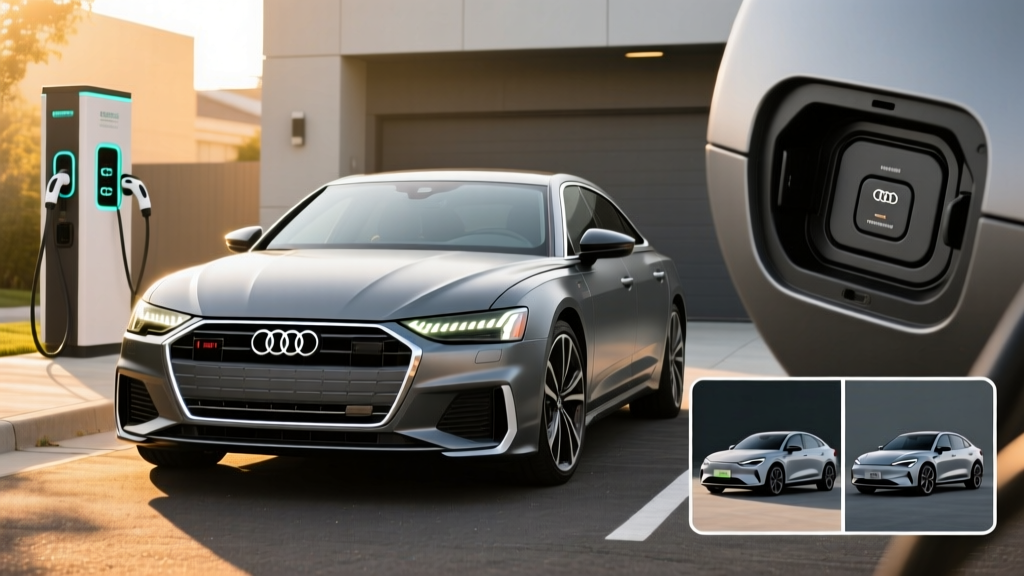
The 2026 Audi A6 Sportback e-tron arrives as Audi's first PPE-based (Premium Platform Electric) executive sedan for the U.S. market, slotting between the smaller A4 e-tron lineup and the flagship e-tron GT. Built on the same 800-volt architecture co-developed with Porsche that underpins the Macan EV and Q6 e-tron, the A6 Sportback e-tron promises class-leading charging speeds, a sleek fastback silhouette, and the kind of refined highway manners Audi is known for — now without a combustion engine.
With an EPA-estimated range approaching 400 miles on its largest battery configuration and peak DC fast-charging at 270 kW, this is Audi's most compelling long-distance electric cruiser yet. But at a starting MSRP pushing well into luxury territory, and with stiff competition from the Tesla Model S, BMW i5, and Mercedes EQE, the A6 Sportback e-tron needs to deliver on more than just spec-sheet numbers. Here's everything we know about the U.S.-spec model.
2026 Audi A6 Sportback e-tron — Key Specifications
| Spec | A6 Sportback e-tron (RWD) | A6 Sportback e-tron quattro (AWD) |
|---|---|---|
| EPA Est. Range | ~390 miles | ~360 miles |
| Battery (usable) | ~94.5 kWh (NMC) | ~94.5 kWh (NMC) |
| Horsepower | ~362 hp | ~443 hp (launch control) |
| 0-60 mph | ~5.4 sec | ~4.3 sec |
| Drivetrain | Rear-Wheel Drive | Dual-Motor AWD |
| Peak DC Fast Charge | 270 kW | 270 kW |
| 10-80% DC Charge Time | ~21 min | ~21 min |
| Level 2 Home Charge | 11 kW (AC) | 11 kW (AC) |
| Efficiency (est.) | ~3.6 kWh/mi (120 MPGe) | ~3.9 kWh/mi (110 MPGe) |
| Cargo Volume | ~18.4 cu ft (rear seats up) | |
| Base MSRP (est.) | ~$74,900 | ~$82,500 |
| Battery Warranty | 8 yr / 100,000 mi | |
Range and Efficiency: Real-World Expectations
The 2026 Audi A6 Sportback e-tron is built around a lithium-ion battery pack with approximately 94.5 kWh of usable capacity using NMC (nickel manganese cobalt) chemistry. Audi has opted for NMC over LFP (lithium iron phosphate) to maximize energy density — critical in a sedan platform where packaging space is at a premium and buyers expect 350+ miles of range.
EPA vs. Real-World Range
EPA Estimated: ~390 miles (RWD) / ~360 miles (quattro AWD)
Real-World Highway (70-80 mph): Expect ~310-340 miles (RWD) and ~280-310 miles (quattro). At sustained highway speeds, aerodynamic drag and the lack of regenerative braking opportunities reduce efficiency by roughly 15-20% compared to the EPA combined cycle.
Cold Weather (below 32°F): Plan for 20-30% range reduction, bringing the RWD model down to ~275-310 miles in winter conditions. The A6 Sportback e-tron includes a heat pump as standard equipment, which mitigates cabin-heating energy draw but cannot fully offset the battery's reduced chemical efficiency at low temperatures.
City/Commuter Driving: This is where the A6 Sportback e-tron shines — expect to match or slightly exceed EPA estimates thanks to frequent regenerative braking and lower average speeds.
Efficiency is estimated at roughly 3.6 kWh per mile (approximately 120 MPGe) for the RWD variant. The quattro model, with its added front motor and weight, drops to approximately 110 MPGe. For context, the BMW i5 eDrive40 achieves around 105 MPGe combined, while the Tesla Model S Long Range sits at approximately 124 MPGe — so the Audi lands competitively in this segment.
Audi's adaptive recuperation system lets drivers choose between coasting (freewheeling with minimal drag) and strong one-pedal-style regen. The system can also automatically adjust regen intensity based on navigation data, traffic ahead, and speed limits — a practical feature for drivers who don't want to manually toggle settings.
Charging: 800-Volt Architecture Delivers
The A6 Sportback e-tron's 800-volt electrical architecture is the headline feature here. This is the same high-voltage platform used in the Porsche Taycan and the Audi e-tron GT, and it enables DC fast-charging speeds that most 400-volt competitors simply cannot match.
Charging Speed Breakdown
| Charging Method | Max Power | Speed / Time | Notes |
|---|---|---|---|
| DC Fast Charge (CCS/NACS) | 270 kW peak | 10-80% in ~21 min | Peak rate sustained to ~50% SoC, then tapers. Expect ~160 kW average over the 10-80% session. |
| DC Fast Charge (50 kW station) | 50 kW | 10-80% in ~105 min | Common at older public chargers; the car can accept far more. |
| Level 2 Home/Public (240V) | 11 kW (48A) | ~30 mi/hr; 0-100% in ~9.5 hr | Requires a 60A circuit. Standard NEMA 14-50 outlet at 40A yields ~9.6 kW / ~26 mi/hr. |
| Level 1 (120V household) | ~1.4 kW | ~4 mi/hr | Emergency/trickle only. A full charge would take 65+ hours. |
A few real-world charging notes from the PPE platform:
- Peak vs. sustained: The 270 kW figure is a peak, not a sustained rate. In practice, the A6 Sportback e-tron holds close to 250-270 kW from roughly 10% to 50% State of Charge (SoC), then tapers progressively. From 80% to 100%, charging slows dramatically to protect the battery — this is normal for all lithium-ion packs and why we recommend charging to 80% for daily use.
- Preconditioning matters: The navigation system will precondition the battery (warm it to optimal temperature) when a DC fast-charger is set as your destination. Skip this step in cold weather, and your peak charge rate may drop to 150-180 kW until the pack warms up.
- Connector: U.S.-spec models are expected to ship with the NACS (Tesla-style) charge port for 2026, with CCS compatibility via adapter. Audi has confirmed NACS adoption across its U.S. EV lineup, granting access to Tesla Supercharger stations.
- Home charging: At 11 kW on a hardwired Level 2 wall connector, overnight charging easily replenishes a full day's driving. A typical 300-mile day (~85 kWh used) would require roughly 8 hours on an 11 kW connection — well within an overnight window.
Performance and Driving Dynamics
The rear-wheel-drive A6 Sportback e-tron produces an estimated 362 horsepower from its single rear motor, delivering a 0-60 mph time of approximately 5.4 seconds. That's brisk enough for confident highway merging and passing, and the instant electric torque makes it feel quicker than the number suggests in everyday driving.
Step up to the quattro all-wheel-drive variant, and the dual-motor setup pushes output to an estimated 443 hp (with launch control engaged), dropping the 0-60 time to roughly 4.3 seconds. The quattro system is fully variable — under normal cruising, it runs primarily on the rear motor for efficiency, engaging the front motor only when traction or additional power is demanded.
Audi's air suspension is standard on U.S.-spec models, offering adjustable ride height and damping. The system lowers the car at highway speeds for improved aerodynamics (and range) and can raise it for rough roads or steep driveways. Steering feel is characteristically Audi — precise and well-weighted, if not quite as communicative as a BMW i5. The low center of gravity from the underfloor battery pack keeps body roll minimal through corners, and the ~4,900-lb curb weight is managed competently by the adaptive dampers.
One notable drawback: unlike some competitors, the A6 Sportback e-tron does not offer a high-performance variant in the S or RS lineage at launch. If you want a sport-executive EV with sub-3-second 0-60 times, the Porsche Taycan or Tesla Model S Plaid remain the benchmarks.
Interior, Cargo, and Technology
The A6 Sportback e-tron's cabin represents a significant step forward from the outgoing combustion A6, anchored by Audi's latest MMI infotainment system displayed across a curved OLED panel that spans the dashboard. The driver faces an 11.9-inch digital instrument cluster, while a 14.5-inch central touchscreen handles navigation, media, and vehicle settings. A 10.9-inch front-passenger display is available as an option, allowing the passenger to stream media or view navigation without distracting the driver.
Key technology features include:
- Augmented-reality head-up display: Projects navigation arrows and speed information onto the windshield, overlaid on the road ahead. One of the best implementations in the luxury segment.
- Audi Adaptive Drive Assist: A Level 2 (SAE) driver-assistance system combining adaptive cruise control, lane-centering, and traffic-jam assist. It works well on highways but requires hands-on-wheel supervision at all times — this is not a hands-free system like GM's Super Cruise or Ford's BlueCruise.
- Matrix LED headlights with digital light signatures: Customizable daytime running light patterns, a feature Audi has pioneered.
- Over-the-air (OTA) updates: The PPE platform supports remote software updates for powertrain calibration, infotainment, and driver-assist features.
- Plug & Charge: At compatible networks (including Electrify America), simply plugging in initiates authentication and billing automatically — no app or RFID card required.
Cargo space comes in at approximately 18.4 cubic feet behind the rear seats, accessed via the Sportback's power liftgate. The fastback roofline gives the opening a wider, more usable aperture than a traditional sedan trunk, though the sloping roof does cut into vertical space for tall items. A small front trunk (frunk) adds roughly 2.1 cubic feet — enough for a charging cable kit or a small bag. Rear-seat legroom is approximately 38.0 inches, competitive with the BMW i5 but slightly less than the Mercedes EQE.
Pricing, Trims, and Federal Tax Credit
The 2026 Audi A6 Sportback e-tron is positioned as a premium executive EV, and its pricing reflects that. Based on Audi's announced U.S. pricing structure:
Estimated Pricing by Trim
| Trim | Drivetrain | Est. MSRP | Est. After §30D Credit |
|---|---|---|---|
| Premium (RWD) | RWD | $74,900 | See eligibility below* |
| Premium Plus (RWD) | RWD | $79,500 | See eligibility below* |
| Premium Plus quattro | AWD | $82,500 | See eligibility below* |
| Prestige quattro | AWD | $89,900 | See eligibility below* |
Federal tax credit eligibility (§30D): This is where the A6 Sportback e-tron faces a significant hurdle. The IRS §30D clean vehicle credit offers up to $7,500, but several conditions apply:
- MSRP cap: Sedans must have an MSRP at or below $55,000 to qualify. Since every A6 Sportback e-tron trim exceeds this cap, the vehicle does NOT qualify for the new-vehicle §30D federal tax credit.
- Income caps (for reference): Even if the MSRP were below the cap, buyers must have modified adjusted gross income (MAGI) at or below $150,000 (single), $225,000 (head of household), or $300,000 (joint filing).
- Battery sourcing: The §30D credit also requires that battery components and critical minerals meet U.S./FTA-country sourcing thresholds, which tighten annually.
The MSRP cap for sedans ($55,000) is the binding constraint here — the A6 Sportback e-tron simply prices itself out of federal credit eligibility. Buyers should check the latest rules at IRS.gov and consult a tax professional, as state-level incentives (such as California's CVRP or Colorado's innovative motor vehicle credit) may still apply. Some states offer credits or rebates regardless of MSRP caps, so local incentives could partially offset the purchase price.
Warranty and Long-Term Ownership
Audi provides the following warranty coverage for the 2026 A6 Sportback e-tron:
- Basic Vehicle Warranty: 4 years / 50,000 miles
- Battery Pack Warranty: 8 years / 100,000 miles (retains at least 70% of original capacity)
- Powertrain (e-motors, power electronics): 8 years / 100,000 miles
- Corrosion Perforation: 12 years, unlimited miles
- Roadside Assistance: 4 years / unlimited miles
The 70% capacity retention threshold over 8 years / 100,000 miles is industry-standard, matching BMW, Mercedes, and Tesla. Real-world data from PPE-platform vehicles already on the road in Europe (the Q6 e-tron launched there in 2024) suggests degradation is modest — approximately 5-8% loss over the first 60,000 miles under normal use. The 800-volt system's advanced thermal management, which actively cools the battery during fast charging, should help preserve long-term State of Health (SoH).
For ownership costs beyond the purchase price, expect insurance premiums to run 15-25% higher than a comparably priced combustion A6, based on current EV insurance trends. Maintenance costs, however, are significantly lower — no oil changes, no transmission fluid, and regenerative braking extends brake pad life considerably.
Pros and Cons
Pros
- Class-leading 270 kW DC fast-charging — 10-80% in ~21 minutes
- ~390-mile EPA range (RWD) is among the best in the executive EV segment
- 800V architecture with NACS port grants Tesla Supercharger access
- Refined air-suspension ride quality with excellent highway manners
- Stunning fastback design with practical liftgate cargo access
- Augmented-reality HUD and latest-generation MMI infotainment
- Heat pump standard — helps preserve range in cold climates
Cons
- Does NOT qualify for the $7,500 federal tax credit (MSRP exceeds $55K sedan cap)
- No hands-free driving mode — Audi's Level 2 system requires hands on wheel
- Frunk is small (2.1 cu ft) compared to some competitors
- Fastback roofline reduces rear headroom for taller passengers
- No high-performance S/RS variant at launch
- Starting price near $75K is steep, especially without the federal credit
- Real-world highway range drops to ~310-340 miles at 75+ mph
Who Should Buy the Audi A6 Sportback e-tron?
This EV is best suited for:
- Executive commuters who want a refined, quiet, tech-forward sedan with 300+ miles of real-world range and the ability to fast-charge quickly on business trips.
- Audi loyalists transitioning from a combustion A6 or A7 Sportback who value the brand's design language, build quality, and dealer network.
- Frequent road-trippers who will benefit from the 800V charging architecture — a 20-minute stop at a 270 kW charger adds roughly 200+ miles, making 500-mile days feasible with a single charge stop.
- Tech-forward buyers who appreciate the augmented-reality HUD, curved OLED displays, and OTA update capability.
It's less ideal for:
- Budget-conscious buyers — the lack of a federal tax credit makes the effective price gap versus a BMW i5 or Tesla Model S wider.
- Those wanting hands-free highway driving — GM Super Cruise and Ford BlueCruise offer hands-off Level 2 capability that Audi does not yet match.
- Performance seekers — no S or RS variant means the Porsche Taycan and Tesla Model S Plaid own the sport-executive EV space.
Decision Framework
Choose the A6 Sportback e-tron if: You prioritize charging speed, build quality, and design over outright performance or hands-free driving, and you can absorb the premium price without a federal credit.
Consider the BMW i5 instead if: You want a slightly lower starting price, available hands-free driving (Highway Assistant), and don't mind slower DC charging (~205 kW peak).
Consider the Tesla Model S if: Maximum range (402 mi EPA), Supercharger network native access, and performance (Plaid: 1.99s 0-60) are your top priorities, and you can accept Tesla's minimalist interior approach.
Frequently Asked Questions
What is the real-world range of the Audi A6 Sportback e-tron?
The EPA estimates approximately 390 miles for the RWD variant and 360 miles for the quattro AWD. In real-world highway driving at 70-80 mph, expect roughly 310-340 miles (RWD) and 280-310 miles (AWD). Cold weather (below freezing) can reduce range by an additional 20-30%.
How fast does the A6 Sportback e-tron charge?
On a DC fast charger capable of delivering 270 kW, the 10-80% charge takes approximately 21 minutes. At home on a Level 2 (240V, 48A) wall connector, the 11 kW onboard charger adds roughly 30 miles of range per hour, fully replenishing the battery in about 9.5 hours.
Does the Audi A6 Sportback e-tron qualify for the federal EV tax credit?
No. The IRS §30D credit caps eligible sedans at an MSRP of $55,000. Since the A6 Sportback e-tron starts at approximately $74,900, it exceeds this cap and is ineligible for the $7,500 federal credit. State and local incentives may still apply — check IRS.gov and your state's energy office for details.
Is the Audi A6 Sportback e-tron worth buying vs. competitors?
It depends on your priorities. The A6 Sportback e-tron leads the executive EV segment in DC charging speed (270 kW) and offers competitive range (~390 mi EPA). However, the BMW i5 is priced lower and offers available hands-free driving, while the Tesla Model S offers more range and performance. If fast-charging capability and Audi's build quality matter most, it's a strong choice.
What connector does the A6 Sportback e-tron use?
The 2026 U.S.-spec model is expected to feature the NACS (North American Charging Standard) port, providing native access to Tesla Superchargers. CCS compatibility is available via adapter for use with Electrify America and other CCS-equipped networks.
What is the battery warranty?
Audi covers the high-voltage battery for 8 years or 100,000 miles, whichever comes first, guaranteeing at least 70% of original capacity retention. The e-motors and power electronics receive the same 8-year/100,000-mile coverage.