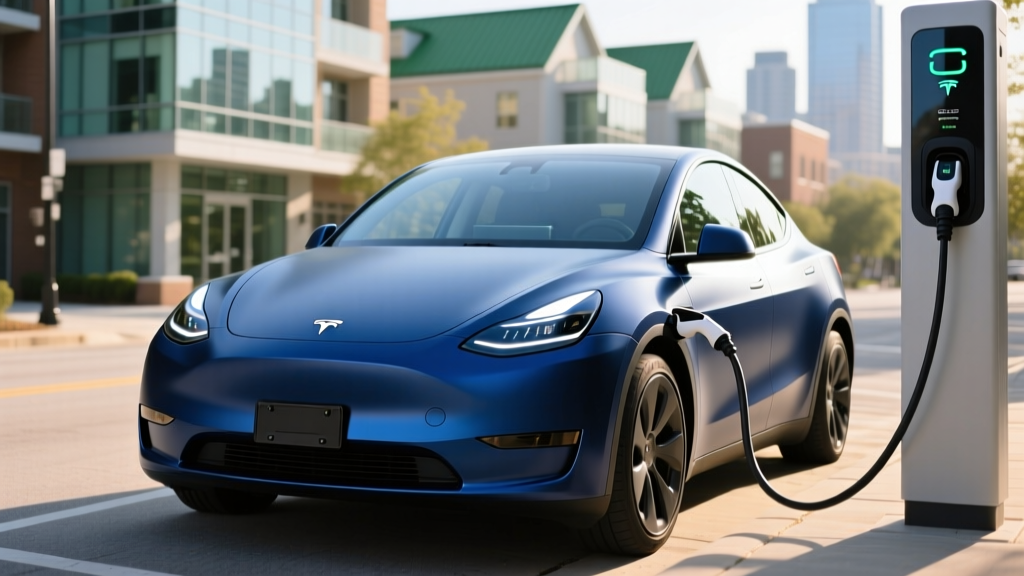
Atlanta has quietly become one of the best U.S. cities to own an electric vehicle — and the Tesla Model Y remains the default choice for many Metro Atlantans considering the switch. With a dense Supercharger network, moderate winters that preserve battery range, and a growing web of HOV-lane and utility incentives, the city is tailor-made for Tesla ownership. But does the math actually work in 2026?
This guide examines the current-year Tesla Model Y through the lens of an Atlanta-based owner: real-world range on I-75 and I-85 commutes, home-charging costs under Georgia Power rates, federal and state incentive eligibility, and how the Model Y stacks up against rivals like the Hyundai Ioniq 5 and Ford Mustang Mach-E for Peach State drivers.
2026 Tesla Model Y: Quick Verdict for Atlanta Buyers
The refreshed Model Y (internally dubbed "Juniper") entered production in early 2025 and carries over into the 2026 model year with minor software and trim updates. It remains the best-selling EV in the United States for good reason: class-leading efficiency, access to Tesla's 6,000+ North American Supercharger network, and a starting price that undercuts many competitors once the federal tax credit is applied.
For Atlanta specifically, the Model Y Long Range AWD is the sweet spot. It offers enough range to handle round-trips to Chattanooga or Macon without charging, qualifies for the full §30D credit, and fits comfortably in the city's suburban driveways and parking garages alike. The Performance trim adds thrill but sacrifices range and ride comfort — a harder sell on Atlanta's pothole-prone surface streets.
Range, Efficiency & Real-World Expectations
| Spec | Model Y Long Range AWD | Model Y Performance |
|---|---|---|
| EPA Range | 320 miles | 293 miles |
| Battery (usable) | ~75 kWh, NMC | ~75 kWh, NMC |
| MPGe (combined) | 111 MPGe | 102 MPGe |
| Efficiency | 27 kWh/100 mi | 30 kWh/100 mi |
| Drivetrain | Dual-Motor AWD | Dual-Motor AWD |
| 0–60 mph | 4.8 sec | 3.5 sec |
| Horsepower | ~384 hp | ~456 hp |
Tesla's NMC (nickel manganese cobalt) chemistry prioritizes energy density over the LFP (lithium iron phosphate) packs found in the RWD base model. The trade-off: NMC delivers more range per pound but Tesla recommends daily charging to 80% for longevity, reserving 100% for road trips. The LFP-equipped RWD variant (EPA 308 miles) can be charged to 100% daily without degradation concerns — a consideration for high-mileage commuters who need every electron.
Charging Speed: Superchargers, Home & Public Networks
| Charging Method | Power (kW) | Rate | Notes |
|---|---|---|---|
| DC Fast Charge (V4 Supercharger) | Peak 250 kW | 10–80% in ~22 min | Charge curve tapers sharply above 80%; precondition via nav |
| DC Fast Charge (non-Tesla CCS/NACS) | Up to 250 kW | 10–80% in ~25 min | Now open to Electrify America, EVgo via NACS port |
| Level 2 Home (Tesla Wall Connector) | 11.5 kW (48A) | ~44 mi/hr | Full charge in ~7 hr; requires 60A circuit |
| Level 2 Public (Destination/Workplace) | 7–19 kW | ~25–60 mi/hr | Common at Atlanta hotels, malls, offices |
| Level 1 (120V household) | ~1.4 kW | ~3–5 mi/hr | Emergency/top-up only |
Atlanta's Supercharger density is among the best in the Southeast. As of early 2026, there are over 30 Supercharger stations within the Perimeter and dozens more along I-75, I-85, and I-20 corridors. A typical Atlanta-to-Savannah trip (250 miles) requires one brief stop at the Statesboro or Pooler V4 Supercharger — roughly 15–18 minutes to add 150 miles of range.
For home charging, Georgia Power's residential rate averages ~$0.13/kWh, making a full Model Y charge cost approximately $9.75 — versus $45–55 to fill a comparable gas crossover at $3.20/gallon. Installing a Tesla Wall Connector in an Atlanta home typically runs $800–$1,500 if your panel has spare capacity; older homes in neighborhoods like Virginia-Highland or Decatur may need a $1,500–$3,000 panel upgrade to support a 60A circuit. Always get a quote from a licensed electrician before committing.
Pricing, Trims & Federal Tax Credit Eligibility
| Trim | Base MSRP | Est. §30D Credit | Effective Price |
|---|---|---|---|
| Model Y Long Range AWD | $44,990 | Up to $7,500 | ~$37,490* |
| Model Y Performance | $48,990 | Up to $7,500 | ~$41,490* |
*Effective price assumes full §30D eligibility. Destination fee ($1,390) and optional paint/wheels not included.
- MSRP Cap: SUVs/crossovers must be under $80,000 — both Model Y trims qualify.
- Buyer Income Cap: AGI ≤ $150,000 (single), $225,000 (head of household), $300,000 (joint). Check your prior-year or current-year AGI, whichever is lower.
- Battery Sourcing: Critical minerals and battery components must meet phased-in domestic/free-trade thresholds per IRS §30D rules. Tesla has progressively shifted sourcing, but eligibility can change by production batch — verify the VIN-specific credit on the IRS portal or at point of sale.
- Point-of-Sale Transfer: Since 2024, buyers can transfer the credit to the dealer for an instant price reduction rather than waiting for a tax refund.
Georgia does not currently offer a state EV purchase incentive, and the state's $214 annual EV registration fee partially offsets fuel-tax revenue loss. However, Atlanta-area EV owners can apply for the Georgia HOV/HOT lane exemption (drive solo in express lanes on I-75, I-85, and I-575) — a perk worth hundreds in toll savings annually for commuters. Check GDOT for current application requirements and the Clean Air Force decal program.
Interior, Cargo & Daily Livability
The Juniper refresh brought meaningful interior upgrades: ventilated front seats, ambient lighting, a rear-seat touchscreen for climate/media, and improved sound insulation that cuts highway drone significantly compared to pre-2025 models. Build quality from the Austin and Fremont factories has converged, with panel gaps and interior rattle complaints dropping markedly.
- Cargo (behind 2nd row): 30.2 cu ft
- Cargo (2nd row folded): 72.1 cu ft
- Frunk: 4.1 cu ft — fits a charging cable bag and a small duffel
- Front legroom: 41.8 in
- Rear legroom: 41.6 in — generous for adults on longer trips
- Towing: 3,500 lbs (braked) — adequate for a small utility trailer or a pair of jet skis, but not a large camper
For Atlanta families, the Model Y's cargo area swallows strollers, Costco runs, and weekend camping gear for North Georgia mountains trips without issue. The flat load floor and low liftover height make it practical. The panoramic glass roof is tinted but still lets in significant heat on July afternoons — a $100 aftermarket sunshade is a near-mandatory accessory in the Southeast.
Tech, Driver Assistance & Safety
The Model Y's 15.4-inch center touchscreen runs Tesla's latest software, which in 2026 includes improved navigation with real-time Supercharger stall availability, a revamped phone-as-key experience, and Dashcam/Sentry Mode with higher-resolution cameras. Over-the-air updates continue to add features post-purchase — a Tesla hallmark.
Autopilot (standard) handles adaptive cruise and lane centering competently on I-285 and GA-400. FSD Supervised ($8,000 one-time or $99/month in 2026) adds city-street navigation, stop-sign recognition, and autosteer on local roads — but Atlanta's construction zones, faded lane markings on Ponce de Leon Ave, and aggressive lane-changers still require frequent driver intervention. It's a convenience feature, not a chauffeur.
Safety ratings remain strong: the Model Y earned the NHTSA 5-Star Overall rating and the IIHS Top Safety Pick+ designation. Standard features include automatic emergency braking, blind-spot monitoring, and 8-camera surround vision.
- FSD Supervised still requires constant driver attention and performs inconsistently in heavy rain and construction zones.
- No Apple CarPlay or Android Auto — Tesla's native infotainment is the only option.
- Turn-signal stalk removal (steering-wheel buttons instead) remains polarizing and takes 1–2 weeks to build muscle memory.
- Ride quality on 20-inch Performance wheels is firm over Atlanta's uneven roads.
Pros, Cons & How It Compares
Pros
- Best-in-class Supercharger network reliability (99%+ uptime in Atlanta metro)
- Lowest cost-per-mile in its segment at Georgia Power rates
- Strong resale value relative to EV competitors
- OTA updates add features over time
- Spacious cargo and rear-seat room for the footprint
- HOV/HOT lane access in Metro Atlanta
Cons
- No phone mirroring (CarPlay/Android Auto)
- FSD is expensive and still Level 2
- Service center wait times in Atlanta can stretch 2–4 weeks for non-urgent repairs
- Minimal physical controls — everything is screen-driven
- Insurance premiums run 15–25% higher than gas equivalents in Georgia
Versus the Hyundai Ioniq 5: The Ioniq 5 charges faster (10–80% in ~18 min at 350 kW chargers) and offers CarPlay, but its public charging network (even with NACS adapter access) is less seamless than Tesla's native ecosystem. The Model Y wins on range and charging infrastructure; the Ioniq 5 wins on interior design and 800V charging speed.
Versus the Ford Mustang Mach-E: The Mach-E Extended Range AWD offers comparable range (~312 mi EPA) and a more traditional interior layout with physical knobs. However, it trails on efficiency (kWh/100mi) and lacks access to any proprietary fast-charging network comparable to Superchargers.
Warranty & Long-Term Ownership
Tesla covers the Model Y with a 4-year/50,000-mile basic warranty and an 8-year/120,000-mile battery and drive-unit warranty. The battery warranty guarantees at least 70% capacity retention over that period. Real-world data from Tesla's fleet suggests NMC packs in the Model Y degrade approximately 8–12% over the first 100,000 miles, with degradation slowing significantly thereafter. A replacement battery pack, if needed out of warranty, runs $12,000–$16,000 at current pricing — though full replacements remain rare.
For Atlanta owners planning 5+ years of ownership, the total cost of ownership remains compelling. According to fueleconomy.gov, the Model Y Long Range saves an estimated $4,500 in fuel costs over 5 years compared to the average new gasoline vehicle, even accounting for Georgia's relatively low gas prices and the state's EV registration fee.
Who Should Buy a Tesla in Atlanta?
Choose the Model Y Long Range AWD if: You commute 30+ miles daily on GA-400 or I-285, want HOV lane access, can install a Level 2 charger at home, and value the Supercharger network for weekend trips to the mountains or coast.
Choose the Model Y Performance if: You prioritize acceleration (3.5-sec 0–60) over range, drive mostly in-town, and don't mind a firmer ride on Atlanta's imperfect roads.
Look elsewhere if: You need Apple CarPlay, want physical buttons, regularly tow more than 3,500 lbs, or lack reliable home charging access (public-only charging erodes the cost advantage significantly).
Frequently Asked Questions
What is the real-world range of the Tesla Model Y in Atlanta?
Expect 260–285 miles on mixed highway driving at Georgia speeds (70–80 mph). City driving with regen braking can push closer to 300 miles. Winter range loss is mild (8–12%) thanks to Atlanta's moderate climate — far less than northern states experience.
How fast does the Model Y charge at home and on the road?
At a V4 Supercharger, the Model Y peaks at 250 kW and charges 10–80% in approximately 22 minutes. At home with a Tesla Wall Connector (11.5 kW / 48A), you'll add about 44 miles of range per hour, fully recharging overnight in roughly 7 hours.
Does the 2026 Tesla Model Y qualify for the federal EV tax credit?
Both trims fall under the $80,000 SUV MSRP cap. Buyers must meet income thresholds ($150K single / $300K joint AGI) and the vehicle's battery components and critical minerals must satisfy IRS §30D sourcing requirements, which can vary by production batch. Confirm eligibility at purchase via the IRS portal or dealer point-of-sale transfer.
Is the Tesla Model Y worth it over the Hyundai Ioniq 5 or Ford Mach-E?
For Atlanta buyers, the Model Y's Supercharger network advantage is significant — especially for road trips across the Southeast where non-Tesla DC fast-charger reliability remains inconsistent. If you rarely leave the metro area and value CarPlay or 800V ultra-fast charging, the Ioniq 5 is a strong alternative.
What are the biggest ownership costs to budget for?
Insurance runs $1,800–$2,600/year in Georgia for a Model Y (get quotes before purchasing). Georgia's $214 annual EV registration fee applies. Home charger installation runs $800–$3,000 depending on your electrical panel. Tires wear faster on EVs due to weight and instant torque — budget $1,200–$1,600 for a set of four every 25,000–35,000 miles.
How is Tesla service in Atlanta?
Tesla operates multiple service centers in the metro area (Atlanta NE, Atlanta SW, and mobile service). Urgent issues are typically addressed within a week, but non-critical cosmetic or software-related appointments can stretch 2–4 weeks. Mobile service handles many minor repairs at your home or office — a significant convenience for Atlanta professionals.