The Short Answer
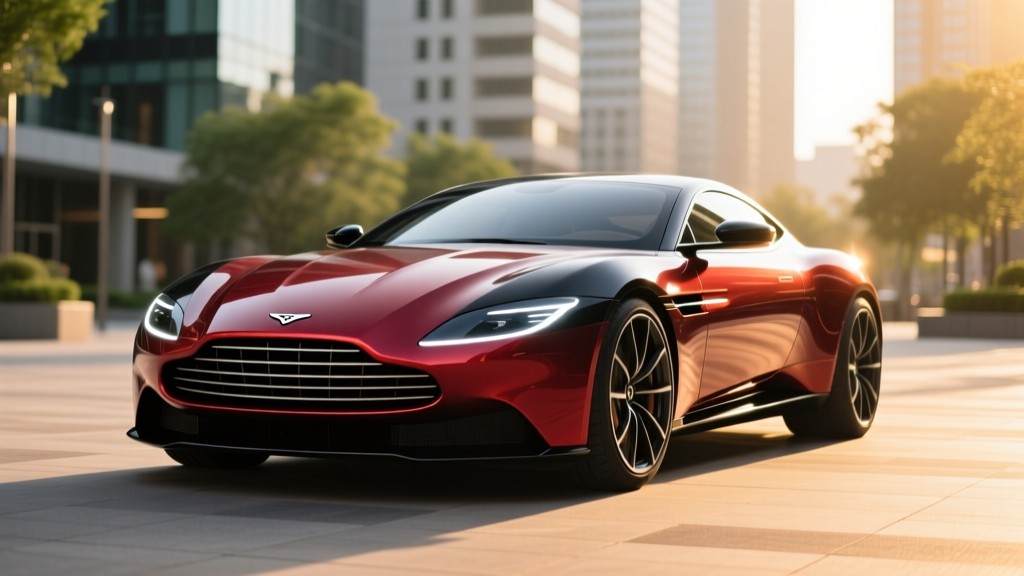
Aston Martin's first fully electric production vehicle — the Aston Martin Valour-based electric grand tourer (expected to carry a new nameplate) — is slated for delivery beginning late 2026 or early 2027. The brand has confirmed an EV built on a bespoke electric platform developed with Lucid Motors, targeting over 400 miles of range, 800+ horsepower, and a price point well above $250,000. As of early 2026, the vehicle is not yet available for purchase, and final EPA-certified specs have not been published. If you're searching for an Aston Martin electric car you can drive today, the closest option is a used or new Aston Martin paired with a separate EV for daily driving — or waiting for the confirmed production launch.
What Aston Martin Has Confirmed About Its Electric Future
Aston Martin's electrification strategy has been turbulent. The brand initially announced a partnership with Mercedes-Benz for EV technology, then pivoted in 2023 to a technology agreement with Lucid Group to develop a high-performance electric platform. Under this deal, Aston Martin will integrate Lucid's powertrain and battery technology — the same compact, high-efficiency motors and battery architecture that underpin the Lucid Air — into its own bespoke vehicle designs.
What we know as of early 2026:
- Platform: Bespoke Aston Martin architecture using Lucid electric drivetrain components
- Target range: 400+ miles (WLTP; EPA figure expected to be lower, likely 330–380 miles)
- Power output: 800+ hp (twin or tri-motor configuration expected)
- Battery chemistry: Likely NMC (nickel manganese cobalt) for energy density — typical in luxury performance EVs
- Charging architecture: 900V+ system (Lucid's architecture supports this), enabling peak DC fast charging above 300 kW
- Estimated base price: $250,000–$350,000 (based on Aston Martin's current GT pricing and executive statements)
- First deliveries: Late 2026 or 2027, pending production ramp
Aston Martin has also confirmed that its first EV will be a grand tourer rather than an SUV, staying true to the brand's GT heritage. A high-performance electric SUV is expected to follow by 2028–2029.
How an Aston Martin EV Compares to Gas GTs and Luxury EVs
Buyers considering an Aston Martin electric car are typically cross-shopping two categories: traditional luxury grand tourers (Aston Martin DB12, Bentley Continental GT, Ferrari Roma) and high-end electric performance vehicles (Lucid Air Sapphire, Porsche Taycan Turbo GT, Tesla Model S Plaid). Here's how the expected Aston Martin EV stacks up against current benchmarks:
| Spec | Aston Martin EV (Est.) | Aston Martin DB12 (Gas) | Lucid Air Sapphire | Porsche Taycan Turbo GT |
|---|---|---|---|---|
| Powertrain | Tri-motor BEV | 4.0L Twin-Turbo V8 | Tri-motor BEV | Dual-motor BEV |
| Horsepower | ~800+ hp | 671 hp | 1,234 hp | 1,019 hp (Launch Control) |
| 0–60 mph | ~2.8 sec (est.) | 3.5 sec | 1.89 sec | 2.1 sec |
| Range | ~350 mi (EPA est.) | ~340 mi (16.9 gal tank) | 427 mi (EPA) | 269 mi (EPA) |
| Fuel/Charging Cost per Mile | ~$0.05–$0.08 | ~$0.28–$0.35 | ~$0.04–$0.07 | ~$0.05–$0.08 |
| Starting Price | ~$275,000 (est.) | $245,000 | $249,000 | $230,000 |
Note: Aston Martin EV specs are preliminary estimates based on Lucid platform capabilities and executive statements. Final EPA-certified figures will differ.
The comparison reveals a core tension: the Aston Martin EV will likely match or exceed the DB12 in straight-line performance while offering dramatically lower per-mile energy costs. However, it enters a luxury EV segment where the Lucid Air Sapphire — using the same underlying technology — delivers more horsepower and verified range for less money. The Aston Martin's value proposition rests on design, brand cachet, bespoke interior craftsmanship, and exclusivity rather than spec-sheet dominance.
Real Costs and Savings: Ownership Economics
At the $250,000+ price tier, total cost of ownership calculations shift. Buyers at this level are less focused on fuel savings and more concerned with depreciation, maintenance, insurance, and the practicalities of high-end EV ownership. Here's a realistic breakdown:
| Cost Category (5-Year) | Aston Martin EV (Est.) | Aston Martin DB12 (Gas) | Notes |
|---|---|---|---|
| Purchase Price | $275,000 | $245,000 | EV expected to carry a premium |
| Energy/Fuel (75,000 mi) | $3,750–$6,000 | $21,000–$26,250 | Based on $0.15/kWh home charging vs. $4.00/gal premium |
| Maintenance | $3,000–$5,000 | $8,000–$12,000 | No oil changes, fewer brake replacements (regen), but tire costs remain high |
| Insurance (Annual Avg) | $7,500–$12,000 | $6,000–$9,500 | EV insurance premiums are typically 15–30% higher for luxury vehicles |
| Estimated Depreciation | $110,000–$150,000 | $95,000–$130,000 | Luxury EVs depreciate steeply; Aston Martin's brand may help retain value |
| 5-Year Total (approx.) | $436,000–$508,000 | $405,000–$462,750 |
Federal tax credit: The §30D new clean vehicle credit offers up to $7,500, but it applies only to vehicles with an MSRP at or below $80,000 for SUVs, pickups, and vans, or $55,000 for sedans and other body styles (source: IRS). An Aston Martin EV priced above $250,000 will not qualify for the federal purchase credit. State incentives vary but are similarly capped.
Charging Cost Reality
With an estimated 110–120 kWh battery pack (consistent with Lucid's large-pack configuration), a full home charge at the US average of $0.16/kWh would cost roughly $17.60–$19.20. At 350 miles of range, that's approximately $0.05 per mile — compared to the DB12's premium-fuel cost of roughly $0.30 per mile at 18 mpg combined and $4.00/gallon.
Public DC fast charging is more expensive. Networks like Electrify America and EVgo charge $0.40–$0.60/kWh in many markets, pushing per-mile cost to $0.12–$0.18 — still below gasoline but erasing much of the home-charging advantage if you rely exclusively on public charging.
Real-World Ownership Considerations
Home Charging: A Prerequisite at This Price Point
An Aston Martin EV owner will almost certainly have access to home charging — likely a dedicated Level 2 (240V) circuit in a private garage. At 11.5–19.2 kW (the typical range for high-end home chargers), a depleted 120 kWh battery would recharge fully in 6–10 hours, meaning overnight replenishment is trivial.
Installation of a 60-amp dedicated circuit with a hardwired Level 2 charger typically runs $1,200–$3,500 depending on panel proximity and local permitting. If your electrical panel requires a 200-amp upgrade, add $2,000–$5,000. At this vehicle's price point, charging infrastructure is a rounding error — but it must be in place before delivery.
Cold-Weather Range Loss
All EVs lose range in cold temperatures. Based on testing data from similar large-battery luxury EVs, expect 15–30% range reduction at temperatures below 32°F, depending on cabin heating use and whether the vehicle has a heat pump. A 350-mile EPA estimate could drop to 245–295 miles in harsh winter conditions. Preconditioning the battery while plugged in mitigates this and also improves charging speed at DC fast chargers.
Charging Speed and Road Trips
Lucid's 900V+ architecture enables exceptional DC fast charging performance. The Air Grand Tourer peaks at approximately 300 kW and charges from 10–80% in roughly 20–25 minutes. If Aston Martin adopts the same powertrain, expect similar figures:
- Peak DC charge rate: ~300 kW
- 10–80% charge time: ~20–25 minutes
- Miles added in 15 minutes: ~200–250 miles
- Connector: NACS (Tesla standard) or CCS — Aston Martin has not confirmed; NACS adoption is industry-wide by 2025–2026
On a 500-mile road trip, you'd need one 20-minute fast-charge stop. This is competitive with the Porsche Taycan's charging performance and significantly faster than most 400V-architecture EVs.
Common Misconceptions About Luxury EVs
| Myth | Fact |
|---|---|
| "EV batteries need replacing every 5–8 years" | Modern NMC and LFP batteries are warrantied for 8 years/100,000 miles (minimum federal requirement). Real-world degradation data from Tesla, Lucid, and Hyundai shows most packs retain 85–92% capacity at 100,000 miles. Full replacement is rare and typically covered under warranty. |
| "An Aston Martin EV will qualify for the $7,500 tax credit" | The §30D credit has an MSRP cap of $55,000 for sedans and $80,000 for SUVs/trucks. A $250,000+ Aston Martin is categorically ineligible. |
| "Electric grand tourers can't match V8 character" | EVs deliver instant torque and sub-3-second 0–60 times — objectively faster than most V8 GTs. The trade-off is sound and emotional engagement, which is subjective. Many luxury EV makers add synthetic audio profiles. |
| "I can charge anywhere on a road trip" | While the DC fast-charging network has expanded significantly, charging deserts persist in rural areas of the Mountain West, Great Plains, and parts of the South. Route planning remains necessary for long trips outside major corridors. |
| "Maintenance-free means no service costs" | EVs eliminate oil changes, spark plugs, and transmission fluid. But tires wear faster due to vehicle weight and instant torque, cabin air filters need replacement, brake fluid requires periodic flushing, and software/hardware service visits still occur. Budget $600–$1,000/year minimum. |
Decision Framework: Should You Wait, Cross-Shop, or Buy Now?
Choose Your Path
Wait for the Aston Martin EV if:
- You are a current Aston Martin owner or have a standing relationship with a dealer and want to stay within the brand
- Exclusivity and bespoke design matter more than having the best spec sheet in the segment
- You already have a daily-driver EV and are adding a grand tourer to a multi-car garage
- You're comfortable with a $250,000+ purchase with no federal tax incentive
Cross-shop the Lucid Air Sapphire instead if:
- You want verified 427-mile EPA range and 1,234 hp today, not in 2027
- Performance-per-dollar is a priority — the Sapphire delivers supercar acceleration at $249,000
- You want access to the Tesla Supercharger network now (Lucid includes a NACS adapter)
Consider the Porsche Taycan Turbo GT if:
- Track capability and Porsche's dealer/service network are important
- You value an established EV platform with real-world reliability data
- 269 miles of EPA range and a $230,000 price point fit your needs
Stick with the Aston Martin DB12 (gas) if:
- V8 sound, analog engagement, and proven long-distance GT touring are your priorities
- You frequently drive in areas with sparse DC fast-charging infrastructure
- You're not ready to invest in home Level 2 charging or adjust road-trip habits
What First-Time Luxury EV Buyers Must Know
If the Aston Martin EV would be your first electric vehicle, several ownership realities deserve attention before you place a deposit:
- Home charging is non-negotiable for satisfaction. Relying solely on public charging at this price point is frustrating, expensive, and time-consuming. Confirm your garage can support a 60-amp, 240V dedicated circuit before committing.
- Depreciation on luxury EVs is steep and uncertain. Early data on high-end EVs (Porsche Taycan, Lucid Air, Mercedes EQS) shows 40–55% value loss over three years. Aston Martin's limited-production approach may soften this, but plan for significant depreciation.
- Insurance will be higher than your current GT. EV repair costs, battery replacement risk, and limited collision-shop expertise push luxury EV insurance premiums 15–30% above equivalent gas vehicles. Get a quote before ordering.
- Tire costs are real. A luxury GT EV weighing 5,000+ pounds with 800 hp will consume tires aggressively. Expect to replace a set of high-performance tires ($2,000–$4,000) every 15,000–25,000 miles depending on driving style.
- Software updates and connectivity matter. Modern EVs receive over-the-air updates that can alter range estimates, charging behavior, and feature availability. Understand the brand's update philosophy and connectivity requirements.
Frequently Asked Questions
When can I actually buy an Aston Martin electric car?
Aston Martin has confirmed its first EV will begin production in late 2025 with deliveries expected in 2026–2027. Reservations or expressions of interest may be available through authorized dealers. Final specs and pricing have not been published as of early 2026.
Will the Aston Martin EV use Tesla Superchargers?
This has not been confirmed. However, by 2025–2026, nearly all major automakers have adopted or committed to NACS (the Tesla charging connector), granting access to the Supercharger network. It is highly likely the Aston Martin EV will support NACS either natively or via adapter.
How does the Lucid partnership affect reliability and service?
Lucid's powertrain technology is proven in the Air sedan, which has been in production since 2021. However, Aston Martin will handle vehicle integration, software, and dealer service. Service infrastructure for a low-volume luxury brand will be limited to authorized Aston Martin dealerships — plan accordingly if you don't live near one.
Is the Aston Martin EV a good investment compared to a limited-edition gas Aston?
Limited-edition gas Astons (e.g., Valhalla, Valkyrie) have shown collector appreciation. First-edition EVs from luxury brands have not yet established a collector market. Treat the EV as a purchase for driving enjoyment, not as an appreciating asset.
What battery warranty should I expect?
Federal law mandates a minimum 8-year/100,000-mile warranty on EV battery packs. Most luxury manufacturers match or exceed this. Aston Martin has not published specific warranty terms for its EV; expect at least 8 years with a capacity retention threshold of 70–75%.