The Reliability Question: What the Data Actually Shows
If you've spent any time in EV forums or comment sections, you've seen the debate: are Teslas reliable? The answer depends entirely on which Tesla you're talking about, what you define as "reliable," and whether you're measuring mechanical durability or software stability. After tracking owner surveys, warranty claims, and real-world ownership data through 2026, the picture is more nuanced than either the fanbase or the critics will admit.
Tesla's powertrain reliability — the battery, motors, and single-speed reduction gear — is genuinely excellent. These components have fewer moving parts than any internal combustion engine, and Tesla's 8-year battery warranties reflect that confidence. But build quality, panel gaps, interior rattles, and software glitches remain legitimate pain points that vary by model year and factory. The Fremont-built vehicles historically show more fit-and-finish issues than Shanghai or Berlin output, though the gap has narrowed significantly since the 2024 refresh cycle.
Consumer Reports' 2025 reliability survey placed Tesla in the middle of the pack — not the disaster some headlines suggest, but not the class leader either. JD Power's Initial Quality Study tells a similar story: Tesla ranks below Lexus and Porsche but above several legacy automakers still working through their own EV growing pains. The key insight? Most Tesla "reliability" complaints aren't about the car breaking down — they're about cosmetic defects, touchscreen lag, and the frustration of depending on a single service network that can be slow to schedule.
2026 Tesla Model 3: Specs, Range, and Real-World Performance
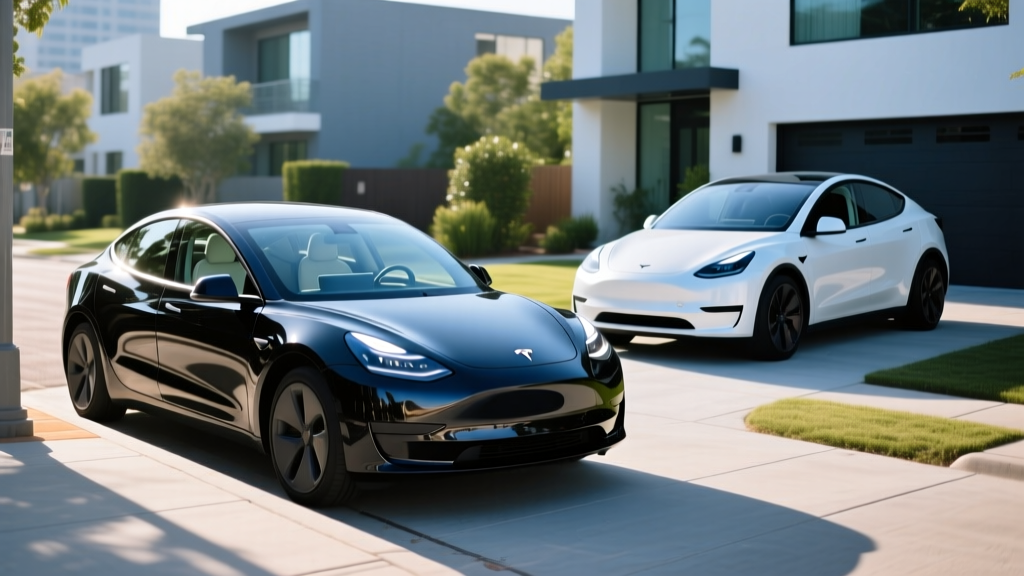
The refreshed Model 3 (internally called "Highland" and updated again for 2026) remains Tesla's volume sedan and the most common entry point for new EV buyers. Here's what the numbers look like across the current lineup:
| Spec | RWD | Long Range AWD | Performance |
|---|---|---|---|
| EPA Range | 272 mi | 363 mi | 315 mi |
| Battery (usable) | ~57 kWh LFP | ~75 kWh NMC | ~75 kWh NMC |
| MPGe (combined) | 132 MPGe | 131 MPGe | 125 MPGe |
| kWh/100 mi | 25 | 26 | 27 |
| 0-60 mph | 5.8 sec | 4.2 sec | 2.9 sec |
| Horsepower | 271 hp | 346 hp | 510 hp |
| Drivetrain | RWD | Dual-Motor AWD | Dual-Motor AWD |
| Base MSRP | $38,990 | $47,740 | $54,990 |
Charging Speed: DC Fast and Home Level 2
| Charge Type | Peak Power | Speed | Time |
|---|---|---|---|
| DC Fast Charge (NACS) | 170 kW (RWD) / 250 kW (LR/Perf) | ~175 mi added in 15 min (LR) | 10-80% in ~25 min (LR) |
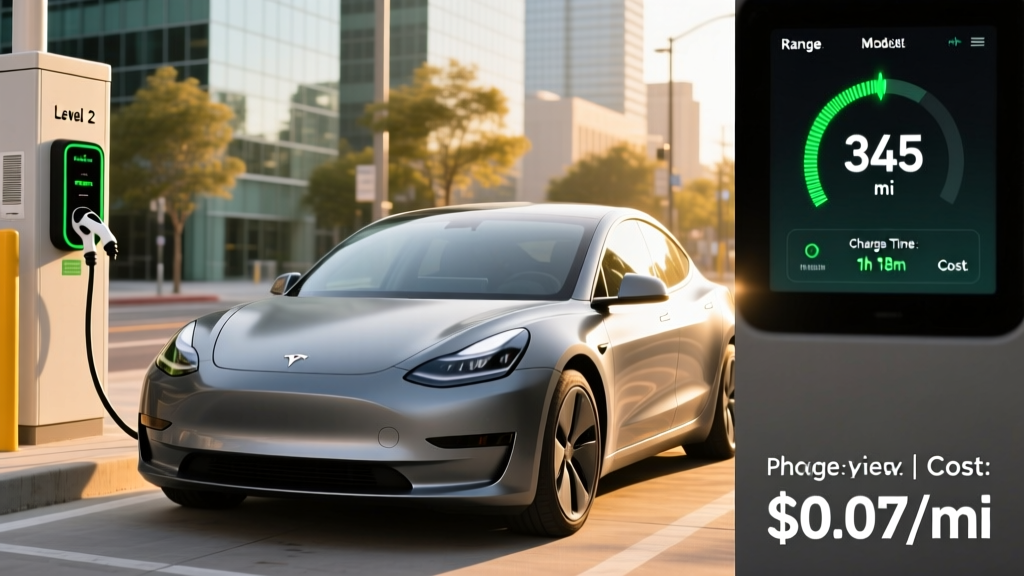
| Level 2 Home (48A) | 11.5 kW | ~44 mi/hr | 0-100% in ~8 hours |
| Level 1 (120V) | ~1.4 kW | ~3-4 mi/hr | Overnight top-up only |
The Model 3's charging curve is well-managed. The Long Range peaks at 250 kW but sustains above 200 kW only up to roughly 35% state of charge, then tapers progressively. You won't see 250 kW for the full session — that's physics, not a Tesla flaw. Preconditioning the battery via navigation routing to a Supercharger is essential for hitting peak rates; skip it and your first 10 minutes will be noticeably slower.
Interior, Cargo, and Technology
The 2026 Model 3 interior is minimalist by design — a 15.4-inch touchscreen handles nearly everything, including glovebox release and mirror adjustments. The rear touchscreen added in the refresh gives passengers climate and entertainment control. Cargo space is 23 cu ft behind the rear seats plus a 3.1 cu ft frunk. Rear legroom is 35.3 inches — adequate for adults on shorter trips, tight for anyone over 6 feet on longer drives.
Tesla's Autopilot comes standard and is genuinely one of the better Level 2 driver-assist systems available — lane centering is smooth, and adaptive cruise handles stop-and-go traffic competently. Full Self-Driving (Supervised) remains a $8,000 option and is emphatically not autonomous driving. You must keep your hands on the wheel and eyes on the road. Tesla's camera-only vision approach has improved, but still struggles with construction zones, faded lane markings, and heavy rain.
2026 Tesla Model Y: The Best-Selling EV Under the Microscope
The Model Y is the vehicle most buyers are actually cross-shopping, and its reliability profile mirrors the Model 3 with one important difference: the Austin-built Juniper refresh (2025+) shows measurably better build quality than earlier Fremont output. Panel gaps are tighter, rattles are fewer, and the revised suspension eliminates the crashy ride that plagued pre-2024 models.
| Spec | RWD | Long Range AWD | Performance |
|---|---|---|---|
| EPA Range | 277 mi | 330 mi | 300 mi |
| Battery (usable) | ~57 kWh LFP | ~75 kWh NMC | ~75 kWh NMC |
| MPGe (combined) | 127 MPGe | 122 MPGe | 117 MPGe |
| 0-60 mph | 6.2 sec | 4.8 sec | 3.5 sec |
| Horsepower | 271 hp | 384 hp | 456 hp |
| Base MSRP | $44,990 | $49,990 | $54,990 |
Cargo capacity is where the Model Y earns its keep: 30.2 cu ft behind the second row, 72.1 cu ft with seats folded, plus a 4.1 cu ft frunk. The optional third row adds two seats suitable only for small children, and deletes nearly all rear cargo space when deployed. For families who need the third row regularly, a Kia EV9 or Rivian R1S is the better tool.
Federal Tax Credit Eligibility: What You'll Actually Pay
The IRS §30D federal EV tax credit remains a moving target, and Tesla's eligibility depends on the specific model, your income, and battery-sourcing requirements that tighten annually. Here's where things stand for 2026:
| Requirement | Model 3 RWD | Model 3 LR / Perf | Model Y (all trims) |
|---|---|---|---|
| MSRP Cap (cars: $55k, SUVs: $80k) | ✅ Under $55k | ✅ Under $55k | ✅ Under $80k (SUV class) |
| Income Cap (single: $150k / joint: $300k) | Buyer-dependent | Buyer-dependent | Buyer-dependent |
| Battery Sourcing (critical minerals) | Partial — varies by batch | Partial — varies by batch | Partial — varies by batch |
| Maximum Potential Credit | Up to $3,750 | Up to $3,750 | Up to $3,750 |
| Point-of-Sale Transfer | ✅ Available | ✅ Available | ✅ Available |
Critical caveat: Battery-sourcing and critical-mineral requirements have tightened significantly since 2024. Many Tesla vehicles now qualify for only $3,750 of the potential $7,500 credit, not the full amount. The credit is non-refundable — you must have sufficient tax liability to claim it, or use the point-of-sale transfer to apply it as a down-payment reduction. Always verify current eligibility with your tax professional before purchasing, as these rules shift with regulatory guidance.
Warranty and Long-Term Durability
Tesla's warranty structure is straightforward and competitive with the broader EV market:
- Basic Vehicle: 4 years / 50,000 miles
- Battery & Drive Unit (RWD): 8 years / 100,000 miles, minimum 70% capacity retention
- Battery & Drive Unit (AWD/Performance): 8 years / 120,000 miles, minimum 70% capacity retention
The 70% retention threshold is standard across the industry. In practice, Tesla's NMC batteries degrade roughly 8-12% over the first 100,000 miles based on fleet data, with the steepest drop occurring in the first 20,000 miles before leveling off. LFP batteries (in RWD models) show slower degradation overall and can be charged to 100% daily without the longevity concerns that apply to NMC chemistry — a meaningful advantage for high-mileage commuters.
Outside the powertrain, the 4-year/50,000-mile basic warranty is shorter than Hyundai's 5-year/60,000-mile or Kia's 5-year/60,000-mile coverage. If you plan to keep the vehicle beyond four years, budget for out-of-warranty repairs on components like the touchscreen, window regulators, and suspension — items that Tesla service centers do see regularly.
Reliability Verdict: What Breaks, What Doesn't
Where Tesla Excels
- Battery and motor durability — very few catastrophic failures before 150k miles
- Over-the-air updates fix bugs and add features without dealer visits
- Supercharger network remains the most reliable public charging infrastructure in North America
- Heat pump standard on all trims — efficient cold-weather cabin heating
- Low routine maintenance cost — no oil, filters, spark plugs, or transmission fluid
Where Tesla Falls Short
- Build quality inconsistency — panel gaps, paint defects, and interior rattles vary unit to unit
- Service center wait times can stretch to weeks in metro areas
- Camera-only Autopilot/FSD still struggles in adverse weather and construction zones
- No physical controls for common functions (wipers, glovebox, mirror adjust) frustrates some drivers
- Insurance premiums run 15-30% higher than comparable non-Tesla EVs in most states
Is a Tesla Worth It vs. the Competition?
The honest answer: it depends on what you prioritize. If you value charging infrastructure, software sophistication, and performance-per-dollar, Tesla still leads. The Supercharger network is a genuine competitive moat — even as other networks expand, EPA data and owner surveys consistently show Tesla owners report higher charging satisfaction.
But if build quality, dealer service accessibility, and physical controls matter more to you, the Hyundai Ioniq 6, BMW i4, and Ford Mustang Mach-E are compelling alternatives with stronger initial-quality track records. The Model Y faces its stiffest competition from the Hyundai Ioniq 5, Kia EV6, and the refreshed Ford Mach-E — all of which now offer NACS compatibility for Supercharger access starting in 2025.
Who Should Buy a Tesla in 2026?
Choose Tesla if: You want access to the most reliable DC fast-charging network, value over-the-air software updates, commute 30+ miles daily (where LFP's 100% daily charge tolerance shines), and are comfortable with a touchscreen-first interface.
Look elsewhere if: You live far from a Tesla service center, prefer physical buttons and knobs, need guaranteed dealer service turnaround, or want the full $7,500 tax credit without sourcing-requirement uncertainty.
Frequently Asked Questions
Are Tesla batteries reliable long-term?
Yes. Fleet data shows Tesla's NMC batteries retain approximately 88-92% capacity at 100,000 miles, and LFP batteries degrade even more slowly. Catastrophic battery failure requiring full replacement is rare — well under 1% of vehicles based on warranty claim data. The 8-year warranty provides a meaningful safety net.
How much does it cost to maintain a Tesla?
Tesla's routine maintenance is minimal: cabin air filter replacement every 2 years (~$60-100), tire rotation every 6,250 miles (~$50), brake fluid check every 2 years, and wiper blades as needed. Expect $300-500 annually — roughly one-third the cost of maintaining a comparable gas vehicle. The regenerative braking system extends pad life significantly; many owners report 80,000+ miles on original brake pads.
Do Teslas hold their value?
Depreciation has been Tesla's weakest financial metric since 2023's aggressive price cuts reset the used market. A 2024 Model 3 Long Range purchased at ~$48,000 is worth approximately $30,000-33,000 at three years and 36,000 miles — roughly 60-65% retention. That's below the Toyota and Lexus EV average but comparable to most luxury EVs. If you're buying new and keeping the car 7+ years, depreciation matters less than if you trade every three years.
Is Tesla's service network adequate?
This is Tesla's most consistent complaint. Major metro areas have multiple service centers, but wait times for non-emergency work can stretch 2-4 weeks. Rural owners may face 100+ mile drives to the nearest center. Tesla's mobile service handles many issues (software, minor hardware, 12V battery replacement) at your home or office, but it can't address structural, suspension, or high-voltage work. If you live outside a metro area, verify service center proximity before purchasing.
Does the Model Y qualify for the full $7,500 tax credit?
As of 2026, most Model Y configurations qualify for up to $3,750 — not the full $7,500 — due to battery critical-mineral sourcing requirements. Your personal eligibility also depends on adjusted gross income (under $150,000 single / $300,000 joint) and the vehicle's MSRP (the Model Y's $80,000 SUV cap provides more headroom than the Model 3's $55,000 car cap). The credit can be transferred to the dealer at point of sale as a down-payment reduction. Always confirm current eligibility with IRS guidelines and a tax professional.