The 'Bulletproof' Claim: What Tesla Actually Promises
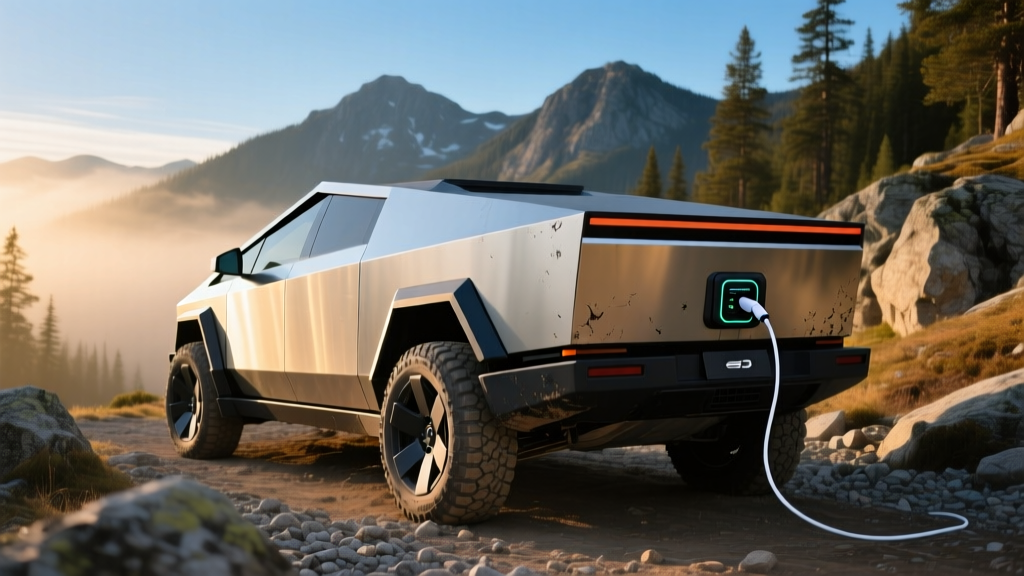
When Tesla unveiled the Cybertruck, the word "bulletproof" dominated headlines — from the stainless steel exoskeleton to the "armor glass" windows that famously cracked during the 2019 reveal. Now, with the 2026 Cybertruck firmly in production and on roads, the question persists: are Teslas bulletproof, and does the Cybertruck actually deliver on its armored marketing?
The short answer: No Tesla is fully bulletproof. The Cybertruck's 30X cold-rolled ultra-hard stainless steel body panels and laminated armor glass offer genuine resistance to small-arms fire and blunt impacts that would destroy a conventional vehicle. But "bulletproof" is a spectrum, not a binary, and real-world durability involves far more than ballistic resistance. Let's break down what the Cybertruck actually withstands — and where it falls short — alongside the range, charging, and ownership data that matter for buyers.
2026 Cybertruck: Full Spec Breakdown
| Spec | AWD (Dual-Motor) | Cyberbeast (Tri-Motor) |
|---|---|---|
| EPA Range | 340 miles | 320 miles |
| Battery (usable) | ~123 kWh, NMC | ~123 kWh, NMC |
| 0-60 mph | 3.9 sec | 2.6 sec |
| Horsepower | 600 hp | 845 hp |
| Drivetrain | Dual-motor AWD | Tri-motor AWD |
| Max DC Fast Charge | 250 kW (peak) | 250 kW (peak) |
| 10-80% DC Charge | ~30 min | ~30 min |
| Level 2 Home Charge | 11.5 kW (~37 mi/hr) | 11.5 kW (~37 mi/hr) |
| Efficiency | 56 MPGe / 60 kWh/100mi | 53 MPGe / 63 kWh/100mi |
| Towing Capacity | 11,000 lbs | 11,000 lbs |
| Cargo (bed + frunk) | ~67 cu ft bed + ~7 cu ft frunk | ~67 cu ft bed + ~7 cu ft frunk |
| Base MSRP | $79,990 | $99,990 |
Source: Tesla Cybertruck specs and fueleconomy.gov EPA data, 2026 model year.
Armor, Steel, and Glass: The Durability Truth
The Cybertruck's exoskeleton is made from 30X cold-rolled ultra-hard stainless steel — a material Tesla claims is harder than conventional automotive steel and resistant to dents, scratches, and corrosion. In independent tests and owner reports, the body panels have shrugged off impacts from baseballs, hail, and minor collisions that would crease an aluminum or mild-steel body.
On the ballistic front, Tesla demonstrated during development that the stainless panels can stop 9mm rounds at close range. However, the vehicle has not been independently certified to any NIJ (National Institute of Justice) ballistic rating. The armor glass — a polymer-laminated composite — resisted the steel-ball drop test in subsequent demonstrations, though the original 2019 reveal showed it cracking under impact. Production models use an improved lamination process, but Tesla does not claim the glass is bulletproof, only "ultra-strong."
- It is not rated to any military or NIJ ballistic armor standard.
- The undercarriage, wheel wells, and suspension components are not armored.
- The armor glass resists impacts but can still crack under concentrated force.
- Stainless panels resist dents but show fingerprints, scratches from abrasive contact, and are difficult/expensive to repair if severely deformed.
For daily ownership, the real durability win is corrosion resistance and dent prevention. Stainless steel doesn't rust like conventional bodies, and the unpainted finish eliminates clear-coat peeling and paint chips. But panel repair after a significant collision is a specialized, costly process — few body shops have the tooling for ultra-hard stainless.
Real-World Range: Beyond the EPA Sticker
Real-world expectations based on owner data and testing:
- Highway (70-75 mph): ~270-290 miles — the angular, flat-body design creates substantial aerodynamic drag at speed.
- City/suburban mixed: ~310-330 miles — regenerative braking recovers energy in stop-and-go driving.
- Cold weather (below 32°F): ~220-260 miles — battery chemistry loses efficiency, and cabin heating draws significant power. The Cybertruck's heat pump helps, but the large cabin volume demands energy.
- Towing (loaded trailer): ~150-180 miles — the 11,000-lb capacity is impressive, but towing obliterates range in any EV.
The Cybertruck's wedge shape is visually striking but aerodynamically costly. Its drag coefficient is substantially higher than a Model Y or Rivian R1T, which is why highway efficiency drops to roughly 60-63 kWh/100 miles — among the least efficient EVs on the market. If your commute is mostly highway at 75+ mph, budget for 260 usable miles between charges, not the 340 on the window sticker.
Charging Speed and Infrastructure
| Level | Power | Speed | Use Case |
|---|---|---|---|
| Level 1 (120V) | ~1.4 kW | ~4-5 mi/hr | Emergency/top-up only |
| Level 2 (240V, 48A) | 11.5 kW | ~37 mi/hr | Daily home charging (overnight full charge) |
| DC Fast Charge | 250 kW peak | 10-80% in ~30 min | Road trips, Supercharger network |
The Cybertruck uses the NACS (North American Charging Standard) connector natively — Tesla's own plug, now adopted industry-wide. At a V3 or V4 Supercharger, it peaks near 250 kW, but the charge curve tapers significantly above 60% state of charge. Expect the 10-80% session to average closer to 150-170 kW sustained, which is why the full 70% fill takes ~30 minutes rather than the ~18 minutes a peak-only calculation would suggest.
At home on a Wall Connector with a 60A circuit (48A continuous), you'll add roughly 37 miles of range per hour — enough to fully replenish the ~123 kWh battery in about 11-12 hours from near-empty. Most owners charge overnight and start each day near-full, making home charging the backbone of Cybertruck ownership.
One practical note: the Cybertruck's large battery and 800V-capable architecture mean it benefits from high-amperage home circuits. If your electrical panel is maxed at 100A, a panel upgrade to 200A (typically $1,500-$3,000) may be necessary before installing a 60A charger circuit.
Pricing, Tax Credits, and Ownership Cost
| Trim | Base MSRP | Federal Credit (§30D) | Effective Price |
|---|---|---|---|
| AWD (Dual-Motor) | $79,990 | $0 | $79,990 |
| Cyberbeast (Tri-Motor) | $99,990 | $0 | $99,990 |
Neither Cybertruck trim qualifies for the federal §30D clean vehicle credit. The reason: the credit caps eligible pickup trucks at an MSRP of $80,000, and only the AWD trim's base price squeaks in — but once you add any options, destination fees, or the mandatory paint/protective-film packages, the as-tested price exceeds $80,000 and disqualifies it. The Cyberbeast at $99,990 is well above the cap regardless.
Additionally, §30D imposes buyer income limits ($150,000 single / $300,000 joint filers for 2026) and battery critical-mineral sourcing requirements that shift annually. Even if the AWD base model technically meets the MSRP cap, the battery sourcing requirement may reduce the credit to $3,750 or eliminate it entirely depending on the production batch. Always verify current eligibility on fueleconomy.gov before purchasing.
For buyers seeking a Tesla truck with potential credit eligibility, the base AWD at strict MSRP with zero add-ons is the only narrow path — and realistically, most buyers configure above the cap.
Technology, Interior, and Daily Livability
The Cybertruck interior is minimalist even by Tesla standards: an 18.5-inch front touchscreen handles all vehicle functions, navigation, and entertainment, with a 9.4-inch rear screen for passengers. There are no physical buttons — climate, mirrors, and glovebox are all screen-controlled, which draws polarizing reactions from owners.
Driver assistance includes Tesla's Autopilot (SAE Level 2) as standard, with Full Self-Driving (Supervised) available as a $8,000 option or $99/month subscription. FSD remains a Level 2 system — the driver must maintain steering-wheel contact and visual attention at all times. It handles highway lane-keeping, on-ramp merges, and some city intersections competently, but it is not autonomous driving.
Tesla Autopilot and FSD (Supervised) require continuous driver supervision. The system can steer, accelerate, and brake, but the driver is legally and practically responsible for all driving decisions. Hands-free systems like GM Super Cruise (on mapped highways) offer similar Level 2 capability with eye-tracking rather than steering-wheel torque detection.
Cargo practicality is a mixed story. The 6-foot composite bed with powered tonneau cover is weatherproof and lockable — a genuine advantage over open-bed trucks. The 7-cu-ft front trunk (frunk) adds secure storage. But the bed's width between wheel wells is narrow, and the angular bed walls don't accommodate standard 4x8 sheets of plywood flat. The 11,000-lb tow rating is competitive with full-size gas trucks, but expect 150-180 miles of range while towing a loaded trailer.
Passenger space is adequate but not generous: rear legroom measures ~38 inches, and the rear bench is relatively upright compared to a Ford F-150 or Rivian R1T. Six-foot-tall adults fit, but long road trips in the rear seat aren't luxurious.
Cybertruck vs. Rivian R1T vs. Ford F-150 Lightning
The Cybertruck competes in a small but growing electric pickup segment. Here's how it stacks up against key rivals on the metrics that matter:
- Range: Cybertruck AWD (340 mi EPA) edges the Rivian R1T Dual-Motor Max (352 mi) and F-150 Lightning Extended Range (320 mi). But real-world highway range favors the R1T's more aerodynamic shape.
- Charging: Lightning charges faster on DC (peak ~230 kW but a flatter curve, ~25 min 10-80%). Cybertruck's 30 min is competitive but not class-leading.
- Price: F-150 Lightning starts around $55,000 and qualifies for the $7,500 federal credit on eligible trims — a massive $25,000+ effective price gap vs. Cybertruck.
- Utility: Lightning offers a 6.5-ft bed with wider wheel wells (fits plywood flat), a massive 14-cu-ft frunk, and Pro Power Onboard (V2L). Cybertruck's bed is narrower, and its frunk is smaller.
- Durability: Cybertruck's stainless exoskeleton is unique — no competitor offers equivalent dent and corrosion resistance. But repair costs after major damage are higher and fewer shops can service it.
Who Should Buy the Cybertruck (and Who Shouldn't)
- You want a statement vehicle with unmatched exterior durability and corrosion resistance.
- You value Supercharger network access for road-trip towing (with range planning).
- You prioritize acceleration and performance in a pickup (2.6 sec 0-60 in Cyberbeast).
- You have home Level 2 charging and don't need sub-$60K pricing.
- You need federal tax credit eligibility ($7,500 savings).
- You regularly haul 4x8 sheets, use bed-mounted accessories, or need maximum cargo versatility.
- You want a more conventional, serviceable truck with widespread dealer support.
- Real-world highway efficiency matters (Lightning and R1T are more aerodynamic).
Warranty and Long-Term Ownership
Tesla covers the Cybertruck with a 4-year/50,000-mile basic vehicle warranty and an 8-year/120,000-mile battery and drive unit warranty — with a capacity retention threshold of 70% during the warranty period. If the battery degrades below 70% state of health within 8 years/120K miles, Tesla replaces or refurbishes it at no cost.
The stainless body panels theoretically outlast any painted vehicle, but the armor glass, powered tonneau mechanism, steer-by-wire system, and 48V electrical architecture are all first-generation technology with limited long-term reliability data. Early production Cybertrucks have seen recalls for accelerator pedal trim detachment, windshield wiper failures, and tonneau cover alignment — typical first-year issues, but worth monitoring.
Insurance costs are notably high: expect $3,000-$4,500 annually depending on your profile, driven by the Cybertruck's repair complexity, high MSRP, and performance capability.
Frequently Asked Questions
Are Teslas bulletproof?
No Tesla vehicle is certified bulletproof to any military or NIJ standard. The Cybertruck's stainless steel body panels can resist small-caliber rounds (9mm) in controlled tests, and the armor glass resists impacts that would shatter conventional automotive glass. But the undercarriage, suspension, and glass edges remain vulnerable, and Tesla does not market the vehicle as a ballistic-rated armored vehicle.
What is the real-world range of the Cybertruck?
The EPA rates the AWD at 340 miles and Cyberbeast at 320 miles. In real-world highway driving at 70-75 mph, expect 270-290 miles. In cold weather (below freezing), range drops to 220-260 miles. Towing a loaded trailer reduces range to roughly 150-180 miles.
How fast does the Cybertruck charge?
On a Tesla V3/V4 Supercharger, it peaks at 250 kW DC and charges from 10-80% in approximately 30 minutes. At home on a Level 2 Wall Connector (11.5 kW), it adds ~37 miles of range per hour, fully charging overnight in about 11-12 hours.
Does the Cybertruck qualify for the federal EV tax credit?
Effectively, no. The §30D credit caps pickup trucks at $80,000 MSRP. The AWD base price is $79,990, but any options, destination charges, or dealer add-ons push it above the cap. The Cyberbeast at $99,990 is ineligible regardless. Income limits and battery sourcing rules further restrict eligibility. Check fueleconomy.gov for current status.
Is the Cybertruck worth buying vs. the F-150 Lightning?
If you prioritize durability, performance, and Supercharger access, and don't need the $7,500 tax credit, the Cybertruck is compelling. If you need practical cargo utility (flat plywood loading, larger frunk), lower pricing, tax credit eligibility, or dealer service accessibility, the F-150 Lightning is the more pragmatic choice.
What are the biggest Cybertruck drawbacks?
High purchase price with no tax credit, poor highway aerodynamic efficiency, narrow bed width, limited rear-seat comfort, steer-by-wire learning curve, high insurance costs, and specialized repair requirements for the stainless body. First-year production quality issues have also been documented.
Is Tesla's Full Self-Driving actually self-driving?
No. FSD (Supervised) is an SAE Level 2 driver-assistance system. It can handle highway and some city driving tasks, but the driver must remain fully engaged — hands on the wheel (or torque-sensing), eyes on the road. It is not autonomous. Only Level 4 services like Waymo operate without a driver, and those are limited to specific geofenced areas.
Safety and reliability data: NHTSA.gov for recalls and crash ratings; IIHS.org for insurance safety testing. Tax credit rules: IRS §30D guidance.