When Elon Musk hurled a steel ball at the Cybertruck's "armor glass" during its 2019 unveiling, the window shattered on stage — instantly making "are Tesla windows bulletproof" one of the most searched EV questions on the internet. Years later, with the Cybertruck in driveways and the broader Tesla lineup updated for 2026, the answer is more nuanced than a simple yes or no.
This guide breaks down exactly what Tesla's glass can (and cannot) withstand across the current fleet, then delivers the full ownership picture on the vehicle that started the conversation: the Tesla Cybertruck. If you're weighing a purchase, you need range, charging, pricing, and tax-credit facts — not just viral demos.
Are Tesla Windows Actually Bulletproof?
The short answer: No Tesla vehicle sold to consumers comes with bulletproof windows as standard equipment. However, the Cybertruck's optional armor glass comes closer than any other production Tesla to resisting ballistic and impact threats.
Here's what each model actually uses:
- Cybertruck Armor Glass: Tesla's proprietary polymer-layered composite glass. It is designed to resist high-velocity impacts, including 9mm handgun rounds in controlled testing (according to Tesla's engineering disclosures). It is ballistic-resistant, not fully bulletproof in the military-grade sense. The glass can still crack under extreme localized force — as the infamous demo proved — but the polymer interlayer prevents shattering and penetration.
- Model S, Model 3, Model X, Model Y: These vehicles use laminated acoustic glass (standard on most trims) for the front windows and tempered glass for the rear. Laminated glass resists shattering and provides UV and noise reduction, but it is not rated for ballistic protection.
Key distinction: "Bulletproof" implies a certified ballistic rating (such as NIJ Level III-A or higher). Tesla does not certify any production vehicle glass to a National Institute of Justice ballistic standard. Cybertruck armor glass is ballistic-resistant — meaning it can stop certain projectiles under specific conditions — but it is not rated or marketed as bulletproof.
2026 Tesla Cybertruck: Full Model Profile
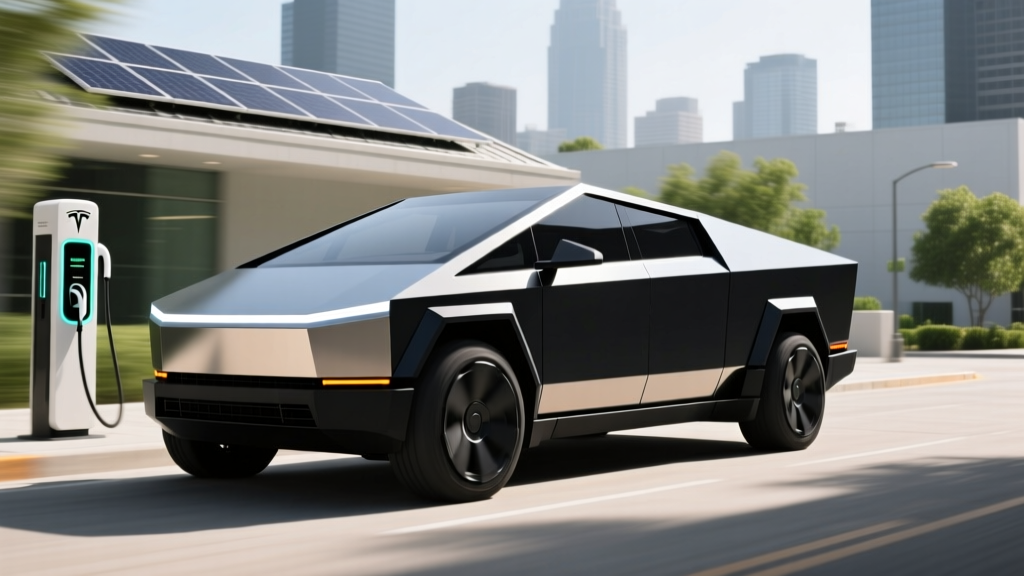
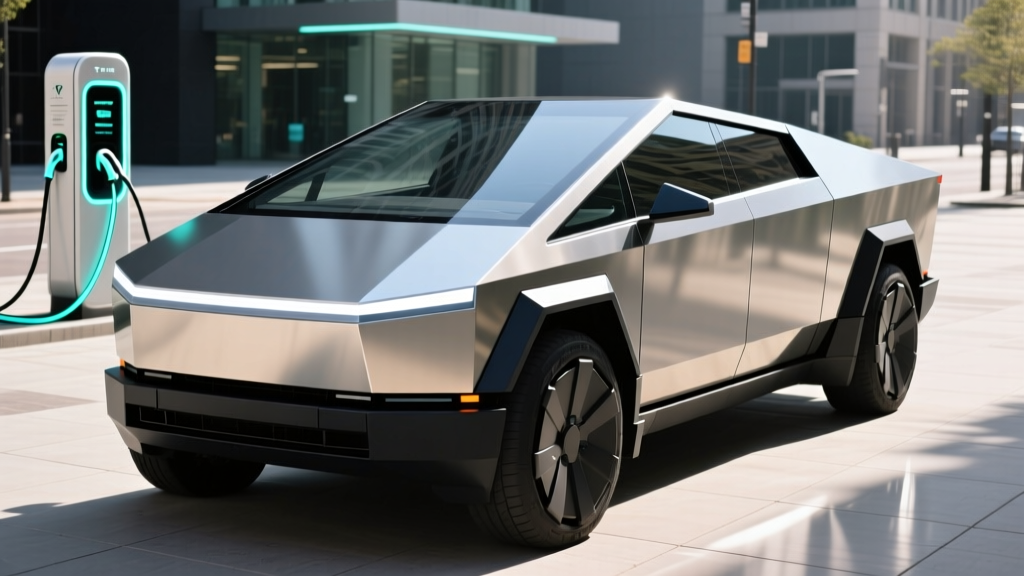
The Cybertruck remains Tesla's most polarizing vehicle. For 2026, it's available in three trims: the Dual Motor AWD, the tri-motor Cyberbeast, and the base Rear-Wheel Drive (RWD) model that Tesla began delivering in limited volumes. Here's the complete spec breakdown buyers need.
| Spec | RWD (Base) | Dual Motor AWD | Cyberbeast (Tri-Motor) |
|---|---|---|---|
| EPA Range | ~250 mi (est.) | 340 mi | 320 mi |
| Battery (usable) | ~85 kWh (est.) | ~123 kWh, NMC | ~123 kWh, NMC |
| 0-60 mph | ~6.5 sec (est.) | 3.9 sec | 2.6 sec |
| Horsepower | ~315 hp (est.) | 600 hp | 845 hp |
| Drivetrain | RWD | Dual Motor AWD | Tri-Motor AWD |
| Max DC Fast Charge | ~200 kW (est.) | 250 kW | 250 kW |
| 10-80% DC Time | ~28 min (est.) | ~18 min | ~18 min |
| Level 2 Home Charge | 11.5 kW (~37 mi/hr) | 11.5 kW (~37 mi/hr) | 11.5 kW (~37 mi/hr) |
| MPGe (combined) | TBD (est.) | 72 MPGe | 69 MPGe |
| Towing Capacity | 7,500 lb (est.) | 11,000 lb | 11,000 lb |
| Cargo (bed + frunk) | ~67 cu ft total (est.) | ~67 cu ft total | ~67 cu ft total |
| Base MSRP | ~$60,990 (est.) | $79,990 | $99,990 |
Note: RWD trim specs are estimated based on Tesla's preliminary disclosures and may vary as deliveries scale. Always verify at tesla.com/cybertruck before ordering.
Real-World Range: What the EPA Sticker Doesn't Tell You
EPA Rating: 340 miles (Dual Motor AWD) / 320 miles (Cyberbeast)
Real-World Expectation: Expect 270–300 miles on mixed highway driving at 70+ mph. In cold weather (below 32°F / 0°C), range can drop 20–30%, bringing effective range down to 220–260 miles. Towing near max capacity cuts range roughly in half.
The Cybertruck's angular stainless-steel exoskeleton creates more aerodynamic drag than a sleek sedan like the Model S. At highway speeds, this drag penalty is significant — efficiency drops to roughly 2.0–2.2 kWh/mile on flat interstate runs, compared to the EPA combined rating that assumes a city/highway mix.
Cold-weather impacts are amplified by the truck's large battery thermal mass. Tesla's heat pump (standard on all 2026 trims) helps, but preconditioning the battery before driving is essential to preserve range. On a 30°F morning commute, expect the first 10–15 miles to consume energy at a noticeably higher rate as the cabin and battery warm up.
Charging Speed: DC Fast, Level 2, and the Curve Reality
The Cybertruck supports Tesla's V3 and V4 Supercharger architecture. Here's what charging actually looks like in practice:
| Charging Level | Power | Miles Added per Hour | Notes |
|---|---|---|---|
| Level 1 (120V outlet) | ~1.4 kW | ~3-4 mi/hr | Emergency/trickle only |
| Level 2 (240V home) | 11.5 kW | ~37 mi/hr | Full charge overnight (~9 hrs) |
| DC Fast (Supercharger V3/V4) | Peak 250 kW | ~200+ mi in 15 min | 10-80% in ~18 min |
Charging curve reality: The 250 kW peak only applies at low state-of-charge (roughly 10–30% SoC). Above 50%, the charge rate tapers significantly — often dropping below 100 kW by 70% SoC. This is standard lithium-ion battery behavior to protect cell longevity, but it means a 10–90% session takes considerably longer than the quoted 10–80% time. Plan road-trip stops around the 10–80% window for maximum efficiency.
For home charging, a Tesla Wall Connector on a 60-amp circuit delivers the full 11.5 kW (48 amps continuous). Most owners find overnight charging from 20% to 80% takes about 6–7 hours — more than enough for daily driving. If your home has a 200-amp electrical panel, installation typically runs $500–$1,500 beyond the $475 Wall Connector unit, depending on run length and conduit needs.
Pricing, Trims, and Federal Tax Credit Eligibility
The Cybertruck's pricing has been a moving target since launch. For 2026, here's where the trims land:
| Trim | Base MSRP | Federal Tax Credit (§30D) | Effective Price |
|---|---|---|---|
| RWD (Base) | ~$60,990 | Up to $7,500* | ~$53,490* |
| Dual Motor AWD | $79,990 | Up to $7,500* | ~$72,490* |
| Cyberbeast | $99,990 | $0 (MSRP cap) | $99,990 |
*Critical §30D eligibility rules for 2026 (per IRS.gov):
- MSRP cap: Trucks, SUVs, and vans must have an MSRP at or below $80,000 to qualify. This disqualifies the Cyberbeast ($99,990) and may affect the Dual Motor AWD depending on options.
- Income cap: Modified adjusted gross income must not exceed $150,000 (single), $225,000 (head of household), or $300,000 (joint filing).
- Battery sourcing: A percentage of critical minerals and battery components must be sourced from the U.S. or free-trade-agreement countries. These thresholds increase annually. Verify current-year compliance at fueleconomy.gov.
- Point-of-sale transfer: As of 2024, buyers can transfer the credit to the dealer at purchase, reducing the upfront cost rather than waiting for a tax refund. This applies in 2026.
The base RWD model offers the best chance at the full $7,500 credit, but confirm battery-sourcing compliance for your specific delivery batch before relying on it in your budget.
Performance, Tech, and Daily Livability
The Cyberbeast's 2.6-second 0-60 mph time makes it one of the quickest production trucks ever built — a 5,000+ lb stainless-steel wedge that outruns most sports cars off the line. The Dual Motor AWD at 3.9 seconds is hardly slow. Even the base RWD model delivers the instant torque EV buyers expect.
Standout tech features:
- 18.5-inch center touchscreen with Tesla's latest UI (2026 refresh)
- 9.4-inch rear-seat touchscreen for passengers
- Autopilot standard; Full Self-Driving (Supervised) available as a $8,000 add-on or $99/month subscription
- Adaptive air suspension with up to 16 inches of ground clearance
- Vault-style tonneau cover with integrated bed storage
- 240V bed outlet for power tools, camping gear, or V2L (vehicle-to-load) use
- Steer-by-wire system (no mechanical linkage between yoke and wheels)
Notable drawbacks:
- Steer-by-wire requires an adjustment period — some drivers report a disconnected feel at low speeds
- Stainless-steel body panels show fingerprints and smudges constantly
- Visibility is compromised by the thick A-pillars and angular rear design
- No Apple CarPlay or Android Auto — Tesla's ecosystem is closed
- Insurance premiums run 15–30% higher than comparable trucks due to repair costs for the steel exoskeleton
ADAS clarification: Tesla Autopilot and Full Self-Driving (Supervised) are SAE Level 2 driver-assistance systems. The driver must remain engaged, hands on the yoke, and eyes on the road at all times. These are not self-driving systems. Tesla's naming convention ("Full Self-Driving") is marketing — not a reflection of SAE Level 4 or 5 autonomy.
Cargo, Passenger Space, and Warranty
The Cybertruck seats five across two rows. Rear legroom measures approximately 38 inches — adequate for adults on longer trips, though the sloping roofline limits headroom for taller passengers. The 6-foot bed offers roughly 55 cu ft of cargo volume, with an additional ~12 cu ft in the front trunk (frunk).
Tesla's warranty coverage for the 2026 Cybertruck:
- Basic vehicle: 4 years / 50,000 miles
- Battery & drive units: 8 years / 120,000 miles (with minimum 70% capacity retention)
- Armor glass: Covered under basic warranty; impact damage may fall under comprehensive insurance
The 8-year/120,000-mile battery warranty is competitive with the broader EV truck segment. Tesla's NMC cells in the AWD and Cyberbeast trims have shown degradation of roughly 8–12% over the first 100,000 miles based on fleet data from early Model S and Model X packs, though the Cybertruck's newer 4680 cells may perform differently over time.
Cybertruck vs. Key Competitors: Is It Worth Buying?
The electric truck segment has matured. Here's how the Cybertruck stacks up against its main rivals:
| Spec | Tesla Cybertruck (AWD) | Ford F-150 Lightning (Extended Range) | Rivian R1T (Dual Motor Max) |
|---|---|---|---|
| EPA Range | 340 mi | 320 mi | 352 mi |
| Starting MSRP | $79,990 | ~$71,990 | ~$87,000 |
| Towing | 11,000 lb | 10,000 lb | 11,000 lb |
| 0-60 mph | 3.9 sec | ~4.5 sec | ~3.5 sec |
| Supercharger Network | Native access | Adapter required (NACS) | Adapter required (NACS) |
| Federal Tax Credit | Up to $7,500* | Up to $7,500* | Up to $7,500* |
Choose the Cybertruck if: You prioritize Tesla's Supercharger network, want the fastest acceleration in the segment, value the stainless-steel exoskeleton for durability, and accept the polarizing design and steer-by-wire learning curve.
Choose the F-150 Lightning if: You need a more conventional truck experience, want broader dealer service access, prefer a lower starting price, and value Ford's fleet/commercial support infrastructure.
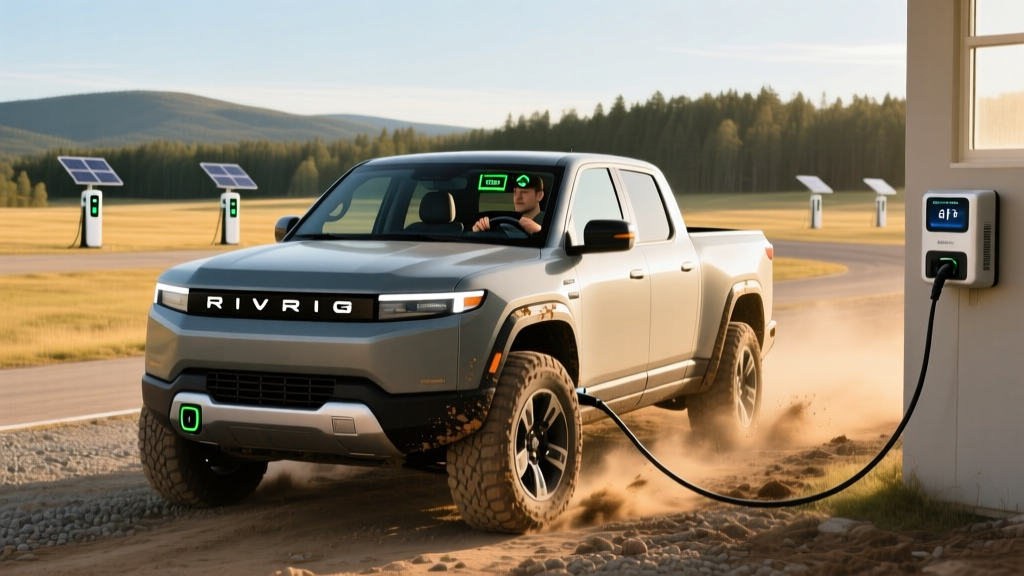
Choose the Rivian R1T if: You want the longest range in the segment, prefer a more refined interior, need a gear tunnel for adventure gear, and don't mind the higher price point.
Pros
- Class-leading acceleration (Cyberbeast: 2.6 sec 0-60)
- Native Tesla Supercharger access — best DC network reliability
- Armor glass offers genuine impact resistance for work sites
- 240V bed outlet enables real job-site and camping utility
- 11,000-lb towing capacity matches full-size ICE trucks
Cons
- Steer-by-wire feel takes significant adjustment
- Stainless panels attract fingerprints and complicate body repair
- Rear visibility is poor; camera dependency is high
- Cyberbeast and optioned AWD exceed $80K MSRP cap (no tax credit)
- Insurance costs 15-30% above segment average
Who Should Buy the Tesla Cybertruck?
The Cybertruck fits a specific buyer profile:
- Tech-forward truck buyers who want EV performance and are already in the Tesla ecosystem (Powerwall, Solar Roof, existing Tesla owner)
- Work-site users who benefit from the 240V outlet, stainless-steel durability, and armor glass impact resistance
- Performance enthusiasts who want a daily-driver truck that can hit 2.6 seconds to 60 mph
- Tesla loyalists who value Supercharger access and over-the-air updates above traditional truck brand loyalty
It's a less natural fit for traditional truck buyers who prioritize dealer service networks, conventional steering feel, or need crew-cab configurations with more rear-seat space.
Frequently Asked Questions
Are Tesla windows bulletproof on any model?
No Tesla model is sold with certified bulletproof glass. The Cybertruck's optional armor glass is ballistic-resistant and can withstand certain handgun rounds in controlled testing, but it is not NIJ-certified bulletproof. All other Tesla models use standard laminated or tempered automotive glass.
What is the real-world range of the Cybertruck?
The EPA rates the Dual Motor AWD at 340 miles and the Cyberbeast at 320 miles. In real-world highway driving at 70+ mph, expect 270–300 miles. In cold weather (below freezing), effective range drops to roughly 220–260 miles. Towing near max capacity roughly halves these figures.
How fast does the Cybertruck charge at home and on the road?
On a Level 2 home charger (11.5 kW / 48A), the Cybertruck adds about 37 miles of range per hour — a full overnight charge takes roughly 9 hours. On a Tesla V3 or V4 Supercharger, it peaks at 250 kW and charges from 10–80% in approximately 18 minutes, though the charge rate tapers significantly above 50% SoC.
Does the Cybertruck qualify for the federal EV tax credit?
The base RWD (~$60,990) and potentially the Dual Motor AWD ($79,990) may qualify for up to $7,500 under IRS §30D, subject to buyer income limits ($150K single / $300K joint), battery-sourcing requirements, and the $80,000 MSRP cap for trucks. The Cyberbeast at $99,990 does not qualify. Always verify current eligibility at IRS.gov and consult a tax professional.
Is the Cybertruck worth buying over the F-150 Lightning or Rivian R1T?
It depends on your priorities. The Cybertruck wins on acceleration, native Supercharger access, and stainless-steel durability. The F-150 Lightning wins on conventional truck feel, lower price, and broader dealer service. The Rivian R1T wins on range, interior refinement, and adventure-oriented design. Test-drive all three before deciding.
Can I get aftermarket bulletproof windows for my Tesla?
Aftermarket ballistic glass upgrades exist through specialty armorers (such as INKAS Armored or Texas Armoring), but they add significant weight (200–500+ lbs), cost $15,000–$40,000+, void Tesla's factory warranty on affected components, and may require suspension upgrades to compensate for the added mass. This is a niche modification not recommended for most buyers.
How does steer-by-wire feel in daily driving?
Tesla's steer-by-wire system eliminates the mechanical connection between the yoke and the wheels, using electronic signals instead. Most reviewers report that it feels overly sensitive at parking-lot speeds but natural at highway speeds. Expect a 1–2 week adjustment period. There is no traditional round steering wheel option on the Cybertruck.
Sources: Tesla Cybertruck official specs, IRS §30D Clean Vehicle Credits, fueleconomy.gov