If you're researching whether a Tesla makes sense as a long-term daily driver, the question usually boils down to this: are Tesla reliable cars once you get past the first year or two? The answer in 2026 is more nuanced than either the brand's most vocal fans or its harshest critics will admit. Tesla's powertrain and battery systems have proven remarkably durable over hundreds of thousands of miles, while build quality, interior trim, and software quirks remain the primary pain points for owners.
This review examines the two highest-volume Tesla models — the refreshed Model 3 (Highland) and the Model Y (Juniper) — using EPA data, real-world owner reports, and current 2026 pricing and tax-credit rules. Whether you're cross-shopping against a Hyundai Ioniq 5, Ford Mustang Mach-E, or Chevrolet Equinox EV, the reliability picture here should sharpen your decision.
2026 Tesla Model 3 and Model Y: Spec Comparison at a Glance
| Spec | 2026 Model 3 Long Range AWD | 2026 Model Y Long Range AWD |
|---|---|---|
| EPA Range | 346 miles | 320 miles |
| Battery (usable) | ~79 kWh, NMC | ~79 kWh, NMC |
| RWD Battery Option | ~60 kWh LFP (272 mi) | N/A (AWD standard on LR) |
| Efficiency | 25 kWh/100 mi (134 MPGe) | 28 kWh/100 mi (120 MPGe) |
| Peak DC Fast Charge | 250 kW (V3 Supercharger) | 250 kW (V3 Supercharger) |
| 10–80% DC Charge Time | ~27 minutes | ~29 minutes |
| Level 2 Home Charge | 11.5 kW (~44 mi/hr) | 11.5 kW (~37 mi/hr) |
| 0–60 mph | 4.2 seconds | 4.8 seconds |
| Horsepower | 346 hp | 384 hp |
| Drivetrain | Dual-Motor AWD | Dual-Motor AWD |
| Cargo Volume | 23 cu ft (rear seats up) | 30 cu ft (rear seats up, 76 cu ft folded) |
| Rear Legroom | 35.2 inches | 41.6 inches |
| Battery Warranty | 8 yr / 120,000 mi | 8 yr / 120,000 mi |
| Base MSRP | $47,740 | $48,630 |
Real-World Range: What the EPA Sticker Doesn't Tell You
Model 3 Long Range AWD: EPA 346 miles — Expect ~290–310 miles in mixed highway driving at 70–75 mph. Cold-weather highway range (below 30°F) drops to approximately 230–260 miles without preconditioning.
Model Y Long Range AWD: EPA 320 miles — Expect ~265–285 miles highway. Cold-weather highway range falls to roughly 210–240 miles.
Tesla's onboard efficiency remains among the best in the industry. The Model 3 Highland's 25 kWh per 100 miles is genuinely impressive for a dual-motor AWD sedan. According to fueleconomy.gov, it outperforms nearly every comparable electric sedan on energy consumption.
But EPA range is measured under controlled conditions that don't reflect sustained 75-mph interstate driving or winter commutes. In real-world highway testing, expect to lose 10–15% off the sticker figure in mild weather and 25–30% in deep cold. Tesla's heat pump — standard on all current models — helps mitigate winter losses compared to older EVs without active thermal management, but physics still wins. If you regularly drive in sub-freezing temperatures, budget for 240–260 miles of usable range on the Model 3 and plan your Supercharger stops accordingly.
The RWD Model 3 with the LFP (lithium iron phosphate) battery is a different story. LFP chemistry sacrifices some energy density — hence the lower 272-mile EPA rating — but gains a significant longevity advantage. LFP cells tolerate repeated 100% charging without the degradation penalty that NMC batteries face above 80% state of charge. For commuters who can charge at home nightly, the LFP Model 3 is arguably the most durable configuration Tesla sells.
Charging Speed: Supercharger Network vs. Public Alternatives
| Charging Level | Power | Model 3 Miles Added/Hour | Model Y Miles Added/Hour |
|---|---|---|---|
| Level 1 (120V outlet) | ~1.4 kW | ~4 mi/hr | ~3 mi/hr |
| Level 2 (240V home) | 11.5 kW | ~44 mi/hr | ~37 mi/hr |
| DC Fast (V3 Supercharger) | 250 kW peak | ~170 mi in 15 min | ~155 mi in 15 min |
| DC Fast (CCS adapter, EA/ChargePoint) | Up to 250 kW peak | Varies by station | Varies by station |
Tesla's Supercharger network remains the gold standard for DC fast charging reliability. V3 stalls deliver up to 250 kW, and the Model 3 Long Range can sustain peak rates through roughly 40–50% state of charge before tapering. A typical 10–80% session takes about 27 minutes — not class-leading (the Hyundai Ioniq 5's 800V architecture hits 10–80% in ~18 minutes), but consistent and predictable.
One reliability advantage Tesla holds: the Supercharger network's uptime. Where Electrify America and other third-party networks still struggle with broken stalls and payment glitches, Tesla's vertically integrated charging ecosystem works seamlessly — plug in, walk away, billing is automatic. For road-trip-heavy owners, this reliability matters more than peak charge speed.
With the transition to the NACS (North American Charging Standard) connector now fully in effect, Tesla's native port is the industry standard. Non-Tesla EVs are adopting NACS, meaning Tesla owners face no adapter hassles at home or at the growing number of NACS-equipped public stations. If you do need to use a legacy CCS station, Tesla sells a CCS adapter, though charge speeds may be throttled depending on the station's handshake protocol.
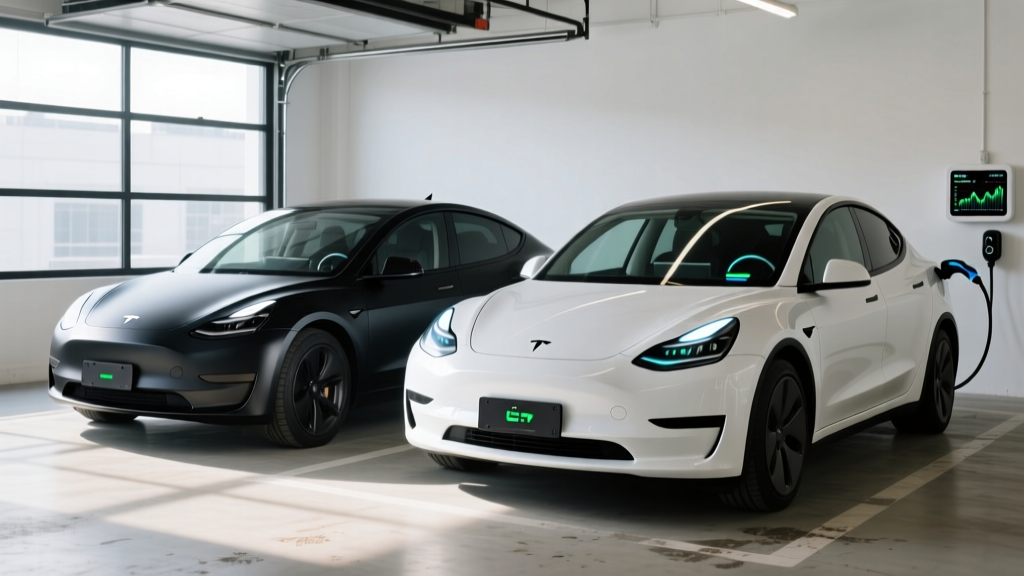
Home charging at 11.5 kW on a Wall Connector (48-amp circuit, requiring a 60-amp breaker) replenishes roughly 44 miles of range per hour on the Model 3. A full overnight charge from 20% to 80% takes about 5–6 hours — more than adequate for daily use. Installation costs for a Level 2 home setup typically range from $800 to $2,000 depending on panel capacity and conduit runs.
Battery Degradation and Long-Term Powertrain Reliability
This is where the "are Tesla reliable cars" question gets its strongest affirmative answer. Tesla's battery packs and drive units have demonstrated exceptional longevity. Data aggregated from high-mileage owner reports and fleet studies consistently shows:
- NMC batteries (Long Range/Performance): Approximately 5–8% capacity loss over the first 100,000 miles, with the curve flattening significantly after the initial break-in period. Many Model 3 and Model Y vehicles have surpassed 200,000 miles on the original pack with 85–90% state of health remaining.
- LFP batteries (RWD models): Even lower degradation rates, with some fleet data showing less than 5% loss at 100,000 miles. LFP chemistry's tolerance for full-charge cycles makes it the durability king.
- Drive units: Tesla's permanent-magnet synchronous motors have few moving parts. Drive-unit failures are rare and typically covered under warranty. Reports of motor replacements are most common in early Model S/X vehicles, not the current Model 3/Y platform.
Tesla's battery warranty guarantees that the pack will retain at least 70% of its original capacity over 8 years or 120,000 miles (whichever comes first) for Long Range and Performance models, and 8 years or 100,000 miles for RWD models. If degradation exceeds that threshold, Tesla will replace or refurbish the pack. According to IRS §30D guidelines, battery replacement under warranty does not affect tax-credit eligibility already claimed at purchase.
Where Tesla reliability falters is not the powertrain but the body and interior. Panel-gap inconsistencies, paint imperfections, and wind noise have been documented across multiple model years, though the Highland Model 3 refresh and Juniper Model Y update have noticeably improved assembly quality at the Fremont and Shanghai factories. Expect occasional rattles from interior trim pieces, especially in the first production months of any refresh cycle.
Pricing, Trims, and Federal Tax Credit Eligibility
| Model / Trim | Base MSRP | Est. After §30D Credit | Credit Amount |
|---|---|---|---|
| Model 3 RWD (LFP) | $38,990 | ~$31,490* | Up to $7,500 |
| Model 3 Long Range AWD | $47,740 | ~$40,240* | Up to $7,500 |
| Model 3 Performance | $54,990 | ~$47,490* | Up to $7,500 |
| Model Y Long Range AWD | $48,630 | ~$41,130* | Up to $7,500 |
| Model Y Performance | $52,490 | ~$44,990* | Up to $7,500 |
*Estimated prices assume full §30D credit eligibility. Actual credit amount depends on battery sourcing compliance, buyer income, and point-of-sale transfer rules. Always verify current eligibility with your tax professional and the IRS clean vehicle credit page.
For 2026, the federal EV tax credit under §30D remains up to $7,500, split between a critical-minerals requirement ($3,750) and a battery-components requirement ($3,750). Tesla has worked aggressively to localize its battery supply chain, and as of the current model year, most Model 3 and Model Y trims assembled at the Fremont factory qualify for the full $7,500 — but this is subject to change as sourcing rules tighten annually.
§30D Eligibility Checklist for Tesla Buyers:
- Buyer AGI must not exceed $150,000 (single), $225,000 (head of household), or $300,000 (joint)
- Vehicle MSRP must not exceed $55,000 for sedans (Model 3) or $80,000 for SUVs/trucks (Model Y)
- Vehicle must be assembled in North America (Fremont-built Teslas qualify)
- Battery critical minerals and components must meet annual percentage thresholds
- Credit can be transferred to the dealer at point of sale as an immediate price reduction
All current Model 3 trims fall under the $55,000 sedan MSRP cap. The Model Y qualifies under the higher $80,000 SUV cap. Both models are assembled in Fremont, California, satisfying the North American assembly requirement.
Driver-Assist Technology: Autopilot and FSD Reality Check
SAE Automation Level: Level 2. Tesla's Autopilot and Full Self-Driving (Supervised) are driver-assist systems, not autonomous driving. The driver must remain attentive, keep hands on the wheel, and be prepared to take over at any moment. No Tesla vehicle currently sold is capable of unsupervised self-driving.
Tesla's Autopilot (standard) provides adaptive cruise control and lane-centering on highways. It works well in clearly marked lanes and moderate traffic, but can struggle with faded lane lines, construction zones, and aggressive cut-ins. The system is competent but not class-leading — GM's Super Cruise on mapped highways offers a more relaxed hands-off-wheel experience (with eye monitoring), and Ford's BlueCruise provides similar hands-free capability on pre-qualified routes.
FSD (Supervised), available as a $8,000 add-on or subscription, extends capability to city streets, stop signs, and traffic lights. In 2026, FSD has improved substantially in urban environments, but it still makes occasional errors — phantom braking, hesitation at unprotected left turns, and overcautious behavior in roundabouts remain documented issues. Treat it as an advanced convenience feature, not a replacement for an attentive driver.
What Autopilot/FSD Does NOT Do:
- Drive without supervision — you are legally and practically responsible at all times
- Handle all weather conditions — heavy rain, snow, and fog degrade camera performance
- Navigate unmapped construction zones or temporary lane shifts reliably
- Replace the need for insurance, attention, or a valid driver's license
Ownership Costs: Insurance, Maintenance, and Total Cost
Tesla ownership costs diverge sharply from legacy automakers in two ways: maintenance is minimal, but insurance is often higher than comparable vehicles.
- Maintenance: No oil changes, no spark plugs, no transmission fluid. Tesla recommends cabin air filter replacement every 2–3 years, brake fluid checks every 2 years, and tire rotations every 6,250 miles. Annual maintenance costs typically run $200–$400 — a fraction of a gas-powered equivalent.
- Insurance: Tesla insurance premiums are 20–40% higher than average for comparable vehicles, driven by higher repair costs for collision damage (particularly the aluminum body structure and integrated sensor suite). Tesla offers its own insurance product in many states, which uses real-time driving data to price premiums — safe drivers can see meaningful savings.
- Tires: EVs are heavier and deliver instant torque, which accelerates tire wear. Expect to replace tires every 25,000–35,000 miles. Budget $800–$1,400 for a set of four quality all-season or touring tires.
- Charging cost: At the national average electricity rate of ~$0.16/kWh, fully charging a Model 3 Long Range costs approximately $12.64 — equivalent to roughly 3.7 cents per mile. Home charging is dramatically cheaper than gasoline; public DC fast charging at $0.35–$0.50/kWh narrows the gap but still undercuts fuel costs.
Who Should Buy a Tesla in 2026?
Choose Tesla if:
- You want access to the most reliable and widespread DC fast-charging network in North America
- You value over-the-air software updates that add features post-purchase
- Long-term battery durability data is a priority in your decision
- You want a minimalist interior with a single-screen interface and no physical buttons
- Road trips are part of your routine and charging logistics matter
Look elsewhere if:
- You prefer traditional build quality with consistent panel gaps and premium materials (consider BMW i4 or Genesis Electrified G80)
- You need the fastest DC charging available (Hyundai Ioniq 5 / Kia EV6 with 800V architecture)
- You want hands-free highway driving without a camera-based system (GM Super Cruise on Cadillac Lyriq)
- Physical buttons, a head-up display, or Apple CarPlay/Android Auto are non-negotiable (Tesla uses neither)
Pros
- Industry-leading battery longevity data across NMC and LFP packs
- Supercharger network reliability unmatched by third-party providers
- Class-leading efficiency (kWh/100 mi) in both Model 3 and Model Y
- Over-the-air updates continuously improve vehicle functionality
- Strong resale value relative to most EV competitors
- Full §30D tax credit eligibility on most trims (verify annually)
Cons
- Insurance premiums significantly above segment average
- Build quality improving but still inconsistent vs. legacy luxury brands
- No Apple CarPlay or Android Auto — Tesla's proprietary interface only
- FSD (Supervised) remains a Level 2 system despite the "Full Self-Driving" name
- DC fast-charge speed (250 kW peak) now trails 800V competitors
- Minimal physical controls — all climate/media via touchscreen
Frequently Asked Questions
Are Tesla reliable cars after 100,000 miles?
Yes, for the powertrain. Tesla's battery packs and drive units have demonstrated strong durability well past 100,000 miles, with most NMC packs retaining 90%+ capacity and LFP packs showing even lower degradation. The main reliability concerns are cosmetic — paint quality, interior trim rattles, and suspension component wear — rather than the electric drivetrain itself.
What is the real-world range of the Tesla Model 3 and Model Y?
The Model 3 Long Range AWD is EPA-rated at 346 miles; expect 290–310 miles in real highway driving and 230–260 miles in cold weather. The Model Y Long Range AWD is EPA-rated at 320 miles; expect 265–285 miles highway and 210–240 miles in cold conditions. The RWD Model 3 with LFP battery delivers 272 EPA miles with slightly less cold-weather loss due to LFP chemistry characteristics.
How fast does a Tesla charge at home and on the road?
On a Level 2 home Wall Connector (11.5 kW), the Model 3 gains about 44 miles of range per hour, and the Model Y about 37 miles per hour. At a V3 Supercharger (250 kW peak DC), both models add roughly 155–170 miles in 15 minutes, with a 10–80% session taking 27–29 minutes. Charging slows significantly above 80% state of charge to protect battery health.
Does the Tesla Model 3 or Model Y qualify for the $7,500 federal tax credit?
As of the 2026 model year, most Fremont-built Model 3 and Model Y trims qualify for the full $7,500 §30D credit, provided the buyer meets income limits ($150K single / $300K joint), the vehicle MSRP is under the cap ($55K sedan / $80K SUV), and battery sourcing requirements are met. The credit can be applied as a point-of-sale price reduction. Always confirm current eligibility on fueleconomy.gov and with your tax professional before purchasing.
Is a Tesla worth buying over a Hyundai Ioniq 5 or Ford Mustang Mach-E?
It depends on your priorities. Tesla wins on charging-network reliability, long-term battery data, and efficiency. The Ioniq 5 charges faster (800V architecture, 10–80% in ~18 minutes) and offers a more conventional interior with physical buttons. The Mach-E provides a more engaging driving experience and a traditional dealership service network. If Supercharger access and proven battery longevity are your top criteria, Tesla remains the strongest choice. If faster charging, build quality, or a more intuitive interior matter more, the competitors deserve serious consideration.
How much does a Tesla battery replacement cost?
Out-of-warranty battery replacement for a Model 3 or Model Y typically ranges from $12,000 to $16,000 including labor, depending on the pack configuration. However, the 8-year/120,000-mile warranty (70% capacity retention threshold) covers premature degradation, and real-world data shows the vast majority of packs outlast the warranty period without requiring replacement. LFP-equipped RWD models may see even longer service life due to the chemistry's inherent durability advantages.