The Short Answer: Yes — With Caveats
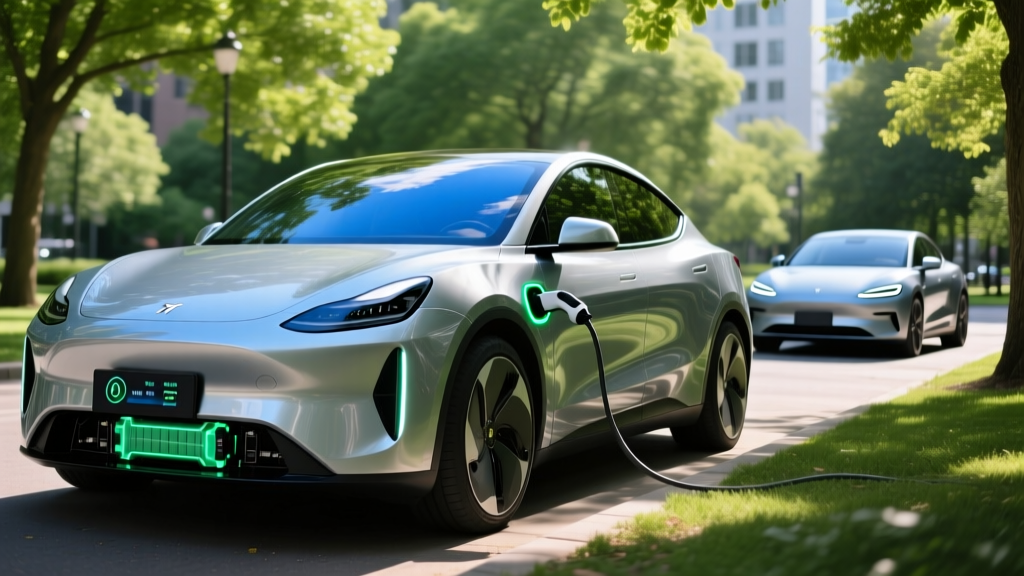
Are EVs actually better for the environment? The data says yes, but the magnitude depends on three variables: where you charge (your local grid mix), how long you keep the car (manufacturing emissions are front-loaded), and what you compare it to (a 40-MPG hybrid or a 22-MPG truck). According to EPA lifecycle analysis, the average EV sold in the U.S. today produces fewer greenhouse gas emissions over its full life — including battery manufacturing — than a comparable gasoline car, even on coal-heavy grids. On a clean grid (hydro, wind, nuclear, solar), the advantage is dramatic: 60-70% lower lifetime CO₂. On the dirtiest U.S. grids, the breakeven point is roughly 2-3 years of average driving before the EV's lower operating emissions offset its higher manufacturing footprint.
Lifecycle Emissions: Manufacturing vs. Driving
The most common argument against EV environmental benefit is that building the battery creates a massive carbon debt. This is partially true — and it's exactly why ownership duration matters.
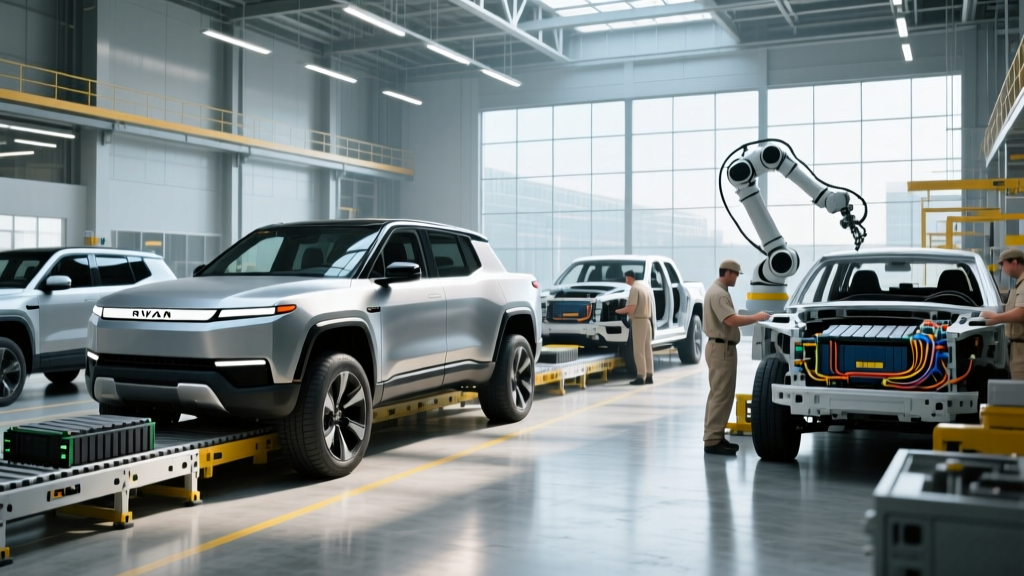
A mid-size EV battery pack (75 kWh, NMC chemistry) requires mining and processing lithium, nickel, cobalt, and manganese. Studies from the Intergovernmental Panel on Climate Change and independent lifecycle analyses place battery manufacturing emissions at roughly 60-100 kg of CO₂ per kWh of capacity, depending on the factory's energy source. That means a 75 kWh pack carries approximately 4,500-7,500 kg (4.5-7.5 metric tons) of embedded CO₂ before the car drives its first mile.
A comparable gasoline car's manufacturing footprint? Roughly 5-7 metric tons total, with no large battery. So the EV starts with a 2-5 ton CO₂ deficit at the factory gate.
Here's where the math flips. A gas car burning fuel at 25 MPG combined emits roughly 4.6 metric tons of CO₂ per year (based on 11,500 miles/year and 8.89 kg CO₂ per gallon of gasoline, per EPA figures). An EV charged on the average U.S. grid mix (roughly 0.85 lbs CO₂ per kWh in 2025-2026) and consuming 3 miles per kWh emits roughly 1.4 metric tons per year from electricity generation.
That's a savings of about 3.2 metric tons per year in operation. Divide the 4-ton manufacturing deficit by 3.2 tons/year, and you get a breakeven of approximately 15-18 months on the average U.S. grid. On a cleaner grid (Pacific Northwest hydro, upstate New York nuclear/wind), breakeven drops to under 12 months. On a coal-dominant grid (parts of Wyoming, West Virginia), it may stretch to 2.5-3 years.
| Metric | EV (75 kWh, 3 mi/kWh) | Gas Car (25 MPG) | Hybrid (50 MPG) |
|---|---|---|---|
| Manufacturing CO₂ | ~10-12 metric tons | ~5-7 metric tons | ~6-8 metric tons |
| Annual driving CO₂ | ~1.4 tons/yr | ~4.6 tons/yr | ~2.3 tons/yr |
| 10-year driving CO₂ | ~14 tons | ~46 tons | ~23 tons |
| Total lifetime CO₂ | ~24-26 tons | ~51-53 tons | ~29-31 tons |
| vs. Gas Car | ~50% lower | Baseline | ~42% lower |
Your Grid Matters: How Local Electricity Changes the Math
Not all electrons are created equal. The environmental case for EVs strengthens or weakens based on your utility's generation mix. Here's how the major U.S. grid regions stack up in 2026, based on EIA data:
- Pacific Northwest (BPA, Seattle City Light): ~80% hydro/wind. EV emissions roughly equivalent to a gas car getting 130+ MPG. Breakeven in ~6 months.
- California (CAISO): ~55% renewables + nuclear. Equivalent to 90-100 MPG. Breakeven ~10 months.
- Texas (ERCOT): ~45% wind/solar/nuclear, 50% natural gas. Equivalent to 70-80 MPG. Breakeven ~14 months.
- Midwest (MISO): ~30% renewables, 40% gas, 30% coal. Equivalent to 55-65 MPG. Breakeven ~18-22 months.
- Appalachia (parts of PJM, TVA): Higher coal share. Equivalent to 45-55 MPG. Breakeven ~24-30 months.
Even on the dirtiest U.S. grids, EVs still break even within the typical ownership period (5-8 years). And grids are getting cleaner every year — a car bought in 2026 will charge on a progressively less carbon-intensive grid through 2035 and beyond. A gas car's emissions never improve.
Battery Mining and End-of-Life: The Honest Drawbacks
Environmental benefit doesn't mean environmental perfection. EV battery supply chains carry real impacts that buyers should understand.
Mining Footprint
Lithium extraction (primarily from brine in Chile/Argentina or hard rock in Australia) requires significant water and energy. Nickel mining in Indonesia has been linked to deforestation and tailings concerns. Cobalt mining in the DRC has well-documented labor and environmental issues — though the industry is shifting toward cobalt-free LFP chemistry, which now powers roughly 40% of global EV production (including base-trim Tesla Model 3, Model Y Standard Range, and Ford Mustang Mach-E Select).
Battery Longevity and Replacement
Modern EV batteries are lasting longer than early fears suggested. Most manufacturers warranty 8 years / 100,000 miles with a capacity retention threshold of 70%. Real-world degradation data from fleets and owner surveys shows typical NMC packs losing 10-15% capacity over 150,000 miles, while LFP packs degrade even slower (8-12% over the same distance). A replacement pack in 2026 costs roughly $8,000-$15,000 depending on capacity — expensive, but rarely needed within normal ownership.
Recycling and Second Life
Over 95% of battery-grade lithium, nickel, and cobalt can be recovered through hydrometallurgical recycling (companies like Redwood Materials and Li-Cycle). Degraded EV packs that fall below 70% capacity for automotive use still serve well in stationary grid storage, extending their useful life another 10-15 years before recycling.
| Myth | Fact |
|---|---|
| "EVs are worse because of battery manufacturing" | Manufacturing debt is repaid in 1.5-3 years of driving; net lifetime emissions are 40-60% lower. |
| "Charging on coal power makes EVs dirtier than gas" | Even on the most coal-heavy U.S. grids, EVs break even within ~3 years and remain cleaner over a 150k-mile life. |
| "Batteries end up in landfills" | 95%+ of critical minerals are recoverable; retired packs enter grid storage second-life before recycling. |
| "EVs emit more because of tire wear" | Heavier EVs do produce ~10-20% more tire particulate, but this is offset by zero tailpipe PM and NOx emissions. |
| "Hybrids are just as clean as EVs" | A 50-MPG hybrid still emits ~23 tons lifetime CO₂ vs. ~25 tons for an EV — nearly identical, but the EV's advantage grows as the grid cleans. |
Total Cost of Ownership: Where Environment Meets Wallet
The environmental case is stronger when paired with the economic one. Let's compare a 2026 EV (using the Hyundai Ioniq 6 SE as a representative example: 361-mile EPA range, 77.4 kWh battery, 150 kW peak DC charging, $39,000 MSRP before incentives) against a comparable gas sedan (Toyota Camry LE, 32 MPG combined, ~$29,000 MSRP).
| Cost Category | 2026 Hyundai Ioniq 6 SE | 2026 Toyota Camry LE (Gas) |
|---|---|---|
| Purchase Price (MSRP) | $39,000 | $29,000 |
| Federal Tax Credit (§30D) | -$7,500 (if eligible) | $0 |
| Net Purchase Price | $31,500 | $29,000 |
| Fuel / Electricity (60k mi) | $2,400 (home charging at $0.14/kWh) | $7,500 (gas at $3.50/gal, 32 MPG) |
| Maintenance (5 years) | ~$800 (cabin filter, wipers, tire rotation) | ~$2,800 (oil changes, filters, brakes, belts) |
| Insurance (5-year avg) | ~$8,500 (EVs cost ~15-20% more to insure) | ~$7,200 |
| Depreciation (est. 5yr) | ~$14,000 | ~$11,000 |
| Total 5-Year Cost | ~$57,200 | ~$57,500 |
Note: §30D eligibility requires meeting income caps ($150k single / $300k joint), MSRP caps ($55k sedans), and battery sourcing rules. Confirm at IRS.gov. State incentives not included; many states offer additional rebates.
The numbers reveal a near-parity in 5-year cost, with the EV pulling ahead in years 6-10 as fuel and maintenance savings compound while the gas car faces increasing repair costs. If you charge primarily at home on off-peak utility rates ($0.08-$0.12/kWh), the EV's fuel cost drops to $1,400-$1,900 over 60,000 miles — widening the gap significantly.
Real-World Ownership: What First-Time Buyers Need to Know
The environmental and economic case only works if the car fits your life. Here are the practical realities that determine whether an EV is the right choice for you.
Home Charging Access Is the Biggest Variable
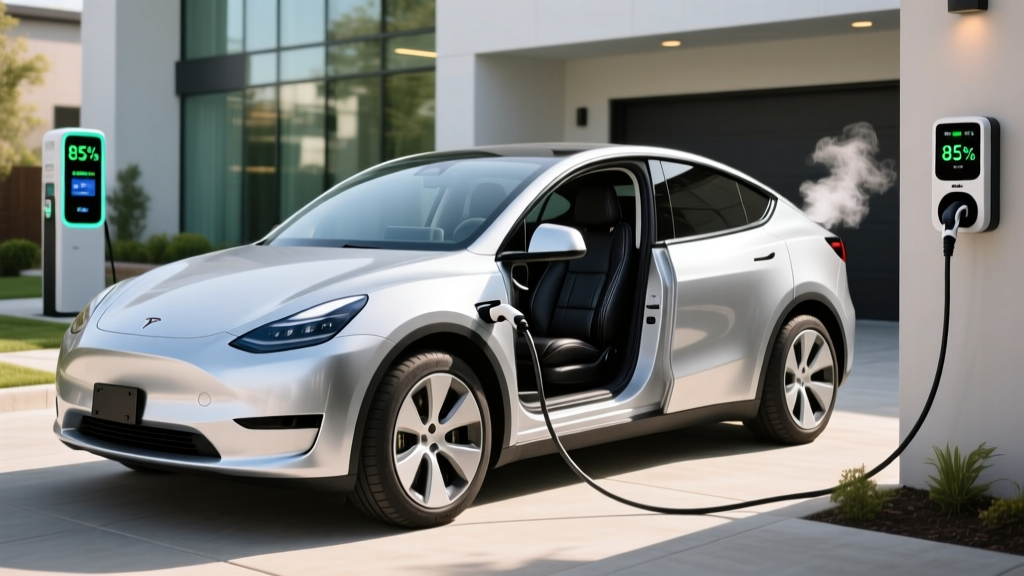
Roughly 70-75% of U.S. EV owners charge primarily at home. If you have a garage or driveway with access to a 240V circuit (or can install one), an EV is seamless — you wake up every morning with a full "tank." A Level 2 home charger (7-11 kW) adds roughly 25-40 miles of range per hour of charging, easily replenishing a day's driving overnight.
Home charger installation costs vary widely:
- Simple install (panel nearby, 50A circuit, short wire run): $500-$1,200
- Moderate install (longer wire run, permit required): $1,200-$2,500
- Panel upgrade needed (older 100A service upgraded to 200A): $2,500-$5,000+
If you live in an apartment, condo, or street-parking situation without home charging access, the calculus changes. Public DC fast charging costs $0.30-$0.50/kWh (vs. $0.12-$0.16 at home), erasing much of the fuel-cost advantage and adding time inconvenience. A PHEV (plug-in hybrid) may be a better fit in this scenario.
Climate and Driving Pattern Realities
Cold weather reduces EV range by 15-30% in freezing temperatures due to battery chemistry limitations and cabin heating demands. A 300-mile EPA-rated EV may deliver 210-255 real-world miles in a 20°F January. Heat pumps (standard on most 2025+ EVs) mitigate this by 5-10 percentage points.
Highway driving at 75-80 MPH also reduces range by 10-20% versus the EPA combined cycle, which includes city driving with regenerative braking. If your commute is 90% highway at high speed, plan around 75-80% of EPA range for trip planning.
Charging Speed and Road Trips
Modern EVs on 800V architectures (Hyundai Ioniq 5/6, Kia EV6/EV9, Porsche Taycan, Lucid Air) can charge from 10-80% in 18-22 minutes at compatible 250-350 kW chargers. Older or lower-cost EVs on 400V systems (many Nissan, Subaru, base-model vehicles) may take 30-45 minutes for the same range. For road trips exceeding your battery's range, plan stops around charger locations — the Electrify America, Tesla Supercharger (now open to NACS-equipped non-Teslas), and EVgo networks cover most interstate corridors.
Decision Framework: Is an EV the Right Environmental and Financial Choice for You?
Choose a BEV (full electric) if:
- You have home or workplace Level 2 charging access
- Your daily driving is under 200 miles (covers 95%+ of U.S. drivers)
- You plan to keep the car 5+ years (amortizing the manufacturing carbon debt)
- Your local grid has meaningful renewable/nuclear share (most U.S. regions now qualify)
- You want the lowest per-mile fuel cost and minimal maintenance
Choose a PHEV (plug-in hybrid) if:
- You lack reliable home charging but can plug in occasionally
- You regularly take road trips exceeding 300 miles through sparse charging areas
- You want electric-only commuting (25-50 miles) with gas-engine flexibility
- You live in extreme cold climates and want zero range-anxiety backup
Stick with a gas car or HEV (conventional hybrid) if:
- You have no access to any charging (home, work, or public)
- You drive a low-mileage annual total (under 5,000 miles — the manufacturing carbon debt takes too long to repay)
- You need a specialized vehicle not yet available in electric form (heavy towing, certain commercial applications)
- Your budget cannot accommodate the higher upfront cost even after incentives
The Bottom Line: Better, Not Perfect — and Improving
EVs are not a zero-impact technology. Battery mining has environmental and ethical costs, tire wear from heavier vehicles produces particulate matter, and the manufacturing carbon debt is real. But the data consistently shows that over a typical vehicle lifespan of 150,000 miles, an EV produces 40-60% fewer lifecycle greenhouse gas emissions than a comparable gasoline car — and that advantage grows every year as the grid decarbonizes.
For the individual buyer, the environmental benefit aligns with a compelling economic case when you have home charging, qualify for federal or state incentives, and plan to own the vehicle for 5+ years. The worst environmental outcome is buying any new car you'll replace in 2-3 years; the best is keeping an efficient vehicle — electric or otherwise — for a decade or more.
Do EVs produce more emissions than gas cars when you include battery manufacturing?
No, over a full lifetime. Battery manufacturing adds 4-7 metric tons of CO₂ upfront, but the EV recovers this "carbon debt" within 1.5-3 years of average driving through lower operating emissions. Over 150,000 miles, the EV's total lifecycle emissions are 40-60% lower than a gas car.
What if my electricity comes mostly from coal?
Even on the most coal-heavy U.S. grids, an EV still breaks even with a gas car within approximately 3 years. The U.S. has no grid that is 100% coal, and even a grid that's 50% coal plus natural gas and renewables produces lower per-mile emissions than burning gasoline. The grid is also getting cleaner every year.
Are hybrids better for the environment than EVs?
A high-MPG hybrid (50+ MPG) comes close to an EV in lifecycle emissions, especially on coal-heavy grids. The gap is roughly 2-4 metric tons of CO₂ over a full lifetime in the EV's favor. However, hybrids still burn fossil fuels and their advantage doesn't improve over time, while an EV gets cleaner as the grid decarbonizes.
How long do EV batteries last before needing replacement?
Most modern EV batteries retain 85-90% of original capacity after 150,000 miles. Federal warranty requirements mandate 8 years/100,000 miles of coverage with at least 70% capacity retention. Full replacement is rarely needed during normal ownership and costs $8,000-$15,000 if required.
Is the federal tax credit still available in 2026?
The §30D clean vehicle credit offers up to $7,500 for qualifying new EVs, but eligibility depends on buyer income caps ($150k single / $300k joint AGI), vehicle MSRP caps ($55k for sedans, $80k for SUVs/trucks), battery critical-mineral sourcing requirements, and North American final assembly. Always verify current eligibility at IRS.gov before purchasing.