Quick Answer: Are All Teslas Electric?
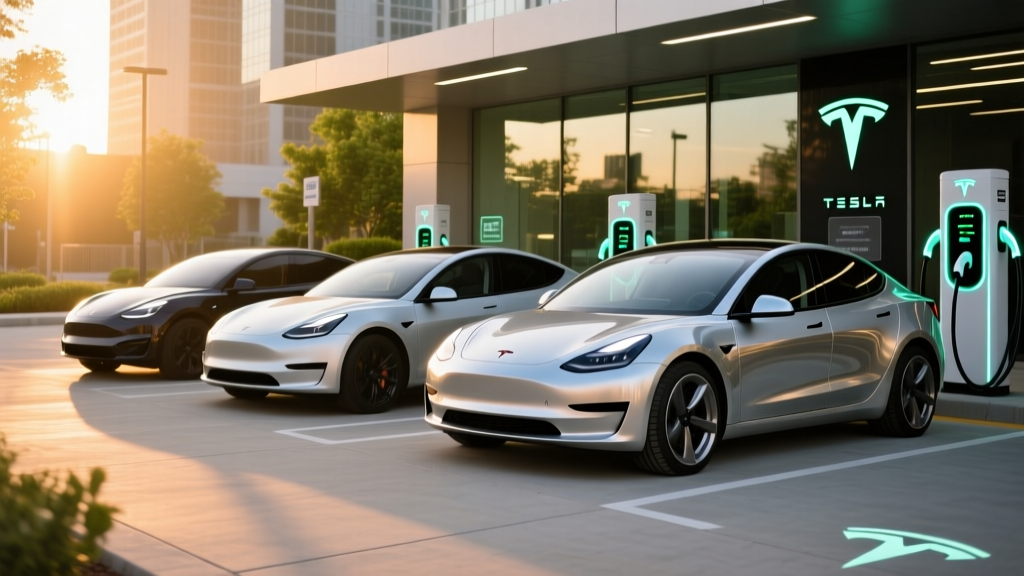
Yes. Every Tesla ever produced is a fully battery-electric vehicle (BEV). Tesla has never manufactured a hybrid, plug-in hybrid, or gasoline-powered car. As of 2026, the lineup includes the Model 3, Model Y, Model S, Model X, and Cybertruck — all powered exclusively by onboard lithium-ion battery packs with zero tailpipe emissions. Tesla also has no plans for hybrid models; the company's engineering roadmap remains fully committed to pure electric powertrains.
That simple answer, though, opens a far more important set of questions for prospective buyers: What does "all-electric" actually mean for your daily driving, your wallet, and your charging routine? Below, we break down every Tesla model's real-world range, charging speed, purchase cost, and ownership economics so you can decide whether going fully electric with Tesla makes sense for your situation.
The 2026 Tesla Lineup: Specs at a Glance
Every current-production Tesla uses a skateboard-style battery pack mounted low in the chassis, driving either a single rear motor or dual-motor all-wheel-drive configuration. Battery chemistry varies by trim: Standard Range models typically use lithium iron phosphate (LFP) cells, while Long Range and Performance variants use nickel-manganese-cobalt (NMC) for higher energy density. Here is the full lineup with EPA-verified figures from fueleconomy.gov:
| Model (2026) | Trim | EPA Range | Battery (usable kWh) | Peak DC Charge (kW) | 10–80% Time | 0–60 mph | Base MSRP |
|---|---|---|---|---|---|---|---|
| Model 3 | Standard Range | 272 mi | ~57.5 (LFP) | 170 kW | ~25 min | 5.8 s | $38,990 |
| Model 3 | Long Range AWD | 363 mi | ~78.1 (NMC) | 250 kW | ~18 min | 4.2 s | $45,990 |
| Model Y | Long Range AWD | 320 mi | ~78.1 (NMC) | 250 kW | ~20 min | 4.8 s | $44,990 |
| Model S | Long Range | 402 mi | ~100 (NMC) | 250 kW | ~22 min | 3.1 s | $79,990 |
| Model X | Long Range | 348 mi | ~100 (NMC) | 250 kW | ~24 min | 3.8 s | $84,990 |
| Cybertruck | AWD | 340 mi | ~123 (NMC) | 250 kW | ~25 min | 4.1 s | $79,990 |
Real-World Range Reality Check
EPA range is measured under controlled conditions. Expect ~15–20% less range at sustained highway speeds (75+ mph) and ~25–35% less in freezing temperatures due to cabin heating and battery chemistry limitations. A Model 3 Long Range rated at 363 mi EPA may deliver 260–290 mi on a cold-weather highway trip. Plan road-trip charging stops accordingly.
Tesla vs. Gas Cars: Real Cost Comparison
The most common question from first-time EV buyers is whether a Tesla actually saves money compared to a conventional gas sedan or crossover. The answer depends heavily on your local electricity rate, annual mileage, and whether you can charge at home. Here's a 5-year ownership comparison between the 2026 Model 3 Long Range and a comparably equipped 2026 Toyota Camry XSE V6 (a popular midsize gas sedan):
| Cost Category | Tesla Model 3 LR AWD | Toyota Camry XSE (Gas) |
|---|---|---|
| Purchase Price (MSRP) | $45,990 | $36,500 |
| Estimated §30D Federal Tax Credit | Up to $7,500* | $0 |
| Effective Purchase Price | ~$38,490 | $36,500 |
| 5-Year Fuel/Energy (15k mi/yr) | $3,750 (home charging @ $0.14/kWh) | $10,500 (@ $3.50/gal, 28 MPG combined) |
| 5-Year Maintenance | ~$1,200 (cabin filter, wipers, tires) | ~$3,800 (oil, filters, brakes, fluids) |
| 5-Year Insurance (avg.) | ~$12,500 | ~$8,500 |
| 5-Year Total Cost | ~$55,940 | ~$59,300 |
*The IRS §30D clean vehicle credit has income caps ($150K single / $300K joint), MSRP limits ($55K sedans, $80K SUVs/trucks), and battery-sourcing requirements that change annually. Verify your eligibility with a tax professional. Point-of-sale transfer is available at participating dealers.
The key takeaway: Tesla's higher sticker price is largely offset by the federal tax credit and dramatically lower energy and maintenance costs. Over 5 years, the Model 3 LR actually costs less to own than a Camry V6 — but only if you can charge at home at residential electricity rates. Public DC fast charging at $0.35–$0.50/kWh erases most of the fuel-cost advantage.
What First-Time Tesla Buyers Must Know About Charging
Because every Tesla is fully electric — no gas engine, no range-extender, no hybrid fallback — your charging strategy is your fuel strategy. Here's what that looks like across the three charging levels:
| Level | Power Source | Max Power (kW) | Miles Added per Hour | Best Use Case |
|---|---|---|---|---|
| Level 1 | Standard 120V outlet | ~1.4 kW | 3–5 mi/hr | Overnight top-up, low daily mileage |
| Level 2 | 240V (dryer outlet / wall connector) | 7.7–11.5 kW | 25–44 mi/hr | Primary home charging, daily needs |
| DC Fast Charge | Supercharger / CCS station | 170–250 kW | ~1,000+ mi/hr (peak) | Road trips, rapid top-ups |
Home charging is non-negotiable for most owners. A Level 2 Tesla Wall Connector ($475) installed on a 60A circuit delivers ~11.5 kW, adding roughly 44 miles of range per hour — enough to fully replenish any Tesla overnight. Professional installation typically costs $800–$2,500 depending on panel proximity and local permit fees. If your home has a 200A electrical panel with spare capacity, expect the lower end. Older 100A panels may require a $2,000–$4,000 upgrade.
Without home charging, Tesla ownership becomes significantly less practical. Relying on public Superchargers or third-party DC fast chargers means 20–30 minute stops several times a week, at per-kWh costs 2–3× higher than home electricity. Before purchasing, honestly assess whether you have a garage, driveway, or workplace with charging access.
Common Misconceptions About Tesla and EVs
| Myth | Fact |
|---|---|
| "Teslas have a hidden gas engine or hybrid mode." | No. Every Tesla is a pure BEV with no internal combustion components whatsoever. There is no fuel tank, no exhaust, and no hybrid fallback. |
| "Tesla batteries need replacing every few years." | Tesla's battery warranty covers 8 years / 100,000–150,000 miles (varies by model) with a minimum 70% capacity retention guarantee. Real-world data shows most packs retain 85–90% after 150K miles. |
| "Autopilot and FSD make the car self-driving." | Tesla's Autopilot and Full Self-Driving (Supervised) are SAE Level 2 driver-assist systems. The driver must remain fully attentive, hands on or near the wheel, at all times. These are not autonomous vehicles. |
| "EVs are worse in cold weather." | Range drops 25–35% in sub-freezing temps — a real limitation. However, preconditioning the battery while plugged in and using seat/steering wheel heaters (instead of cabin air heating) recovers much of that loss. Teslas use heat pumps on all current models to improve cold-weather efficiency. |
| "You can't take a Tesla on a road trip." | The Tesla Supercharger network has 65,000+ connectors globally and is the most reliable DC fast-charging network in North America. With in-car route planning that auto-preconditions the battery, road-trip charging stops average 15–25 minutes. |
| "All Teslas qualify for the $7,500 tax credit." | Eligibility depends on the buyer's adjusted gross income, the vehicle's MSRP (must be under $55K for sedans, $80K for SUVs/trucks), and battery-critical-mineral sourcing rules that tighten yearly. Model S and X exceed MSRP caps. Always check current IRS guidelines. |
SAE Automation Level: What Tesla's Driver-Assist Actually Is
Tesla's Autopilot (standard) and FSD Supervised (paid upgrade, ~$8,000 or $99/mo) are classified as SAE Level 2 — partial driving automation. The system can manage steering, acceleration, and braking under certain conditions, but the human driver is fully responsible for monitoring the road and intervening instantly. This is the same automation level as GM Super Cruise, Ford BlueCruise, and Toyota Safety Sense. No Tesla model is a Level 4 or Level 5 autonomous vehicle. Treat every drive as if you are the driver, not a passenger.
Decision Framework: Should You Buy a Tesla (or Any EV)?
Choose a Tesla (or another BEV) if:
- You have reliable access to Level 2 home or workplace charging.
- Your daily commute is under 100 miles round-trip (covers >90% of US drivers).
- You want to eliminate oil changes, transmission service, and exhaust repairs permanently.
- You qualify for the §30D federal tax credit (or state incentives), narrowing the upfront price gap.
- You drive 12,000+ miles per year, where fuel savings compound fastest.
- You value access to the Supercharger network for road trips.
Consider a Hybrid (PHEV/HEV) or hold off if:
- You live in an apartment or street-park with no charging access and no workplace chargers.
- You regularly drive 300+ miles in rural areas with sparse charging infrastructure.
- You frequently tow heavy loads in cold weather (towing can cut EV range by 40–50%).
- Your budget is under $30,000 and you need a new vehicle — the used EV market or a hybrid like the Toyota Prius Prime may fit better.
- You live in extreme cold (consistently below 0°F) and lack a garage for preconditioning.
Ownership Practicalities: Insurance, Depreciation, and Maintenance
Insurance: Teslas carry higher premiums than comparable gas cars — typically 25–45% more — due to higher repair costs (aluminum body panels, sensor calibration, battery proximity in collisions). Average annual premiums range from $2,200–$3,200 depending on model, state, and driving record. Get quotes before purchasing; Tesla's own insurance product (available in many states) sometimes undercuts third-party carriers.
Depreciation: Tesla prices have fluctuated significantly since 2022 due to aggressive MSRP cuts, which hammered resale values for earlier buyers. As of 2026, Model 3 and Model Y retain roughly 45–55% of MSRP after 3 years — below the Toyota/Acura benchmark but improving as the market stabilizes. Higher-volume models (Model 3/Y) depreciate less in percentage terms than the low-volume Model S/X.
Maintenance: This is where all-electric ownership shines. With no engine oil, spark plugs, timing belts, fuel filters, or exhaust systems, annual maintenance averages $200–$300. The primary recurring costs are cabin air filter replacement (~$50–$100 every 2 years), tire rotation and replacement (EVs are heavier and wear tires faster — budget $800–$1,400 for a set every 30,000–40,000 miles), brake fluid checks, and wiper blades. Regenerative braking means brake pads often last 100,000+ miles.
Frequently Asked Questions
Has Tesla ever made a gas car or hybrid?
No. Since its founding, Tesla has produced only battery-electric vehicles. The original Roadster (2008), Model S (2012), Model X (2015), Model 3 (2017), Model Y (2020), Cybertruck (2023), and all subsequent models are fully electric. CEO Elon Musk has publicly stated that Tesla will not pursue hybrid powertrains, viewing them as a transitional technology.
Do all Teslas use the same charging connector?
All current Tesla vehicles use the North American Charging Standard (NACS) connector, which Tesla designed and opened to other manufacturers in 2022. As of 2025–2026, Ford, GM, Rivian, Volvo, and others have adopted NACS, making the Tesla Supercharger network accessible to non-Tesla EVs and expanding Tesla's connector ecosystem. Tesla vehicles can also charge at CCS stations using an adapter (included with newer vehicles, ~$175 separately).
What happens if a Tesla battery fails out of warranty?
Out-of-warranty battery replacement costs approximately $12,000–$16,000 for a Model 3/Y and $18,000–$22,000 for a Model S/X, including labor. However, catastrophic battery failure is rare; most degradation is gradual capacity loss (roughly 10–15% over 150,000 miles). Tesla's battery management system, thermal management, and LFP chemistry (on Standard Range trims) are designed for longevity. Many high-mileage Teslas exceed 200,000 miles on the original pack.
Can I charge a Tesla at non-Tesla charging stations?
Yes. With the included NACS-to-CCS adapter (or built-in compatibility on 2025+ models), Teslas can use Electrify America, EVgo, ChargePoint, and other CCS networks. However, the Supercharger network remains the most reliable option, with 99.9%+ uptime and seamless plug-and-charge billing. Third-party networks have improved but still experience occasional connector or payment-app failures.
Is a Tesla cheaper to own than a gas car over 5 years?
For most drivers charging primarily at home, yes. Based on 15,000 miles/year, $0.14/kWh home electricity, and $3.50/gallon gas, a Model 3 Long Range saves roughly $6,750 in fuel and $2,600 in maintenance over 5 years compared to a similar gas sedan. Higher insurance premiums (~$4,000 more over 5 years) partially offset these savings, but the net advantage is typically $4,000–$6,000 in the EV's favor — before factoring in the federal tax credit.