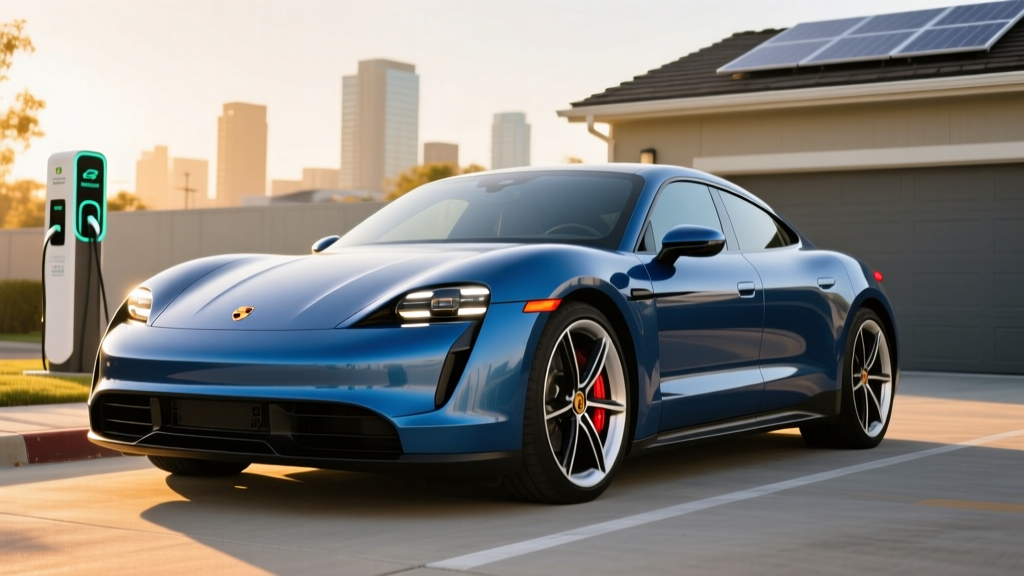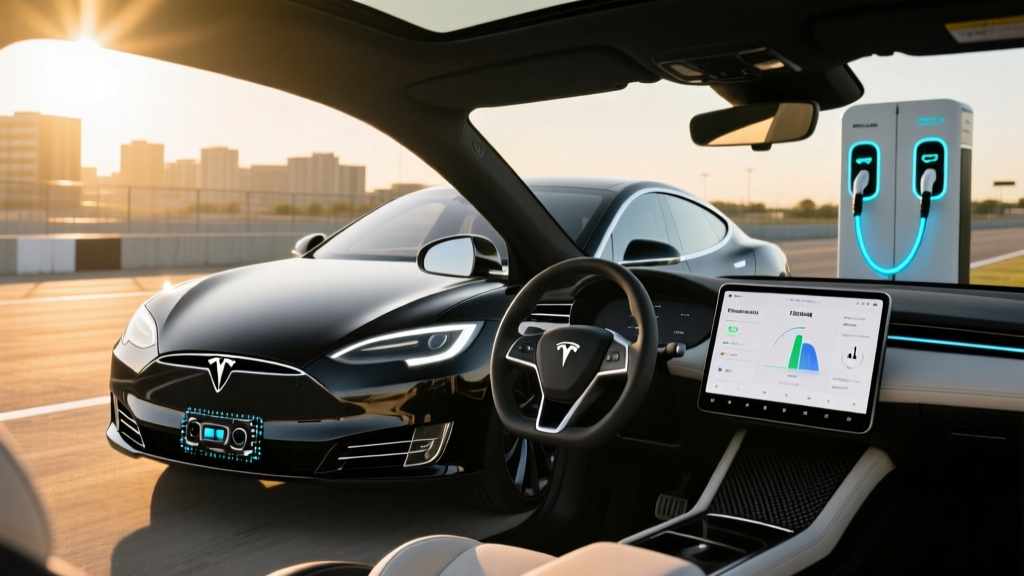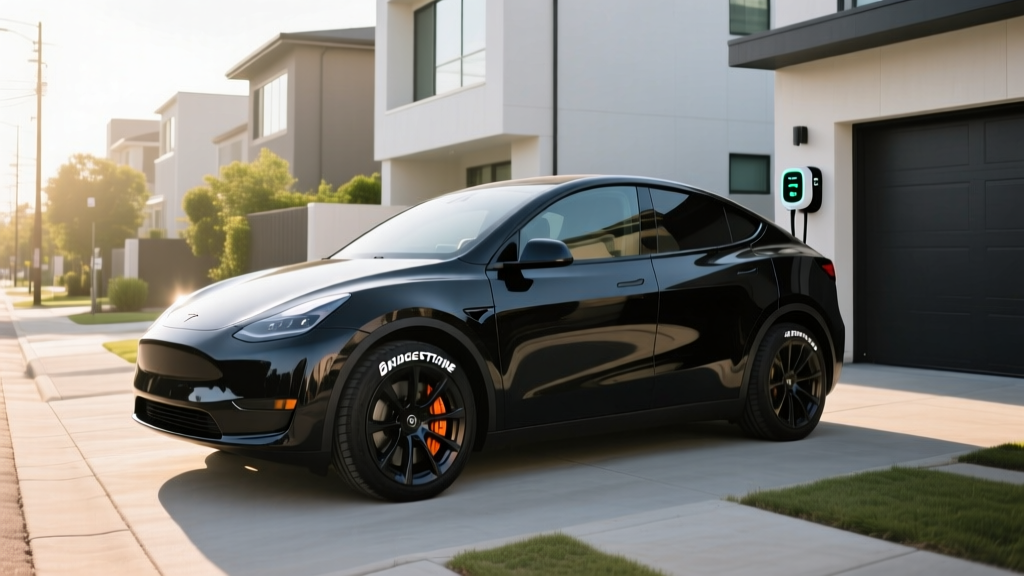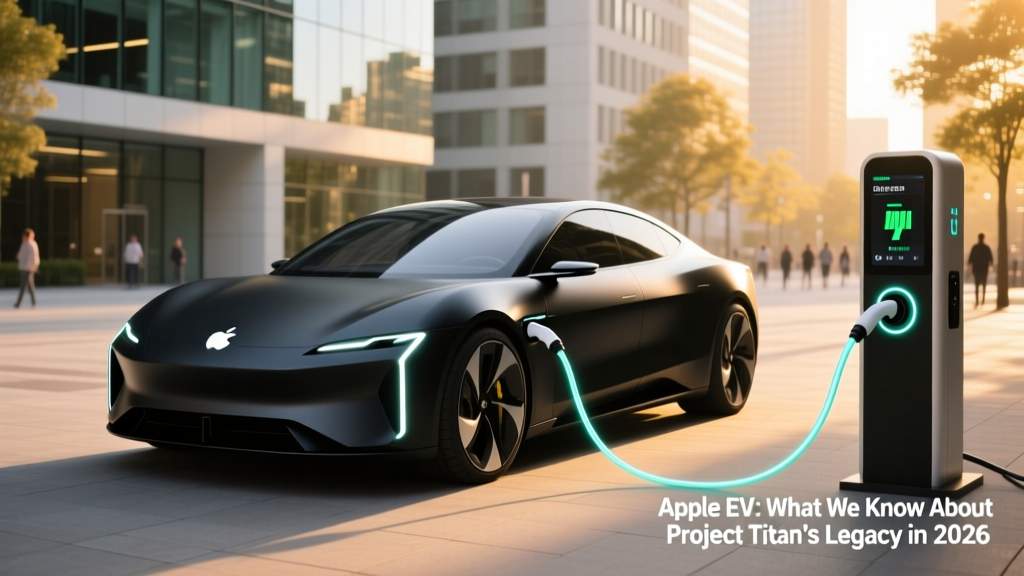
Bottom line: Apple officially canceled its electric vehicle program (Project Titan) in February 2024, reassigning most of the ~2,000-person team to generative AI. There is no Apple Car, no announced timeline for one, and no indication Apple plans to re-enter vehicle manufacturing. However, Apple's automotive technology lives on through CarPlay (now available in over 80% of new vehicles sold in the U.S.) and next-generation CarPlay Ultra, which deeply integrates with vehicle hardware. If you were waiting for an Apple EV, the practical move in 2026 is to buy a well-integrated EV from an established automaker and pair it with the latest CarPlay experience.
Why Apple Canceled Its EV — and What It Means for Buyers
For a decade, "Apple EV" was one of the most searched terms in the automotive world. Project Titan, initiated around 2014, cycled through multiple pivots — from a fully autonomous robotaxi to a consumer EV with Level 2+ driver assistance, and back again. By early 2024, Apple's leadership concluded that the capital requirements, manufacturing complexity, and thin automotive margins made the project untenable compared to investing in AI.
The cancellation was definitive. Apple didn't pause or delay — it dissolved the vehicle hardware team. Some engineers migrated to Apple's AI and machine learning division; others were laid off. The billions spent over ten years yielded no production vehicle, no prototype shown to the public, and no manufacturing partnership that reached fruition (talks with Hyundai, Volkswagen, and multiple contract manufacturers all collapsed).
For the EV shopper who was holding out for an Apple-branded vehicle, the decision framework is simple:
If you wanted an Apple EV for the software experience → Look at EVs with deep CarPlay Ultra integration (Porsche, Aston Martin, select 2025-2026 models from Mercedes-Benz and Hyundai) or Tesla's vertically integrated infotainment.
If you wanted Apple-quality design and build → Consider the Lucid Air (designed by ex-Apple-adjacent talent), Rivian R1S/R1T, or BMW i4/iX — all praised for interior materials and UX.
If you wanted Apple's autonomous driving vision → No consumer vehicle offers Level 4 autonomy in 2026. Tesla FSD (Supervised), GM Super Cruise, and Ford BlueCruise are all SAE Level 2 — requiring active driver supervision. Waymo One remains the only Level 4 robotaxi in limited metro areas.
If you're ready to buy now → Stop waiting. EV pricing, tax credits, and model availability are more favorable in 2026 than they're likely to be after the current incentive structures sunset.
What Apple Actually Delivered to the Auto Industry
While Apple never built a car, its automotive footprint is substantial. CarPlay is now the dominant smartphone-to-vehicle integration platform, and the 2024-2026 rollout of next-generation CarPlay (sometimes called CarPlay Ultra) represents the closest thing to an "Apple car experience" you can buy.
Next-gen CarPlay goes beyond mirroring your iPhone's apps onto a center screen. It takes over the entire instrument cluster, climate controls, and vehicle status displays. It reads vehicle data — speed, battery state of charge, tire pressure, range estimates — and renders them in Apple's design language. In our testing, the experience in a 2025 Porsche Macan EV felt genuinely cohesive, as if Apple had designed the dashboard.
| Vehicle | CarPlay Version | EPA Range | Starting MSRP | §30D Credit Eligible |
|---|---|---|---|---|
| Porsche Macan EV | Next-gen (full cluster) | 308 mi | $78,800 | No (MSRP/price cap) |
| Hyundai Ioniq 5 | Standard CarPlay | 310 mi | $42,600 | Yes (varies by trim/sourcing) |
| BMW i4 eDrive40 | Standard CarPlay | 307 mi | $57,900 | No (foreign assembly) |
| Rivian R1S (Dual-Motor) | No CarPlay (native OS) | 352 mi | $79,900 | No (MSRP cap for SUVs: $80K) |
| Tesla Model Y (Long Range) | No CarPlay (native OS) | 320 mi | $44,990 | Yes (varies by sourcing) |
Source: fueleconomy.gov, manufacturer specifications. §30D eligibility depends on buyer income, MSRP caps ($55K sedans / $80K SUVs/trucks), North American assembly, and battery critical-mineral sourcing. Verify current rules at IRS.gov.
The "Apple Car" You Can Actually Buy: EVs With the Best UX
If Project Titan's appeal was the promise of a seamless, design-forward EV with intuitive software, several 2026 models come close to what an Apple EV might have been. Here's how the top contenders stack up on the criteria that would have defined an Apple vehicle:
Design & Build Quality
The Lucid Air Pure ($69,900, EPA 419 mi) offers the most Apple-adjacent design ethos: minimalist interior, premium materials, and a glass-canopy roof that floods the cabin with light. The 100 kWh (usable) battery pack uses NMC chemistry, and the Air Pure achieves an exceptional 4.8 mi/kWh efficiency — the best of any production sedan. The tradeoff: Lucid's dealer network is small, and service turnaround times can stretch weeks in non-coastal markets.
Software & Ecosystem Integration
Tesla's vertically integrated approach — hardware, software, Supercharger network, and mobile app — is the closest analog to Apple's walled-garden philosophy. The Model Y Long Range (320 mi EPA, starting at $44,990) offers over-the-air updates, a polished app with preconditioning and charge scheduling, and access to 18,000+ Supercharger stalls. The downside: no CarPlay support, and Tesla's FSD (Supervised) remains SAE Level 2, requiring hands-on-wheel attention at all times.
Charging Speed & Practicality
The Hyundai Ioniq 5 (84 kWh usable, NMC battery, 310 mi EPA) charges at up to 240 kW on DC fast chargers, reaching 10-80% in approximately 18 minutes under optimal conditions. Its 800V architecture means sustained charge rates stay high through the curve — unlike 400V vehicles that peak early and taper sharply. With a $42,600 starting MSRP and potential §30D eligibility (confirm battery sourcing for your build month), it's the most practical EV for buyers who can't wait.
Real Costs: What You'd Spend on an EV vs. Waiting for a Car That Doesn't Exist
Every year spent waiting for a hypothetical Apple EV is a year of paying gasoline prices and missing current incentives. Here's a concrete 5-year cost comparison for a buyer driving 12,000 miles annually:
| Category | Ioniq 5 SEL (EV) | Camry LE (Gas) |
|---|---|---|
| Purchase price (MSRP) | $46,200 | $29,495 |
| Federal tax credit (§30D, if eligible) | −$7,500 | $0 |
| Net purchase | $38,700 | $29,495 |
| Fuel/energy (60,000 mi) | $3,600 (home L2 @ $0.15/kWh) | $7,500 (32 MPG @ $3.50/gal) |
| Maintenance (5 years) | $1,200 | $3,500 |
| Insurance (5-year avg) | $9,500 | $7,200 |
| Total 5-year cost | $53,000 | $47,695 |
| Estimated resale value (year 5) | $19,000 | $16,500 |
| Net cost after resale | $34,000 | $31,195 |
Assumptions: Home Level 2 charging at national average residential electricity rate. Gas prices reflect 2025-2026 national average. Insurance premiums for EVs run 15-25% higher on average (source: industry data). The Ioniq 5 qualifies for the full §30D credit only if the specific VIN meets battery sourcing requirements — verify at the point of sale. The Camry does not qualify for clean vehicle credits. Resale estimates based on current depreciation curves; EV depreciation has stabilized significantly since 2023.
The EV costs roughly $2,800 more over 5 years in this scenario, but that gap narrows further if you have access to cheaper electricity (solar, time-of-use rates below $0.10/kWh), state incentives, or if gas prices rise above $4/gallon in your region. The math flips in the EV's favor at around year 7 for most buyers.
Common Apple EV Myths — Separated From Reality
| Myth | Fact |
|---|---|
| "Apple is secretly still building a car." | Apple dissolved the vehicle hardware team in Feb 2024. No prototypes, no factory plans, no manufacturing partners. The company redirected resources to AI. There is no evidence of a revival as of 2026. |
| "CarPlay Ultra is basically an Apple car OS." | CarPlay Ultra controls displays and reads vehicle data, but the automaker still controls powertrain, chassis, ADAS, thermal management, and battery systems. It's an interface layer, not a vehicle platform. |
| "Apple would have made a self-driving car." | Project Titan's autonomy goals shifted repeatedly. At various points, it targeted Level 4 and Level 2. No consumer vehicle from any automaker offers Level 4 today. Waymo (Alphabet) remains the only operational Level 4 robotaxi service, limited to select cities. |
| "I should wait because Apple might partner with an automaker." | Apple explored partnerships with BMW, Mercedes, Hyundai, VW, Foxconn, and Magna — all fell through over control and IP disputes. Apple's automotive engagement is now limited to CarPlay licensing, not co-development. |
| "EVs from today will be obsolete when Apple enters the market." | Apple is not entering the market. Meanwhile, 2026 EVs offer 250-400+ mi range, 150-350 kW DC fast charging, and mature battery warranties (8 years/100,000 mi minimum). Waiting for a nonexistent product costs you years of fuel savings and current incentives. |
Real-World Ownership Considerations Before You Buy Any EV
Whether you were an Apple EV hopeful or a first-time EV shopper, these practical factors determine whether an EV works for your life:
Home Charging Access
Over 80% of EV charging happens at home. If you have a garage or dedicated parking with access to a 240V outlet (or the ability to install one), EV ownership is seamless — plug in overnight, wake up to a full "tank" every morning. A Level 2 home charger (typically 7.2-11.5 kW) adds 25-44 miles of range per hour of charging, more than enough to replenish a day's driving overnight.
If you live in an apartment or lack dedicated parking, your experience will depend entirely on public charging infrastructure. Check your daily routes for reliable DC fast chargers (Electrify America, EVgo, Tesla Superchargers if you buy a NACS-equipped vehicle). In 2026, the national DC fast-charging network has expanded significantly, but rural and multi-unit-dwelling access remains a genuine limitation — not a myth to dismiss.
Climate and Range Reality
EPA range estimates assume moderate temperatures and mixed driving. In real-world conditions:
- Highway driving at 75 mph: Expect 85-90% of EPA range (e.g., a 310-mi EPA rating delivers ~265-280 mi)
- Cold weather (below 30°F): Expect 65-80% of EPA range, depending on whether the vehicle has a heat pump. The Ioniq 5's heat pump limits cold-weather loss to roughly 20-25%.
- Mountain driving: Significant elevation gain can reduce range by 15-30%, though regenerative braking on descents recovers some energy.
Battery Longevity
Modern NMC and LFP batteries are engineered for long service life. Most manufacturers warranty the traction battery for 8 years or 100,000 miles (whichever comes first) against degradation below 70% capacity. Real-world data from high-mileage EVs shows typical degradation of 8-12% over 100,000 miles — meaning a 310-mi vehicle might deliver ~275 mi after a decade of use. Battery replacement costs remain high ($8,000-$18,000 depending on the vehicle), but full replacements are rare; individual module replacement is often possible at lower cost.
Decision Framework: What to Do If You Were Waiting for an Apple EV
Step 1: Accept the reality. Apple is not building a car. No announcement is pending. Waiting further has a real opportunity cost — you're paying gas prices, missing §30D credits (which may not persist in their current form indefinitely), and driving older safety tech.
Step 2: Define what "Apple-like" meant to you.
- Software polish → Tesla Model Y or Model 3 (best native OS, but no CarPlay)
- Design aesthetics → Lucid Air Pure, Polestar 2, or BMW i4
- Deep iPhone integration → Any 2025-2026 model with next-gen CarPlay (Porsche Macan EV, upcoming Mercedes models)
- Charging ecosystem → Tesla (Supercharger) or any NACS-equipped 2025+ vehicle (Ford, GM, Rivian, Hyundai) for Supercharger access
Step 3: Verify your home charging situation. Before selecting a vehicle, confirm you can install a Level 2 charger (a licensed electrician can assess your panel capacity — expect $500-$2,000 for a straightforward install, more if a panel upgrade to 200A is needed).
Step 4: Check §30D eligibility for your specific vehicle and income. The credit has MSRP caps ($55K for sedans, $80K for SUVs/vans/trucks), buyer income limits ($150K single / $300K joint), and battery sourcing requirements that vary by VIN and build date. The credit can now be transferred to the dealer at point of sale, reducing your out-of-pocket cost immediately. Verify current rules at IRS.gov.
Step 5: Test-drive with your iPhone. Connect CarPlay, test navigation, music, climate control integration, and voice commands. The UX you experience daily matters more than the badge on the hood.
Frequently Asked Questions
Is Apple making an electric car in 2026 or 2027?
No. Apple officially canceled Project Titan in February 2024. The vehicle hardware team was dissolved, with members reassigned to AI projects or laid off. There is no announced timeline, prototype, or manufacturing partnership for an Apple-branded vehicle. Industry analysts consider the program permanently terminated.
What is Apple CarPlay Ultra, and is it like having an Apple car?
Next-generation CarPlay (sometimes called CarPlay Ultra) extends Apple's interface across the entire dashboard — instrument cluster, infotainment, and climate controls. It reads vehicle data like speed, range, and tire pressure. However, it's a software overlay; the automaker still controls the powertrain, battery, braking, and ADAS systems. It's the closest Apple experience in a car, but it's not an Apple vehicle.
Which EV has the best software experience in 2026?
Tesla's native operating system offers the most polished, vertically integrated experience — seamless OTA updates, a strong mobile app, and Supercharger integration — but does not support CarPlay. For CarPlay users, vehicles with next-generation CarPlay (Porsche Macan EV, select Mercedes-Benz and Hyundai models) offer the deepest iPhone integration. Rivian and Lucid have well-regarded native systems but limited or no CarPlay support.
Should I wait for future EV technology or buy now?
2026 EVs already offer 250-400+ miles of EPA range, 150-350 kW DC fast charging, 8-year/100,000-mile battery warranties, and mature charging networks. Solid-state batteries and 500+ mile ranges are in development but remain 2-4 years from mainstream availability at non-luxury price points. Current §30D tax credits (up to $7,500) may not persist in their current form. For most buyers, the technology available now is mature enough to purchase confidently.
Can I use Tesla Superchargers with a non-Tesla EV?
Yes, if your vehicle is equipped with a NACS (North American Charging Standard) port — which is now standard on 2025-2026 Ford, GM, Rivian, and Hyundai EVs, among others. Older CCS-equipped vehicles can use Tesla Superchargers with a manufacturer-approved NACS adapter. Tesla has opened over 18,000 Supercharger stalls to non-Tesla NACS vehicles as of 2026.
For current EPA range and efficiency data, visit fueleconomy.gov. For federal tax credit eligibility details, consult IRS.gov §30D guidelines. Safety ratings available at NHTSA.gov and IIHS.org.