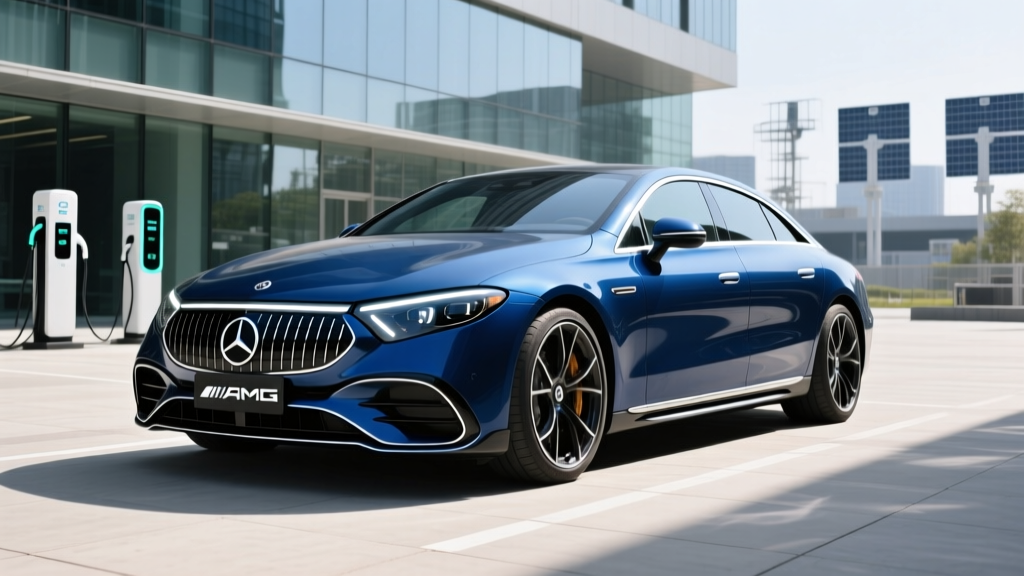
The Mercedes-AMG EQS Sedan represents the electrified pinnacle of AMG performance, blending hypercar acceleration with the luxury sedan formula Mercedes has perfected over decades. For 2026, the AMG EQS continues to offer dual-motor all-wheel drive, a massive 118 kWh battery pack, and the kind of tech-laden cabin that justifies its six-figure price tag. But performance EVs live and die by their real-world range and charging speed—and the AMG EQS has specific strengths and compromises buyers need to understand before signing.
AMG EQS Sedan: Quick Verdict
The 2026 Mercedes-AMG EQS 53 4MATIC+ delivers supercar-rivaling acceleration (0-60 mph in 3.4 seconds) wrapped in a full-size luxury sedan with genuine 300+ mile range. It excels as a daily driver that can demolize a canyon road, but its 800-volt-class competitors from Porsche and Hyundai/Kia charge noticeably faster. If you want AMG performance with Mercedes S-Class comfort and don't mind paying a premium, the EQS 53 remains compelling—but buyers should weigh it carefully against the Taycan Turbo S and Model S Plaid.
Range, Battery & Real-World Efficiency
| Spec | Value |
|---|---|
| EPA Range | 305 miles |
| Battery (usable) | 118 kWh, NMC chemistry |
| Efficiency | 79 MPGe combined / 42 kWh/100mi |
| Max DC Fast Charge | 200 kW (peak) |
| 10–80% DC Charge Time | ~31 minutes |
| Level 2 Home Charge Rate | 9.6 kW (~27 mi/hr) |
| 0–60 mph | 3.4 seconds |
| Horsepower | 649 hp (751 hp w/ AMG Dynamic Plus) |
| Drivetrain | Dual-motor AWD (4MATIC+) |
| Base MSRP | $149,350 |
| Battery Warranty | 10 years / 150,000 miles |
The AMG EQS uses a 118 kWh usable lithium-ion battery with NMC (nickel-manganese-cobalt) chemistry—chosen for its high energy density, which is necessary to push a 5,800-pound sedan past 300 miles. NMC offers superior range-per-kilogram compared to LFP (lithium iron phosphate), but LFP's longer cycle life and lower cost are why you see it in more affordable models. For a performance flagship, NMC is the correct engineering choice.
Efficiency is the AMG's trade-off. At 42 kWh per 100 miles (79 MPGe combined, per fueleconomy.gov), it consumes roughly 40% more energy per mile than a Lucid Air Grand Touring (which achieves 131 MPGe combined). Heavy mass, aggressive AWD powertrain tuning, and wide performance tires all contribute. On a road trip, you'll stop to charge more often than in a more efficient luxury EV.
Charging Speed: DC Fast & Home Level 2
The AMG EQS supports up to 200 kW peak DC fast charging on CCS1 connectors. Mercedes quotes a 10–80% charge time of approximately 31 minutes under ideal conditions (battery preconditioned, ambient temperature 68–77°F, charger capable of sustaining 200 kW).
| Charging Level | Power / Rate | Time / Range Added |
|---|---|---|
| Level 1 (120V outlet) | ~1.4 kW | ~4 miles per hour |
| Level 2 (240V home) | 9.6 kW | ~27 miles per hour (full charge ~12.5 hrs) |
| DC Fast (CCS1) | 200 kW peak | 10–80% in ~31 min; ~186 mi added |
Charging curve reality: The 200 kW peak is not sustained across the full session. The AMG EQS typically holds above 150 kW from roughly 10–40% State of Charge (SoC), then tapers progressively. From 80–100%, charging slows dramatically to protect battery health—plan to charge to 80% on road trips and move on. This taper behavior is normal for NMC packs but means your average charging speed across a 10–80% session is closer to 130–140 kW.
Compared to 800-volt rivals like the Porsche Taycan Turbo S (270 kW peak, 10–80% in ~22 minutes) or the Hyundai Ioniq 5 N (240 kW, ~18 minutes), the AMG EQS charges noticeably slower. On a 600-mile road trip, this can add 20–30 extra minutes of total charging time. For daily use with home Level 2 charging, this is irrelevant—you plug in overnight and wake up full.
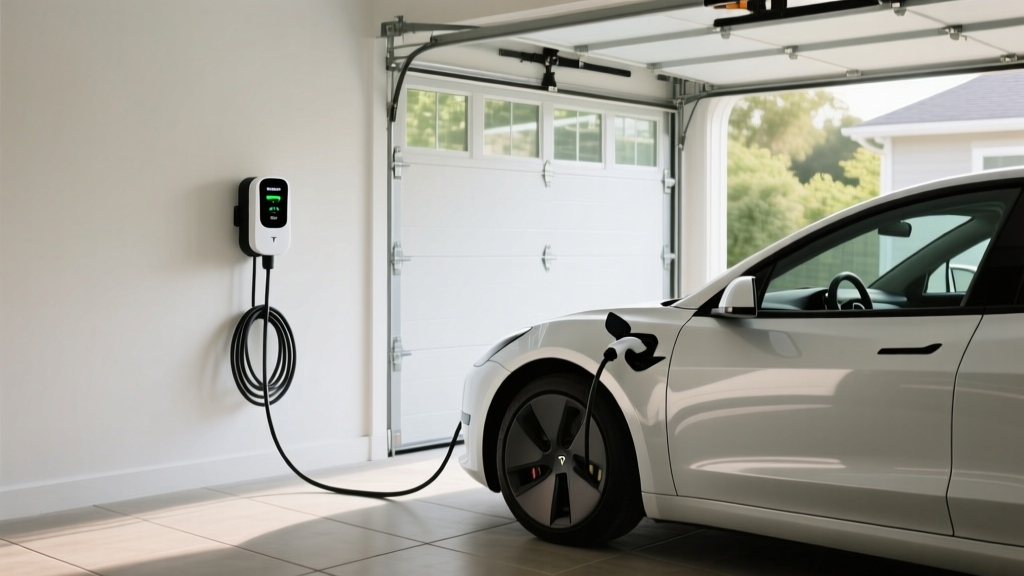
For home charging, the onboard 9.6 kW AC charger adds roughly 27 miles of range per hour, meaning a full 0–100% charge takes about 12.5 hours. Most owners will rarely deplete the full battery and will typically need 6–8 hours for a meaningful top-up. A 48-amp Level 2 home charger (hardwired, NEMA 14-50 or wall connector) is strongly recommended—installation typically costs $800–$2,000 depending on panel capacity and run length.
Performance & Driving Dynamics
The AMG EQS 53 puts out 649 horsepower and 701 lb-ft of torque in standard trim, rising to 751 hp and 752 lb-ft with the optional AMG Dynamic Plus package (which activates a temporary overboost mode via RACE START). The 0–60 mph sprint takes 3.4 seconds (standard) or approximately 2.8 seconds with the Dynamic Plus package engaged.
Power delivery is instant and relentless, as expected from dual-motor AWD. The AMG-tuned air suspension with adaptive dampers manages the sedan's 5,800-pound curb weight impressively well in Sport and Sport+ modes, though physics ultimately wins—the car is more confident on sweeping highways than tight autocross courses. Rear-axle steering (up to 10 degrees, optional) dramatically shrinks the turning circle and makes this full-size sedan feel agile in parking lots and urban canyons.
The AMG-specific drive modes—Slippery, Comfort, Sport, Sport+, and Individual—alter throttle mapping, suspension firmness, steering weight, and even the synthesized AMG sound profile. Brake feel from the regenerative braking system is among the best-calibrated in the EV segment, with a natural pedal transition between regen and friction braking.
Interior, Cargo & Technology
The cabin is dominated by the optional MBUX Hyperscreen—a 56-inch curved glass panel spanning the entire dashboard, integrating a 12.3-inch instrument cluster, 17.7-inch central OLED touchscreen, and 12.3-inch passenger display. The Hyperscreen runs Mercedes' latest MBUX software with over-the-air updates, wireless Apple CarPlay/Android Auto, and natural-language voice control ("Hey Mercedes").
Standard technology includes:
- 64-color ambient lighting with AMG-specific themes
- Burmester 4D surround sound system (15 speakers, 710 watts)
- Heated and ventilated front seats with massage function
- Wireless smartphone charging (front and rear)
- Head-up display with augmented-reality navigation
- HEPA cabin air filtration (Energizing Air Control Plus)
Passenger space: Front legroom is 41.7 inches; rear legroom is 41.3 inches—generous for all occupants. Headroom is adequate front (40.4 in) but slightly compromised in the rear (38.3 in) due to the sloping roofline.
Cargo capacity: The trunk offers 22 cubic feet of space, which is excellent for a sedan and rivals some midsize SUVs. There is no front trunk (frunk)—the space under the hood is occupied by power electronics and HVAC components, which is a missed opportunity for an EV at this price.
Pricing, Trims & Federal Tax Credit
| Trim | Base MSRP | As-Tested (Typical) |
|---|---|---|
| AMG EQS 53 4MATIC+ | $149,350 | $162,000–$175,000 |
| AMG EQS 53 w/ Dynamic Plus Pkg | $156,850 | $170,000–$185,000 |
Destination charges add $1,150. Popular options that push the as-tested price upward include the AMG Dynamic Plus package ($7,500), MBUX Hyperscreen ($8,000), AMG Night Package ($2,500), rear-axle steering ($1,950), and Executive Rear Seat Package ($3,800).
- MSRP cap: §30D limits the credit to sedans with an MSRP of $55,000 or less. The AMG EQS starts at $149,350—nearly triple the cap.
- Income cap: Buyer modified adjusted gross income (MAGI) must not exceed $150,000 (single) / $300,000 (joint). Many AMG buyers exceed these thresholds.
AMG EQS vs. Key Competitors
| Spec | AMG EQS 53 | Porsche Taycan Turbo S | Tesla Model S Plaid | BMW i7 M70 |
|---|---|---|---|---|
| EPA Range | 305 mi | 283 mi | 396 mi | 295 mi |
| 0–60 mph | 3.4s | 2.4s | 1.99s | 3.5s |
| Horsepower | 649 hp | 750 hp | 1,020 hp | 650 hp |
| Peak DC Charge | 200 kW | 270 kW | 250 kW | 195 kW |
| Base MSRP | $149,350 | $197,400 | $89,990 | $169,695 |
| Cargo (cu ft) | 22 | 14.3 | 28 | 17.7 |
vs. Porsche Taycan Turbo S: The Taycan wins on outright performance (0–60 in 2.4s) and charging speed (270 kW, 10–80% in ~22 min), but sacrifices range (283 mi) and cargo space (14.3 cu ft). It also costs $48,000 more. The AMG EQS is the more practical daily driver; the Taycan is the sharper track tool.
vs. Tesla Model S Plaid: The Plaid dominates on price ($89,990—$59,000 less), range (396 mi), and raw acceleration (1.99s to 60). But cabin quality, ride refinement, and dealer service infrastructure are areas where Mercedes retains a clear advantage. The Plaid is a performance bargain; the AMG EQS is a luxury statement.
vs. BMW i7 M70: Closest rival in philosophy and price. The i7 M70 offers similar luxury, slightly less power (650 hp), and marginally less range (295 mi). The AMG EQS edges ahead on efficiency (MPGe) and trunk space, while the i7 wins on rear-seat executive comfort and available theater screen.
Pros & Cons
Pros
- 305-mile EPA range is excellent for a performance sedan
- Supremely quiet, comfortable cabin at highway speed
- MBUX Hyperscreen is visually stunning and functional
- 22 cu ft trunk rivals midsize SUVs
- AMG-tuned air suspension handles mass impressively
- 10-year/150,000-mile battery warranty exceeds industry standard
Cons
- 200 kW peak DC charging trails 800V competitors
- 42 kWh/100mi efficiency is poor for the segment
- No front trunk (frunk)
- $150K+ price with no federal tax credit eligibility
- Rear headroom compromised by roofline
- 5,800-lb mass is felt during aggressive cornering
Who Should Buy the AMG EQS Sedan?
Choose the AMG EQS 53 if:
- You want a full-size luxury sedan that can hit 60 mph in 3.4 seconds but still deliver 300+ miles of range
- Cabin quality, ride comfort, and dealer service network are top priorities
- You primarily charge at home (Level 2) and road-trip occasionally
- You value the MBUX Hyperscreen and Mercedes tech ecosystem
Look elsewhere if:
- Maximum DC charging speed is critical (consider Porsche Taycan or Hyundai Ioniq 5 N)
- Efficiency and lowest cost-per-mile matter (consider Lucid Air or Tesla Model S)
- Track-day performance is the primary use case (Taycan Turbo GT or Model S Plaid)
- Budget is a concern (Model S Plaid delivers more performance for $60K less)
Ownership Costs & Warranty
Mercedes-Benz provides a 4-year/50,000-mile limited vehicle warranty and a 10-year/150,000-mile high-voltage battery warranty (covering capacity below 70% of original). This battery warranty exceeds the federal minimum of 8 years/100,000 miles and provides meaningful long-term protection.
Estimated annual insurance for the AMG EQS 53 runs $4,500–$6,200 depending on location, driving record, and coverage level—typical for a $150K+ performance EV. Maintenance costs are lower than ICE AMG models (no oil changes, fewer brake pad replacements due to regen), but tire replacement for the standard 21-inch AMG performance tires can cost $1,800–$2,400 per set.
Charging cost at home (national average $0.16/kWh) works out to approximately $0.067 per mile, compared to $0.14–$0.18/mile for a comparable gasoline AMG E63 on premium fuel. On public DC fast chargers ($0.35–$0.50/kWh), cost rises to $0.15–$0.21/mile—roughly comparable to gasoline.
Frequently Asked Questions
What is the real-world range of the AMG EQS 53?
EPA-rated at 305 miles, real-world highway driving at 70–75 mph yields approximately 255–275 miles. Cold weather (below freezing) can reduce this to 215–245 miles. City driving with frequent regenerative braking can approach or slightly exceed the EPA estimate.
How fast does the AMG EQS charge?
On a DC fast charger, it peaks at 200 kW and charges from 10–80% in approximately 31 minutes. At home on a Level 2 (9.6 kW) charger, it adds about 27 miles of range per hour, with a full charge taking roughly 12.5 hours.
Does the AMG EQS qualify for the federal EV tax credit?
No. The $7,500 federal tax credit under IRS §30D has an MSRP cap of $55,000 for sedans. The AMG EQS starts at $149,350 and is ineligible. Buyer income caps and battery-sourcing rules are additional barriers. No federal credit should be expected at this price point.
Is the AMG EQS worth buying over the Tesla Model S Plaid?
It depends on priorities. The Model S Plaid is faster (1.99s 0–60), has more range (396 mi), charges faster (250 kW), and costs $60,000 less. The AMG EQS wins on cabin luxury, ride refinement, dealer service experience, and brand prestige. Neither is objectively "better"—they serve different buyers.
What is the battery chemistry and will it last?
The AMG EQS uses an NMC (nickel-manganese-cobalt) lithium-ion battery. NMC offers high energy density suited to performance applications. Mercedes warrants the battery for 10 years/150,000 miles against capacity loss below 70%. Based on current NMC degradation data, owners can expect approximately 85–90% capacity retention after 100,000 miles under normal use.
Does the AMG EQS have a frunk (front trunk)?
No. The space under the hood houses power electronics, the onboard charger, and HVAC components. All cargo must go in the 22-cubic-foot rear trunk.