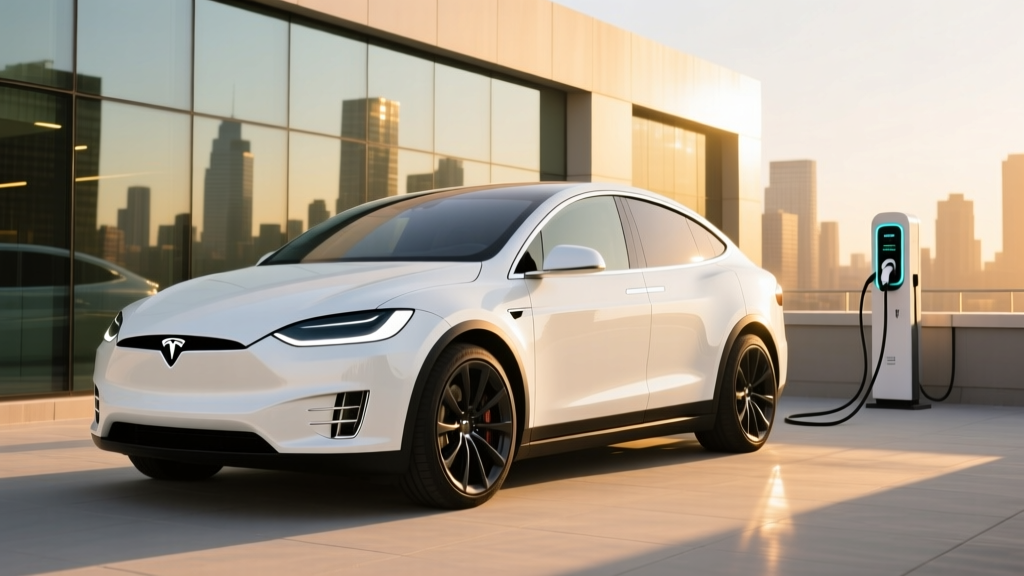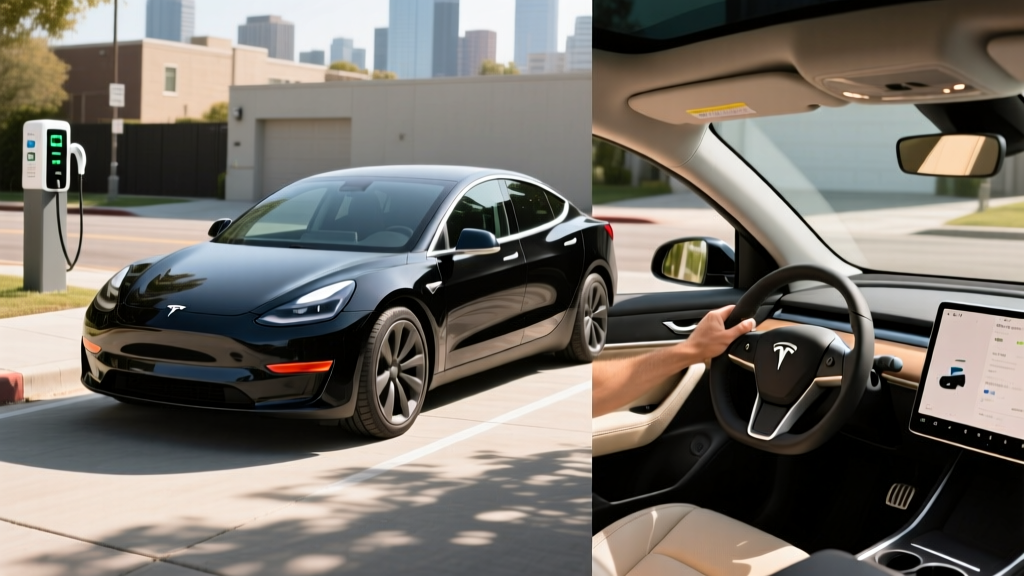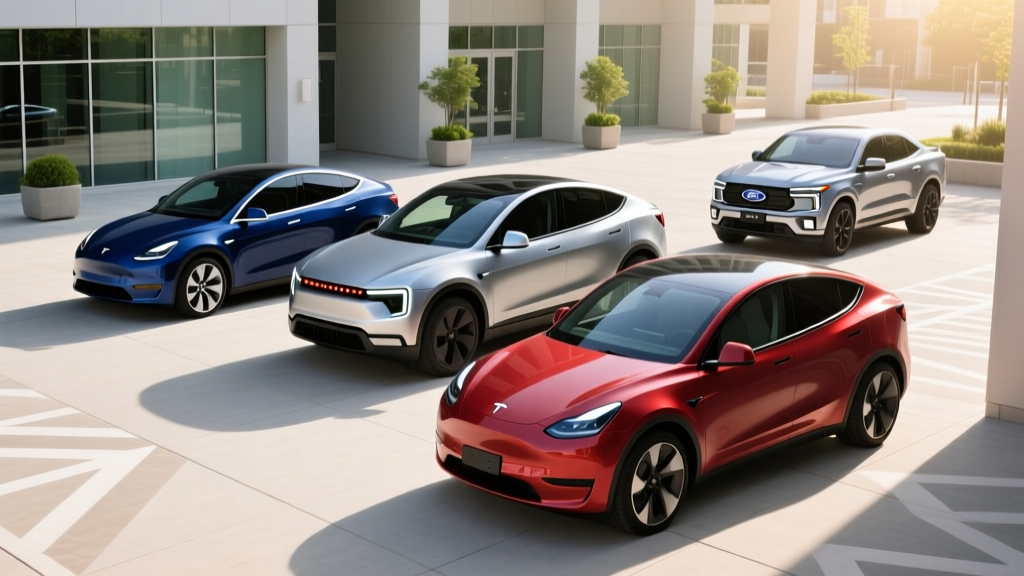
Quick Answer: Which American Made EVs Should You Buy in 2026?
If you want a domestically built EV that qualifies for the federal §30D tax credit, your strongest 2026 options are the Tesla Model Y (Long Range, 320 mi EPA, ~$44,990), Ford F-150 Lightning (Extended Range, 320 mi EPA, ~$69,995), Chevrolet Equinox EV (RS AWD, 319 mi EPA, ~$43,400), and the Tesla Model 3 (Long Range, 363 mi EPA, ~$42,490). Eligibility for up to $7,500 in federal credits depends on your income, the vehicle's MSRP cap, and battery/critical-mineral sourcing rules that shift yearly — always confirm on IRS.gov before signing.
What "American Made" Actually Means for EVs
There's no single legal definition of "American made" in the EV world, so buyers need to look at three different metrics:
- Final assembly location: The car must be assembled in North America to qualify for the §30D new clean vehicle credit. Tesla's Fremont and Austin plants, Ford's Rouge Electric Vehicle Center in Michigan, GM's Factory ZERO in Detroit-Hamtramck, and Hyundai's Metaplant in Georgia all count.
- American Automotive Labeling Act (AALA) content: This tracks the percentage of US/Canadian parts in the vehicle. The Tesla Model Y typically leads here at 65-75% US/Canadian content.
- Battery sourcing: Under current §30D rules, a growing percentage of battery components must be manufactured or assembled in North America, and critical minerals must be sourced from the US or free-trade-agreement partners. These thresholds tighten each year through 2029.
A vehicle can be assembled in the US but still lose its tax credit if battery sourcing doesn't meet current-year thresholds. That's why you'll see some US-built models qualify for the full $7,500, others for $3,750, and some for nothing at all.
Top American Made Electric Vehicles: Specs & Pricing
Here are the mainstream US-assembled EVs worth cross-shopping in 2026, with the numbers that matter for real ownership.
| Model | EPA Range | Battery (kWh) | Peak DC Charge | 10-80% Time | 0-60 mph | Base MSRP |
|---|---|---|---|---|---|---|
| Tesla Model 3 LR RWD | 363 mi | ~75 kWh (NMC) | 250 kW | ~25 min | 5.8 sec | $42,490 |
| Tesla Model Y LR AWD | 320 mi | ~75 kWh (NMC) | 250 kW | ~27 min | 4.8 sec | $44,990 |
| Ford F-150 Lightning Ext. Range | 320 mi | ~131 kWh (NMC) | 150 kW | ~41 min | 3.8 sec (4x) | $69,995 |
| Chevrolet Equinox EV RS AWD | 319 mi | ~85 kWh (NMC) | 150 kW | ~32 min | ~6.0 sec | $43,400 |
| Cadillac Lyriq AWD | 307 mi | ~102 kWh (NMC) | 190 kW | ~34 min | 4.6 sec | $58,590 |
| Rivian R1T Dual Large | 352 mi | ~141 kWh (NMC) | ~220 kW | ~30 min | 3.5 sec | $79,900 |
Tax Credit Eligibility: The §30D Checklist
The federal clean vehicle credit can knock up to $7,500 off your tax bill — or, under the point-of-sale transfer provision, off your purchase price at the dealer. But eligibility isn't automatic. Here's what you need to verify for 2026:
- Income caps: Modified AGI ≤ $150,000 (single), $225,000 (head of household), $300,000 (married filing jointly).
- MSRP caps: ≤ $55,000 for sedans; ≤ $80,000 for SUVs, vans, and trucks.
- North American final assembly: Verified via the VIN decoder on fueleconomy.gov.
- Battery component sourcing: For 2026, a specified percentage of battery components (by value) must be manufactured or assembled in North America to claim half the credit ($3,750).
- Critical minerals sourcing: A separate percentage threshold for minerals sourced from the US or FTA partners unlocks the other $3,750.
- Foreign entity of concern (FEOC) exclusion: Vehicles with battery components or critical minerals from designated FEOCs (e.g., certain Chinese suppliers) are disqualified entirely.
Because these thresholds change annually and sourcing chains shift, a model that qualifies in January might not in July. Always check the latest list on IRS.gov or ask the dealer for a written eligibility confirmation tied to the specific VIN.
Cost of Ownership: American Made EVs vs Gas Equivalents
Let's compare a Tesla Model Y Long Range AWD against a gas-powered Toyota RAV4 AWD over 5 years and 75,000 miles — a typical first-ownership cycle.
| Cost Category | Tesla Model Y LR AWD | Toyota RAV4 AWD (Gas) |
|---|---|---|
| Purchase Price (MSRP) | $44,990 | $33,500 |
| Federal Tax Credit | −$7,500 (if eligible) | $0 |
| Effective Purchase | $37,490 | $33,500 |
| Fuel/Energy (75k mi) | $3,375 (home L2, $0.15/kWh) | $8,100 ($3.60/gal, 28 MPG avg) |
| Maintenance (5 yr) | $1,200 (cabin filter, tires, wipers) | $3,800 (oil, filters, brakes, belts) |
| Insurance (5 yr avg) | $9,500 | $6,800 |
| Estimated Depreciation | $18,000 | $12,500 |
| 5-Year Total Cost | $71,565 | $64,700 |
| Cost Per Mile | $0.95 | $0.86 |
The EV costs more over five years in this scenario — primarily due to higher insurance premiums and steeper depreciation. But that math flips in the buyer's favor if any of these apply:
- You drive more than 15,000 miles/year (energy savings compound).
- Your local utility offers off-peak EV rates below $0.10/kWh.
- Your state adds a rebate (e.g., Colorado, California, Massachusetts — amounts vary, check state energy office).
- You keep the vehicle 8+ years (EVs have fewer mechanical wear items; battery degradation on modern NMC packs is typically 10-15% over 150,000 miles).
Real-World Ownership: What First-Time Buyers Must Know
Home Charging Is the Foundation
Over 80% of EV charging happens at home. If you can install a Level 2 (240V) charger, daily EV ownership is effortless — plug in at night, wake up to a full battery. A typical Level 2 install costs $1,200-$2,800 including the charger ($400-$700 for a quality 48A unit like the ChargePoint Home Flex or Tesla Wall Connector), electrician labor, and permitting. If your electrical panel is maxed out or you need a service upgrade from 100A to 200A, add $1,500-$3,500.
If you live in an apartment or lack dedicated parking, public charging becomes your lifeline. That's where the experience diverges sharply from gas: DC fast charging a Model Y from 10-80% at a 250 kW Supercharger takes ~25 minutes and costs roughly $12-$18, versus 3 minutes and $45-$55 to fill the RAV4. But public charger reliability remains inconsistent outside the Tesla Supercharger network — plan for 10-15% of non-Tesla sessions to involve some troubleshooting.
Cold Weather Changes the Equation
If you live north of the 37th parallel, winter range loss is the single biggest ownership surprise. Expect 25-35% reduction in below-freezing temperatures. A 320-mile Model Y becomes a ~215-mile vehicle on a 15°F day. Mitigation strategies:
- Precondition the battery and cabin while plugged in (uses grid power, not battery).
- Use seat and steering wheel heaters instead of cabin air heating when possible.
- Choose a model with a heat pump (standard on current Tesla, Equinox EV, and Lyriq).
- Garage the vehicle if possible — even an unheated garage keeps the battery above the worst efficiency-loss temperatures.
Maintenance Is Genuinely Lower
EVs eliminate oil changes, spark plugs, timing belts, exhaust systems, and transmission fluid. Regenerative braking extends pad life to 100,000+ miles in many cases. Budget for cabin air filters ($50-$100/year), washer fluid, wiper blades, and tires (EVs wear tires 15-20% faster due to instant torque and heavier curb weight — expect $800-$1,400 for a set of four every 30,000-40,000 miles).
Common Misconceptions About American EVs
| Myth | Fact |
|---|---|
| "EV batteries need replacing every 5 years." | Modern NMC and LFP packs are warranted for 8 years/100,000 miles with ≥70% capacity retention. Real-world data from Tesla's fleet shows ~12% average degradation at 150,000 miles. Full replacements cost $12,000-$22,000 but are rarely needed within a typical ownership cycle. |
| "All American EVs get the $7,500 tax credit." | US assembly is just one requirement. Battery sourcing, critical mineral origin, MSRP caps, and buyer income limits all apply. Some US-built models qualify for $3,750, others $0, depending on current-year rules. |
| "EVs are worse for the environment because of battery mining." | Lifecycle analyses from Argonne National Laboratory and the Union of Concerned Scientists consistently show that even on coal-heavy grids, EVs produce fewer lifetime emissions than comparable gas cars. On the US average grid, the break-even point is 6,000-12,000 miles of driving. |
| "Charging takes too long for road trips." | At a 250 kW DC fast charger, a Model Y adds ~200 miles in 15 minutes. Combined with rest stops, the total trip-time penalty on a 500-mile drive is roughly 30-45 minutes versus a gas car. |
| "American EVs can't tow." | The F-150 Lightning is rated for 7,700-10,000 lbs depending on trim. But towing at max capacity cuts range by 40-50% — a 320-mile truck becomes a ~170-mile truck under heavy load. |
Decision Framework: Which American EV Fits You?
Choose the Tesla Model 3 Long Range if: You want the best efficiency and range-per-dollar in a sedan, have access to a home Level 2 charger, and value the Supercharger network for road trips. Best for commuters driving 30-80 miles daily.
Choose the Tesla Model Y Long Range if: You need crossover cargo space (30 cu ft rear, 76 cu ft folded) and the broadest charging infrastructure. The default pick for families who road-trip 3+ times per year.
Choose the Chevrolet Equinox EV if: You want a mainstream dealer experience, competitive range (319 mi), and don't need Tesla's ecosystem. Good fit if your nearest Supercharger is inconvenient but you have a CCS-compatible DC fast charger nearby.
Choose the Ford F-150 Lightning if: You need a truck for work, towing, or V2H (vehicle-to-home) backup power. Budget for significantly higher energy consumption (~2.0 kWh/mi vs ~0.28 kWh/mi for a Model 3) and plan road-trip charging around its slower 150 kW peak rate.
Choose the Cadillac Lyriq if: You want a premium interior, quiet ride, and don't mind paying $58k+ for a luxury EV assembled in Tennessee. GM's Ultium platform delivers solid efficiency for its class.
Choose the Rivian R1T if: You want an adventure-oriented electric truck with genuine off-road capability and are willing to pay a premium ($79,900+). The Large battery pack delivers 352 mi EPA, but MSRP exceeds the §30D truck cap of $80,000 — credit eligibility is tight.
Stick with a hybrid (PHEV) like the Ford Escape PHEV or Jeep Wrangler 4xe if: You can't install a home charger, regularly drive 300+ miles between charging opportunities, or live in an extreme-cold climate where winter range loss would make an EV impractical for your commute.
Frequently Asked Questions
Are Tesla vehicles really made in America?
Yes. The Model 3 and Model Y are assembled at Tesla's Fremont, California factory and Giga Texas in Austin. Tesla consistently ranks at or near the top of the AALA US/Canadian content index for all vehicles sold in the US, typically reporting 65-75% domestic parts content.
Can I get the $7,500 tax credit at the point of sale?
Yes, under the §30D point-of-sale transfer provision, you can assign the credit to the dealer and receive it as an immediate price reduction rather than waiting to claim it on your tax return. The dealer must be registered with the IRS Energy Credits Online portal. Confirm eligibility before signing — if the IRS later determines you didn't qualify, you'll owe the amount back on your tax return.
How long do EV batteries last in American made electric vehicles?
Federal law mandates that EV battery warranties cover at least 8 years/100,000 miles with a minimum of 70% capacity retention. In practice, Tesla's 2025 Impact Report showed its fleet retaining ~88% capacity at 150,000 miles. GM and Ford offer the same 8/100k warranty on their Ultium and Lightning platforms respectively. Catastrophic battery failure is rare — most degradation occurs in the first 20,000-30,000 miles and then flattens into a slow, linear decline.
Is home charging installation worth the cost?
If you plan to keep the EV for 3+ years, absolutely. A Level 2 home charger adds 25-44 miles of range per hour of charging (at 48A/11.5 kW), meaning an overnight session fully replenishes any daily commute. The $1,200-$2,800 install cost pays for itself in convenience and fuel savings (home electricity at $0.12-$0.18/kWh costs roughly $0.04-$0.06 per mile, versus $0.12-$0.15 per mile at public DC fast chargers and $0.14-$0.18 per mile for a 28 MPG gas car at $3.60/gal).
Do American made EVs hold their resale value?
EV depreciation has been steeper than gas cars in recent years, driven by aggressive price cuts (especially Tesla), rapid technology improvements, and the used-EV tax credit (§25E, up to $4,000) pulling buyers toward older models. Expect 40-55% depreciation over 5 years for mainstream EVs versus 35-45% for comparable gas vehicles. However, as the market matures and the new-vehicle tax credit phases adjust, this gap is narrowing.