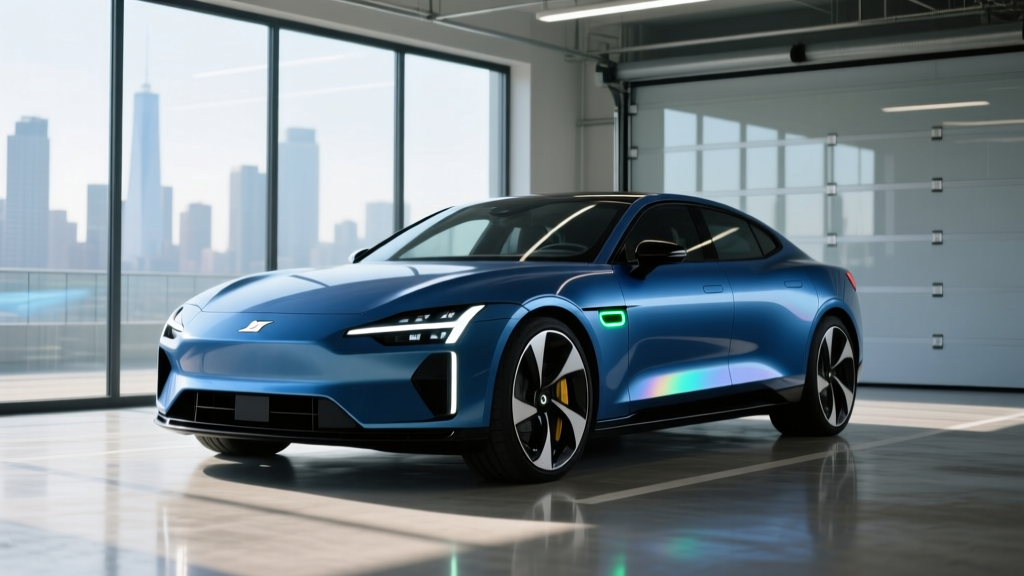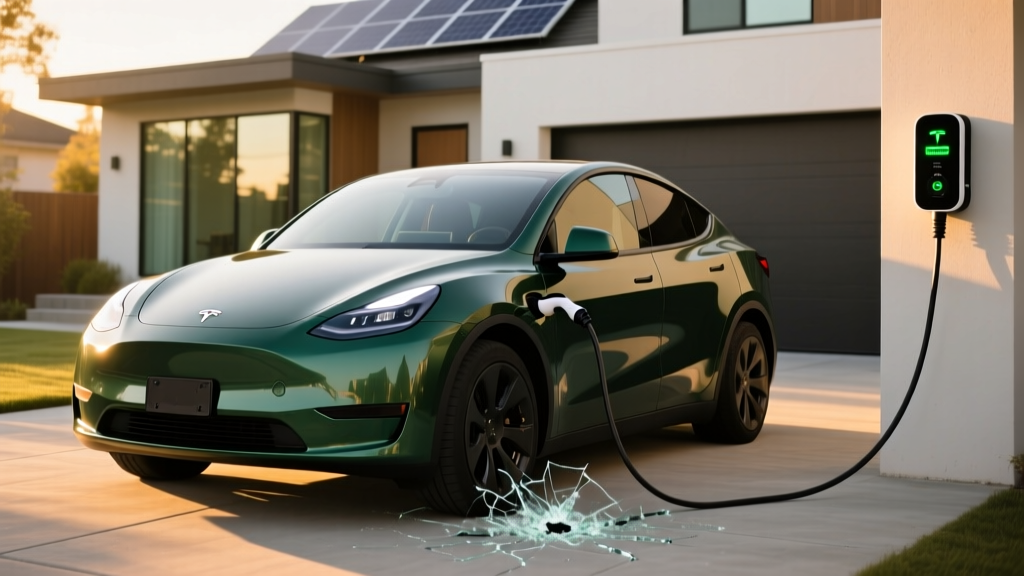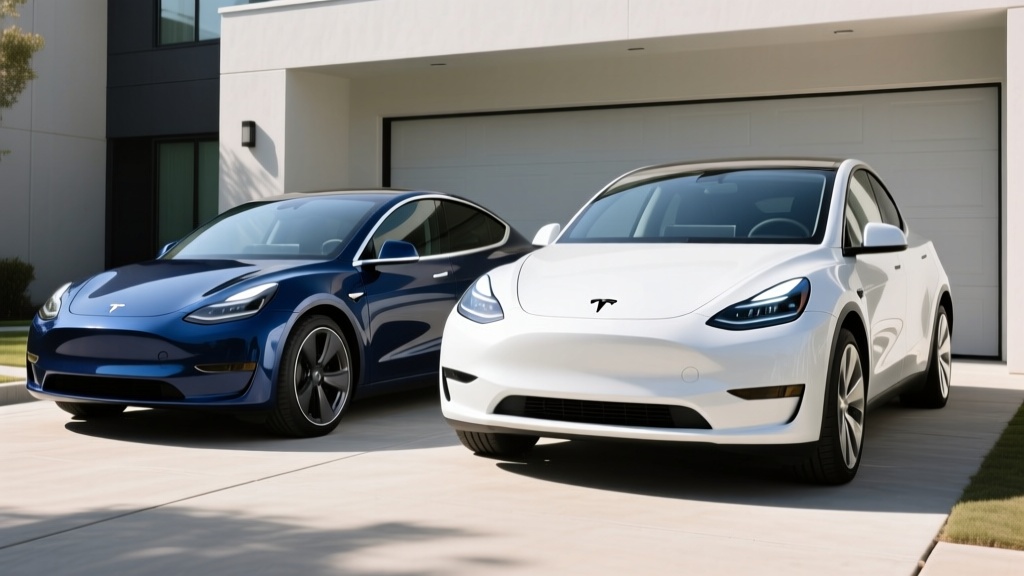
Searches for "American Heroes Tesla" typically point to two things: Tesla's long-standing military and first-responder appreciation programs, and the broader question of whether America's best-known EV maker still deserves its homegrown-hero status in 2026. With the refreshed Model 3 Highland now fully established and the Model Y Juniper refresh hitting delivery driveways, we're putting both vehicles under the microscope — EPA range, real-world efficiency, DC fast-charge curves, IRS §30D tax credit eligibility, and how they stack up against an increasingly competitive field.
If you're a service member, veteran, or first responder considering a Tesla, or simply a buyer weighing the brand's American manufacturing footprint against rivals from Hyundai, Ford, and BMW, this review gives you the exact numbers you need to decide.
2026 Tesla Model 3: Range, Battery, and Real-World Efficiency
The 2026 Tesla Model 3 continues with three main trims following the Highland refresh: the Rear-Wheel Drive (RWD), Long Range AWD, and Performance AWD. Tesla has standardized the LFP (lithium iron phosphate) battery on the base RWD model while retaining NMC (nickel manganese cobalt) chemistry on Long Range and Performance variants for their superior energy density.
| Spec | RWD | Long Range AWD | Performance AWD |
|---|---|---|---|
| EPA Range | 272 mi | 363 mi | 315 mi |
| Battery (usable) | ~57.5 kWh (LFP) | ~75 kWh (NMC) | ~75 kWh (NMC) |
| Drivetrain | RWD, single motor | AWD, dual motor | AWD, dual motor |
| Horsepower | 271 hp | 346 hp | 510 hp |
| 0-60 mph | 5.8 sec | 4.2 sec | 2.9 sec |
| MPGe (combined) | 132 MPGe | 125 MPGe | 113 MPGe |
| Efficiency | 25 kWh/100mi | 27 kWh/100mi | 30 kWh/100mi |
| Base MSRP | $38,990 | $45,490 | $52,990 |
2026 Tesla Model Y: The Family SUV Benchmark
The Model Y received its Juniper refresh for the 2025 model year, and the 2026 version carries forward with updated styling, a ventilated-seat option, ambient lighting, and improved cabin insulation. It remains Tesla's volume leader and one of the best-selling vehicles of any powertrain in the United States.
| Spec | Long Range AWD | Performance AWD |
|---|---|---|
| EPA Range | 320 mi | 285 mi |
| Battery (usable) | ~75 kWh (NMC) | ~75 kWh (NMC) |
| Drivetrain | AWD, dual motor | AWD, dual motor |
| Horsepower | 384 hp | 510 hp |
| 0-60 mph | 4.8 sec | 3.5 sec |
| MPGe (combined) | 111 MPGe | 102 MPGe |
| Cargo Volume | 72 cu ft (rear seats folded) | 72 cu ft |
| Base MSRP | $44,990 | $51,490 |
Charging Speed: DC Fast Charge and Home Level 2
Tesla's Supercharger network remains the gold standard for reliability, and the North American Charging Standard (NACS) connector — originally Tesla's proprietary design — is now the industry standard adopted by Ford, GM, Rivian, Hyundai, and others. Here's what charging looks like in practice for both vehicles.
| Charging Level | Model 3 Long Range | Model Y Long Range |
|---|---|---|
| DC Fast Charge (peak) | 250 kW | 250 kW |
| 10–80% DC time | ~25 min | ~27 min |
| Sustained rate (10–50%) | ~170–200 kW avg | ~160–190 kW avg |
| Level 2 home (11.5 kW / 48A) | ~44 mi/hr | ~40 mi/hr |
| Level 1 (120V / 12A) | ~3 mi/hr | ~3 mi/hr |
Charging-curve reality: Peak 250 kW is only sustained at low states of charge (roughly 10–30%). Above 50%, the curve tapers significantly — you'll see 80–100 kW, and above 80%, it drops below 50 kW. This is why we measure 10–80% time rather than quoting peak kW alone. For road trips, plan stops around the 10–80% window for maximum efficiency.
At home, a Tesla Wall Connector on a 60-amp circuit delivers up to 11.5 kW (48 amps continuous), adding roughly 40–44 miles of range per hour of charging. Most owners charging overnight from 20% to 80% will wake up fully replenished. Installation typically costs $800–$2,000 depending on panel proximity and local permitting — budget more if your electrical panel needs a 200-amp upgrade.
Federal Tax Credit: Does Tesla Qualify Under §30D?
This is where "American Heroes Tesla" becomes especially relevant — Tesla manufactures the Model 3 and Model Y at its Fremont, California, and Austin, Texas, Gigafactories, giving it a homegrown advantage in battery-sourcing and critical-mineral compliance under IRS §30D rules.
- ✓ MSRP Cap: Model 3 qualifies (sedan cap: $55,000). Model Y qualifies (SUV/truck cap: $80,000). Both base trims fall well under limits.
- ✓ Income Cap: Buyer AGI must not exceed $150,000 (single), $225,000 (head of household), or $300,000 (joint). Check your prior-year or current-year AGI, whichever is lower.
- ✓ Battery Sourcing: As of 2026, both vehicles meet critical-mineral and battery-component requirements for the full $7,500 credit, thanks to Tesla's North American supply chain. This can change annually — verify at purchase.
- ✓ Point-of-Sale Transfer: You can transfer the credit to the dealer at purchase, reducing your out-of-pocket cost immediately rather than waiting for tax filing.
| Model | Base MSRP | §30D Credit | Effective Price* |
|---|---|---|---|
| Model 3 RWD | $38,990 | $7,500 | ~$31,490 |
| Model 3 Long Range | $45,490 | $7,500 | ~$37,990 |
| Model Y Long Range | $44,990 | $7,500 | ~$37,490 |
*Effective price assumes full §30D eligibility. Destination fees, state incentives, and optional paint/wheels/FSD not included. Verify current rules at irs.gov. State and local incentives vary by jurisdiction — consult official sources.
Interior, Cargo, and Daily Practicality
The Highland-refreshed Model 3 interior is markedly quieter and more refined than pre-2024 models, with ventilated front seats, ambient lighting, a rear touchscreen for passengers, and improved material quality. However, the minimalist approach still polarizes: no physical turn-signal stalk (buttons on the steering wheel), no instrument cluster, and all climate/mirror/seat controls live on the central 15.4-inch touchscreen.
Model 3 Cargo: 23 cu ft (rear trunk + frunk). Rear legroom is 34.9 inches — adequate for adults on shorter trips, tight for tall passengers on long hauls.
Model Y Cargo: 72 cu ft with rear seats folded (30.2 cu ft behind the second row). The Juniper refresh improved rear-seat comfort with a slightly reclined seatback and better cushioning. Available third-row seating (small children only) brings capacity to seven, but it's best treated as a five-seat SUV with generous cargo space.
Both vehicles include Tesla's signature 15.4-inch touchscreen running Tesla's proprietary OS, over-the-air updates, a mobile app with climate preconditioning and location tracking, and available Full Self-Driving (Supervised) — which, despite its name, remains a SAE Level 2 driver-assist system requiring full driver attention at all times.
Warranty, Reliability, and Ownership Costs
Tesla's warranty structure is competitive but not class-leading:
- Basic Vehicle: 4 years / 50,000 miles
- Battery & Drive Unit (RWD): 8 years / 100,000 miles
- Battery & Drive Unit (Long Range/Performance): 8 years / 120,000 miles
- Battery Degradation Threshold: Tesla warrants that the battery will retain at least 70% of original capacity during the warranty period.
Real-world degradation data from fleet studies and owner reports suggests Tesla's NMC batteries typically retain 90–95% capacity at 50,000 miles and 85–90% at 100,000 miles when properly maintained (avoiding chronic 100% charges on NMC; LFP batteries can and should be charged to 100% regularly). LFP chemistry in the Model 3 RWD offers superior cycle life and thermal stability, though at the cost of lower energy density and reduced cold-weather range.
Insurance costs remain a pain point. Tesla vehicles carry higher-than-average premiums due to repair costs, specialized parts, and elevated claim severity. Expect annual premiums of $1,800–$3,200 depending on your state, driving record, and trim level. Get quotes before purchasing.
Pros, Cons, and Who Should Buy
Pros
- Best-in-class Supercharger network reliability (now open to non-Tesla EVs via NACS adapters)
- Industry-leading efficiency (kWh/100mi) — your electricity dollar goes further
- Over-the-air updates continuously add features post-purchase
- Full §30D tax credit eligibility on most trims
- Strong resale value relative to EV segment average
- LFP battery option (Model 3 RWD) for longevity-focused buyers
Cons
- Touchscreen-only controls (no stalks, no physical buttons) require adaptation
- Higher insurance premiums than comparable ICE or rival EVs
- Model 3 rear seat is tight for tall adults on long trips
- FSD (Supervised) costs $8,000 extra or $99/mo — and remains Level 2, not autonomous
- Service center wait times can be lengthy in some metro areas
- No Apple CarPlay or Android Auto — Tesla's ecosystem is closed
Who This EV Suits Best
- Daily commuters (20–60 mi round trip): Model 3 RWD is ideal — LFP battery loves daily 100% charges, home Level 2 covers all needs, lowest running costs.
- Families needing cargo space: Model Y Long Range offers the best balance of range, space, and value. The 72 cu ft cargo area handles strollers, groceries, and road-trip luggage easily.
- Road-trip enthusiasts: Model 3 Long Range (363 mi EPA) or Model Y Long Range (320 mi EPA) paired with the Supercharger network delivers the most frictionless long-distance EV travel available in 2026.
- Military/first responders: Check with your local Tesla store about appreciation programs. Combined with the §30D credit and potential state incentives, the effective price becomes compelling.
Competitor Comparison: Is Tesla Still the American Hero?
The EV landscape in 2026 is far more competitive than even two years ago. Here's how the key American-market rivals stack up:
| Attribute | Tesla Model 3 LR | Hyundai Ioniq 6 SEL | BMW i4 eDrive40 | Ford Mustang Mach-E ER |
|---|---|---|---|---|
| EPA Range | 363 mi | 361 mi | 307 mi | 320 mi |
| Peak DC Charge | 250 kW | 350 kW | 205 kW | 150 kW |
| Base MSRP | $45,490 | $42,600 | $52,200 | $48,995 |
| §30D Credit | $7,500 | $0 (Korea-built) | $0 (Germany-built) | $3,750–$7,500 |
| NACS Native | Yes | No (CCS) | No (CCS) | No (CCS) |
The Hyundai Ioniq 6 charges faster (350 kW peak) and matches Tesla on range, but it doesn't qualify for the federal credit due to overseas manufacturing. The BMW i4 is more luxurious but pricier and also credit-ineligible. The Mach-E qualifies partially but charges more slowly. Tesla's combination of range, credit eligibility, native NACS, and Supercharger access remains difficult to beat for American buyers.
Frequently Asked Questions
What is the real-world range of the Tesla Model 3 and Model Y?
Expect 85–90% of EPA range in mixed moderate-temperature driving. The Model 3 Long Range delivers roughly 300–320 real-world highway miles; the Model Y Long Range delivers 270–290. In sustained cold weather (below 32°F), reduce these figures by 15–25%. Always precondition your battery before highway driving to minimize losses.
How fast does a Tesla charge at home and on the road?
On a home Level 2 Wall Connector (11.5 kW / 48A), both vehicles add approximately 40–44 miles of range per hour — a full overnight charge from 20% to 80% takes 6–8 hours. On a 250 kW Supercharger, 10–80% takes 25–27 minutes, though the charge curve tapers significantly above 50% state of charge.
How much does a Tesla cost after the federal tax credit?
The Model 3 RWD drops to approximately $31,490 after the $7,500 §30D credit. The Model Y Long Range falls to roughly $37,490. Eligibility requires meeting income caps ($150K single / $300K joint), MSRP limits, and battery-sourcing requirements. The credit can be transferred at point of sale to reduce your purchase price immediately. Verify current rules at irs.gov.
Is Tesla worth buying vs Hyundai, Ford, or BMW in 2026?
For American buyers prioritizing federal tax credit eligibility, Supercharger network access, native NACS compatibility, and strong efficiency, Tesla remains the default recommendation. If you value faster DC charging, the Hyundai Ioniq 6 (350 kW peak) is compelling — but you'll forgo the $7,500 credit. If luxury is paramount, the BMW i4 is refined but pricier and credit-ineligible. For cargo space rivals, the Mach-E and Ioniq 5 are strong, but Tesla's overall ecosystem integration is unmatched.
What are the biggest pros and cons of owning a Tesla in 2026?
Pros: class-leading efficiency, Supercharger reliability, OTA updates, full tax credit, LFP battery option for longevity. Cons: touchscreen-only interface, higher insurance, no CarPlay, FSD remains Level 2 (not autonomous), service center availability varies by region.
Does the Tesla Model 3 and Model Y qualify for the full $7,500 federal EV tax credit?
Yes, as of 2026, both vehicles qualify for the full $7,500 under §30D, assuming the buyer meets income caps and the specific vehicle's battery components and critical minerals satisfy that year's sourcing thresholds. Tesla's North American manufacturing gives it a structural advantage over Korean- and German-built competitors. Always confirm eligibility at the point of sale — rules evolve annually.