Quick Verdict: What Are Amazon Rivian Trucks?
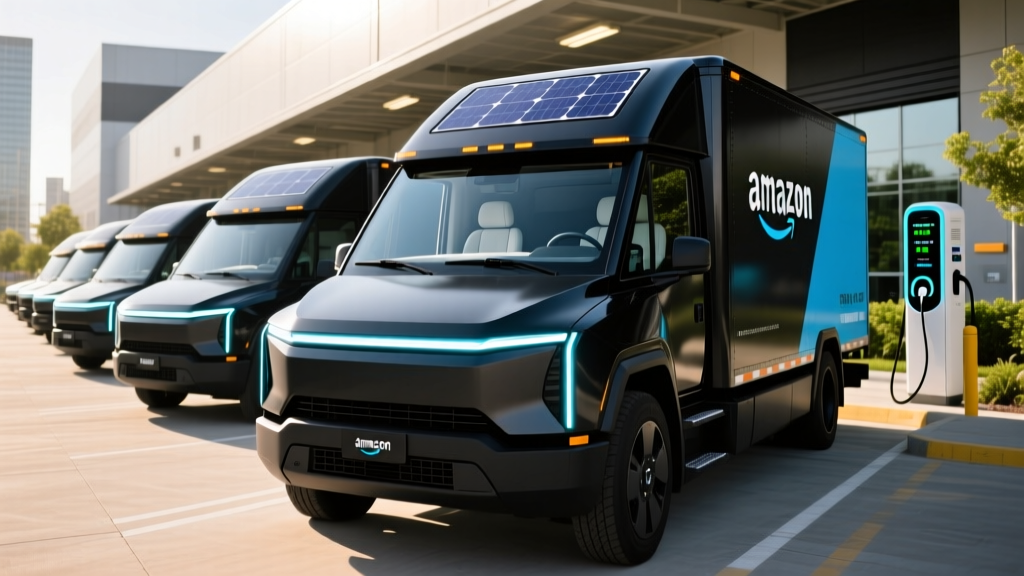
If you've spotted a boxy, blue-and-gray electric van pulling up to your doorstep, you've seen the Amazon Rivian EDV (Electric Delivery Van) — a commercial vehicle built exclusively for Amazon's last-mile delivery network. These aren't consumer trucks you can walk into a dealership and buy, but they matter enormously to anyone researching Rivian as a brand, a stock, or a future vehicle maker. The EDV program is the financial backbone that kept Rivian solvent while it scaled the R1T pickup and R1S SUV, and the engineering lessons from the fleet directly feed into the consumer lineup.
This review breaks down the real specs of the Amazon Rivian EDV fleet in 2026, how it compares to the consumer R1T, and what the partnership means for buyers eyeing a Rivian today.
The Amazon Rivian EDV: Specs, Battery, and Real-World Range
The Amazon EDV comes in three body configurations — the EDV-500, EDV-700, and EDV-900 — named for their approximate cargo volume in cubic feet. The EDV-700 is the workhorse of the fleet, and the variant most Amazon drivers use daily.
| Spec | EDV-500 | EDV-700 | EDV-900 |
|---|---|---|---|
| EPA Est. Range | ~150 mi | ~150 mi | ~120 mi |
| Battery Capacity | ~90 kWh (NMC) | ~150 kWh (NMC) | ~150 kWh (NMC) |
| Max DC Fast Charge | ~115 kW | ~115 kW | ~115 kW |
| 10–80% DCFC Time | ~45 min | ~75 min | ~75 min |
| Level 2 Charge Rate | ~11.5 kW | ~11.5 kW | ~11.5 kW |
| Motor / Drivetrain | Single motor / FWD | Single motor / FWD | Single motor / FWD |
| Horsepower | ~275 hp | ~275 hp | ~275 hp |
| Cargo Volume | ~500 cu ft | ~700 cu ft | ~900 cu ft |
| Payload Capacity | ~2,000 lbs | ~2,500 lbs | ~2,800 lbs |
Charging Infrastructure: How Amazon Keeps the Fleet Running
Rivian and Amazon have invested heavily in depot charging infrastructure rather than relying on public networks. Here's how the EDV charges:
| Charging Level | Power (kW) | Miles Added per Hour | Use Case |
|---|---|---|---|
| Level 1 (120V) | ~1.4 kW | ~3–4 mi/hr | Emergency/trickle only |
| Level 2 (240V depot) | ~11.5 kW | ~28–32 mi/hr | Overnight depot charging (primary) |
| DC Fast Charge | ~115 kW peak | ~180 mi/hr (peak) | Mid-shift top-up if needed |
The EDV's ~115 kW peak DC charge rate is modest compared to Rivian's consumer R1T (which peaks at ~220 kW on the latest Dual-Motor packs). This is intentional: Amazon's vans charge overnight at depots where speed matters less than grid-load management. Fast-charging a 150 kWh battery at 350 kW would strain depot electrical infrastructure unnecessarily. The charge curve holds near peak through ~40% SoC, then tapers progressively — expect the full 10–80% session to take roughly 75 minutes at a DC fast charger.
How the EDV Compares to Rivian's Consumer R1T Truck
Many buyers searching for "Amazon Rivian trucks" are actually interested in the Rivian R1T — the consumer pickup that shares Rivian's skateboard platform DNA but is a very different vehicle. Here's a side-by-side look for 2026:
| Spec | Amazon EDV-700 | 2026 Rivian R1T Dual-Motor |
|---|---|---|
| EPA Range | ~150 mi | ~352 mi (Standard); ~420 mi (Max) |
| Battery | ~150 kWh NMC | ~106 kWh (Std) / ~141 kWh (Max) NMC |
| DC Fast Charge Peak | ~115 kW | ~220 kW |
| 10–80% DCFC | ~75 min | ~21 min (Standard pack) |
| 0–60 mph | ~9.0 sec | ~4.5 sec (Dual) / ~3.0 sec (Tri) |
| Horsepower | ~275 hp | 533 hp (Dual) / 850 hp (Tri) |
| Drivetrain | FWD single motor | AWD dual/tri motor |
| Towing Capacity | N/A (cargo van) | 11,000 lbs |
| Base MSRP | Fleet only (not for sale) | $69,900 (Dual-Motor Standard) |
| Federal Tax Credit | Commercial fleet (§45W) | Up to $7,500 (§30D, eligibility varies) |
The takeaway: the EDV is purpose-built for predictable urban delivery routes where 150 miles is plenty and charging happens at a home depot. The R1T is built for consumers who need highway range, towing, and fast charging on road trips. They share a manufacturer but serve entirely different missions.
Why Amazon Bet on Rivian — and What It Means for Buyers
Amazon ordered 100,000 EDVs from Rivian in 2019, with deliveries ramping through 2024 and continuing into 2026. The deal gave Rivian a guaranteed revenue stream while it burned cash scaling production in Normal, Illinois. By early 2026, Amazon had taken delivery of over 20,000 EDVs, making it one of the largest electric commercial fleets in North America.
For consumer buyers, this matters in three ways:
- Financial stability: The Amazon contract reduces Rivian's insolvency risk — a real concern for anyone spending $70K+ on a vehicle and needing long-term parts/service support.
- Engineering transfer: Battery thermal management, motor efficiency, and software-defined vehicle architecture developed for the EDV fleet feed back into the R1T and R1S. Rivian's second-generation R1 platform benefits from billions of fleet miles of real-world data.
- Charging network: Rivian's growing Rivian Adventure Network (DC fast chargers along popular road-trip routes) is partly funded by the fleet revenue, expanding infrastructure that consumer owners use.
Amazon's exclusivity clause on the EDV design began loosening in late 2023, allowing Rivian to sell similar commercial vans to other fleets starting in 2026. This opens a new revenue channel and could lead to a consumer-oriented van variant in the future.
2026 Rivian R1T: Pricing, Tax Credits, and Ownership Costs
If you're researching Amazon's Rivian trucks and considering buying a Rivian for yourself, here's what the 2026 R1T lineup costs:
| Trim | Base MSRP | Est. Federal Credit (§30D) | Effective Price |
|---|---|---|---|
| R1T Dual-Motor Standard | $69,900 | Up to $7,500* | ~$62,400 |
| R1T Dual-Motor Max | $79,900 | Up to $7,500* | ~$72,400 |
| R1T Tri-Motor | $99,900 | Up to $7,500* | ~$92,400 |
| R1T Quad-Motor | $119,900 | Up to $7,500* | ~$112,400 |
*Federal tax credit eligibility under IRS §30D depends on multiple factors: buyer income caps ($150K single / $300K joint MAGI), vehicle MSRP cap ($80,000 for trucks/vans), battery critical-mineral and component sourcing requirements, and point-of-sale transfer availability. The R1T qualifies as a truck under the $80K MSRP cap, but trims above $80K (Tri-Motor and above) may be ineligible. Battery sourcing rules tighten annually — verify current-year eligibility with a tax professional before purchasing.
Who Should Buy a Rivian — and Who Shouldn't
- You need a full-size electric pickup with real towing capacity (11,000 lbs) and off-road capability
- You want 350+ miles of EPA range for road trips with DC fast charging under 25 minutes
- You value over-the-air software updates and a tech-forward ownership experience
- You have access to home Level 2 charging (a 240V/48A setup adds ~25 mi/hr)
- Your budget is under $60K — consider the Ford Maverick Hybrid or a used EV instead
- You need a commercial delivery van — the EDV isn't available to individual buyers; look at the Ford E-Transit or BrightDrop Zevo
- You frequently tow heavy loads over long distances — expect range to drop 40–50% when towing near max capacity
- You live in an area with limited DC fast-charging infrastructure and can't install home Level 2
Pros and Cons of the Rivian Lineup in 2026
- Class-leading EPA range (up to 420 mi with Max Pack)
- Tri- and Quad-Motor performance (0–60 in ~3.0 sec) rivals sports cars
- 11,000-lb towing capacity with integrated trailer software
- Over-the-air updates continuously add features
- Amazon partnership provides long-term financial backing
- Rivian Adventure Network expanding along key road-trip corridors
- Base price starts at ~$70K — premium segment only
- Service center network still growing; some regions face long wait times
- Towing range penalty is significant (~50% reduction at max load)
- Tax credit eligibility uncertain on higher trims above $80K MSRP
- Insurance costs run 15–25% higher than comparable gas trucks
- No single-motor / lower-price variant available yet
Frequently Asked Questions About Amazon Rivian Trucks
Can I buy an Amazon Rivian EDV delivery van?
No. The EDV was designed and built exclusively for Amazon under a 100,000-vehicle contract. Individual consumers cannot purchase one. Starting in 2026, Rivian began offering similar commercial vans to other fleet buyers, but these remain B2B transactions, not retail consumer sales.
What is the real-world range of the Amazon Rivian EDV?
The EDV-700 achieves roughly 150 miles EPA-estimated in urban delivery conditions. Real-world highway range drops to ~110–120 miles, and cold-weather operation can reduce range to ~100 miles. For Amazon's typical 60–90 mile daily routes, this is sufficient with overnight depot charging.
Does the consumer Rivian R1T qualify for the $7,500 federal tax credit?
Potentially. Under IRS §30D, the R1T qualifies as a truck (MSRP cap of $80,000). The Dual-Motor Standard at $69,900 falls under the cap. However, eligibility also depends on your income (MAGI caps: $150K single, $300K joint), battery sourcing requirements that tighten each year, and whether you elect the point-of-sale transfer. Consult a tax professional and check the latest fueleconomy.gov listings before purchasing.
How fast does the Rivian R1T charge compared to the Amazon EDV?
Significantly faster. The 2026 R1T with the Standard pack peaks at ~220 kW DC fast charging, achieving a 10–80% charge in roughly 21 minutes. The Amazon EDV peaks at ~115 kW and takes ~75 minutes for the same session. The R1T is optimized for road-trip charging speed; the EDV is optimized for overnight depot charging.
Is Rivian a safe bet as a company for long-term ownership support?
Rivian's Amazon contract (valued at billions) provides a financial floor that most EV startups lack. The company has delivered over 100,000 vehicles across consumer and fleet lines as of early 2026. That said, their service center network is still expanding, and parts availability in rural areas can lag behind legacy automakers. Warranty coverage is strong: 8 years / 175,000 miles on the battery and drive units.
What battery chemistry does the Amazon EDV use?
The EDV fleet uses NMC (nickel-manganese-cobalt) lithium-ion cells, similar to Rivian's consumer vehicles. NMC offers higher energy density than LFP (lithium iron phosphate), which matters for a large van needing to maximize cargo volume within a given battery footprint. Trade-off: NMC cells degrade slightly faster than LFP over thousands of cycles, though Rivian's thermal management system and conservative charge windows (fleet vehicles rarely charge to 100%) mitigate this.
Will Rivian ever make a consumer van or smaller truck?
Rivian has announced the R2 platform (a midsize SUV and truck expected for 2026–2027 at a ~$45K starting price) and the R3 (a smaller crossover). A consumer-oriented van has not been officially announced, but the loosening of the Amazon exclusivity clause and Rivian's commercial van experience make this a plausible future product. Any such vehicle would be listed as announced/preliminary until production begins.