Quick Answer: Can I Buy Amazon's Electric Van?
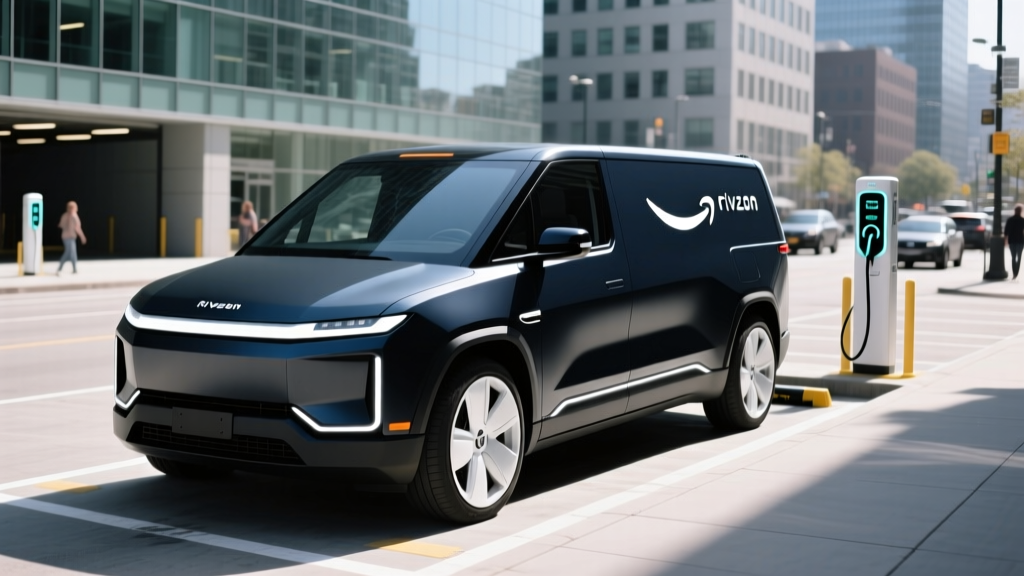
No. Amazon's electric delivery van — officially the Rivian EDV (Electric Delivery Van) — is a purpose-built commercial vehicle exclusive to Amazon's logistics network. You cannot purchase one as a private consumer. However, understanding its specs, economics, and real-world deployment offers valuable insight into commercial EV adoption and the Rivian brand you can buy (R1T, R1S). If you're a fleet manager or small business owner evaluating electric cargo vans, this guide breaks down what the EDV proves about EV delivery viability.
What Exactly Is Amazon's Electric Van?
Amazon's electric van is a custom-designed delivery vehicle built by Rivian, developed under an exclusive partnership announced in 2019. Amazon ordered 100,000 EDVs, with deployment beginning in 2022 and scaling through 2026. The vehicle comes in three body configurations optimized for last-mile delivery: a compact ~500 cu-ft cargo variant, a mid-size ~700 cu-ft model, and the largest ~900 cu-ft version that dominates Amazon's suburban routes.
Unlike consumer EVs evaluated on 0-60 times or luxury features, the EDV is engineered around a specific duty cycle: 150-200 daily delivery stops, frequent door openings, stop-and-go urban driving, and return-to-base overnight charging. Every design decision — from the low step-in height to the reinforced curbside bulkhead — serves that operational profile.
| Specification | EDV-700 (Mid-Size) | EDV-900 (Large) |
|---|---|---|
| Cargo Volume | ~660 cu ft | ~850 cu ft |
| Battery Capacity (Usable) | ~135 kWh (NMC) | ~135 kWh (NMC) |
| EPA-Equivalent Range | ~150 miles | ~120-140 miles |
| Peak DC Fast Charge Rate | ~150 kW | ~150 kW |
| Level 2 Charge Rate | ~19.2 kW | ~19.2 kW |
| Level 2 Full Charge Time | ~8-9 hours | ~8-9 hours |
| Motor Configuration | Single rear motor | Single rear motor |
| Horsepower | ~275 hp | ~275 hp |
| Payload Capacity | ~2,500 lbs | ~2,500 lbs |
| GVWR | ~9,990 lbs | ~9,990 lbs |
Range, Battery, and Charging: Built for the Route, Not the Highway
The EDV's ~150-mile range (for the mid-size variant) might seem modest compared to consumer EVs pushing 300+ miles. But fleet economics tell a different story. Amazon's delivery routes average 70-120 miles per day, with the van returning to a depot every night. That 150-mile buffer accounts for cold-weather degradation (expect 20-30% range loss below freezing), air conditioning loads, and route variability.
EPA-Equivalent Range: ~150 miles (EDV-700)
Real-World Delivery Route Expectation: 120-140 miles in moderate climates; 90-110 miles in sub-30°F winter conditions with cabin and cargo-area heating active. Amazon's route optimization software ensures vans rarely exceed 80% of available range before returning to depot.
The 135 kWh NMC (nickel manganese cobalt) battery pack is one of the largest in any production electric vehicle. NMC chemistry offers high energy density — critical when cargo volume and payload can't be sacrificed to battery weight. However, NMC degrades faster than LFP (lithium iron phosphate) under sustained high-charge states, which is why Amazon's fleet management system likely caps daily charging to 80-90% state of charge and reserves full charges for route-exception days.
Charging Infrastructure: The Depot Advantage
Amazon has invested heavily in depot-level charging infrastructure, installing thousands of Level 2 chargers at delivery stations nationwide. At 19.2 kW per vehicle, a depleted EDV battery replenishes in roughly 8-9 hours — perfectly aligned with overnight downtime. This is the commercial EV sweet spot: vehicles that charge while parked, avoiding the downtime and cost of mid-route DC fast charging.
For fleet operators studying the EDV model, the lesson is clear: depot-based Level 2 charging at $0.08-$0.12/kWh (commercial electricity rates) costs roughly $10-$16 per full charge, compared to $45-$65 for diesel fueling an equivalent route. DC fast charging at public stations ($0.35-$0.55/kWh) is available but economically irrational for a predictable daily route.
The Economics: Electric Van vs. Gas Delivery Van
Amazon hasn't publicly disclosed per-unit EDV pricing — the vehicles are built under a long-term supply agreement, not sold at MSRP. However, industry estimates place the EDV's production cost between $70,000 and $90,000 per unit, depending on body configuration and battery cost fluctuations. For comparison, a conventional gas-powered Ram ProMaster or Ford Transit cargo van lists between $45,000 and $55,000.
The higher upfront cost is offset by dramatically lower operating expenses over the vehicle's 10-15 year fleet life:
| Cost Category | Rivian EDV (Electric) | Gas Cargo Van (e.g., Transit 350) |
|---|---|---|
| Fuel / Electricity (5 yrs) | $4,500 - $6,000 | $18,000 - $24,000 |
| Maintenance (5 yrs) | $2,000 - $3,500 | $7,000 - $10,000 |
| Brake Replacement | $400 - $800 (regen extends life) | $1,500 - $2,500 |
| Oil / Fluid Changes | $0 | $1,500 - $2,500 |
| Estimated 5-Year Total OpEx | $6,900 - $10,300 | $28,000 - $39,000 |
The fuel savings alone — roughly $13,500 to $18,000 over five years — nearly close the gap on the EDV's higher acquisition cost. Factor in maintenance savings (no oil changes, no transmission fluid, dramatically extended brake life from regenerative braking), and the total cost of ownership (TCO) crossover point arrives around year 3-4 of a typical 12,000-mile-per-year delivery route.
For Amazon specifically, the EDV also serves brand and regulatory goals: visible zero-tailpipe-emission delivery in urban areas supports corporate sustainability pledges and positions the company ahead of tightening municipal clean-air mandates in cities like Los Angeles, New York, and London (where Amazon also operates).
What Small Fleet Operators and Business Owners Can Learn
You can't buy a Rivian EDV, but the van's deployment validates the electric cargo van category for any fleet operator. Here's what the EDV proves about EV fleet viability in 2026:
| Myth | Fact (Proven by EDV Deployment) |
|---|---|
| "EVs can't handle real delivery routes" | 150-mile range covers 90%+ of last-mile delivery routes with margin for weather and detours. |
| "Charging takes too long for commercial use" | Overnight depot Level 2 charging (8-9 hours) aligns perfectly with fleet downtime. No mid-route charging needed. |
| "Batteries won't last the vehicle's life" | NMC batteries at 80% daily SoC with thermal management are projected to retain 80%+ capacity at 200,000+ miles. Rivian offers an 8-year/175,000-mile battery warranty on consumer models; fleet terms are similar. |
| "Cold weather kills EV fleets" | 20-30% winter range loss is real but manageable with route planning. Amazon deploys EDVs in Chicago, Detroit, and Minneapolis year-round. |
| "Electric vans cost more overall" | Higher upfront cost is recovered in 3-4 years through fuel and maintenance savings on high-mileage routes. |
Consumer Alternatives: Electric Vans You Can Buy
If you're a small business owner or contractor looking for an electric cargo van in 2026, these are your real options:
- BrightDrop Zevo 400/600: GM's commercial electric van (formerly BrightDrop, now integrated into GM Envolve). 250-mile EPA range, ~165 kWh battery, available for fleet purchase. Starting ~$75,000.
- Ford E-Transit: 126-mile EPA range, 68 kWh battery, ~$50,000 starting. Lower range but strong dealer/service network and Pro Power Onboard for job-site use.
- Mercedes-Benz eSprinter: ~200-mile EPA range (extended battery), ~113 kWh usable, starting ~$72,000. Premium pricing but proven Sprinter platform.
- Canoo Lifestyle Delivery Vehicle: Still in limited production; check current availability as the company has faced financial headwinds.
None of these match the EDV's custom route-optimization, but all offer viable electrification for small-to-mid-size delivery operations with predictable daily routes under 150 miles.
Decision Framework: Is an Electric Cargo Van Right for Your Fleet?
Choose an electric cargo van if:
- Your average daily route is under 150 miles (or under 110 miles in cold climates)
- Vehicles return to a single depot or home base nightly
- You can install Level 2 charging (240V, 40-80 amp circuit) at your depot
- Your fleet drives 10,000+ miles per vehicle annually (higher mileage = faster ROI)
- You operate in an urban area with clean-air incentives or mandates
- You want to reduce maintenance downtime and unpredictable fuel costs
Stick with gas/diesel vans if:
- Your routes regularly exceed 200 miles with no mid-day charging opportunity
- You operate in extreme cold (-20°F or below) without heated depot storage
- Your vehicles are used intermittently (low annual mileage won't recover the EV premium)
- You lack access to overnight charging infrastructure and can't install it
- Your payload requirements push GVWR limits where battery weight becomes a penalty
Frequently Asked Questions
Can consumers buy Amazon's Rivian EDV?
No. The Rivian EDV is built exclusively for Amazon under a long-term supply agreement. Rivian has not announced plans to sell the EDV to other fleets or individual consumers. If you want a Rivian, the R1T pickup and R1S SUV are available through direct order.
How many Amazon electric vans are on the road?
As of early 2026, Amazon has deployed over 15,000 Rivian EDVs across more than 1,500 delivery stations in the United States, with thousands more in European markets. The original 100,000-vehicle order is being fulfilled in phases through the end of the decade.
What is the real-world range of Amazon's electric van?
The mid-size EDV-700 achieves approximately 150 miles in moderate weather on a delivery route cycle. In real-world winter conditions (below 30°F), expect 100-120 miles due to cabin heating, cargo-area temperature management, and battery chemistry limitations. Amazon's route software ensures vans operate within 80% of available range.
How much does it cost Amazon to charge an electric van?
At commercial depot electricity rates of $0.08-$0.12/kWh, fully charging the 135 kWh battery costs approximately $10.80-$16.20. Compare this to $45-$65 for fueling a comparable gas van for the same route distance. Over a year of 250 operating days, that's a fuel savings of roughly $8,000-$12,000 per vehicle.
Does the Rivian EDV qualify for federal EV tax credits?
The EDV is not available for consumer purchase, so the IRS §30D clean vehicle credit does not apply to individual buyers. However, fleet operators purchasing eligible commercial EVs (like the Ford E-Transit or BrightDrop Zevo) may qualify for the §45W Commercial Clean Vehicle Credit, which offers up to $7,500 for vehicles under 14,000 lbs GVWR and up to $40,000 for heavier vehicles, subject to sourcing and domestic-content requirements. Consult a tax professional for eligibility.
What happens if an EDV battery degrades below usable capacity?
Rivian warranties its battery packs against degradation below 70% of original capacity for 8 years or 175,000 miles on consumer vehicles; fleet warranty terms are negotiated but expected to be similar. At 70% retention, the EDV's 135 kWh pack would still deliver ~95 kWh usable — roughly 105 miles of range, still sufficient for shorter urban routes. Battery replacement cost for a pack this size would be substantial ($15,000-$25,000+), but fleet operators typically retire or repurpose vehicles before this threshold.
Is Amazon's electric van actually better for the environment?
On a tailpipe-emissions basis, the EDV produces zero direct emissions — meaningful in dense urban neighborhoods where delivery vans idle frequently. Lifecycle emissions depend on the electricity grid: in regions with high renewable or nuclear generation (Pacific Northwest, much of the Northeast), the EDV's carbon footprint is dramatically lower than a diesel equivalent. In coal-heavy grid regions, the advantage narrows but still exists due to electric motor efficiency (~85-90%) vs. internal combustion (~25-30%). Over the vehicle's 150,000+ mile life, even on an average US grid, the EDV produces roughly 40-60% fewer greenhouse gas emissions than a comparable gas van, per EPA lifecycle analysis.
The Bottom Line for EV Buyers and Fleet Operators
Amazon's electric van won't be in your driveway, but it's reshaping the commercial EV landscape. The EDV demonstrates that a purpose-built electric delivery vehicle — with the right range, charging infrastructure, and route optimization — outperforms gas equivalents on total cost of ownership within 3-4 years. For small fleet operators and business owners, the takeaway is practical: if your daily routes are predictable, under 150 miles, and end at a home base with charging access, an electric cargo van from Ford, GM, or Mercedes-Benz can deliver similar savings. The EDV isn't a product you can buy; it's proof that the electric commercial vehicle math works.